NewGeography.com blogs

Feudal Future Podcast — Faith in Flux

The ground beneath American religion is shifting, but not in a straight line. We dig into why the country’s casual middle is shrinking while conviction grows at the edges—among communities that ask more, not less. With Charles Murray and Terry Mattingley, we trace the data on mainline decline, the plateau of the “nones,” and the surprising surge in tradition-forward spaces where authority, discipline, and community still shape everyday life.

Listen on Apple Podcast
More podcast episodes & show notes at JoelKotkin.com

Watch this Episode

Support Our Work

The Center for Demographics and Policy focuses on research and analysis of global, national, and regional demographic trends and explores policies that might produce favorable demographic results over time. It involves Chapman students in demographic research under the supervision of the Center’s senior staff.

Students work with the Center’s director and engage in research that will serve them well as they look to develop their careers in business, the social sciences, and the arts. Students also have access to our advisory board, which includes distinguished Chapman faculty and major demographic scholars from across the country and the world.

For additional information, please contact Mahnaz Asghari, Associate Director of the Center for Demographics and Policy, at (714) 744-7635 or [email protected]

Follow us on LinkedIn

Tweet thoughts: @joelkotkin, @mtoplansky, #FeudalFuture #BeyondFeudalism

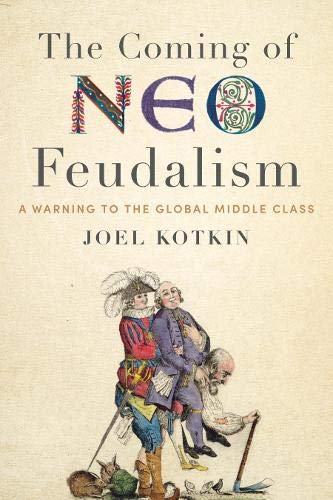
Buy Joel’s latest book, ‘The Coming of Neo-Feudalism

Sign Up For News & Alerts

This show is presented by the Chapman Center for Demographics and Policy, which focuses on research and analysis of global, national and regional demographic trends and explores policies that might produce favorable demographic results over time.

Reports from Urban Reform Institute, Center for Opportunity Urbanism

Archive of reports by the Center for Opportunity Urbanism and the Urban Reform Institute.

2023

Demographia International Housing Affordability 2023

Demographia U.S. Housing Affordability 2023

Building the New America

The Future of Appalachia

2022

The Last Utopia: The 15-Minute City

Exurbia Rising

The Next American Cities

Demographia International Housing Affordability 2022

Demographia U.S. Housing Affordability 2022

2021

Demographia International Housing Affordability 2021

Demographia U.S. Housing Affordability 2021

2020

How Urban Planning Caused the Housing Crisis

Beyond Feudalism

URI Standard of Living Index - 2020

A Policy of Delusion and Misdirection: Rethinking California's New Planning Regime

2019

Beyond Gentrification

2018

The Millennial Dilemma: A Generation Searches for Home

Localism in America

Perspectives on Defining the American Heartland

Houston Resilient

COU Standard of Living Index - 2018

2017

The Great Train Robbery

MaX Report

Hurricane Harvey

Job-Creating Transportation Infrastructure

Fading Promise

New American Heartland

COU Standard of Living Index - 2017

2016

America's Housing Crisis

Best Cities for Minorities

Restoring Localism

Putting People First

COU Standard of Living Index

The Cost of Not Housing

The Texas Way of Urbanism

2015

Maximizing Opportunity Urbanism with Robin Hood Planning

Golden Opportunity Lost: Can It Happen Here?

Core and Suburban Growth in Cities of Western Europe, 1971-2011

2014

America's Opportunity City

Opportunity Urbanism 2014

2012

California Getting In Its Own Way

2007

Opportunity Urbanism

Inequality in Megacities

Opportunity Urbanism Policy Framework

2005

The New Suburbanism

New California High Speed Rail Exaggeration

The just released Environmental Impact Statement for the California High Speed Rail Phase I Los Angeles to Anaheim segment assumes a population of 44 million in 2049. In fact, the official state population projection, produced by the California Department of Finance (DOF) is just 40,800,000, according to September 30, 2025 data. Moreover, by 2070, the state is projected by DOF to have a population of 39.5 million residents, virtually the same as reported in the 2020 US census.

For decades, high speed rail aficionados have been claiming that it is necessary to handle California’s population growth. There is none. What decade are they living in?

There is a considerable body of literature documenting the overly optimistic ridership projections associated with high speed rail. There are also the cost overruns, which California and the United Kingdom (the HS2 project) seem to be trying to outspend one another, with little hope of ever completing extensions to Sacramento, Riverside-San Bernardino and San Diego (much less San Francisco, Los Angeles and Anaheim). Manchester, Leeds and Sheffield have similarly been put on the “back burner.”

When the wrong numbers are used, it is not surprising when projects fail to deliver on their advertised performance. The California High Speed Rail line has been on this track for some time.


Train derailment through the wall at Paris Montparnasse Station, 1897.


Wendell Cox is principal of Demographia, an international public policy firm located in the St. Louis metropolitan area. He is a Senior Fellow with Unleash Prosperity in Washington and the Frontier Centre for Public Policy in Winnipeg and a member of the Advisory Board of the Center for Demographics and Policy at Chapman University in Orange, California. He has served as a visiting professor at the Conservatoire National des Arts et Metiers in Paris. His principal interests are economics, poverty alleviation, demographics, urban policy and transport. He is author of the annual Demographia International Housing Affordability Survey and author of Demographia World Urban Areas.

Mayor Tom Bradley appointed him to three terms on the Los Angeles County Transportation Commission (1977-1985), which was a predecessor agency to the Los Angeles County Metropolitan Transportation Authority (Metro). Speaker of the House Newt Gingrich appointed him to the Amtrak Reform Council, to complete the unexpired term of New Jersey Governor Christine Todd Whitman (1999-2002). He is author of War on the Dream: How Anti-Sprawl Policy Threatens the Quality of Life and Toward More Prosperous Cities: A Framing Essay on Urban Areas, Transport, Planning and the Dimensions of Sustainability.

AttachmentSize
Train_wreck_at_Montparnasse_1895.jpg85.65 KB

Feudal Future Podcast — Newsom's Next Move

A governor with national ambitions, a party tug‑of‑war, and a state wrestling with affordability—this conversation goes straight at the question on everyone’s mind: can Gavin Newsom sell hope to a country tired of anger without getting buried by California’s record? We bring together seasoned strategists to weigh why prediction markets love his chances, how a relentless work ethic and podcast‑first media game reshape reach, and whether a transactional political style beats an old‑school “vision thing” when attention is fragmented and narratives move at internet speed.

Listen on Apple Podcast
More podcast episodes & show notes at JoelKotkin.com

Watch this Episode

Support Our Work

The Center for Demographics and Policy focuses on research and analysis of global, national, and regional demographic trends and explores policies that might produce favorable demographic results over time. It involves Chapman students in demographic research under the supervision of the Center’s senior staff.

Students work with the Center’s director and engage in research that will serve them well as they look to develop their careers in business, the social sciences, and the arts. Students also have access to our advisory board, which includes distinguished Chapman faculty and major demographic scholars from across the country and the world.

For additional information, please contact Mahnaz Asghari, Associate Director of the Center for Demographics and Policy, at (714) 744-7635 or [email protected]

Follow us on LinkedIn

Tweet thoughts: @joelkotkin, @mtoplansky, #FeudalFuture #BeyondFeudalism

Buy Joel’s latest book, ‘The Coming of Neo-Feudalism

Sign Up For News & Alerts

This show is presented by the Chapman Center for Demographics and Policy, which focuses on research and analysis of global, national and regional demographic trends and explores policies that might produce favorable demographic results over time.

Feudal Future Podcast — Why Iranian American Immigrants Excel

What explains the outsized success of Iranian Americans—and can that same resolve help tilt the future of Iran? We bring together two sharp voices to unpack a story that spans kitchen-table sacrifice, elite migration, and a culture where A’s are expected and grit is non-negotiable.

Listen on Apple Podcast
More podcast episodes & show notes at JoelKotkin.com

Watch this Episode

Support Our Work

The Center for Demographics and Policy focuses on research and analysis of global, national, and regional demographic trends and explores policies that might produce favorable demographic results over time. It involves Chapman students in demographic research under the supervision of the Center’s senior staff.

Students work with the Center’s director and engage in research that will serve them well as they look to develop their careers in business, the social sciences, and the arts. Students also have access to our advisory board, which includes distinguished Chapman faculty and major demographic scholars from across the country and the world.

For additional information, please contact Mahnaz Asghari, Associate Director of the Center for Demographics and Policy, at (714) 744-7635 or [email protected]

Follow us on LinkedIn

Tweet thoughts: @joelkotkin, @mtoplansky, #FeudalFuture #BeyondFeudalism

Buy Joel’s latest book, ‘The Coming of Neo-Feudalism

Sign Up For News & Alerts

This show is presented by the Chapman Center for Demographics and Policy, which focuses on research and analysis of global, national and regional demographic trends and explores policies that might produce favorable demographic results over time.

Subjects: