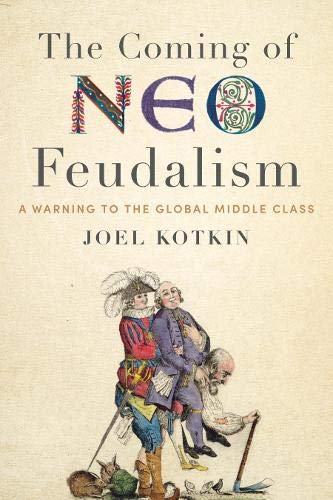
On today's episode of Feudal Future hosts Joel Kotkin and Marshall Toplansky are joined by guests Harry and Fred Siegel. Fred is a senior fellow at the Manhattan Institute for Policy Research. His son, Harry is a senior editor at the Daily Beast. Their conversation covers the future trends of cities, the workforce, and Manhattan. read more »
New York
Feudal Future Podcast — Fred and Harry Siegel
by Charlie Stephens 09/30/2020
»
- Login to post comments
Young People Leaving Buffalo, Despite Cuomo Claims
by Wendell Cox 10/05/2018
According to the Wall Street Journal, New York Governor Andrew Cuomo said that young people are returning "to upstate cities such as Buffalo." The Governor continued, “This is reality, these are numbers.” Cuomo was quoted in a 27 September article on the population and economic stagnation in New York. Actually, the latest American Community Survey domestic migration data for the Buffalo metropolitan area, there was net outmigration in 2011-2015. read more »
»
- Login to post comments
Subjects:
London Murder Rate Exceeds NYC for the First Time
by Wendell Cox 04/02/2018
The Sunday Times reports an ominous finding for London (the Greater London Authority, as opposed to the larger metropolitan area that includes the suburban development outside the greenbelt), with a murder rate that exceeded that of the city of New York for the first time (in February). read more »
Subjects:
Resurrecting the New York Subway
by Wendell Cox 08/09/2016
The subway is crucial to mobility in the city of New York. Over the last 10 years, ridership increases on the subway have been more than that of all other transit services in the United States combined. It was not always this way. read more »
»
- Login to post comments
Subjects:
New York and California: The Need for a “Great Reset”
by Wendell Cox 06/24/2013
Despite panning Texas Governor Rick Perry’s initiative to draw businesses from New York, Slate’s business and economics correspondent, Matt Yglesias offers sobering thoughts to growth starved states along on the West Coast and in the Northeast. read more »
Subjects:
Texas Two Step
by Jonathan Bowles 03/07/2013
There has been a huge spike in the number of New Yorkers relocating to Texas in recent years, even at a time when fewer city residents were departing for Charlotte, Atlanta, Philadelphia and other traditional destinations. read more »
Infographics: The Decongestion of Manhattan, New York Walking Commutes
by Aaron M. Renn 08/23/2012
Jim Russell pointed me at an interesting article about densification vs. de-densification over at the Urbanization Project at NYU Stern. It contains this very interesting map of the change in census tract densities in Manhattan over the century between 1910 and 2010: read more »
»
The Last Stop in Brooklyn
by Lou Siegel 06/17/2012
Getting out was essential but I was stuck in Brooklyn until I could plot my escape…
There was no such thing as “diversity” in white, working-class Bensonhurst in the 1950s. Only the Jews and the Italians.
My tribe descending from Yiddish-speaking East European immigrants who settled in cramped tenements and worked in the schmatta trade of Manhattan’s lower east side. read more »
Subjects:
An Obituary for the Occupation in New York
by Harry Siegel 12/09/2011
I came to report on the occupation of Zuccotti Park expecting it would pass in a matter of days, like the stillborn movements before it.
In spite of its self-celebrated cosmopolitanism, New York after 9/11 has become an arid environment for protest under Mayor Michael Bloomberg and Police Commissioner Ray Kelly. The press and the public yawned through the massive anti–Iraq War march in 2003 and the excessive police response to the 2004 RNC protesters (the city is still dealing with those lawsuits). Even after the Wall Street meltdown, an eerie silence prevailed. read more »
»
- Login to post comments
Subjects:
Housing Bottom? Not Yet.
by Jeff Speakes 10/06/2011
Weakness in housing activity and in housing prices continues to be a major drag on the overall economy. My colleagues at California Lutheran University's Center for Economic Research and Forecasting have long maintained that the home ownership rate (HOR) needs to fall back to its historical norm of 64% before housing can recover. Their view has been that the attempt to increase the HOR by loosening credit standards contributed to creating financial instability. read more »
»
- Login to post comments
Subjects: