Newgeography.com - Economic, demographic, and political commentary about places
President Obama won re-election primarily because he did so well with two key, and expanding, constituencies: Hispanics and members of the Millennial Generation. Throughout the campaign, Democratic pundits pointed to these two groups as being the key difference makers. They were right.
Let’s start with Hispanics, arguably the biggest deciders in this election. Exit polling shows Obama winning this group — which gave up to two-fifths of their vote to George Bush — by over two to one. In 2008, Obama improved his winning margin with Latino voters from 67% in 2008 to 69% in 2012. And for the first time they represented 10% of the overall electorate. read more »
Addis Abeba is the capital of Ethiopia and calls itself the "diplomatic capital" of Africa, by virtue of the fact that the African Union is located here. Yet Ethiopia is still one of the most rural nations in both Africa and the world. Ethiopia also appears to be among the most tolerant. Various forms of Christianity claim account for approximately 65 percent of the population, with the Ethiopian Orthodox Church (Coptic) holding the dominant share. At the same time there is a sizable Muslim minority, at more than 30 percent of the population. read more »
The middle class, we’re frequently told, decides elections. But the 2012 race has in many ways been a contest between two elites, with the plutocratic corporate class lining up behind Mitt Romney to try and reclaim its position on top of the pile from an ascendant new group—made up of the leaders of social and traditional media, the upper bureaucracy and the academy—that’s bet big on Barack Obama. read more »
I was honored to speak at a conference in Milwaukee over the summer called Milwaukee’s Future in the Chicago Mega-City. Chicago and Milwaukee are about 90 miles apart on I-94. There’s an Amtrak link that makes the journey in about 90 minutes. The two cities have been sprawling such that there’s now more or less continuous development along the lakefront between the two cities. Milwaukee has been a challenged city economically and demographically. read more »
Deadline reporters, especially in weather broadcasts from the surf line, have been wailing about “this enormous storm” or “the unfolding tragedy.” What they might also say is that hurricanes are a munificent windfall for newspapers, television stations, the federal government, construction unions, and politicians seeking reelection. In addition to classifying storms from one to five on the Saffir-Simpson scale, going forward it might also be possible to grade hurricanes as profit centers, or by the surge levels that they generate in reelection campaigns. read more »
There may be no better illustration of President Barack Obama’s appeal than his ability to hold onto voters — minorities, single moms and young people — who have fared the worst under his presidency. But the bigger question as we approach Election Day may be whether these constituencies, having been mauled by the economy, show up in sufficient numbers to save the presidential bacon.
Welcome to the politics of disappointment. Much has been said about the problems facing the middle class, who have been losing out since the 1970s. But the biggest recent losers have been groups like African-Americans. In the current economic downturn, middle class African-Americans have lost virtually all the gains they made over the past 30 years, according to the National Urban League. Median annual household income for blacks decline by more than 11 percent between June 2009 and June 2012, according to the Census bureau, twice the loss suffered by whites. read more »
One of the more curious developments in American politics over the last two decades is the political malpractice of Republicans in dealing with Hispanic-Americans. Indeed, it now appears that the 2012 election may well be determined by the share of the Latino vote that Governor Mitt Romney is able to keep from falling into President Barack Obama’s column. read more »
When Americans think of oil executives, they tend to conjure up the image of J. R. Ewing: slick smile, sharp suits, cowboy boots, and a 10-gallon hat packed with bluster, vanity, and greed. According to Gallup, no industry is more widely reviled than oil and gas—not even banking, real estate, or heath care. The poll found that 64 percent of Americans disapprove of its activities. Only the federal government fared worse. read more »
After the financial crisis of 2008, much of Great Britain's construction industry capacity was wiped out. Now, in 2012, there is much fear that the “traditional” construction industry is too weak to rapidly increase the rate of housing production, even if the administrative planning system wanted it to. Which it doesn’t. read more »
There is general agreement that smaller units of government are more responsive and accountable to their electorates. However, proponents of larger governments often claim that this advantage also creates higher spending and tax levels. On this basis, bigger-is-better proponents often suggest consolidating local governments to save money. Such calls have increased in recent years, with the unprecedented fiscal difficulties faced by governments from the federal to local level. read more »
This is the introduction to a new report on the future of the American Great Plains released today by Texas Tech University (TTU). The report was authored by Joel Kotkin; Delore Zimmerman, Mark Schill, and Matthew Leiphon of Praxis Strategy Group; and Kevin Mulligan of TTU. Visit TTU's page to download the full report, read the online version, or to check out the interactive online atlas of the region containing economic, demographic, and geographic data.
For much of the past century, the vast expanse known as the Great Plains has been largely written off as a bit player on the American stage. As the nation has urbanized, and turned increasingly into a service and technology-based economy, the semi-arid area between the Mississippi Valley and the Rockies has been described as little more than a mistaken misadventure best left undone. read more »
In the last half century, East Asia emerged as the uber-performer on the global economic stage. The various countries in the region found success with substantially different systems: state-led capitalism in South Korea, Singapore and Japan; wild and wooly, competitive, entrepreneur-led growth in Taiwan and Hong Kong; and more recently, what Deng Xiaoping once described as “socialism with Chinese characteristics.” read more »
"Privileged people don't march and protest; their world is safe and clean and governed by laws designed to keep them happy...." Michael Brock in John Grisham's The Street Lawyer (Doubleday, 1998).
"There can be nothing happy for the person over whom some fear always looms…” Cicero, Tusculan Disputations 5.62, via Wikipedia.com read more »
Is college worth it? The question almost seems ludicrous on its face. The unemployment rate for people with a college degree is only 4.2% versus 9.1% for people without a college degree and 13.0% for people with less than a high school education. In this economy, that should be an open and shut case. read more »
Whether or not Mitt Romney makes it to the White House, his candidacy signals that Mormons have arrived in American political life. Just as President Obama’s nomination and election marked a sea change in the country’s tortured racial history, so Romney’s nomination has changed religious boundaries that have persisted for more than 160 years. No religious group has been more persecuted by the U.S. government, or more derided by other faiths present in the country, than the Church of Jesus Christ of Latter-day Saints (or the LDS Church, as many Mormons refer to it). read more »
President Obama brought up Planned Parenthood three separate times at Tuesday’s town hall debate. It was an appeal aimed directly at a key part of his base: If he is reelected, it will be because of the Single Nation.
Democrats have woken up to the huge political rifts that have emerged over the past 30 years—between married and single people, and people with kids and those who don’t have them. And save African Americans, there may be no constituency more loyal to the president and his party than the growing ranks of childless and single Americans. read more »
High land prices have all but killed the Australian housing industry.
Lower housing starts has led to lower GST revenues (house construction attracts full GST) and lower stamp duty receipts are crippling state budgets and cruelling the chances of low and middle income earners to get a start in the housing market.
What has caused this slump in housing starts? Land prices. read more »
Here at California Lutheran University's Center for Economic Research and Forecasting, we think that each presidential candidate does have an economic plan. But it is a bit difficult to discern the policy under all the campaign noise. Then there is the problem of the truth. When out of office, each party claims to be the protector of the public purse. Each accuses the other of running deficits, and both are right about this. Except for a brief respite at the end of the 1990s, deficit spending has been the norm since the 1974 oil crisis. read more »
Professor Shlomo Angel's new book, Planet of Cities, seems likely to command a place on the authoritative bookshelf of urbanization between Tertius Chandler's Four Thousand Years of Urban Growthand Sir Peter Hall's Cities and Civilization and The Containment of Urban England. Chandler produced the definitive volume of gross population figures for urban areas (cities) over millennia. Angel, takes the subject much further, describing detail how urban areas have grown over the last two centuries, both in population and continuous urban land area. The book focuses principally on population growth, urban spatial expanse, and density. read more »
I’ve said before that I don’t think Chicago is well positioned to become some type of dominant tech hub, but should only seek to get its “fair share” of tech. However, as the third largest city in America, Chicago’s fair share on tech is still pretty darn big. If you look at what’s been happening in the city the last couple of years, I think you’d have to have to say it’s something real. Built in Chicago lists 1145 companies in its inventory, and that’s definitely something. read more »
Many people ask, “What do geographers do?” I would suggest that Marvin Creamer’s life story is all you need to know about the practical application of geography, even though most of us will never be stuck in a horizonless Indian Ocean on a “sea of glass”, or try to navigate the ferocious Drake’s Passage. Ancient mariners may have been able to sail long distances without instruments, but it is difficult, tricky, and can be extremely hazardous. Only one person, New Jersey’s Marvin Creamer, has ever attempted to circumnavigate the globe this way. read more »
Real estate broker Coldwell Banker handles corporate relocations for a large portion of our middle class. It recently released a survey of Suburbanite Best Places to Live. While it's easy to dismiss as a sales tool for their realtors, the survey provides a fascinating glimpse of middle class, suburban preferences, influenced by our current economy. Coldwell Banker’s top honors go to Cherry Hills Village, Colorado, a suburb of Denver. read more »
For decades, Americans have chosen to live in suburbs rather than in cities. Suburban growth has outpaced urban growth, and many big cities have even lost population. But in recent years, some experts have said it’s time for cities to make a comeback. Why? read more »
This piece is the introduction to a new report on post-familialism from Civil Service College in Singapore, Chapman University, and Fieldstead and Company and authored by Joel Kotkin.
For most of human history, the family — defined by parents, children and extended kin — has stood as the central unit of society. In Europe, Asia, Africa and, later, the Americas and Oceania, people lived, and frequently worked, as family units. read more »
The preferred story for California's economy runs like this:
In the beginning there was prosperity. It started with gold. Then, agriculture thrived in California's climate. Movies and entertainment came along in the early 20th Century. In the 1930s there was migration from the Dust Bowl. California became an industrial powerhouse in World War II. Defense, aerospace, the world's best higher education system, theme parks, entertainment, and tech combined to drive California's post-war expansion. read more »
Among those for whom Paris is not their favorite European city, Barcelona often fills the void. Barcelona is the capital of Spain's Catalonia region. Catalonia has been in the news in recent weeks because of the rising a settlement for independence from Spain, or at a minimum, considerably expanded autonomy. In part, the discontent is driven by a concern about the extent to which more affluent Catalonia subsidizes the rest of Spain. Another driving factor is the interest in separating Catalonian language and culture from that of Spain. read more »
For over a decade, conventional wisdom has held that the future of the world economy rests on the rise of the so-called BRIC countries: Brazil, Russia, India, China (and, in some cases, with the addition of an ‘S’ for South Africa). read more »
Never mind the big-tent debate talk from both Barack Obama and Mitt Romney about how their respective politics will benefit all Americans. There’s a broader, ugly truth that as the last traces of purple fade from the electoral map, whoever wins will have little reason to take care of much of the country that rejected them. read more »
EMSI recently developed a methodology for calculating expected wages for occupations by region. The analysis is aimed at helping us better understand what regional earnings should be given the performance of a set of standardized occupations that are ubiquitous, stable, and diverse across the US economy. It’s a bit like the consumer price index, just for occupations.
Read more about that here. read more »
I recently moved to Providence, Rhode Island, where I live in the town of West Warwick. I’ve been learning the place more and soaking in New England culture (and seafood). This area has a Rust Belt type profile: declining population, post-industrial economic landscape, high unemployment, etc. So I’ve been trying to get a handle on conditions and think a bit about what the opportunities are. read more »
Sometimes the stakes are bogus, sometimes the fast lane hits a fork.
Sometimes southern California wants to be western New York
–Lyrics from Dar Williams’ song “Sometimes California Wants to Be Western New York”.
For long, making cultures and making people have been deemed outmoded. It is largely a knowledge economy. And since knowledge has been diverging into “spiky locales” known to be hotbeds of innovation, consider it a double whammy, as most of the relevant geographies are on the coast. The middle of the country is thus irrelevant if you care to survive. It is a man with a pitchfork in a sea of MacBook’s and iLife’s. read more »
Even if the best-seller Fifty Shades of Grey did draw more fans than the Olympics (both sports involve “play parties” and metallic neckwear), the nominal American summer game is baseball. But that celebration of agrarian mythology and fields of dreams has descended to the level of a cable infomercial: white noise blended with car sales promotions, insurance deals, and breakfast cereals. read more »
Did Britain’s New Labour party conspire against land development? Is it responsible for outdated, “socialist” land planning policies?
The British Conservative Party’s favourite think tank, Policy Exchange, would have us think so. Its latest report aims to demonstrate that the British planning system is socialist rather than capitalist. Why Aren’t We Building Enough Attractive Homes? - Myths, misunderstandings and solutions, by Alex Morton takes on the British planning system that dates from the 1947 Town and Country Planning Act. read more »
The most recent jobs report was again below consensus. With fewer than 100,000 new jobs, unemployment fell only because people continue to leave the labor force in huge numbers. People are discouraged, and many don't believe we are in a recovery. Why would they think that we aren't in a recovery? After all, GDP is above its pre-recession high, and we hear all the time about how many jobs have been created over the past couple of years. read more »
After a decade of increasingly celebrated gentrification, many believe Brooklyn — the native borough of both my parents — finally has risen from the shadows that were cast when it became part of New York City over a century ago. Brooklyn has gotten “its groove back” as a “post-industrial hotspot,” the well-informed conservative writer Kay Hymowitz writes, a perception that is echoed regularly by elements of a Manhattan media that for decades would not have sullied their fingers wr read more »
Continuing my exploration of the 2011 data from the American Community Survey, I want to look now at some aspects of commuting.
Public Transit
Public transit commuting remains overwhelmingly dominated by New York City, with a metro commute mode share for transit of 31.1%. There are an estimated 2,686,406 transit commuters in New York City. All other large metro areas (1M+ population) put together add up to 3,530,932 transit commuters. New York City metro accounts for 39% of all transit commuters in the United States. read more »
Within the handful of swing states, the presidential election will come down to a handful of swing counties: namely the suburban voters who reside in about the last contested places in American politics.
Even in solid-red states, big cities tilt overwhelmingly toward President Obama and the Democrats, and even in solid-blue ones, the countryside tends to be solidly Republican. read more »
The Nordic nations, and Sweden in particular, are seen by many as the proof that it is possible to combine innovative and entrepreneurial economies with high tax rates. It is often argued that nations such as the US can gain the attractive social features of Denmark, Sweden, Norway and Finland — such as low crime rates, high life expectancy, and a high degree of social cohesion — simply by expanding the welfare state. An in depth analysis, however, shows that this line of reasoning is flawed. read more »
So many Midwest places flail around looking for a brand image or identity. Not Chicago. In fact, the identity and stories of Chicago overflow the page. They are too numerous to be written in a mere blog posting.
Yet Chicago has in effect decided to jettison that powerful, historic brand identity in favor of a type of global city genericism. This, I believe, is a mistake.
One trend you can’t help but notice if you travel is the increasing homogenization of the urban culture and standard of urban development. Global markets demand standardized commodities that can be graded and traded. This includes cities. This forces cities increasingly into a standard model of what one expects. read more »
This is by far the most difficult article I have ever had to write. I have been a fan of the US Bureau of the Census since I began following its numbers in the second grade. Much of my career has been spent analyzing these numbers and those of similar national statistical bureaus around the world. Yet, the 2011 sub-county estimates produced by the Census Bureau should never have been released, because they were not estimates, but they were rather "fair share" allocations of county population growth (or loss). read more »
Teleworking (also known as telecommuting) has taken flight as a global trend. During July of 2002, European Union collectively decided on a shared framework agreement on telework, which regulates issues such as employment and working conditions, health and safety, training, and the collective rights of teleworkers. Following suit, the American the Telework Enhancement Act of 2010 served as a rallying call for federal agencies to encourage “work-at-home” employees. read more »
“There’s nothing wrong with New York that a million Chinese couldn’t cure,” the urban geographer George Sternlieb once quipped. It may be an exaggeration, but rising Asian immigration has indeed been a boon to many communities and economies across the country. read more »
The New Zealand Green Party is perpetuating the claim that development beyond Auckland’s “city limits” imposes a high cost on ratepayers. A spokesperson claims that the current Auckland plan, which allows for some new development outside the current urban area, “will cost ratepayers $42b billion to 2042, an annual levy of $200 per ratepayer” according to a report in the New Zealand Herald. read more »
In the last few decades, as suburbanization and deindustrialization devastated so many cities, they turned to two sectors that seemed not only immune to decline, but were actually growing: universities and hospitals. The so-called “eds and meds” sectors, often related through university affiliated hospitals, became a great stabilizer for many places. read more »
Zürich is the largest urban area in Switzerland. The core city (stadt) of Zürich is located at the northern end of Lake Zürich, which is glacial and similar to the "finger lakes" of upstate New York. Lake Zürich is approximately 25 miles/40 kilometers long and 1-2 miles/1.5-3 kilometers wide. The urban area extends south along most of the lake and over hills to the East and West and further North. read more »
I was living in Pennsylvania, voting in my second presidential election when my mom asked me that question in the months leading up to Ronald Reagan’s defeat of Jimmy Carter: “Are you better off today than you were four years ago?” Four-year-ago comparisons are tricky when the worst financial collapse in my lifetime occurred four years ago. Comparing the swing states not to their conditions four years ago, but how they might feel compared to the rest of the nation, Virginia, Colorado and New Hampshire appear to be “better off” than the average American. read more »
This year marks the sixtieth anniversary of the Brewster-Douglass housing projects of Detroit Michigan and there is nothing to celebrate. More accurately, there is no one to celebrate. For several years now this section of the city, already infamous for its vacancy, has been completely abandoned. Rows of houses, full apartment blocks, schools empty.
A cursory Google search will reveal many details regarding the architecture and planning employed at Brewster-Douglass . Diana Ross lived there. For my part, I didn’t want an explanation, but an experience. read more »
When people were preparing eulogies for the entertainment sector, Techdirt’s Mike Masnick popped out with his bold piece, “The Sky is Rising,” and poked holes in the gloomy forecast. His scrutiny of the numbers revealed that the entertainment industry is actually growing. Entertainment consumption per household increased from 2000 to 2008. Employment in the entertainment sector jumped 20% from 1998 to 2008. And the number of independent artists rose 43% over the same period. read more »
While the Democratic convention this week celebrates the party’s new coalition, Bill Clinton will no doubt try to recapture the white middle class that’s largely deserted the Democrats since his presidency ended. But it’s likely his efforts will be a case of too little, too late for Barack Obama—who will have to look elsewhere for his electoral majority. read more »
The Environmental Protection Agency (EPA) has just finalized its regulation requiring that new cars and light trucks (light vehicles) achieve average fuel efficiency of 54.5 miles per gallon (MPG) by 2025 (4.3 liters per 100 kilometers). This increase in the "CAFE" standard (Corporate Average Fuel Efficiency) is the second major step in the Obama Administration's program to improve light vehicle fuel efficiency. In 2010, EPA adopted regulations requiring 35.5 MPG average by 2016 (6.6 liters per 100 kilometers). read more »
Bits and pieces of ideal cities have been incorporated into real ones; traffic projects and housing schemes are habitually introduced by their sponsors as at least preliminary steps to paradise. The ideal city gives us the authority to castigate the real one; while the sore itch of real cities goads us into creating ideal ones. Jonathan Raban, from Soft City
There’s a spot in Cleveland that is becoming what many had hoped for: a bit vibrant, a bit hip, with breweries, local retail, and farm-to-table restaurants turning that hard rawness of a disinvested Rust Belt city strip into a thing less raw. read more »
Had the 1789 constitutional amendments protected travel alongside the rights to freedom of the press, religion, and assembly, the United States might be a less xenophobic country. It might be less prone to treat arriving tourists as terror suspects, and more encouraging to those of its own citizens who want to explore the world’s darker corners. Instead, foreign travel in the age of terror feels more like an imperial favor than a constitutional right. read more »
Recently, the McKinsey Global Institute published its report 'The Most Dynamic Cities in 2025' in Foreign Policy, a highly respected US journal. On this list, 27 mainland Chinese cities as well as Hong Kong took top spots alongside Shanghai and Beijing, leaving many other world-renowned metropolises far behind.
As a Chinese who has lived through China's transformation over the past two decades, I was hardly surprised by the results of this report. What really shocked me was the doubt and controversy that this report generated in western media, especially the negativity in the heated discussions published in the very same issue of Foreign Policy. read more »
Much is said about class warfare in contemporary America, and there’s justifiable anger at the impoverishment of much of the middle and working classes. The Pew Research Center recently dubbed the 2000s a “lost decade” for middle-income earners — some 85% of Americans in that category feel it’s now more difficult to maintain their standard of living than at the beginning of the millennium, according to a Pew survey. read more »
São Paulo is Brazil's largest urban area and ranks among the top 10 most populous in the world. Between 1950 and 1975, São Paulo was also among the globe’s fastest growing urban areas. For two decades starting in 1980 São Paulo ranked fourth in population among the world's urban areas, but has been displaced by much faster growing urban areas like Manila and Delhi. read more »
by Anonymous 08/27/2012
A proposal by Senator Michael Rubio (SB 317) to loosen California's landmark environmental protection law commonly known as CEQA, has been shelved. The proposed legislation was intended to exempt the Central Valley rail construction project from CEQA requirements, thereby removing the threat of environmental litigation against the project. read more »
“Rust Belt Chic is the opposite of Creative Class Chic. The latter [is] the globalization of hip and cool. Wondering how Pittsburgh can be more like Austin is an absurd enterprise and, ultimately, counterproductive. I want to visit the Cleveland of Harvey Pekar, not the Miami of LeBron James. I can find King James World just about anywhere. Give me more Rust Belt Chic.” Jim Russell, blogger at Burgh Diaspora
National interest in a Rust Belt “revival” has blossomed. There are the spreads in Details, Atlantic Cities, and Salon, as well as an NPR Morning Edition feature. And so many Rust Belters are beginning to strut a little, albeit cautiously–kind of like a guy with newly-minted renown who’s constantly poking around for the “kick me” sign, if only because he has a history of being kicked. read more »
“The history of cities can be described as the history of water.” — UK Urbanist Matthew Gandy, 2003
In Cebu City, the second largest city in the Philippines, that particular history is being rewritten in a way never seen anywhere before. Contrary to the well-known major municipal water privatizations of the last two decades (including that of Manila), the existing utility in Cebu City is not functionally obsolete, nor has it been systematically de-funded in order to justify a contract with a private vendor. Here, the city’s individual entrepreneurs have bypassed the municipal provider on their own. read more »
At the turn of the century, America’s biggest advantage was its relatively vibrant demographics. In sharp contrast with its major competitors — the E.U., Russia, China, Japan — the United States had maintained a far higher birthrate and rate of population growth. read more »
When Louis Sullivan, purveyor of modern American high-rise architecture, said more than 100 years ago that ‘Form Follows Function’, he perhaps didn’t realize the extent to which building form would not be determined only by building type and the laws of physics, but by zoning laws, building safety codes, real estate developer balance sheets and even vocal neighborhood groups. read more »
Drew Klacik’s recent post on how he ended up in Indianapolis got me thinking about the unique status of what I’d describe as “cities of aspiration.” Pretty much all cities seem to be reasonably good at attracting people in the following cases: read more »
When a friend constantly tells you how much he or she likes you and then one day says, “But I’d never live with you,” the predictable reaction is to feel hurt and angry. That’s how I felt when The Urbanophile posted “Why I Don’t Live in Indianapolis.”
But last night, while riding my bike on one of Indianapolis’ many bike trails (yes, we have them), I started thinking about why I do live in Indianapolis. The answer surprised me. read more »
by Anonymous 08/16/2012
Most Californians live within miles of its majestic coastline – for good reason. The California coastline is blessed with arguably the most desirable climate on Earth, magnificent beaches, a backdrop of snow-capped mountains, and natural harbors in San Diego and San Francisco. The Golden State was aptly named. Its Gold Rush of 1849 was followed a century later by massive post-war growth. read more »
Istanbul is unique in straddling two continents. The historical city was concentrated on the European side of the Bosporus, the wide, more than 20 mile long strait linking the Sea of Marmara (Mediterranean Sea) in the south to the Black Sea in the north. Nearly all of the historic city was located on a peninsula to the south of the Golden Horn, an inlet off the Bosporus. By 1990, the urban area had expanded to occupy large areas on both sides of the Bosporus. read more »
by Anonymous 08/14/2012
Back in June 2011, British prime minister David Cameron backed proposals tackling the sexualisation of British children, in a bid to dilute the culture of sex that has swept western nations. The rhetoric goes that the ‘oversexualisation’ of society, as represented in everything from ‘lads mags’ to advertising boards promoting shampoo, has fuelled a surplus of sexual desire that is thought to have contributed to the rise of teenage pregnancy and rape cases in the UK. read more »
The “new agriculture” is typically small-acreage, intensively-managed, organic (in contemporary terms) in that it avoids both chemical use and genetic modification, and uniquely adaptable to such practices as niche-market services, consumer associations (community-sharing) and pick-your-own. One could argue that it won’t supplant present-day large-scale commercial generic-commodity agriculture any time soon. read more »
About two in three Americans do not think what’s good for Wall Street is good for America, according to the 2012 Harris poll, but do think people who work there are less “honest and moral than other people,” and don’t “deserve to make the kind of money they earn.” Confidence in banks is at a record low, read more »
It’s a commonplace among pundits and economic developers that smart people flock to “smart” places like sparrows to Capistrano. Reflecting the conventional wisdom, The New York Times recently opined that “college graduates gravitate to places with many other college graduates and the atmosphere that creates.” read more »
It’s no secret that Indianapolis has been a huge focus of my blog over the years. One of the biggest criticisms I get here, especially when I ding some other city, is that I’m nothing more than a mindless booster for Indy. While I like to think I’ve given the city a lot of tough love over the years, it’s definitely true that I’ve had many, many good things to say, and I have no problem saying that I’m a big fan of the city overall.
Why then, might one ask, don’t I actually live in Indianapolis? read more »
A few weeks ago, we suggested that Hong Kong was the "smart growth" ideal, for having the highest urban population density in the high income world. But, if you expand the universe to the poorer, developing countries, Hong Kong barely holds a candle to Dhaka. Dhaka's 14.6 million people live in just 125 square miles (325 square kilometers). At more than 115,000 people per square mile (Figure 1), or 45,000 per square kilometer (Figure 2), the capital of Bangladesh is nearly 75 percent more dense than Hong Kong. read more »
Overheated presidential politics have done few favors to Florida, except to put 132 miles of hot asphalt on everyone’s lips: Interstate 4. Completed in the late 1960s, this interstate (in fact, the only interstate highway to be entirely contained within one state) is known by millions who have visited there at least once on vacation. But the social and political reality in the world around Interstate 4 is little known outside of Central Florida. Like Ypres, the Flemish town continually under assault during World War 1, I-4 will receive the brunt of both side’ read more »
With EMSI’s new data categories, we can now more closely parse data on the major classes of workers in the labor market. This is a significant shift in how we present employment data, and one of the valuable applications is being able to track and analyze self-employed workers — those whose primary job, their chief source of income, is working on their own. read more »
by Anonymous 08/04/2012
On July 18, at a site pregnant with symbolism — the future location of what HSR advocates hope will become San Francisco’s terminus of the state’s bullet train — California Gov. Jerry Brown signed a bill to fund construction of the first section of the high-speed line. Earlier in the day, Brown had traveled for a similar ceremony to Los Angeles, the other "bookend" of the project. read more »
Zoning ordinances, land use maps and comprehensive plans used by cities to guide growth rarely provide the kind of insight required to make informed decisions about what will truly be best for the city and its residents in the long run. Unfortunately, by failing to incorporate market analysis and financial modeling in the beginning stages of the planning process, too many cities find themselves facing the results of misallocated resources and fiscal difficulties that could have been easily prevented. read more »
In my article “The Second-Rate City?” I noted Chicago’s very strong economic and demographic performance in the 1990s and contrasted it with the very poor performance in the 2000s. Then I outlined several problems with Chicago I thought helped drive the struggles. A few people asked a very fair question, saying, “All the negative factors you cite about Chicago (e.g., clout, business climate) were equally as true in the 1990s as in the 2000s, so what really made the difference?” I want to try to respond to that today. read more »
Victor’s Restaurant, a nondescript coffee shop on a Hollywood side street, seems an odd place to meet for a movement challenging many of Los Angeles’s most powerful, well-heeled forces. Yet amid the uniformed service workers, budding actors, and retirees enjoying coffee and French toast, unlikely revolutionaries plot the next major battle over the city’s future. Driving their rebellion is a proposal from the L.A. planning department that would allow greater density in the heart of Hollywood, a scruffy district that includes swaths of classic California bungalows and charming 1930s-era garden apartments. read more »
Having worked inside banking, do I think that banks colluded to post an artificial London interbank offered rate, otherwise known as Libor? For those not in the brotherhood, that acronym is a compendium of average borrowing prices from sixteen large banks, pronounced either as lee-boar or lie-bore. Before turning to conspiracy theories, let’s review the facts of a scandal that began more than four years ago, and are so murky that I, for one — despite twenty-five years in international banking — have a hard time grasping. read more »
The "urban scaling" research of Geoffrey West, Luis Bettencourt, Jose Lobo, Deborah Strumsky, Dirk Helbing and Christian Kuhnert on cities has attracted considerable attention (references below). They have provided strong quantitative evidence, based upon voluminous econometric analysis that cities tend to become more efficient as they grow in population. read more »
The New South Wales Government has been following an extreme version of currently fashionable planning doctrines based on higher population densities. These policies have resulted in exorbitant housing costs and increasing traffic congestion. A Liberal/National Coalition Government has come into power in New South Wales, replacing the previous Labor Government. In its election platform it promised to change planning policies for the better. read more »
In the mid-1950s, the McGuire Sisters’ version of Johnny Mercer’s song about what happens when an irresistible force meets an immovable object made it to number five on the record charts. Their prediction, that “Something’s Gotta Give,” provides an apt description of the outcome of today’s battle between the parents of Millennials who want more say in their children’s education and the teacher unions and school district administrators who refuse to give up a smidgeon of control over the public schools they run. read more »
Move over, Iraq. Tribal politics have arrived at home.
It’s not like our tribes will arm themselves, but American politics is developing a disturbing resemblance to Mesopotamia’s ever-feuding Sunnis, Shiites, and Kurds as the 2012 election rapidly devolves into a power struggle between irreconcilable factions rather than a healthy debate among citizens.
The blame here falls in large part on President Barack Obama, who after four years of economic lethargy needs to recast the election as anything other than what it naturally is: a referendum on the incumbent and the state of the nation. read more »
Busted. "Even in the best of times, whinging, as Britons call the persistent low-grade grousing that is their default response to life’s challenges, is part of the national condition", Sarah Lyall writes in the New York Times, about Londoners’ failure to embrace the Olympic Spirit. If a British newspaper mocked America there would be a flood of patriotic remonstrance right back at us. But when The Guardian asked its readers whether it was true that Britons were whingers, this is how the poll went: read more »
The 2011 census results show that London (the Greater London Authority, which is Inner and Outer London) experienced its greatest percentage population growth in more than 100 years (1891 to 1901). London added nearly 1,000,000 new residents since 2001. That growth, however, is not an indication that "people are moving back to the city." On the contrary, National Statistics data indicates that London lost 740,000 domestic migrants between 2001 and 2011. read more »
Why does anyone persist with the Greek mythology that the Olympics are an engine of economic development, sportsmanship, or peace on earth? London is spending $15 billion on the hope that it can sell enough tickets to synchronized swimming, and earn enough from television ads, to cover the costs of the 30,000 rent-a-cops and military personnel being deployed in the spirit of Olympic harmony. read more »
This year’s presidential election is fast becoming an ode to diminished expectations. Neither candidate is advancing a reasonable refutation of the conventional wisdom that America is in the grips of a “new normal” — an era of low growth, persistently high unemployment and less upward mobility, particularly for the working class. read more »
The Economist has published another in its city rating series, under the headline "The Best city in the World." This one was the result of a contest examining ways to elaborate on its rating system. The winner, Filippo Lovato, added a spatial dimension to the ratings, which included a 5 point rating of "sprawl," a pejorative term for the natural expansion of cities (which in this article means urban areas, areas of continuous urban development). read more »
I’ve had it in my head for over a year now to do an in-depth exploration of Chicago, a project I’ve called “State of Chicago.” This is the first a series of pieces that expand on the themes in my recent article “The Second-Rate City?”
First, I’d like to list three reasons why I wrote that piece: read more »
Today’s youth, both here and abroad, have been screwed by their parents’ fiscal profligacy and economic mismanagement. Neil Howe, a leading generational theorist, cites the “greed, shortsightedness, and blind partisanship” of the boomers, of whom he is one, for having “brought the global economy to its knees.” read more »
No two countries would appear more divergent than France and China, especially in the age of Eurozone collapse. One country represents the Asian future, while the other is the capital of the failed, if diverting, old world.
The French recently elected a socialist president and assembly on the basis that everyone should share the country’s deficits and decline. The Chinese, meanwhile, have enough surpluses to buy out the European Union, should they wish to exchange their EU debts for an equity stake. (Maybe they will choose to have Paris shipped east in boxes?) read more »
In an election pivoting on jobs, energy could be the issue that comes back to haunt Barack Obama and the Democratic Party as the cultural and ideological schism between energy-producing Republican states and energy-dependent Democratic ones widens. read more »
Is there any high speed rail boondoggle big enough to make rail transport advocates reject it? Sadly, for all too many of them, the answer is No, as two recent developments make clear.
The first is in California, where the state continues to press forward on a high speed rail plan for the state that could cost anywhere from $68 billion to $100 billion. Voters had previously approved $10 billion in bonds for the project, but as the state's economy and finances have continued to sour – including multiple major cities going bankrupt – the polls have turned against it, and with good reason. read more »
Over the toughest economic decade since Great Depression, the nation's core cities continued to gain more than their share the below poverty line population in the 51 metropolitan areas with more than 1,000,000 population. Between 2000 and 2010, core cities (Note 1) attracted approximately 10 percent of the increase in population (Note 2) while adding 25 percent of the increase in people under the poverty line (Figure 1). read more »
Last week Hong Kong’s new leader Leung Chun-ying was sworn into office by Chinese President Hu Jintao. The ceremony coincided with the 15th anniversary of the British handover of Hong Kong to China so there was plenty of rhetoric about ‘strengthening ties with the motherland’. read more »
When we think of places with high salaries, big metro areas like New York, Los Angeles or San Francisco are usually the first to spring to mind. Or cities with the biggest concentrations of educated workers, such as Boston. read more »
by Anonymous 07/09/2012
I sometimes struggle with our willingness to look straight through evidence to see only what we want to see, or what we believe we should be seeing. Some recent interpretations of the Australian census and conclusions about housing form and consumer choice regrettably fall into this category.
Early results from the Australian census may have disappointed some boosters who have actively promoted the view that the typical family household is a thing of the past. The argument has had many forms but usually includes one or more of the following: read more »
When crowds thronged Coney Island for the annual Nathan's hot dog eating contest on July 4th, they found a boardwalk amusement strip that was, for the umpteenth year in a row, undergoing a summer of change and transition. read more »
Are we heading into a new era of local solutions? read more »
In much the developed, as well as developing world, population growth is slowing. Not so in Pakistan according to reported preliminary results of the 2011 Pakistan census. Here population is growing much faster than had been projected. Pakistan's population stood at 197.4 million in 2011, an increase of 62.7 million from the last census in 1998 (Note 1). The new population is 20 million more than had been forecast in United Nations documents. read more »
Seek the welfare of the city where I have sent you into exile, and pray to the LORD on its behalf; for in its welfare you will have welfare. – Jeremiah 29:7
Religion is another one of those topics seldom discussed in urbanist circles. Though Christianity was originally an urban religion, modern Christianity has always had a bit of a problem with cities, with their licentious ways, anonymity, and the little bit of Babylon and Sodom they all contain. read more »
In the US, urban planners talk about the 'redevelopment' of a neighborhood. In the UK, 'regeneration' is heard more often. What is the difference, from both the planner and the resident perspective? Are they both synonyms for 'gentrification'? Angell Town , a UK 'estate' in Brixton — it would be called a 'public housing project' by Americans — provides a good example of how these questions are answered in practice. read more »
A new analysis from the United Kingdom concludes that smart growth (compact city) policies are not inherently preferable to other urban land use policy regimes, despite the claims of proponents."The current planning policy strategies for land use and transport have virtually no impact on the major long-term increases in resource and energy consumption. read more »
President Obama’s recent “do it myself” immigration reform plan, predictably dissed by conservatives and nativists, reveals just how clueless the nation’s leaders are about demographics. Monday’s Supreme Court ruling on Arizona’s immigration crackdown also broke down along predictable lines, with both parties claiming ideological victories.
Yet the heated debates are missing the reality of immigration and its role in America’s future. In reality America needs more immigrants, but with a somewhat different mix. read more »
When the satirical humor weekly The Onion announced it was moving its editorial staff from New York to Chicago it was considered quite a coup by boosters of the Windy City. Yet the hoopla surrounding revealed more about Chicago’s decline as a media center than any significant uptick. This includes news of a staff rebellion at the Onion in which writers attempted to scotch the move, with some ultimately deciding not to come. The strong celebration of a relatively small relocation in the grand scheme of things also shows a city looking hard for good media news where there has been so much bad recently. read more »
Just because China has 500 million bikes on the road or tucked away in sheds or courtyards does not mean the two-wheeler has a bright future there, especially in its largest cities.
Such is the growing indifference to the bike in China that no one seems to mind that the national model is manufactured in Taiwan (or under license on the mainland). With a single gear and heavy steel frame, the Giant is ideal for long rides on flat city streets. At a cost of US $180, it is the bike bargain of the world. Nevertheless, the dream for younger Chinese is a Honda scooter. read more »
As the Great Recession enters its fourth summer, America continues to separate into the multiple economic strands that characterized an earlier day. Our cities, built mostly since the 1930s, poorly accommodate this lack of unity, and will require radical revision if our class divisions continue to deepen.
Back in the era of the streetcar suburbs, at the turn of the 20th century, we also experienced a tiered, multiple economy. The post-Victorian prosperous middle class had carved itself new residential beltways around inner core cities – the so-called “suburbs”. The look read more »
They may not win their first championship against Miami’s evil empire, but the Oklahoma City Thunder have helped to put a spotlight on what may well be the most surprising success story of 21st century America: the revival of the Great Plains. Once widely dismissed as the ultimate in flyover country, the Plains states have outperformed the national average for the past decade by virtually every key measure of vitality — from population, income and GDP growth to unemployment — and show no sign of slowing down. read more »
Tokyo is the ultimate in urbanization, being nearly one-half larger than any other urban area in the world. Further, Tokyo has retained its position as the largest urban area in the world for longer than any period since London's approximately 100 year run from the early 1800s to the early 1900s. During the 1920s, New York became the largest, but was displaced by Tokyo in 1955. read more »
I’ve been spending a lot of time in Ravenna recently. No, not the town in Italy with its early Christian buildings and glittering mosaics. I mean Ravenna, Ohio, a small industrial city of some 12,000 people near Akron. read more »
Eighty percent of Americans buy their first house between the ages of 18-34. While the Millennial Generation’s (born 1982-2003) delayed entry into all aspects of young adulthood has sometimes been characterized as a “failure to launch,” the generation’s preference for single tract, suburban housing should become the fuel to ignite the nation’s next housing boom as Millennials fully occupy this crucial age bracket over the next few years. read more »
One cornerstone for urban designers and planners seeking to transform the polycentric or suburban city of the 20th Century into something resembling the high density city of the 19th was a cross-city comparison by Newman and Kenworthy and successors. read more »
Dennis Meyers is the Principal Economist at California’s Department of Finance. He has recently published two parts of what is promised to be a four-part series titled The Declinists are Wrong. He intends to convince us of “the fundamental strength of the Golden State’s dynamic and vibrant economy.”
I was going to wait until the entire series was complete before commenting, but part one and part two are so poorly argued that I feel compelled to respond now. read more »
When Jerry Brown was elected governor for a third time in 2010, there was widespread hope that he would repair the state’s crumbling and dysfunctional political edifice. But instead of becoming a Californian Mikhail Gorbachev, he has turned out to be something more resembling Konstantin Chernenko or Yuri Andropov, an aged hegemon desperately trying to save a dying system. read more »
Just under a year before she crawled over Kevin Rudd to claim the Prime Minister’s office, Julia Gillard visited the United States in her then capacity as Australia’s Education Minister. Her stay in Los Angeles took in the Technical and Trades College, where she brushed up on the teaching of “green skills,” a subject close to her heart. read more »
Surely you’ve seen it in your own neck of the woods: great contrasts between prosperity and wealth on the one hand, and hardship and despair on the other. I have certainly seen it in every place I have been over the last four years. read more »
As I've settled into life in Florida, I've found myself for the first time using a bicycle as a form of transportation instead of as a form of leisure activity. And, as an urban designer involved in a team that designs bicycle and pedestrian master plans, I've become increasingly aware of the factors that make urban bike use a feasible — or not so feasible — choice. read more »
Facebook‘s botched IPO reflects not only the weakness of the stock market, but a systemic misunderstanding of where the true value of technology lies. A website that, due to superior funding and media hype, allows people to do what they were already doing — connecting on the Internet — does not inherently drive broad economic growth, even if it mints a few high-profile billionaires.
read more »
On July 31, voters in a 10 counties of the 28 county Atlanta metropolitan area will vote on whether to raise the sales tax by one cent for $8 billion in transit and highway projects over 10 years. The measure is highly tilted towards transit spending. Sadly, this would do virtually nothing to reduce Atlanta's traffic or its travel times. read more »
In Madrid you see them on the streets, jobless, aimless, often bearing college degrees but working as cabbies, baristas, street performers, or—more often—not at all. In Spain as in Greece, nearly half of the adults under 25 don’t work.
Call them the screwed generation, the victims of expansive welfare states and the massive structural debt charged by their parents. In virtually every developed country, and increasingly in developing ones, they include not only the usual victims, the undereducated and recent immigrants, but also the college-educated. read more »
There’s nothing particularly modern about traditional rural gentrification. The English roots of successful upper-middle-class urbanites retiring to newly acquired country estates with large houses and small livestock flocks are 18th century or older. Perhaps its earliest American example is Alexander Hamilton’s flight from below-Wall-Street-New York City to the Haarlem that was then the farm country of northern Manhattan Island. read more »
Increasingly, the debate over plummeting world birth rates is shifting to the developing world. This includes Latin America where on the whole rates are dropping quickly from 5.98 children per woman in 1960 to 2.20 children per woman in 2010. read more »
Hefei, the capital of historically poor Anhui province emerged as China's top growth center among major metropolitan areas over the past 10 years. Metropolitan areas from the interior, the Yangtze Delta and the central and northern coast were the fastest growing, displacing Guangdong's Pearl River Delta, long the growth center for the country. (Figure 1).
China's Trends in Context: China's growth rate has fallen substantially and the United Nations has projected that the nation will experience population decline starting between 2030 and 2035. read more »
The labor demonstrators, now an almost-daily occurrence in Madrid and other economically-devastated southern European cities, lambast austerity and budget cuts as the primary cause for their current national crisis. But longer-term, the biggest threat to the European Union has less to do with government policy than what is–or is not–happening in the bedroom. read more »
Commentators have long studied connections between cities and how these influence their development. The city is the natural focus of trade-based theories of growth. Exporting a surplus, based on local resources and specialisation was – and is – considered the way to city wealth. read more »
This month America’s destiny as a pluralistic democracy took a new and unprecedented turn. First, early in May, USA Today asked Americans what name they thought would be appropriate for the country’s newest generation now moving into grade school classrooms with its unique behavior and perspectives. Plurals is the name suggested by communications research and consulting firm, Frank N. read more »
There has been lots of data indicating that domestic manufacturing is regaining some vigor after years of wasting away. Brookings’ Martin Neil Baily and Bruce Katz, writing in the Washington Post, noted:
Manufacturing employment, output and exports are headed in the right direction: In April, the number of U.S. manufacturing jobs was up 489,000 from the January 2010 low of 11.5 million. The Institute of Supply Management’s manufacturing index has shown 33 consecutive months of expansion.
read more »
Midcentury modern tours now are taking place in cities all over the country. Renewed interest in this era capitalizes on the millennials’ interest in design from a time that seems almost impossibly optimistic compared to today’s zeitgeist. Most cities around the country boast a healthy building stock from this postwar period, nicknamed “the suburbs,” although these are ritually condemned – and designated for annihilation – by academics, urban land speculators and the urban clerisy. read more »
No urban area in history has become so large so quickly than Shenzhen (Note 1). A little more than a fishing village in 1979, by the 2010 census Shenzhen registered 10.4 million inhabitants. It is easily the youngest urban area to have become one of the world's 26 megacities (Figure 1). Most other megacities were the largest urban areas in their nations for centuries (such as London and Paris) and a few for more than a millennium (such as Istanbul and Beijing). read more »
In this still tepid recovery, the biggest feel-good story has been the resurgence of American manufacturing. As industrial production has fallen in Europe and growth has slowed in China, U.S. factories have continued an expansion that has stretched on for over 33 months. In April, manufacturing growth was the strongest in 10 months. read more »
by Anonymous 05/22/2012
Many global population projections point to the current world population of roughly seven billion people peaking at around nine to ten billion in 2050, after which numbers will slowly decline. In the midst of this growth, Australia’s current population of 23 million is predicted to rise to around 30 or 35 million in the same period. This low growth outlook has been called ‘big Australia.’ We are kidding ourselves, aren’t we? read more »
You may have heard the old joke about the convenience store with a neon sign blaring, “Open 24 Hours”. A customer stops in one morning for coffee, and confronts the store’s owner, “Your sign says ‘Open 24 Hours’, but I stopped by last night at midnight for a pack of smokes and you were closed.” The owner replies, “Oh, we’re open 24 hours…just not in a row.” read more »
Possibly the most earnest folks in the real estate development industry assembled for the 20th anniversary of the founding of the Congress of the New Urbanism in West Palm Beach, Florida this month. Among the excellent accomplishments of CNU20 attendees: a credible car/pedestrian strategy, some fine looking new communities, and perhaps best of all, a body of hard-won knowledge about town-making for citizen education. read more »
I knew there was the possibility that this month's Congress of New Urbanism — CNU20 — in West Palm Beach would be an exercise in brainwashing. While I was excited to be meeting some of the thinkers at the forefront of my profession, I certainly was aware that the founders of the movement were opinionated and outspoken. read more »
With Facebook poised to go public, the attention of the tech world, and Wall Street, is firmly focused on Silicon Valley. Without question, the west side of San Francisco Bay is by far the most prodigious creator of hot companies and has the highest proportion of tech jobs of any region in the country — more than four times the national average.
Yet Silicon Valley is far from leading the way in expanding science and technology-related employment in the United States. read more »
The Federation of Canadian Municipalities (FCN) and the Canadian Urban Transit Association (CUTA) have expressed serious concern about generally longer commute trip times making Canadian metropolitan areas less competitive. Each has called for additional funding for transit at the federal level to help reduce commute times and improve metropolitan competitiveness. read more »
If you’re an enviro-regulator with a mission, preventing “sprawl” has been ideologically trendy in recent decades. You have successfully predicated your argument on past-history soils-management technological inadequacy, it must be enormously threatening to look back and realize that technology has been gaining on you and is now capable (in engineering terms) and affordable (in end-user cost terms) of enabling just the sorts of rural development the majority of the market-for-housing wants, but you’ve been trying so hard to prevent: Currier-and-Ives-tradition large-lot houses in the countryside. read more »
Unscrupulous landlords are forcing poorer tenants out of their London homes, freeing them up to rent out to visitors to the Olympics this summer, according to the housing charity Shelter. At the same time, the government’s cap on rent subsidies (Housing Benefits) for those out of work or on low incomes threaten to force less well-off tenants out of the capital. Newham Mayor Sir Robin Wales says that they will have to move people as far afield as Stoke-on-Trent if they are to meet their obligations to house the homeless. read more »
Part III of the Recovery Blueprint for homebuilding. Defining good zoning and good planning, and a look at how social engineering plays in.
What exactly is ‘planning’?
It can be government creation of an Interstate Highway, or a city council vote on a new park. For the purposes of this blueprint, planning refers to the design of a new land development or a design for redevelopment. In both cases, the land plan is the developer's business plan. The design will either be positive or negative for the sustainability — long-term health — of the city. read more »
The Midwest’s troubles are well-known. The decline of manufacturing has resulted in job losses and dying industrial towns. The best and brightest have fled the flatlands for more exciting, sunnier, mountainous, or coastal places where the real action is. Even Peyton Manning has left the heartland for the Rockies. read more »
The conventional wisdom is that the world’s largest cities are going to be the primary drivers of economic growth and innovation. Even slums, according to a fawning article in National Geographic, represent “examples of urban vitality, not blight.” In America, it is commonly maintained by pundits that “megaregions” anchored by dense urban cores will dominate the future.
Such conceits are, not surprisingly, popular among big city developers and the media in places like New York, which command the national debate by blaring the biggest horn. However, a less fevered analysis of recent trends suggests a very different reality: When it comes to growth, economic and demographic, opportunity increasingly is to be found in smaller, and often remote, places. read more »
“Although still high in absolute terms, GDP and labor productivity growth rates are sluggish – both by US and international standards. The Chicago Tri-State metro-region’s contribution to national growth has slowed over the past decade and the region does not stand out as a top knowledge hub. Despite a dynamic and numerically large labor force, the region has experienced virtually no growth in the size of its prime working-age population and displays limited ability to attract and retain talent when compared to its US peers. More worrisome are the persistence of unemployment and the lack of sufficient job creation.” – OECD Territorial Review, The Chicago Tri-State Metropolitan Area read more »
Population change has short run and long run effects. Short run effects include changes in fertility rates that can result from economic fluctuations. For example, during a recession, couples may delay having children until economic conditions improve. Once job growth has begun and expectations rise, birthrates can increase The correlation is not perfect and other demographic factors could come into play. read more »
by Anonymous 05/04/2012
The latest local government elections in Queensland, along with the by election for former Premier Anna Bligh’s state seat of South Brisbane, may point to a fundamental shift in popular mood back in favour of growth and development. After many years of anti-growth policy paranoia, it’s a refreshing wind if it lasts. read more »
The latest edition of Demographia World Urban Areas has just been released. The publication includes population estimates, urban land area estimates and urban densities for all nearly 850 identified urban areas in the world with a population of 500,000 or more. These urban areas account for approximately 48% of the world's urban population. Overall, data is provided for approximately 1500 urban areas, comprising approximately 1.9 billion people, or 52% of the world's urban population. read more »
Throughout the brutal recession, one metropolitan area floated serenely above the carnage: Washington, D.C. Buoyed by government spending, the local economy expanded 17% from 2007 to 2012. But for the first time in four years, the capital region has fallen out of the top 15 big cities in our annual survey of the best places for jobs, dropping to 16th place from fifth last year. read more »
We seek to measure the robustness of a region’s growth both recently and over time. We look at all of the metropolitan statistical areas (MSAs) for which the Bureau of Labor Statistics reports monthly employment data. They are derived from three-month rolling averages of U.S. Bureau of Labor Statistics “state and area” unadjusted employment data reported from November 2000 to January 2012. read more »
The Recovery Blueprint is a multipart series on homebuilding. Part II addresses how a reliance on CAD software and a lack of collaboration stifle sustainable land development solutions.
The front cover of Engineering News-Record on March 12th, 2012 was about a technology survey conducted a few weeks earlier. Of 18 issues surveyed, the need for better software was mentioned most frequently. Under read more »
Few states have offered the class warriors of Occupy Wall Street more enthusiastic support than California has. Before they overstayed their welcome and police began dispersing their camps, the Occupiers won official endorsements from city councils and mayors in Los Angeles, San Francisco, Oakland, Richmond, Irvine, Santa Rosa, and Santa Ana. Such is the extent to which modern-day “progressives” control the state’s politics. read more »
The demise of Bo Xilai, the former Party Secretary of Chongqing, has turned into one of the biggest political scandals in China in recent memory and now includes allegations that Bo’s wife Gu Kailai is connected to the murder of a British businessman close to Bo’s family. It is even rumored the businessman, Neil Heywood, may have had an affair with Gu. read more »
Barack Obama learned the rough sport of politics in Chicago, but his domestic policies have been shaped by California’s progressive creed. As the Golden State crumbles, its troubles point to those America may confront in a second Obama term.
From his first days in office, the president has held up California as a model state. In 2009, he praised its green-tinged energy policies as a blueprint for the nation. He staffed his administration with Californians like Energy Secretary Steve Chu—an open advocate of high energy prices who’s lavished government funding on “green” dodos like solar-panel maker Solyndra, and luxury electric carmaker Fisker—and Commerce Secretary John Bryson, who thrived as CEO of a regulated utility which raised energy costs for millions of consumers, sometimes to finance “green” ideals.
read more »
The recent release of the 2010 US census data on urban areas (Note 1) shows that Americans continue to prefer their lower density lifestyles, with both suburbs and exurbs (Note 2) growing more rapidly than the historic core municipalities. This may appear to be at odds with the recent Census Bureau 2011 metropolitan area population estimates, which were widely mischaracterized as indicating exurban (and suburban) losses and historical core municipality gains. read more »
The Recovery Blueprint is a multipart series of articles that offers suggestions on how to recover from the homebuilding recession.
Since the recession began, there haven't been any significant changes in how regulations could be improved to energize the housing market and foster innovation. Three areas where big regulation changes are needed? Environmental subsidies, density requirements, and zoning laws. read more »
Odd as it may seem for someone known as The Urbanophile, I actually grew up in the countryside. I spent most of my childhood on a country road about four miles outside the town of Laconia, Indiana, population 50. I always used to get confused when John Cougar sang about living in a small town, because I knew he was from Seymour, and with over 15,000 people that seemed a big town in my book. read more »
Jean Gottman in 1961 coined the term megalopolis (Megalopolis, the Urbanized Northeastern Seaboard of the Unites States) to describe the massive concentration of population extending from the core of New York north beyond Boston and south encompassing Washington DC. It has been widely studied and mapped, including by me. (Morrill, 2006, Classic Map Revisited, Professional Geographer). The concept has also been extended to describe and compare many other large conurbations around the world.
Maybe it’s time to see how the original has fared? And what has happened to other metropolitan complexes in the US, most notably Los Angeles, San Francisco, Chicago and should we say Florida? read more »
Is gentrification the “fifth great migration,” that will fill old downtowns with upper-middle-class white folks, while the tract mansions of the outer ring become slums for immigrants? So suggests Alan Ehrenhalt, the former executive editor of Governing magazine. In The Great Inversion and the Future of the American City, he proposes that a demographic shift is under way that is reversing generations of suburbanization and white flight. read more »
For generations New Orleans‘ appeal to artists, musicians and writers did little to dispel the city’s image as a poor, albeit fun-loving, bohemian tourism haven. As was made all too evident by Katrina, the city was plagued by enormous class and racial divisions, corruption and some of the lowest average wages in the country. read more »
Recently the Census Bureau released 2011 county and metro area population estimates that showed overall slowing population growth and particularly showing slow to halting growth in exurban counties.
Someone once said to me about Chicago’s Mayor Daley that if he did something you liked, he was a visionary genius leader, but if he did something you hated, he was a corrupt machine dictator.
That seems to be how too many urbanists view the Census Bureau. read more »
My April 9 Cross Country column commentary in The Wall Street Journal (California Declares War on Suburbia) outlined California's determination to virtually outlaw new detached housing. The goal is clear: force most new residents into multi-family buildings at 20 and 30 or more to the acre. read more »
The map is shifting, and Democrats see the nation’s rapidly changing demography putting ever more states in play—Barack Obama is hoping to compete in Arizona this year, to go along with his map-changing North Carolina and Indiana wins in 2008—and eventually ensure the party’s dominance in a more diverse America, as Republicans quite literally die out. read more »
Every now and then, some East Coast based publication sends a reporter out to California to see how the West Coast's economy is doing. I think they write these things sitting at a restaurant patio overlooking the Pacific Ocean. That can be seductive, and lulled into a comfortable sense that all is well with the world, the reporter always gets it wrong. read more »
Each emerging American generation of adolescents and young adults tends to have a distinctive relationship with its parents. For the Baby Boomers of the 1960s and 1970s, that relationship was often conflicted, even adversarial. For Generation X in the 1980s and 1990s it was frequently distant and disrespectful. By contrast, the interactions with their parents of most of today’s Millennial Generation (born 1982-2003) are close, loving, and friendly. read more »
As a reality television series, it’s hard to beat the prime-time adventures of the French presidential election; as endless as the Republican primaries, but racier than Snooki's antics on “Jersey Shore”. This ought to give pause to anyone who is relying on Parisian politics to save the European Union.
To ensure that the Élysée Palace is inhabited occasionally by bigamists (François Mitterand), megalomaniacs (Charles de Gaulle), diamond smugglers (Valéry d’Estaing), or influence peddlers (Jacques Chirac), the presidential electoral system works like this: In the first round on April 22nd, candidates from a diverse number of parties across the spectrum will face off. If none of the candidates get more than 50 percent of the vote (unlikely), a runoff is then held two weeks later, featuring the top two finishers of round one. read more »
Population growth in Australia is double the world average and the New South Wales Department of Planning has projected that the population of the Sydney region will increase by 57,000 people annually. How will these extra people be housed? The NSW Government follows the usual doctrines based on higher population densities. Its planning policy, known as The Metropolitan Strategy, works on locating some 70% of new dwellings within existing urban communities (in-fill) and 30% in new greenfield sites. read more »
The urban population of the United States is now 249 million, according to the 2010 Census, 81 percent of the total. This is impressive, and not all surprising for a large developed economy. Yet the urban population --- meaning cities, suburbs and exurbs --- is not everything. And in many ways for everything from food, resources and recreation, the urban areas still depend on the nearly sixty million who live in rural America read more »
I left Santa Monica for Omaha less than 3 months before the collapse of the global financial infrastructure in September 2008. The impending problems in housing and credit markets – obvious from early 2007 and exacerbated by the pile-on effect of derivatives gone wild – were increasingly in the bank of my mind. I made the decision to leave the dense urban population center of southern California and head to a place where —as recently described in an episode of The Walking Dead – there is a small population and lots of guns. I figured if the world was going to fall apart (something short of being over-run by zombies but worse than a minor recession) I’d rather not be sitting with my back to the ocean and no boat. read more »
The new 2011 Census Bureau county and metropolitan area population estimates indicate that Americans are staying put. Over the past year, 590,000 people moved between the nation's counties. This domestic migration (people moving within the nation) compares to an annual rate of 1,080,000 between the 2000 and 2009. Inter-county domestic migration peaked in 2006 at nearly 1,620,000 and has been falling since that time (Figure 1). read more »
Is the free agency of Colts quarterback Peyton Manning, or the trade of the evangelic Tim Tebow to the New York Jets a far more compelling story than anything yet to emerge from the presidential election news?
Compared with Peyton Manning’s dignified handling of his neck injuries and his complicated departure from Indianapolis, Mitt Romney seems about as stately as those hair-rinsed, middle-aged men who show up on halftime advertisements with that Viagra look in their eye. (In Romney’s case he is trying to get a few primary delegations to head upstairs.) read more »
In this season when most Americans are more concerned than usual with spiritual matters, it may be time to ask whether religion still matters. Certainly religiosity’s worst side has been amply on display in recent years, from the fanaticism of Islamic terrorists to the annoying sanctimoniousness of Rick Santorum. read more »
by Anonymous 04/03/2012
It’s a given in our representative system that policies adopted into law should have popular support. However, there is a distinction to be made between adopting a policy consistent with what a majority of people want, and pushing a policy while making dubious claims that it harnesses “the will of the people.” read more »
Prior to the fifteenth century, China led the world in technological sophistication. Then, it went into a period of long decline. Here’s what Gregory Clark had to say about it in Farewell to Alms:
... When Marco Polo visited China in the 1290s he found that the Chinese were far ahead of the Europeans in technical prowess. Their oceangoing junks, for example, were larger and stronger than European ships. In them the Chinese sailed as far as Africa. read more »
It hurts. When a bigtime Harvard economist writes off your city as a loss, and says America should turn its back on you, it hurts. But Ed Glaeser’s dart tossing is but the smallest taste of what it’s like to live in place like Buffalo. To choose to live in the Rust Belt is to commit to enduring a continuous stream of bad press and mockery.
I write mostly about the Midwest, but whether we think Midwest or Rust Belt or something else altogether, the story is the same. From Detroit to Cleveland, Buffalo to Birmingham, there are cities across this country that are struggling for a host of historic and contemporary reasons. We’ve moved from the industrial to the global age, and many cities truly have lost their original economic raison d’etre. read more »
Gary Hustwit’s new film, “Urbanized,” is the third in his series of documentaries concerning design. In his first two films, he looks at consumer product design and the global visual culture. The existential problem of the city, an urgent one about which much of this website is concerned, is scarcely treated in our contemporary mainstream, and Hustwit’s effort is laudable. In this film, he tackles urban design, introducing ideas about how cities should – and should not – accommodate growth. “Urbanized” tends to favor the big idea over the small, and airs the conventional wisdom of the urban design community. In doing so, he brings to the public an important debate, but he misses some opportunities to explore change in the urban realm. read more »
For the last two decades, America’s pundit class has been looking for models to correct our numerous national deficiencies. Some of the more deluded have settled on Europe, which, given its persistent low economic growth over the past 20 years and minuscule birth rates, amounts to something like looking for love in all the wrong places. read more »
In January, The New York Times released a front-page report on the iEconomy, Apple’s vast and rapidly growing empire built on the production of tech devices almost exclusively overseas. The fascinating story created a wave of attention when it was published, and it’s back in the news after NPR’s “This American Life” retracted its story about working conditions at Foxconn, one of Apple’s key suppliers of iPhones and iPads. read more »
Osaka-Kobe-Kyoto is Japan's second largest urban area and ranks as the 12th largest urban area in the world. With a population of approximately 17,000,000 and a land area of 1240 square miles (3200 square kilometers), Osaka-Kobe-Kyoto has a population density of 13,700 per square mile (5,200 per square kilometer), making it the most dense major urban area in Japan and among the denser urban areas in the high income world. The larger metropolitan region includes four prefectures, Osaka, Kyoto, Kyoto and Nara (Figure 1). read more »
There has been news and conversation about economic inequality and economic growth lately, mostly because the former is increasing steadily and the latter has been less than stellar.
Of course, there is always a tension between economic growth and equality. Economic growth implies at least some inequality. That’s because most people need incentives to create things people value. They need a reward. Creating perfect equality necessarily eliminates incentives. read more »
Until the European Central Bank purchased a call option on the future assets of the Greek government (which remains out-of-the-money), the largest leveraged buyout of a sovereign state had taken place in 1990, when the West German government acquired the German Democratic Republic (GDR), thought at the time to consist largely of liabilities. By most accounts the Bonn government paid over the odds for East Germany, estimated to have cost the West more than $1 trillion. read more »
While not immune to the recession, the upper Great Plains is in a different economic situation from the rest of the nation. Growth coupled with low unemployment means more strain on the region’s workforce, making it tougher for employers to find the workers they need. It's not so much about jobs anymore, but about finding the right workers. read more »
Vietnam may be the next China. With a nominally communist government, Vietnam has liberalized its markets and is prospering from an increased reliance on exports. Vietnam's gross domestic product per capita is still only about $3000, but has been among the faster growing economies over the past 10 years. Vietnam is well positioned to capture any growth that might be diverted from China’s east coast urban areas as labor costs there rise and concerns increase about the influence of that country’s powerful state-owned corporations. read more »
A recent Brookings paper makes a clear case from the start: “Manufacturing matters to the United States …” Other economists and econ bloggers aren’t so sure.
What’s clear, however, is certain states (think Indiana, Wisconsin, and Arkansas) depend on manufacturing to fuel their economies more than others. One way to measure just how dependent states are on manufacturing – rather than simply looking at total jobs or exports – is by looking at a common concentration measure known as location quotient (LQ).
read more »
Throughout the brutal and agonizingly long recession, only one large metropolitan area escaped largely unscathed: Washington, D.C. The city that wreaked economic disasters under two administration last year grew faster in population than any major region in the country, up a remarkable 2.7 percent. The continued steady growth of the Texas cities, which dominated the growth charts over the past decade, pales by comparison. read more »
by Anonymous 03/18/2012
Floribec has been part of the collective imagination of the Quebecois for nearly 50 years. Over time, a movie, a novel, advertisements and news reports played an important part in establishing the greater Miami region as the destination of choice for Quebec tourists. Floribec began as a result of tourism and it later evolved into a transnational community. After visiting southeast Florida, some Quebec tourists decided to take up permanent residence there and to make their living providing services in French to other French-speakers. read more »
Appeals to authority are now the stock-in-trade of progressive pundits across a range of public controversies. In the face of popular discontent bubbling up from forums on the net and elsewhere, their fall-back posture is heavy-handed ‘expertism’. Policymaking is the prerogative of those with the right qualifications and credentials. Ordinary citizens should butt-out, no matter how self-interested the experts may seem. So too in the field of urban policy, encumbered as it is with a green-compact-city orthodoxy, do appeals to authority hold sway. read more »
Not all of them are “clinging to guns and religion,” as Barack Obama famously said in 2008, but Rick Santorum has catapulted to the top of the Republican field by connecting with a bitter streak among rural voters. This is bad news for the Republican party and for rural America, which in fact has some pretty good reasons to be optimistic. read more »
We constantly read about the infrastructure crisis in America. I’ll have more to say on this at a future date, but it is pretty clear that we need to spend more money in a whole lot of areas: airports, roads and bridges, public transportation, and more.
Yet it’s very easy to see that so much of what ails transport has nothing to do with a lack of funds and everything to do with a lack of will. I took a train ride on the Northeast corridor last week that really drove it home to me. read more »
Rick Santorum’s big wins in Alabama and Mississippi place the Republican Party in ever greater danger of becoming hostage to what has become its predominate geographic base: rural and small town America. This base, not so much conservatives per se, has kept Santorum’s unlikely campaign alive, from his early win in Iowa to triumphs in predominately rural and small-town dominated Kansas, Mississippi, North Dakota and Oklahoma. read more »
We all know about the explosion of Apple tech products, the ever-expanding number of mobile applications in the App Store — and the near $100 billion in cash that Apple is hoarding. Yet one question that has gone mostly unanswered is how many jobs Apple has generated (and supported) with its mind-boggling growth. read more »
Honolulu is set to construct an ambitious urban rail project. It’s a $5.125 billion behemoth that this metropolitan area with less than a million residents may not be able to afford.
Honolulu's Beleaguered Residents
Critically, there is plenty of competition for the scarce dollars that Honolulu residents have to spare. The city’s basic infrastructure is in bad shape. read more »
Last week was the 7th anniversary of my blog, Houston Strategies. After 947 posts (cream of the crop here), almost half a million visitors, and thousands of comments in an epic dialogue about Houston, I thought this would be a good time stand back, look at the big picture, and ask "What should be next for Houston?" while linking back to some of the gems from that archive. read more »
Although the television series “Mad Men” has yet to take up the subject of college applications, I could well imagine an episode in which ad man Don Draper spends his day consuming vast quantities of Scotch and cigarettes, only to come home and have his wife say (while ignoring the lipstick on his collar): “I spoke to Millie today, and she had some good things to say about Williams.” read more »
Vancouver is in desperate need of new solutions to ease its worsening housing affordability crisis. The 8th annual Demographia housing affordability survey released by the Frontier Centre found that Vancouver has the second least affordable housing market next to Hong Kong. On average, and assuming zero interest, a house in Vancouver would cost the median family more than ten years income. read more »
Hong Kong has experienced its slowest decadal growth in at least 70 years, according to the results of the recently released 2011 census. Between 2001 and 2011, Hong Kong added only 5.4 percent to its population, a decline of more than two-thirds from its 1991-2001 rate. Hong Kong's slowest growth rate since 1921-1931 was between 1981 and 1991, when 13.8 percent was added to its population. In previous decades growth had been much greater (Figure 1). read more »
Declinism may be all the rage in intellectual salons from Beijing to Barcelona and Boston, but decisions being made in corporate boardrooms suggest that the United States is emerging the world’s biggest winner. Long the world leader as a destination for overseas investment, the U.S. is extending its lead as the favored land of overseas capital. read more »
It's been clear since the census 2011 estimates were released on December 21, 2011, that we are experiencing something of a demographic change, at least in the short run. Clearly growth is slowing down in part, many believe, due to economic reasons, as was the case during the 1930s as well as the 1970s. read more »
“[The author of Leviticus] posits the existence of one supreme God who contends neither with a higher realm nor with competing peers. The world of demons is abolished; there is no struggle with autonomous foes, because there are none. With the demise of the demons, only one creature remains with ‘demonic’ power – the human being. Endowed with free will, human power is greater than any attributed to humans by pagan society. Not only can one defy God but, in Priestly language, one can drive God out of his sanctuary. In this respect, humans have replaced demons…..[The author of Leviticus] also posits that the pollution of the sanctuary leads to YHWH’s abandonment of Israel and its ejection from the land….Israel pollutes the land; the land becomes infertile; Israel is forced to leave.” – Jacob Milgrom, Leviticus
read more »
In his State of the Union address, President Obama invoked the 30-year history of federal support for new shale gas drilling technologies to defend his present day investments in green energy. Obama stressed the value of shale gas—which will create thousands of jobs and billions in profits—as part of his "all of the above" approach to energy, and defended the critical role government investment has always played in developing new energy technologies, from nuclear to solar panels to wind turbines. read more »
With gas prices beginning their summer spike to what could be record highs, President Obama in recent days has gone out of his way to sound reassuring on energy, seeming to approve an oil pipeline to Oklahoma this week after earlier approving leases for drilling in Alaska. read more »
The Millennial Generation (born 1982-2003) is the cohort most in favor of using the federal government to promote economic stability and equality since the GI Generation of the 1930s and 1940s. The attitudes of Millennials were heavily shaped by the protected and group-oriented way in which they were reared and their experience of feeling the full brunt of the Great Recession as they emerged into adulthood. read more »
Things are looking better in St. Louis. For decades, St. Louis has been one of the slowest-growing metropolitan areas of the United States. Its historical core city has lost more than 60 percent of its population since 1950, a greater loss than any other major core municipality in the modern era. Nonetheless, the metropolitan area, including the city, added nearly 50 percent to its population from 1950. The fate of St. Louis has been similar to that of Rust Belt metropolitan areas in the Midwest and East, as the nation has moved steadily West and South since World War II (Note). read more »
New York City is infamous for congestion and long commutes. At 34.6 minutes, it has the longest average commute time in the United State. The region is also America's top user of public transportation, with 30.7% of all metro area commutes made by transit. Nearly 40% of all transit commuters in the United States are in the metro New York. As transit commutes generally take longer than driving, one might be tempted to link these facts. But commute times also seem to correlate with city size, and bedevil big cities with limited public transit too. read more »
The world financial crisis has provoked a stark feeling of decline among many in the West, particularly citizens of what some call the Anglosphere: the United States, Canada, the United Kingdom, Ireland, Australia, and New Zealand. In the United States, for example, roughly 73 percent see the country as on the wrong track, according to an Ipsos MORI poll—a level of dissatisfaction unseen for a generation. read more »
Local economic developers and policy pundits often point to scientific and research jobs as an important part of regional economies and a critical driver of innovation for the nation's economy. As we continue to filter through the data in our latest release (built on nearly 90 federal and state data sources), we notice that many occupations related to science and research are doing quite well. read more »
This piece is an except from a new report on the Great Lakes Region for the Sagamore Institue. Download the pdf version for the full report including charts and maps on the region.
The American Great Lakes region has long been a region defined by the forces of production, both agricultural and industrial. From the 1840s on, the region forged a legacy of productive power, easily surpassing the old northeast as the primary center of American industrial and agricultural might. read more »
Moscow is bursting at the seams. The core city covers more than 420 square miles (1,090 kilometers), and has a population of approximately 11.5 million people. With 27,300 residents per square mile (10,500 per square kilometer), Moscow is one percent more dense than the city of New York, though Moscow covers 30 percent more land. The 23 ward area of Tokyo (see Note) is at least a third more dense, though Moscow's land area is at least half again as large as Tokyo. read more »
Since the early 20th century, the almost universal adoption of the automobile by US residents has had a profound impact on how we plan and design communities. The widespread use of the auto not only spurred development outside of traditional urban centers, it minimized the need to blend multiple land uses into compact areas. read more »
In a mere forty years Orléans has gone from an overwhelmingly French-speaking village to a suburb of Ottawa where scarcely one-third of the population has French as its mother tongue. Nonetheless, the French presence remains vibrant and local francophones are exceptionally dedicated to preserving their language and culture and building on their achievements. No other place in Ontario boasts cultural programs and facilities like those that serve Orléans’ francophone community. read more »
Most people are more interested in organized crime than in organized business. Chambers of commerce do not often attract headlines except for the occasional, inevitable dustup with a public authority. For that reason, this April’s 100 year anniversary of the founding of the U.S. Chamber of Commerce may pass without much public attention. This would be a shame, as groups of companies have left their fingerprints all over the American civic landscape, and were busy even at the birth of Tom Donohue’s organization in 1912. read more »
President Obama’s San Francisco fundraiser with the tech elites today, along with the upcoming IPO for Facebook, marks the emergence of a new, potentially dominant political force well on its way to surpassing Hollywood and even Wall Street as the business bulwark of the Obama Democratic Party. read more »
Seven thousand miles separate Arlington, Virginia and Shenzhen, China. Two continents apart, these two cities could not be more different. Yet they are similar, geopolitically and globally. The characteristics of today’s globalization have united and connected cities like Arlington and Shenzhen. read more »
To many Florida developers in the last decade, downtown condo towers seemed to make a lot of sense. They were sold as the logical locale for active seniors and millennials, great affordable starter homes, and best of all, investments. Reinvigorating downtowns became fashionable currency in many of Florida’s second and third tier cities. read more »
Canada now has fastest-growing population in the G-8 (Note 1), according to the results of the 2011 census, released last week. Canada's growth rate from 2006 to 2011 exceeded that of the United States by nearly one-third and is nearly one half greater than just a decade ago. The population rose from 31.6 million in 2006 to 33.5 million in 2011. read more »
The world produces more than eight billion gallons of wine each year (including those Algerian reds that taste like lighter fluid). All fifty American states, including Alaska, have thriving local wine industries. The eastern end of Long Island now looks like the Médoc, and one reason that the European Union is suffering its debt hangover is because of the huge subsidies that are paid each year to growers who produce wines that no one wants to drink. But perhaps the biggest success of the industry has been to ferment demand for an oversupply of these barrels. read more »
By all accounts both President Barack Obama and his likely challenger, former Massachusetts Gov. Mitt Romney, are ideal family men, devoted to their spouses and their children. But support for the two men could not be more different in terms of the electorate’s marriage and family status. read more »
by Anonymous 02/09/2012
The famous physicist, Albert Einstein, was noted for his powers of observation and rigorous observance of the scientific method. It was insanity, he once wrote, to repeat the same experiment over and over again, and to expect a different outcome. With that in mind, I wonder what Einstein would make of the last decade and a bit of experimentation in Queensland’s urban planning and development assessment? read more »
Forget about all the perceived problems with the American higher education system, and ponder these two numbers: 12.8 million and 3.4 million.
The first is the estimate of Americans actively looking for work and unemployed. The second is the number of job openings in the U.S. as of the end of December, according to the Labor Department.
read more »
One of the most frequently recurring justifications for densification policies (smart growth, growth management, livability, etc.) lies with the assumption that the automobile-based mobility system (Note 1) disadvantages lower income citizens. Much of the solution, according to advocates of densification is to discourage driving and orient both urbanization and the urban transportation system toward transit as well as walking and cycling. read more »
The Florida real estate developer, unburdened of state regulatory agencies, may now focus his efforts on pleasing the investment community and the local market. I recently played the role of real estate developer interviewing two consultant teams vying to help me create a new fictional community. Fortified with readings in both the New Urbanist camp and the Dispersionist camp, each team of students pitched their method of community building to me. read more »
As a college educator I am tasked with preparing today’s students for their future careers.
Implicit is that I should know more about the future than most people. I do not - at least not in the sense of specific predictions. But I can suggest some boundaries on the path forward. read more »
I have long touted the sports strategy that Indianapolis used to revitalize its downtown as a model for cities to follow in terms of strategy led economic and community development. I really think it sets the benchmark in terms of how to do it, and it has been very successful.
Indy is hosting the Super Bowl on Sunday, something that is locally seen as a sort of crowning achievement of the 40 year sports journey. As part of that, the Indianapolis Star and public TV station WFYI produced an hour long documentary on the journey called “Naptown to Super City.” I think it’s a must watch for anyone who is trying to figure out to revitalize their own downtown. read more »
As the probability of President Barack Obama’s reelection grows, state and local officials across the country are tallying up the potential ramifications of a second term. For the most part, the biggest concerns lie with energy-producing states, which fear stricter environmental regulations, and those places most dependent on military or space spending, which are both likely to decrease under a second Obama administration. read more »
by Anonymous 02/01/2012
Look back a few weeks to the surprise success in Iowa for Republican presidential primary contender Rick Santorum. Today, there is increased scrutiny of the conservative values the hard-line social conservative so enthusiastically endorsed. Political discourse on both sides of the Atlantic has become more vocal about whether or not there is a need for a restoration of the ‘nuclear family’ as a platform for a successful society. And the questioning of the nuclear family is not just a debate about whether hardline conservatism is good for society. read more »
The Pearl River Delta of China is home to the largest extent of continuous urbanization in the world. The Pearl River Delta has 55 million people in the jurisdictions of Hong Kong, Shenzhen, Dongguan, Guangzhou, Foshan, Zhongshan, Jiangmen, Zhuhai and Macau. Moreover, the urban population is confined to barely 10 percent of the land area. These urban areas are the largest export engine of China and reflect the successful legacy of Deng Xiaoping's reforms which had their start with the special economic zone in Shenzhen and spread to the rest of the Delta and then much of the nation.
Adjacent Metropolitan Areas: However, the Pearl River Delta today is not a metropolitan area, as is often asserted. Instead it is rather a collection of adjacent metropolitan areas or labor markets (Figure 1). Metropolitan areas are not created by a large number of people living close to one another. Metropolitan areas are labor markets, crudely delineating the geography of the jobs-housing balance. read more »
The announcements by Sens. Ben Nelson (D-Neb.) and Kent Conrad (D-N.D.) that they would not run for reelection reflects what may be the last gasps of the Great Plains Democrats, much as California’s 2010 Democratic landslide assured that Republicans are soon to become endangered species in places like Los Angeles and Silicon Valley.
The conventional explanation for these trends centers on culture or ideology, but the real cause may lie with an evolving conflict between two dueling political economies. read more »
Bookstores and libraries have long played a central role in fostering a deeper appreciation of knowledge, and in lifelong learning. Increasingly, these places are also filling another critical need in our communities, by providing a haven for those seeking a communal connection in an ever-more isolated world.
Ray Oldenburg, author of The Great Good Place, coined the term “third place” to describe any environment outside of the home and the workplace (first and second places, respectively) where people gather for deeper interpersonal connection. Third places include, for example, places of worship, community centers, and even diners or pubs frequented by the “locals.” read more »
Perhaps nothing has more defined America and its promise than immigration. In the future, immigration and the consequent development of what Walt Whitman (1855: iv) called “a race of races” will remain one of the country’s greatest assets in the decades to come. read more »
To some, British Prime Minister David Cameron’s decision to demur from the new euro rescue plan has made the U.K. irrelevant on the world scene. Yet by moving away from the euro zone, Cameron did something more than reaffirm Britain’s opposition to a German-led Europe: He asserted Britain’s greater, historically grounded legacy as the center of the Anglophone world. read more »
The UK Government’s Department for Communities and Local Government (DCLG) announced that there were only 127,780 new housing completions last year in Britain. British house building activity is down to levels of after the First World War, when reliable industrial records began, and still falling. In 1921 the British population was nearly back up to 43 million following the slaughter of the First World War. In 2011 the population of England, Wales, and Scotland is approaching 61 million people. By 2031 the British population is expected to be closer to 70 million. read more »
Mitt Romney’s collapse in South Carolina reflects the larger, long-term decline of the American patrician class he represents. That decline was accelerated by the 2008 financial meltdown that resulted in both the wave of populist anger now being channeled by Romney’s Republican competitors, and the rise of the new post-industrial elite championed by President Obama. read more »
All science fiction agrees. History is leading to the unification of earth. The united world may be governed by benign world federalism or by a dystopian global tyranny. But the modern literature of prophecy is clear: the age of competing nation-states is coming to an end. There are no visions of the future in popular culture in which advanced technology is combined with the continued sovereignty and competition of nation-states like China, India, and the United States or blocs like the European Union. read more »
The vast majority of Americans believe the country is heading in the wrong direction, and, according to a 2011 Pew Survey, close to a majority feel that China has already surpassed the U.S. as an economic power.
These views echo those of the punditry, right and left, who see the U.S. on the road to inevitable decline. Yet the reality is quite different. A confluence of largely unnoticed economic, demographic and political trends has put the U.S. in a far more favorable position than its rivals. Rather than the end of preeminence, America may well be entering a renaissance. read more »
It is well known that home ownership has declined in the United States from the peak of the housing bubble. According to Current Population Survey data, the national home ownership rate fell 2.9 percentage points from the peak of the bubble (4th quarter 2004) to the third quarter of 2011. read more »
Adding nearly 119,000 people in 2011, Florida has capped a decade of steady population increase to see the state grow 19% since 2000. Despite 2009, an historic year where more people left than arrived, the overall net growth of Florida has yielded two additional congressional seats, moving the state well on its way towards the becoming third most populous state in the nation. This ascendancy brings new responsibility to the shoulders of the state’s leaders, and the direction this st read more »
by Anonymous 01/16/2012
For California’s beleaguered high-speed rail project, last week brought plenty of surprises and challenges. Dominating the headlines were the resignations of several top officials of the High-Speed Rail Authority (CHSRA). Among them were board chairman Tom Umberg, CEO Roelof van Ark, board member Matthew Toledo, Deputy Director (Environment) Dan Leavitt and press secretary Rachel Wall. Dan Richard, a respected and trusted advisor of Gov. read more »
by Anonymous 01/14/2012
An interview in Social Intelligence with Neil Howe on the changing nature of human population growth and its implications for politics, culture, and business. read more »
In the last years of his life Dr. Martin Luther King expanded his focus from political and civil rights to include economic justice. Noting that the majority of America’s poor were white King decried the already huge gaps between rich and poor, calling for “radical changes in the structure of our society,” including a massive urban jobs program. read more »
by Anonymous 01/12/2012
“Hands off Our Land!” screams the Daily Telegraph, like some shotgun-toting red-faced farmer. The newspaper, on behalf of the reactionary toffs who form the least pleasant section of its readership, has launched a campaign directed against ‘urban sprawl’ (ie. the rest of us).
On a good day, the Telegraph serves up enlightened articles by progressive liberals like Janet Daley and Simon Heffer and Jeff Randal (I’m talking about real liberals here, not American Trotskyites). But then it disappears under the desk, drinks some devilish, bubbling potion and emerges looking like Mr Hyde, all wonky teeth and messy hair. “Hands off Our Land” is the Telegraph at its worst - a campaign to thwart the government’s all-too-modest suggestions to reform Britain’s vicious planning laws. read more »
by Anonymous 01/11/2012
Driving through the bustling Orchard Road in the heart of Singapore, Wei Ping stares at the shiny new Prada hoarding. Maybe she should ”invest” in a new Prada bag. She must watch out for the next big season sale. Her birthday is a distance away but ever since she and her husband had started talking about the baby, she needed some retail therapy to lift her mood. read more »
When it comes to environmental issues, emotions often trump reasoned argument or sensible reform, especially in California. In Sacramento at our state capitol, real world impacts are abstracted into barbed soundbites. It’s the dialogue of the deaf as environmental advocates rally around our landmark California Environmental Quality Act (CEQA) -- and economic interests decry it as “a job killer.” Perhaps the polarization can be put aside to ask about a specific example in the real world. Why does an old K-Mart sit vacant on Ventura’s busiest boulevard despite initial City approval for a Walmart store? All the thunder and lightning surrounding whether a Walmart belongs in Ventura is behind us. A vigorous and contentious debate (and a failed citizen initiative) have rendered the verdict that filling an empty discount retail space with a different discount retailer is a function of the market, not government regulation. read more »
More than a decade ago, the Sierra Club and I crossed keyboards over urban density. The Sierra Club had just posted a new "neighborhood consumption calculator," that gave visitors the opportunity to look at the purported impacts of various density levels. The Sierra Club designated 500 dwelling units per acre as "efficient urban." Independently, Randal O'Toole and I quickly were on the Internet pointing out the absurdity of such high density. read more »
The recently released estimates of population change and the natural increase and migration components of that change for 2010-2011 contain a few surprises, as well as much what has come to be expected. What we population freaks have been awaiting are estimates of the components of change for the whole 2000-2010 decade, but these are still being adjusted, in part because of the tremendous complexity of migration and immigration and, yes, estimating just who is in the country! read more »
Robert Sarnoff , the CEO of RCA before it was absorbed by GE, once said, “Finance is the passing of money from hand to hand until it disappears.” That process is very clearly defined in The Age of Greed by Jeffrey Madrick. It recounts, in concise terms, how a few dozen individuals—some in the private sector, some in government--brought us to our current economic pass, in which finance seems to have been completely detached from life. Names from the past come back, and their crimes are explained. Ivan Boesky, Michael Milken, and Dennis Levine look guiltier in the retelling than they did in the newspapers at the time. And in this telling, the philosopher king of the new finance was Walter Wriston, CEO of Citicorp. read more »
California has three major problems: persistent high unemployment, persistent deficits, and persistently volatile state revenues. Unfortunately, the only one of these that gets any attention is the persistent deficit. It is even more unfortunate that many of the proposals to reduce the deficits are likely to make all three of the problems worse over the long run.
Two major proposals to deal with the deficit will shape the coming debate. One is from the newly formed Think Long for California Committee; the other from the governor. read more »
In an election year, politics dominates the news, but economics continue to shape people’s lives. Looking ahead to 2012 and beyond, it is clear that the United States is essentially made up of many economies, each with distinctly different short- and long-term prospects. We have highlighted the five regions that are most poised to flourish and help boost the national economy. read more »
Census 2010 gave the detail behind what we’ve known for some time: America is becoming an increasingly diverse place. Not only has the number of minorities simply grown nationally, but the distribution of them among America’s cities has changed. Not all of the growth was evenly spread or did it occur only in traditional ethnic hubs or large, historically diverse cities. read more »
Over the past months as the global economy heads for another recession, U.S. lawmakers have done their best to deflect blame by focusing on various external forces including the most popular straw-man of the day: China’s currency.
Almost every year for the last few years, Congress and the White House have pressed China to revalue its currency, the renminbi. And every time this happens, China responds that it will do what it always does: let it appreciate gradually, at about 5% per year as it has done for the last several years. read more »
As our third full calendar year at New Geography comes to a close, here’s a look at the ten most popular stories in 2011. It’s been another year of steady growth in readership and reach for the site. Thanks for reading and happy new year. read more »
The latest figures from the United States Department of Transportation indicate that driving volumes remain depressed. In the 12 months ended in September 2011, driving was 1.1 percent below the same period five years ago. Since 2006, the year that employment peaked, driving has remained fairly steady, rising in two years (the peak was 2007) and falling in three years. At the same time, the population has grown by approximately four percent. As a result, the driving per household has fallen by approximately five percent. read more »
Central Florida is poised at the cusp of a major turnaround, and its response to this condition will either propel the region forward, or drag it backward. This cusp condition is brought about by a train and a road; neither of which have begun yet but both of which appear imminent. Sunrail uses existing 19th century railroad tracks as a commuter spine through Orlando’s disperse, multipolar city. The Wekiva Parkway completes a beltway around Orlando, placing it with Washington DC, Houston and other ringed cities. Before either gets built, the region deserves some analysis read more »
No one really knows what a politician will do once elected. George “No New Taxes” Bush (George I to us commoners) was neither the first nor will he be the last politician to lie to the public in order to get elected. It takes increasing amounts of money to get elected. Total spending by Presidential candidates in 1988 was $210.7 million; in 2000 it was $343.1 million and in 2008, presidential candidates spent $1.3 billion. read more »
by Anonymous 12/26/2011
In the last 200 years the population of our planet has grown exponentially, at a rate of 1.9% per year. If it continued at this rate, with the population doubling every 40 years, by 2600 we would all be standing literally shoulder to shoulder.
-- Professor Stephen Hawking read more »
Ill-informed chatter continues to dominate the airwaves when it comes to California public pensions. It’s a big, complex and critical issue for government at all levels in the Golden State. What makes debate so distorted is that public pensions actually differ from agency to agency — and advocates on the issue often talk past each other. Pension critics often point to outrageous abuses as if they were typical. On the other hand, pension defenders often cite current averages that understate long-term costs. All this fuels the typical partisan gridlock that Californians lament yet seem powerless to change in our state.
Credit Governor Jerry Brown for trying to overcome the polarization. read more »
by Anonymous 12/24/2011
I had the fortune recently to stumble on the California Department of Finance’s estimates of population change in California during the period July 1, 2010 – July 1- 2011. This is distinct from the Federal census, which tried to establish the number of people in all localities as of April 1, 2010. These California statistics are for a short period of only one year; they are not as reliable, of course, as a real census. read more »
Along with the oft-pronounced, desperately wished for death of the suburbs, no demographic narrative thrills the mainstream news media more than the decline of the Sun Belt, the country’s southern rim extending from the Carolinas to California. Since the housing bubble collapse in 2007, commentators have heralded “the end of the Sun Belt boom.” read more »
The 2011 state population estimates released earlier today by the Census Bureau show that the South has retained its dominant position in both population and growth over the last year. Southern states accounted for more than one half of the nation's population growth between 2011 and 2000, despite having little more than one third of the population. read more »
by Anonymous 12/21/2011
As a practitioner in both consulting and local government, I have observed that in local communities nothing seems to prompt productive action better than a local crisis or strongly felt threat like a factory closure.
Unfortunately, we are often inclined to take action to close the barn door only after the horse has escaped. read more »
We Californians like collaboration. Before we do things here, we consult all of the “stakeholders.” We have hearings, studies, reviews, conferences, charrettes, neighborhood meetings, town halls, and who knows what else. Development in some California cities has become such a maze that some people make a fine living guiding developers through the process, helping them through the minefields and identifying the rings that need kissing.
Here’s an example. This is a (partial?) list of the groups who will have a say on any proposed project in my city, Ventura: read more »
Immigration is a concern for countries around the world, not just the U.S. It’s that annoying tendency of humans to gravitate toward an area where they can survive as opposed to staying where they are barely surviving or worse. Once there, of course, these workers are seen often as taking jobs, altering local cultures and in general upsetting lots of apple carts. read more »
Stephen Bloom, a journalism professor at the University of Iowa, created quite a stir in Iowa this week with a piece in The Atlantic describing his unique observations on rural Iowa as evidence that it doesn’t deserve its decidedly powerful hand in the vote for the president. After the article appeared last Friday both his colleagues and the massive student body of the state he so harshly criticizes are returning the favor. read more »
For a generation American manufacturing has been widely seen as a “declining sport.” Yet its demise has been largely overplayed. Despite the many jobs this sector has lost in the past generation, manufacturing remains remarkably resilient, with a global market share similar to that of the 1970s. read more »
With President Obama’s speech in Osawatomie, Kansas decrying the growing economic inequality and lack of upward mobility in America, the issue has finally arrived at the center of this year’s campaign debates. read more »
by Anonymous 12/13/2011
A combative and clearly agitated Transportation Secretary Ray LaHood defended the Administration’s high-speed rail program at a December 6 oversight hearing of the House Transportation and Infrastructure Committee to discuss congressional concerns with the program’s direction and focus. "We will not be dissuaded by the naysayers and the critics," LaHood said heatedly. read more »
by Anonymous 12/12/2011
During the last decade, Los Angeles County grew by about 300,000, an insignificant figure for a region of 9.8 million people. As in the previous decade, the slight increase in population was made possible by an increase in the number of Latinos (10.5%) and non-Hispanic Asians (18%). But overall growth was slowed by a sharp decline in non-Hispanic white (7.4%) and non-Hispanic African American (8.5%) populations (see Table 1). read more »
The Durban climate change conference has come to an end, with the nations of the world approving the "Durban Platform," (Note 1) an agreement to agree later on binding greenhouse gas (GHG) reduction targets by 2020. read more »
To many, America’s industrial heartland may look like a place mired in the economic past—a place that, outcompeted by manufacturing countries around the world, has too little work to offer its residents. But things look very different to Karen Wright, the CEO of Ariel Corporation in Mount Vernon, Ohio. Wright’s biggest problem isn’t a lack of work; it’s a lack of skilled workers. “We have a very skilled workforce, but they are getting older,” says Wright, who employs 1,200 people at three Ohio factories. read more »
As in other major metropolitan areas in the United States, Nashville public officials are concerned about traffic congestion and the time it takes to get around. There is good reason for this, given the research that demonstrates the strong association between improved economic productivity and shorter travel times to work. read more »
By Hank Robison and Rob Sentz. Illustration by Mark Beauchamp.
In many ways, individual U.S. states are like 50 laboratories where differing public policy, industry focus, and economic development strategies are tried and tested. Different approaches yield different results and some states become more competitive – gaining a larger share of total job creation — while others struggle and lose share. This phenomenon has been evident over the past few years as our nation struggles to recover. Some states have been doing quite well while others are still limping along. read more »
Most critics of Barack Obama’s desultory performance the past three years trace it to his supposedly leftist ideology, lack of experience and even his personality quirks. But it would perhaps be more useful to look at the geography — of Chicago and the state of Illinois — that nurtured his career and shaped his approach to politics. Like with George W. Bush and Texas, this is a case where you can’t separate the man from the place. read more »
Wall Street is disdained in the court of public opinion — detested by the tea party on the right and the Occupy movement on the left. The public blames financial plutocrats for America’s economic plight more than either President Barack Obama or former President George W. Bush. Less than a quarter of all Americans, according to Gallup, have confidence in the banks, which vie for the lowest spot with Big Business and Congress. read more »
Britain’s public sector workers came out on a one day strike last week over government plans to raid their pension funds. Government ministers did the rounds of television studios denouncing the strikers as mindless militants. Both sides are echoing the class struggles of the Thatcher-era, but the truth is that it’s not the 1980s.
read more »
Quanzhou? Quanzhou (pronounced "CHWEN-JOE"), despite its urban population that is approaching 5 million this urban area is so unfamiliar to Westerners and the rest of the world as to require an introduction. Quanzhou is a prefecture ("shi") in China's Fujian province. Fujian is just to the north of Guangdong, home of Guangzhou, Shenzhen and Hong Kong's former province (before the British) and just to the south of Zhejiang, the large rich province at the south flank of the Yangtze Delta (which abuts Shanghai). Quanzhou is also adjacent to Xiamen, one of the original special economic zones established by the legendary reformer Deng Xiao Ping. read more »
by Anonymous 11/27/2011
In the song by the Beatles, the worry was about being fed and needed at 64. Things have changed. If the Beatles wrote those lyrics today, the worry instead might be about housing. read more »
It has been a time of ups and downs for Delhi, which has emerged as the largest urban area (area of continuous urban development) in India. By a quirk in the Census of India definitions, an urban area (urban agglomeration) may not cross a state or territorial boundary. As a result, Delhi continues to be the second largest urban area in India according to the Census of India. read more »
While many experts are pronouncing the demise of the American era and the rise of China, other East Asian nations complicate the picture. As America continues to participate and extend its influence in the dynamic Asian market, there may be no more suitable ally than its old antagonist, Vietnam. read more »
Conventional wisdom dictates that keeping transit fares as low as possible will promote high ridership levels. That isn't entirely incorrect. Holding all else constant, raising fares would have a negative impact on ridership. But allowing the market to set transit fares, when coupled with a number of key reforms could actually increase transit ridership, even if prices increase. In order to implement these reforms, we would need to purge from our minds the idea that public transit is a welfare service that ought to be virtually free in order to accommodate the poor. read more »
Imagine a future America where the home ownership rate climbs from the current 65%1 to 87%2. Libertarians as well as many social democrats would be cheering. Imagine that this rate was achieved by the state itself acting as the builder of 88%3 of the housing. Imagine also that the state imposes rules on home purchases to favor first time read more »
by Anonymous 11/22/2011
Industrial disputes – including a spate of on and off again strikes at national carrier Qantas – are becoming once again a frequent feature of the Australian media. Unions are pushing for wage rises in the face of the falling buying power of the fixed wage (as costs of living rise). Those wage push pressures are being resisted by businesses trying to stay afloat in a very ordinary domestic economy and amidst rising global competition. read more »
Provisional results from the 2011 census of India show a diminishing population, the lowest since independence in 1947. From 2001 to 2007, India's population grew 17.6%, compared to a 20% to 25% growth rate in previous periods since the 1951 census. Even so, India is expected to virtually catch up with China in population by 2020, with United Nations forecasts showing a less than 1 million advantage for China. By 2025, the UN forecasts that India will lead China by more than 50 million people. read more »
During tough economic times, technology is often seen as the one bright spot. In the U.S. this past year technology jobs outpaced the overall rate of new employment nearly four times. But if you’re looking for a tech job, you may want to consider searching outside of Silicon Valley. Though the Valley may still be the big enchilada in terms of venture capital and innovation, it hasn’t consistently generated new tech employment. read more »
A big crowd gathered earlier today to welcome the first Corolla that rolled off the assembly line at Toyota’s tenth U.S. plant in the tiny hamlet of Blue Springs, Mississippi. Situated in Union County, just 17 miles from Elvis’ hometown of Tupelo, the new plant is the latest new automobile manufacturing facility to fly the flag of a foreign manufacturer in the Deep South. read more »
This is the introduction to a new report, "The New World Order" authored by Joel Kotkin in partnership with the Legatum Institute. Read the full report and view the maps at the project website.
The fall of the Soviet Union nearly a quarter of a century ago forced geographers and policy makes to rip up their maps. No longer divided into “west” and “east”, the world order lost many of its longtime certainties. read more »
The No Child Left Behind Act became law in 2002. Among other things, it required standardized testing of students, beginning in 2003. The scores are used to evaluate the quality of the schools.
It sounds reasonable. Congress certainly thought so. It was co-authored in the Senate by Edward Kennedy (D-MA) and Judd Gregg (R-NH), while John Boehner (R-OH) and George Miller (D-CA) introduced it into the House. It passed both houses by huge bi-partisan majorities, 91-8 in the Senate and 384-45 in the House. read more »
In the wake of Solyndra's failure, pundits have latched on to a simple, compelling narrative: government can't do energy right.
From synfuels to solar panels to "clean coal" (written, inevitably, with knowing quotation marks), demonstration projects funded by the Department of Energy are described as one failed white elephant after another. Today the DOE is the agency everyone loves to hate (and, at least in Texas Gov. Rick Perry's case, the agency to forget). read more »
Everybody knows that California’s economy has struggled mightily since the 2008 financial crisis and subsequent recession. The state’s current unemployment rate, 12.1 percent, is a full 3 percentage points above the national rate. Liberal pundits and politicians tend to blame this dismal performance entirely on the Great Recession; as Jerry Brown put it while campaigning (successfully) for governor last year, “I’ve seen recessions. They come, they go. California always comes back.” read more »
The Caribbean has been a long-standing destination for holiday travelers, with its stunning beaches, clear waters, and the 20th century's plummeting costs of long haul travel. The shift away from its historical sugarcane exporting heritage and towards tourism made the region heavily reliant on the world economy. A realization of this dependency has resulted in another shift: a reach to further develop digital and technological industries. read more »
TV network MSNBC's left-leaning commentator Rachel Maddow has opened herself up to ridicule by the conservative blogsophere over her advert featuring the Hoover Dam. The thrust of the spot is that “we don’t do big things anymore” but that we should. But critics say the dam couldn’t be built today due to environmental opposition to exactly these kinds of projects. Indeed many in the Administration and their green allies are more likely to crusade for the destruction of current dams than for the building of new ones.
Both sides have their points. read more »
You can find the future of the world’s women not in Scandinavia or the U.S., but among the entrepreneurs who line the streets of Mumbai, Manila and Sao Paulo. Selling everything from mangoes to home-made blouses, these women, usually considered the very bottom of their home country’s employment barrel, represent the cutting-edge of progress for women in the 21st century. read more »
Even as the troubled economy has continued to hobble along, there may be hints that the domestic migration patterns from before the Great Financial Crisis could be returning at least in some states. This is evident in the recent national interstate migration data from the American Community Survey. This analysis reviews annual interstate migration data from the beginning of the Great Financial Crisis to 2010, with broad comparisons to earlier (2001-2006) data from the Census Bureau population estimates program (Note 1). read more »
"Privileged people don't march and protest; their world is safe and clean and governed by laws designed to keep them happy. I had never taken to the streets before; why bother? And for the first block or two I felt odd, walking in a mass of people, holding a stick with a placard..." Michael Brock in John Grisham's The Street Lawyer (Doubleday, 1998). read more »
The 2010 Census results were mostly bleak for cities, especially for those who believed the inflated hype about the resurgence of the city at the expense of the suburbs. Despite claims of an urban renaissance, the 2000s actually turned out to be worse than the 1990s for central cities. The one bright spot was downtowns, which showed strong gains, albeit from a low base. The resurgence of the city story seemed largely fueled by intra-census estimates by the government that proved t read more »
Many public sector mavens watch like the Dow Jones average the shares of workers using various modes of transportation on work trips to see how their favorite mode is doing. One shouldn’t be surprised when a certain hyperbole creeps into the interpretation of the trends. But in reality not a whole lot is changing, despite many assertions of ballooning growth from some sectors. read more »
Which would you rather have in the view from your house? A thing about the size of a domestic garage, or eight towers twice the height of Nelson’s column with blades noisily thrumming the air. The energy they can produce over ten years is similar: eight wind turbines of 2.5-megawatts (working at roughly 25% capacity) roughly equal the output of an average Pennsylvania shale gas well (converted to electricity at 50% efficiency) in its first ten years. read more »
Over the past decade Los Angeles has steadily declined. It currently has one of the the highest unemployment rates (roughly 12.5%) in the U.S, and there’s little sign of a sustained recovery. The city and county have become a kind of purgatory for all but the most politically connected businesses, while job creation and population growth lag not only the vibrant Texas cities but even aged competitors such as New York. read more »
In defiance of the conventional wisdom in the national media and among most planning professionals, Americans continue not only to prefer, but to move into single family detached houses. Data from the 2010 American Community Survey indicates that such housing attracted 79.2% of the new households in the 51 major metropolitan areas (over 1,000,000 population) over the past decade. read more »
Righteous cries of outrage and anger dominate Florida these days, as unreasonable assaults upon common sense seem to roll with regularity out of the governor’s office. Recently, Governor Scott published a list of Florida’s higher education faculty, matching salaries to names. This act was disingenuously styled as an effort towards transparency, but it was really a good old-fashioned right-wing poke at the eggheads. read more »
by Anonymous 10/28/2011
2011 brought us the Arab Spring, a year of protests, turmoil, and revolution. 2012 will usher in the American Winter, a new era of withdrawal and separation for America and the Middle East. Contrary to conventional wisdom, America is poised to step back from the dominant role it has played in the Middle East since 1948.
The author has traveled to the Middle East for more than two decades during which time there was little change among the dictators, strongmen and mullahs that ruled the desert lands. read more »
The nation’s unemployment rate has been hovering at nearly nine percent since 2009. But not every state is suffering an employment crisis. In the remote, windswept state of North Dakota, job fairs often bustle with more recruiters than potential workers. The North Dakota unemployment rate hasn’t risen above five percent since 1987. In the state's oil country, unemployment hovers at around two percent, and pretty much everyone who wants a job—as long as they are old enough and not incarcerated—is employed. read more »
As we indicated in the last article, solo automobile commuting reached an all time record in the United States in 2010, increasing by 7.8 million commuters. At the same time, huge losses were sustained by carpooling, while the largest gain was in working at home, which includes telecommuting. Transit and bicycling also added commuters. This continues many of the basic trends toward more personalized employment access that we have seen since 1960. read more »
Among the world’s major advanced countries, the United States remains a demographic outlier, with a comparatively youthful and growing population. This provides an unusual opportunity for America’s resurgence over the next several decades, as population growth elsewhere slows dramatically, and even declines dramatically, in a host of important countries. read more »
2010 was the 100th anniversary of the start of the “Great Migration” of the “Negro” population to northern cities from the mainly rural South. The midway point occurred in 1960 when black urban population was beginning to peak. read more »
Much in the way that fax machines, Fed Ex, and home computers changed residential living several decades ago, portable technology is now changing how we spend our time when moving from place to place. To better understand traveler behavior in the digital age, our DePaul University team has been tracking how passengers on intercity trips engage with technology. We’ve compiled data using (ironically) hand-held electronic devices on 112 air, bus and rail departures encompassing 18,000 passengers. read more »
Ku-ring-gai is a piece of suburban paradise in the inner rings of Sydney. A district of modest homes and quaint small-scale shopping districts, it sits near one of the last remaining stretches of blue-gum forest inside Australia’s largest city. You can still catch the occasional cockatoo luxuriating on a branch. read more »
Despite higher prices and huge media hype over shifts to public transit, the big surprise out of the 2010 American Community Survey has been the continued growth over the last decade in driving alone to work. Between 2000 and 2010, driving alone to work increased by 7.8 million out of a total of 8.7 million increase in total jobs. As a result, this use of this mode reached 76.5% of the nation's workers, up from 75.6% in 2000. This is the largest decadal share of commuting ever achieved for this mode of transport. read more »
On December 31, 2011, Primatene Mist, the only over-the-counter asthma inhaler still available, will be taken off the market. The ban is being pointed to as an example of regulatory overreach by the Obama administration. As a physician and asthma specialist, I have been observing the Primatene controversy for — without exaggeration — decades, and have concluded that there’s blame enough to share between both the pro and con government regulation camps, as well as the pharmaceutical and financial industries. read more »
For many conservatives, the notion of class warfare that President Barack Obama now evokes is both un-American and noxious — a crass attempt to cash in on envy among the masses. Yet the problem is not in class warfare itself — but in being clear what class you are targeting. read more »
Even before Steve Jobs crashed the scene in late 1970s, California’s technology industry had already outpaced the entire world, creating the greatest collection of information companies anywhere. It was in this fertile suburban soil that Apple — and so many other innovative companies — took root.
Now this soil is showing signs of exhaustion, with Jobs’ death symbolizing the end of the state’s high-tech heroic age. read more »
On a Saturday afternoon at The Bund, Xiao Ming (or “Little Ming”) clings tightly onto the hands of his paternal grandparents. His maternal grandparents walk slightly ahead, clearing a path for him in the midst of all the buzz and traffic. Retracing the imprints of their imaginary footsteps, Xiao Ming takes his first tentative steps as a three year old in town for the first time. Slightly behind him, the watchful eyes and ready hands of his own parents spur him on. 1 read more »
Next week Australia's Parliament is set to pass a carbon tax that has proven so divisive it may bring down the Labor-Green government. By setting a low price on carbon, returning the money raised to industry and consumers, and relying so heavily on offsets, the legislation is further proof of the iron law of climate policy. A better way forward would be for Australia to impose a modest fee on coal mining and use the money to support its advanced manufacturing industries and innovation to make clean energy cheap. Below is our take on the legislation in Australia's news magazine, Crikey. read more »
The state of Florida has repealed its 30-year old growth management law (also called "smart growth," "compact development" and "livability"). Under the law, local jurisdictions were required to adopt comprehensive land use plans stipulating where development could and could not occur. These plans were subject to approval by the state Department of Community Affairs, an agency now abolished by the legislation. The state approval process had been similar to that of Oregon. read more »
Observers and advocates on Long Island — New York's Nassau and Suffolk counties — have repeatedly used age group population estimates to bolster land use policies based on their preferred narrative. The assumption? Young adults are moving away from the region in large numbers due to the high cost of living, particularly housing prices. So, the story goes, the suburban pattern must be broken, and small, high density housing units must replace detached, single-family homes as the dominant urban form if young adults are to be retained. read more »
Chan Koonchung’s chilling science fiction novel The Fat Years — already an underground sensation in China — will be published in the U.S. January 2012. The book, first published in Hong Kong in 2009, is partly so chilling because it reveals a scenario that is all too plausible. Set in 2013, it takes place after a second financial crisis (euros, anyone?) that all but destroys the Anglo-American economies and ushers in “China’s golden age of ascendancy.”
The nation that leads the world in The Fat Years is less bleakly dystopian than the Stalinist state portrayed in George Orwell’s 1984 or the biologically controlled society of Aldous Huxley’s Brave New World. Yet it is supremely authoritarian — harassing and even executing the rare dissident and putting drugs in the water supply to inflate a sense of well-being among the masses. read more »
by Anonymous 10/03/2011
With its vote on September 21, the Senate Appropriations Committee ended the rail boosters’ hopes of getting a meaningful appropriation for high-speed rail in the new (FY 2012) fiscal year. It probably also dealt a decisive death blow to President Obama’s loopy goal of "giving 80 percent of Americans access to high-speed rail." read more »
by Anonymous 10/02/2011
AEG's downtown stadium in Los Angeles isn't just a playground for really big guys or just another site for really rich guys to consume conspicuously in luxury boxes. If you believe the chorus of hype, Farmers Field also grows good jobs, solves the city's debt crisis, transforms downtown Los Angeles into a nicer version of Manhattan, and builds strong bodies eight ways. It may even cure cancer.
But the downtown stadium - if it's built - isn't going to be particularly "green" in ways that matter. read more »
This week the Census Bureau released its 2010 data from the American Community Survey. The ACS is what contains many of the core demographic characteristics that are frequently opined upon, such as college degree attainment, commute times, etc. read more »
Few would argue that STEM-educated workers are vital to advancing innovative ideas and new products. But here’s another fact borne out by labor market data: The regions with the strongest presence of STEM-related employment are heavily dependent on government funding. read more »
In response to the outcry by job creators about proposed new Nitrogen Oxides emission regulations, the Obama Administration has suspended a planned expansion of these rules.
The Public Health Risks of Densification read more »
In his new book, The Coming Jobs War, Gallup CEO James Clifton defines what he calls an “all-out global war for good jobs.” Clifton envisions a world-wide struggle for new, steady employment, with the looming threat of “suffering, instability, chaos and eventually revolution” for those who fail to secure new economic opportunities.
In the U.S., this conflict can be seen as a kind of new war battle the states, each fighting not only for employment but for jobs that pay enough to support a middle-class lifestyle. read more »
The October 29, 2009 issue of Time Magazine had an article titled “Why California is America’s Future.” I sure hope not. California is fast becoming a post-industrial hell for almost everyone except the gentry class, their best servants, and the public sector.
We only need a few numbers to demonstrate that California is clearly on the wrong track: read more »
Republican primary front-runners Rick Perry and Mitt Romney are each basing a large part of their campaigns on their economic track records. So who is better when it comes to jobs and the economy — Romney or Perry?
Let’s put each of their states under the microscope to see what the data says. In this exercise we will use Analyst, EMSI’s web-based labor market analysis tool, to help us see the ins and outs of the Massachusetts and Texas economies. read more »
This piece originally appeared at Macrobusiness.
The United Kingdom (UK) housing system is arguably the worst in the world because of a myriad of policies that work to severely restrict supply, pump demand, and make renting a highly undesirable substitute for home ownership. These policies have led to the UK housing market experiencing: read more »
Analysis of the state of the world’s cities 2010/2011 by UN-Habitat focused on the narrowing urban divide, with 227 million people moving out of slum conditions over the preceding decade. While acknowledging uncertainty over cause and effect, the report notes that: read more »
In April of 2011 the California High Speed Rail Authority held a meeting of potential investors and vendors interested in participating in the proposed Los Angeles to San Francisco high-speed rail project. Project sponsors have insisted they could gain substantial private investment for the project. The Authority indicated that the meeting drew 2000 attendees at the Los Angeles Convention Center, which supporters indicated was proof of the interest of private investors in the project. read more »
The Republican victory in New York City’s ninth congressional district Sept. 13 — in a special election to replace disgraced Rep. Anthony Weiner — shocked the nation. But more important, it also could have signaled the end of the idea, propagated by Mayor Michael Bloomberg, of New York’s future as a “luxury product.” read more »
In 1989, a man came to my office and introduced himself as the vice president of development for the Del Webb Corporation. He retained my firm to prepare a master plan for their first active-adult community outside of their typical desert southwest market.
This led me to an exploration of what made a successful active adult community. I learned they required unique and distinct considerations quite different from those used in more conventional master planned communities. During the information gathering process, I toured each of the Sun City projects, interviewing staff and visiting residents to understand the qualities and features which attracted buyers and provided the lifestyle sought by retirees. read more »
Texas Governor Rick Perry entered the Republican presidential nomination race bragging about the job creation record of Texas during his term as his primary pitch to a nation starved for jobs. This triggered a flurry of debate on whether or not Texas is really all Perry claims for it. But while there is certainly nuance in numbers, and Texas doesn't win on every single measure, on the whole it seems indisputable that Texas did very, very well during the 2000s. read more »
Europe has been in the news a lot lately. One day it has a plan to, temporarily at least, deal with the debt problems of delinquent members, and markets climb. The next day there is a glitch and markets fall. What is going on here? Why are markets so spooky?
We’re witnessing what are almost surely the dying gasps of the European Union (EU) as we know it. By that, I mean the number of countries in the Euro’s common currency zone will decline. The markets are spooked, because how it happens will have huge economic consequences. read more »
Recently I suggested that in New Zealand we are heading into the perfect housing storm. Now we have news that house prices and rentals are on the climb again, although stocks remain tight, as an annual inflation rate of 5.3% hits a 21 year high. The economists are suggesting this is good news, although it means interest rates may have to be pushed up sooner than expected. read more »
To President Barack Obama and many other Democrats, Europe continues to exercise something of a fatal attraction. The “European dream” embraced by these politicians — as well as by many pundits, academics and policy analysts — usually consists of an America governed by an expanded bureaucracy, connected by high-speed trains and following a tough green energy policy.
One hopes that the current crisis gripping the E.U. will give even the most devoted Europhiles pause about the wisdom of such mimicry. Yet the deadliest European disease the U.S. must avoid is that of persistent demographic decline. read more »
The Obama administration’s belated attempt to address the looming employment crisis — after three years focused largely on reviving Wall Street, redoing health care and creating a “green” economy — reflects not only ineptitude but a deeper crisis of what is best understood as the “gentry presidency.”
Unlike previous Democratic presidents, including John F. Kennedy and Bill Clinton, President Barack Obama’s base primarily lies not with the working and middle classes, who would have demanded effective job action, but with the rising power of the post-industrial castes read more »
Italy's population growth has been stagnating in recent decades, but has turned around during the last decade, with the annual growth rate increasing 16 times (from 0.04 percent to 0.69 percent). According to United Nations data, Italy added more international migrants in the 2000s (3.8.5 million) than it added people in any ten year period since 1960. Some of the strongest growth has been in the Milan metropolitan region, which has begun to grow again after years of stagnation. read more »
In its State of the Population report in 2007, the United Nations Population Fund made this ringing declaration: “In 2008, the world reaches an invisible but momentous milestone: For the first time in history, more than half its human population, 3.3 billion people, will be living in urban areas.” read more »
by Anonymous 09/12/2011
It seems rarely a month passes without some new assault on the lifestyle and housing choice preferred by the overwhelming majority of Australians: the detached suburban home. Denigrated by a careless media as ”McMansions” or attacked as some archaic form of reckless housing choice which is suddenly “no longer appropriate” (according to some planning or environmental fatwa), the detached home is under a constant assault of falsely laid allegation and intellectual derision. read more »
On September 7, 2001, a Friday, the communications staff of New York City Mayor Rudolph Giuliani gathered to plan for the week ahead. I had joined the Giuliani administration the previous April as a speechwriter, one of three on the mayor’s staff.
The biggest event on the schedule was the primary election on Tuesday, September 11, when New Yorkers would choose each party’s nominee to succeed Giuliani. The mayor would be casting his own ballot at Public School 66 on East 88th Street at 7 a.m., followed by a fairly routine round of staff meetings. read more »
This piece originally appeared in the Village Voice.
A decade into its unhappy and unexpectedly long life, Ground Zero has undergone its annual if short-lived transformation from New York politicos' red-headed stepchild to belle of the ball, at least until September 12. read more »
I was surprised to read in Science Digest that the increase in the urban land from 2000 to 2030 could be as much as 590,000 square miles (1.53 million square kilometers), which Science Digest went on to say would house an increase in the urban population of 1.47 billion people. read more »
"By 1970, the governments of the wealthy countries began to take it for granted that they had truly discovered the secret of cornucopia. Politicians of left and right alike believed that modern economic policy was able to keep economies expanding very fast -- and endlessly. That left only the congenial question of dividing up the new wealth that was being steadily generated."
Those words, from a Washington Post editorial more than twenty-five years ago, echoed the beliefs not only of read more »
President Barack Obama‘s “pivot” on jobs this week shows that the president has finally — if belatedly — acknowledged the real misery caused by the Great Recession. However, it does not shed his complicity in the ever deepening employment crisis. Unemployment remains high, exceeding 9% — 16% if you include part-time workers. The percentage of adults in the workforce is bouncing near a 30-year low. read more »
by Anonymous 09/05/2011
Many commentators correctly attribute the UK rioting to decades of misgoverning and miseducating youth. Contributing to this has been the breakdown of family discipline, the replacement of working fathers as role models and the creation of a culture of entitlement. Tony Blair has talked about a breakdown in public morality. Less convincingly, many on the left have attributed the cause to the social expenditure cuts of the Cameron Government, cuts that have actually made barely a dent in the proceeding Blair/Brown years of tumescent expenditure growth. read more »
The recent announcement that California's unemployment again nudged up to 12 percent—second worst in the nation behind its evil twin, Nevada—should have come as a surprise but frankly did not. From the beginning of the recession, the Golden State has been stuck bringing up a humbled nation's rear and seems mired in that less-than-illustrious position. read more »
More than two years ago (March 2009, to be precise), New Geography published an article I wrote, entitled Whatever Happened to ‘The Vision Thing'?. It began:
When I was in elementary school, I remember reading about the remarkable transformations that the future would bring: Flying cars, manned colonies on the moon, humanoid robotic servants. Almost half a century later, none of these promises of the future – and many, many more – have come to pass. Yet, in many respects, these visions from the future served their purpose in allowing us to imagine a world far more wondrous than the one we were in at the time, to aspire to something greater. read more »
America is about to enter a presidential campaign that promises to be filled with divisive rhetoric and sharp differences over which direction the nominees want to take the country. This will be the fourth time in American history that the country has been sharply divided over the question of what the size and scope of government should be. Each time the issue was propelled by vast differences in beliefs between generations that caused the country to experience long periods of Fear, Uncertainty and Doubt (FUD), before ultimately resolving the issue in accord with the ideas and beliefs of a new generation. read more »
CNBC reports the information technology (IT) sector is “where the jobs are.” And the Los Angeles Times writes that tech jobs in San Francisco are a “rare bright spot in the nation’s troubled economy.”
EMSI’s most current data, however, paints a slightly less rosy picture. read more »
Citizens in Australia’s major cities are becoming increasingly unhappy about what they perceive as the escalating deterioration in their quality of life - traffic congestion, overloaded public transport, unaffordable housing for young people, increases in the costs of basic services and overcrowding. There is little doubt that recent election results and unfavourable opinion polls are partly an expression of this dissatisfaction. read more »
The title raises the obvious question: Does Chicago need saving?
I guess the answer is clear. Aaron Renn published a reviewofthe 2010 census, and for Chicago it was not pretty. Since 2000 the city lost over 200,000 people: nearly 7.5% of its Black residents, and almost 6% on non-Hispanic Whites. Only the Hispanic population grew, but at an anemic 3.4%. Even the metro area writ large isn’t doing all that well, growing by only 3.9% (against the nation’s 10%). read more »
China's capital, Beijing, has long been one of the world's largest urban areas. Some reports placed its population at over 1 million in 1800, which would have made Beijing the largest urban area in the world at that time. Later in the nineteenth century, Beijing dropped below 1 million population, as London, Paris and later New York rose to prominence. As late as 1953, Beijing had a population of fewer than 3 million. Since then the city’s population has increased more than six times (Figure 1). read more »
Don’t let the cupcake stands fool you. For years, locals pressed the need to Keep Austin Weird. Besides spawning lazy clichés (Keep Austin Wired, Keep Austin Moving, Keep Austin on Every List of Best Places to Live), the Keep Austin Weird movement overlooks the obvious: the city’s not that weird.
Weird for Texas? Sure. Austin is like a rebellious preacher’s kid. It’s cool, popular, breaks all the rules, and doesn’t go to church very much. Family members from elsewhere visit from time to time, but everyone wonders if they’re all part of the same family. read more »
The suburbs of major metropolitan areas captured the overwhelming majority of population growth between 2000 and 2010, actually increasing their share of growth, as has been previously reported. However, it is often not understood that much of the recent central city (Note 1) growth has actually been suburban in nature, rather than core densification. In fact, historical core cities (Note 2) vary substantially. read more »
It's been indisputable for some time that English is becoming the ‘universal language’. As the number of living languages has steadily decreased, the use of English has expanded on every continent. And though English has not — despite predictions — crushed all other languages (German, Russian, and Spanish, to cite the prime examples, all remain strong), one language does seem to be undergoing the predicted cataclysmic collapse. English may not yet have won the globe, but French has definitely lost it. read more »
Avis Tang, a cool, well-dressed software company executive, lives on the glossy frontier of China’s global expansion. From his perch amid tower blocks of Tianfu Software Park on the outskirts of the Sichuan capital of Chengdu, the 48-year-old graduate of Taiwan’s National Institute of the Arts directs a team of Chinese software engineers who are developing computer games for his Beijing company, Perfect World Network Technology, for the Asian and world market. read more »
You don’t have to like Rick Perry or his sometimes scary neo-confederate politics to admire what has been happening in Texas over the past decade. Rather than trashing the state in order to demean its governor, perhaps the mainstream media should be thinking about what the Lone Star’s success story means for the rest of the country. read more »
In recent years there’s been a resurgence in intercity bus travel, driven by the rise of low cost, non-stop service linking tier one cities like New York, Chicago, and Washington, DC with other regional hubs in their surrounding areas. This is a lively and diverse market, particularly on the east coast, with providers like Megabus, Bolt Bus, Greyhound, and a host of so-called “Chinatown” buses. read more »
In the China of the 21th century, the one where all is about reckless growth, competition and the inevitable slide down into vicious consumerism of colossal proportions, there is still a big portion of it that has not caught up with the craze and preserves its most traditional qualities almost untouched. read more »
Long overdue rapid transit service from Washington DC to Dulles airport is now under construction. The Dulles Corridor Metrorail Project, known as the Silver Line, may seem like it was an obvious choice as a way to improve the region's public transportation. Construction began in March 2009, and service is expected to begin by 2013. As those who have used bus service from the DC area to the airport can attest, the current system — a regular city bus equipped with luggage racks — is inadequate. The buses are low capacity, and are not designed for highway driving. read more »
Treating urbanisation as some sort of homogeneous movement, a driver of an increasingly interdependent world of shared values, behaviour, and prosperity is to oversimplify. There may be some common drivers, but urbanisation in the 21st century is likely to be quite different from urbanisation in the 20th century. Suggesting a universal approaches to governing, managing and planning cities is providing answers without knowing the questions. read more »
California's high-speed rail project is setting speed records, not on tracks, but rather in cost escalation. Last week, the California High Speed Rail Authority (CHSRA) announced that the Bakersfield to Merced section, part of which will comprise the first part of the system to be built, will cost between $10.0 and $13.9 billion. This is an increase of approximately 40 percent to 100 percent over the previous estimate of $7.1 billion, an estimate itself less than two years old. read more »
The riots that hit London and other English cities last week have the potential to spread beyond the British Isles. Class rage isn’t unique to England; in fact, it represents part of a growing global class chasm that threatens to undermine capitalism itself. read more »
Forty years from now, politicians, writers, and historians may struggle to understand how America, once the quintessential middle-class society, became as socially stratified as Europe or even Brazil. Should that dark scenario come to pass, they would do well to turn their attention first to New York City and New York State, which have been in the vanguard of middle-class decline.
It was in mid-1960s New York—under the leadership of a Barack Obama precursor, Hollywood-handsome John Lindsay—that the country’s first top-bottom political coalition emerged. In 1965, Gotham had more manufacturing jobs than any other city in the country. read more »
The boomer generation, spawned (literally) in the aftermath of the Second World War, will continue to shape the American landscape well into the 21st Century. They may be getting older, but these folks are still maintaining their power. Those born in the first ten years of the boomer generation — between 1945 and 1955 — number 36 million, and they will continue to influence communities and real estate markets across the country, especially as they contemplate life after kids and retirement. read more »
Mark Duggan, father of four, was armed with a Bruni BBM semi-automatic pistol when he was shot dead by armed police on 4 August. Despite initial reports Duggan did not fire on the officers from the Trident Police Unit, an armed force dedicated to dealing with “gun related murders within London’s black communities”. read more »
We are going to need less commercial real estate in the future, at least on a per-unit-of-population basis. Advances in communications technology are causing profound and sometimes unanticipated changes in our lives.
Retail Markets
The coming change is most obvious in retail markets. Americans are increasingly shopping online. However, we’ve really just started to scratch the surface. According to the U.S. Census Bureau’s 2009 E-Stats report issued in May, 2011, E-commerce only accounted for 3.99 percent of U.S. retail sales in 2009. read more »
I was recently asked to outline my thoughts on how the Queensland urban landscape might look 40 to 50 years from now. Go on, you can laugh. I did too. It’s hard enough to forecast the next 12 months, let alone two generations away, but I’ve given it a go, of sorts, so here it is: read more »
Los Angeles has grown more than any major metropolitan region in the high income world except for Tokyo since the beginning of the twentieth century, and also since 1950. In 1900, the city (municipality, see Note) of Los Angeles had little over 100,000 people and ranked 36th in population in the nation behind Allegheny, Pennsylvania (which has since merged with Pittsburgh) and St. Joseph Missouri (which has since lost more than one quarter of its population). read more »
Black population changes in various cities have been one of the few pieces of the latest Census to receive significant media coverage. The New York Times, for example, noted that many blacks have returned to the South nationally and particularly from New York City. The overall narrative has been one of a “reverse Great Migration.” But while many northern cities did see anemic growth or even losses in black population, and many southern cities saw their black population surge, the real story actually extends well beyond the notion of a monolithic return to the South. read more »
As the United States continues to fight its way out of the Great Recession, more attention has been directed to the question of why is has taken so long for workers to find re-employment. In economist parlance, this is primarily a question of “structural unemployment.” This describes the type of unemployment that results from a mismatch of worker skills and the skills demanded by employers. read more »
by Anonymous 08/03/2011
The price of bananas is again making headlines as it pushes up inflation and threatens rising interest rates. But what’s the price of the humble ‘nana got to do with property markets? Plenty.
Banana prices have risen almost 500% since Cyclone Yasi wiped out much of north Queensland’s banana crop earlier this year. The immutable laws of supply and demand dictate that when supply falls relative to demand, prices will rise. read more »
I was watching Book TV on C-SPAN last week and I came upon Mr. Ha-Joon Chang talking about his book “23 Things They Don’t Tell You About Capitalism.” For example, Thing #1 is “there is no such thing as a free market.” I actually use this line in my finance and economics courses. read more »
The proposition is simple, if not overwhelming. If we want sustainable cities – however you define “sustainable” – we had better put some effort into the quality of suburban life. We need to get over denigrating suburbs and sprawl. That simply ducks the issue of where and how most people spend most of their time. We need to moderate a preoccupation with promoting CBD and big centre lifestyles. Those are places that people want visit, but not necessarily where they want to live. read more »
Demographic transformations are changing how the American people vote. In 2010, only 15 per cent of Americans claimed to be completely unaffiliated independent voters, while 48 per cent identified with the Democratic Party and 37 per cent with the Republican Party. Back in the 1990s, party identification was at 44 per cent each. read more »
Los Angeles today is a city in secular decline. Its current political leadership seems determined to turn the sprawling capitalist dynamo into a faux New York. But they are more likely to leave behind a dense, government-dominated, bankrupt, dysfunctional, Athens by the Pacific.
The greatness of Los Angeles stemmed from its willingness to be different. Unlike Chicago or Denver or New York, the Los Angeles metro area was designed not around a central core but on a series of centers, connected first by railcars and later by the freeways. The result was a dispersed metropolis where most people occupied single-family houses in middle-class neighborhoods. read more »
For years both government and media have been advancing the notion that America's coastal counties are obtaining most of the population growth at the expense of interior counties. For example, the National Oceanic and Atmospheric Administration reported in the 1990s: Coastal areas are crowded and becoming more so every day. More than 139 million people–about 53% of the national total–reside along the narrow coastal fringes. read more »
A growing sector of the urban populace is turning to “car sharing” — sharing vehicles through membership in nonprofit or for-profit organizations — for cost and convenience. Since 2006, membership in car sharing organizations has grown from about 100,000 to more than 500,000 people. read more »
In recent years, homeowners have been made to feel a bit like villains rather than the victims of hard times, Wall Street shenanigans and inept regulators. Instead of being praised for braving the elements, suburban homeowners have been made to feel responsible for everything from the Great Recession to obesity to global warming. read more »
From the exclusive Club Lounge on the 19th floor of Singapore’s Mandarin Oriental, Anish Lalvani gazes out at the city’s skyline, a dazzling array of glass and steel and vertical ambition. The Lalvani family has come a long way since the days when Anish’s paternal grandfather, Tirath Singh Lalvani, got his start in business by retailing medicines to King George VI’s soldiers in Karachi. Back then the city was a part of British colonial India—until independence arrived in 1947, and its inhabitants suddenly found themselves amid the bloody turmoil of the newborn Pakistan. read more »
How can we prevent situations where environmental 'solutions’ end up in failure? The tale of problems encountered with the misuse of pervious pavers (also known as porous or permeable pavers), used as an eco- friendly option, provides some answers. read more »
This piece originally appeared in the Village Voice.
After a charmed first decade in politics, Mayor Mike Bloomberg is mired in his first sustained losing streak.
His third term has been shaky, marked by the Snowpocalypse, the snowballing CityTime scandal, the backlash to Cathie Black and "government by cocktail party," and the rejection by Governor Andrew Cuomo of his plan to change how public-school teachers are hired and fired. With just a couple more years left in office, Bloomberg is starting to look every one of his 70 years.
Soon, he'll be just another billionaire. read more »
For well over a decade urban boosters have heralded the shift among young Americans from suburban living and toward dense cities. As one Wall Street Journal report suggests, young people will abandon their parents’ McMansions for urban settings, bringing about the high-density city revival so fervently prayed for by urban developers, architects and planners. read more »
Looks can be deceiving. No downtown area in the western world outside Manhattan is more visually impressive than Chicago. Both the historic Loop and the newer development north of the Chicago River, especially along North Michigan Avenue have some of the most iconic structures outside of emerging Asia. Yet these vertical monuments mask a less celebrated reality: that of dispersing, low density urban area. read more »
During his Twitter-fed Town Hall, President Obama admitted that the housing market has proven one of the “most stubborn” pieces of the economic recovery puzzle to try and fix. The President --- as well the Congress and the building industry --- should consider a new path to a solution for housing by tapping the potential of the very generation whose votes brought Barack Obama into the White House in the first place. read more »
Unemployment over nine percent, the highest rate this far into a “recovery” in modern times, reflects only the surface of our problems. More troubling is that over six million American have been unemployed for more than six months, the largest number since the Census began tracking their numbers. The pool of “missing workers” – those neither employed nor counted as unemployed – has soared to over 4.4 million, according to the left-of-center Economic Policy Institute. read more »
by Anonymous 07/15/2011
Several countries with the largest Vietnamese populations today – United States, Canada and Australia – did not have such communities until after the Vietnam War. France, the largest non-English speaking community in the Vietnamese diaspora with about 300,000 strong, illustrates a much more complex tapestry of Vietnamese immigration that started well before the Fall of Saigon in 1975. read more »
Advocates were ecstatic when President Obama had $8 billion for high speed rail put into the stimulus bill. His administration planned to make HSR one of the cornerstones of its infrastructure investment program. Secretary of Transportation Ray LaHood visited Europe to check out HSR there in person and came back proclaiming, “High speed rail is coming to America.” The $8 billion, we were told, was a down payment, and that in little more than two decades, America's largest cities would be linked by a web of high speed trains. read more »
Last week’s disappointing job reports, with unemployment rising above 9%, only reinforced an emerging reality that few politicians, in either party, are ready to address. American society is becoming feudalized, with increasingly impregnable walls between the classes. This is ironic for a nation largely defined by its opportunity for upward mobility and fluid class structure. read more »
In a dreary economy, with record numbers of Portlanders unemployed and underemployed, the shared work space is hoping to tap into the city’s DIY sensibility to foster innovation, creativity and a new connection to work. But similar projects have tried here before --- and failed. Will ADX’s new approach pencil out? read more »
From a Rural to Urban Dispersion in the Middle Kingdom
China’s rise to economic prominence over the past 30 years has rested in large part to its rapid urbanization. Prior to ‘reform and opening up’ that started in earnest during the 1970s, cities in China were viewed as pariahs by the party leadership. Millions of young urban dwellers were forced into the countryside to labor on farming communes during the Cultural Revolution. In stark contrast, today millions of rural migrants make their way to the city. read more »
"Soaring" land and house prices "certainly represent the biggest single failure" of smart growth, which has contributed to an increase in prices that is unprecedented in history. This finding could well have been from our new The Housing Crash and Smart Growth, but this observation was made by one of the world's leading urbanologists, Sir Peter Hall, in a classic work 40 years ago. read more »
What cities are best positioned to grow and prosper in the coming decade?
To determine the next boom towns in the U.S., with the help of Mark Schill at the Praxis Strategy Group, we took the 52 largest metro areas in the country (those with populations exceeding 1 million) and ranked them based on various data indicating past, present and future vitality. read more »
An exorbitantly costly rapid transit heavy rail project has been proposed for the small Hawaiian island of Oahu, where the leading metropolis, Honolulu, ranks 53rd in population among U.S. cities, with less than 500,000 people. If the project moves forward it will be the world's only elevated heavy rail in a metro area with a population of under four million. read more »
Within weeks, the Australian government is expected to announce a package of measures including a carbon tax to stimulate renewable energy sources and abate carbon emissions. Officials, activists and journalists around the world will hail Australia as a courageous and forward-looking country, ready to take its responsibilities seriously. Some will rebuke their own governments for being less bold. Yet they will ignore an inconvenient detail. According to opinion surveys, at least 60 per cent of Australians strongly oppose the tax. read more »
We used to call it “Free Agent Nation.” Now, it seems like the new term of art will be “The 1099 Economy.” While the names may change, they all point to a phenomenon of rising importance: the growing number of Americans who don’t have a “regular job” but instead work on individual contracts with employers or customers. These folks don’t get the traditional W-2 paystub at the end of the year; they report their taxes with the IRS form 1099. read more »
When the Base Realignment and Closure Commission was drawing up its list of military installations to close back in 2005, consultants assured the city of Grand Forks, North Dakota, that its Air Force base would be spared. Days before the list was made public, though, word leaked out that Grand Forks was on the chopping block, after all. read more »
Lunching at Seattle's Space Needle, the casual observer might imagine that one of the nation's most dense urban areas is spread out below. To the immediate south of the Space Needle is one of the nation's premier downtown areas. In 2000 downtown Seattle had the seventh largest employment base in the country and was one of the most dense. Its impressive, closely packed buildings witness a storied past. read more »
In the sixties and seventies, Dallas’s prime tourist attraction was an assassination site. The town seriously needed a new image. It got one in a soap opera that revealed a city besieged by blonds, big hair and big homes. “Dallas,” which premiered in 1978, did for Big D what “Sex in the City” and “Seinfeld” did for New York: it painted a portrait of the city for the world. read more »
When it comes to the winds of change, Florida remains in the horse latitudes. This zone of the Atlantic around 30 degrees latitude was so named by ship captains because their ships, becalmed in the water, seemed to move faster when they lightened their load by throwing off a few horses. Florida’s governor Rick Scott, who campaigned on a promise to create 700,000 jobs in this state, appears to have adopted the same tactic by throwing overboard the Department of Community Affairs, the state agency that regulated real estate development. Other bureaucracies may be next in line read more »
In 2009, former California legislator Bill Maze proposed dividing his state, hiving off thirteen counties as Coastal (or Western) California (see map). Maze, a conservative from the agricultural Central Valley, objects to the domination of state politics by the left-leaning Los Angeles and San Francisco metropolitan areas. The initial impetus for his proposal was the passage by state voters in 2008 of Proposition 2, requiring larger pens and cages for farm animals. read more »
Suggestions that we can grow the Auckland, NZ economy by encouraging business into the central business district (CBD) in the interests of innovation do not reflect the weight of experience. Sure, higher order professions have tended to concentrate there, and become relatively more important as manufacturing, retailing, and distribution have decamped. And in Auckland, at least, tertiary education has become a major player in the CBD. University employment has boosted the scientific as well as education sector. read more »
As the 2012 election approaches, America is in a state of malaise. Massive debt, unfettered spending, economic decline and partisan divide have served to undermine the great American narrative that is predicated on optimism and a “can do” attitude.
As I assess the candidates for President, I will be looking for the one who most fully understands why we need to resurrect the compelling narrative for America. The compelling narrative has four basic components: read more »
For most of the nation’s history, the Atlantic region — primarily New York City — has dominated the nation’s trade. In the last few decades of the 20th Century, the Pacific, led by Los Angeles and Long Beach, gained prominence. Now we may be about to see the ascendancy of a third coast: the Gulf, led primarily by Houston but including New Orleans and a host of smaller ports across the regions. read more »
UCLA's most recent Anderson Forecast indicates that there has been a significant shift in demand in California toward condominiums and apartments. The Anderson Forecast concludes that this will cause problems, such as slower growth in construction employment because building multi-unit dwellings creates less employment than building the detached houses that predominate throughout California and most of the nation. read more »
This is an excerpt from "Enterprising States: Creating Jobs, Economic Development, and Prosperity in Challenging Times" authored by Praxis Strategy Group and Joel Kotkin. The entire report is available at the National Chamber Foundation website, including highlights of top performing states and profiles of each state's economic development efforts.
Read the full report. read more »
This is an excerpt from "Enterprising States: Creating Jobs, Economic Development, and Prosperity in Challenging Times" authored by Praxis Strategy Group and Joel Kotkin. The entire report is available at the National Chamber Foundation website, including highlights of top performing states and profiles of each state's economic development efforts.
Read the full report. read more »
The following excerpts are from a report that was intended to solve many of the planning issues facing one of America's largest cities: Detroit. Its conclusions are in many ways counter to the ‘Smart Growth’ principles being promoted by influential decision makers. It was compiled by the city's highest level planners and engineers: read more »
Sweden is often held up as a role model for those wishing to expand the size of government in the U.S. and other nations. The nation is seen as combining a large public sector with many attractive features, such as low crime rates, high life expectancy and a high degree of social cohesion.
But in actuality the success of the Swedish society lies not with the extent of its welfare state, but as the result of cultural and demographic factors as well as a favourable business environment throughout most of Sweden's modern history. read more »
America is getting older. Those over the age of 65, which currently account for 12% of the population, are expected to make up 20% of the population by 2030. People are marrying later, and a growing group, though still a distinct minority, is choosing not to have children. read more »
According to the results of the 2010 census, Shanghai's population was nearly 1,000,000 people more than had been projected by local authorities. The provincial level of jurisdiction grew from a population of 16.4 million in 2000 to 23.0 million in 2010. Shanghai is one of the world's fastest growing megacities (urban regions of more than 10 million population). read more »
New Census data for the Seattle area's population changes, 2000-2010, permit a preliminary look at age and at types of households in the region. Let's look at patterns of geographic variation in selected age groups and household types for places in greater Seattle. It provides more evidence for how rapidly Seattle in particular is changing in fundamental ways. read more »
From Appalachia to Alaska, the growth is eye-popping. Thousands of new jobs have sprouted up, most well-paying and all boons to their regions. There’s no denying oil and gas extraction jobs are on the rise, and not just in Texas and Oklahoma. read more »
I was interested to read the views of Rick Boven of the New Zealand Institute about central and local government needing to resolve their differences about the future of Auckland. Well, they have worked on that since the establishment of GUEDO in 2005 (now the Auckland Policy Office). read more »
We all know or have heard about the overwhelming development going on in China. Journalists enthuse and analysts throw magnificent statistics of what seems to be a miracle. Yet there is little discussion of the daily life of the common people, and their struggle. There are miracles aplenty in China, but the astounding figures only partially reflect the reality. read more »
A trade deficit is a negative balance between a nation’s imports and its exports, so a country with a trade deficit is spending more on imports than it is receiving for selling its exports. Is there any more that can be done to reduce this deficit over the course of time? One potential solution the US trade deficit would be to increase the attractiveness of its higher education institutions to international students, and to therefore increase the amount of money coming into the country. Money from abroad that is spent in the US, such as on tourism, or in this case, on education, is considered an export. read more »
Less than a decade ago, major American energy companies were investing billions in constructing new terminals for importing liquefied natural gas — the cooled, dense state of methane that makes it economical for it to be transported by ship. Today, some of those same companies are contemplating spending billions to retrofit those facilities in order to export LNG. read more »
Ideas matter, particularly when colored by religious fanaticism, wreaking havoc even in the most favored of places. Take, for instance, Iran, a country blessed with a rich heritage and enormous physical and human resources, but which, thanks to its theocratic regime, is largely an economic basket case and rogue state. read more »
We are supposedly living in an age of austerity, but many federal programs are leading many states into overspending and potential fiscal insolvency. Transit spending is a case in point, as is indicated by the proposed Orlando Sunrail commuter rail project. read more »
The UN has decided to announce that on October 31, 2011 the Earth’s human population will pass the seven billion mark, up from the six billion that was designated on December 5, 1998. The United Nations Population Division Agency is the main organization that estimates global population. Every two years, their report attempts to piece together surprisingly fragmentary national census data and demographic surveys to arrive at a global estimate. As a geographer, I have long been interested in these reports, and in all aspects of population change and distribution on the earth. read more »
World famous for its beautiful harbour setting, Sydney’s Central Business District is undergoing a resurgence. As the hub of Australia’s finance sector, it stumbled during the global crisis. Office vacancies jumped from 5.7 per cent in early 2008 to 8.8 per cent in mid 2009, despite stable supply. Ultimately, though, Sydney was spared the worst, owing to its rise as a staging post for trade and investment in the Asia-Pacific region, which averted the havoc of Europe and North America. Recovery is now underway, if slowly. read more »
Often best places lists reflect as much on what’s being measured, and who is being measured as on the inherent advantages of any locale. Some cities that have grown rapidly in jobs, for example, often do not do as well if the indicator has more to do with perceived “quality” of employment. read more »
Hawks and doves disagree on whether World War II ended the Great Depression. Depending on which species of bird squawks louder, military spending may be the only way out of our current financial malaise. In many ways it is already happening, although it is a surreptitious and quiet influence felt mostly in the high-tech economic sector. Defense growth in one of the most unlikely places – Orlando, Florida – has already begun to diversify the region’s income stream, create a new urban c read more »
In this most insipid of recoveries, perhaps the most hopeful story comes from New Orleans. Today, its comeback story could serve as a model of regional recovery for other parts of the country — and even the world.
You could call it the Katrina effect. A lovely city, rich in history, all too comfortable with its fading elegance and marred by huge pockets of third-world style poverty, suffers a catastrophic natural disaster; in the end the disaster turns into an opportunity for the area’s salvation. read more »
There is probably no large urban area in the world that better illustrates the continuing dispersion of urban population and declining urban population density than Jakarta. Recently released 2010 census data indicates over the past decade that 84 percent of the metropolitan area (Jabotabek) population growth occurred in the suburbs (Note 1). This continues a trend which saw more than 75 percent of growth in the suburbs between 1971 and 2000 (Figure 1). read more »
Lincoln University in New Zealand did a great job of assembling some leaders in the principles and practice of disaster recovery for its Resilient Futures workshop recently in support of recovery in Christchurch after the February earthquake. And in keeping with one of the themes – the importance of quality and timely communications – the papers and summary are already posted on the web.
read more »
For more than 15 years, New York State has led the country in domestic outmigration: for every American who comes to New York, roughly two depart for other states. This outmigration slowed briefly following the onset of the Great Recession. But a new Marist poll released last week suggests that the rate is likely to increase: 36 percent of New Yorkers under 30 are planning to leave over the next five years. read more »
A new Brookings Institution report provides an unprecedented glimpse into the lack of potential for transit to make a more meaningful contribution to mobility in the nation's metropolitan areas. The report, entitled Missed Opportunity: Transit and Jobs in Metropolitan America, provides estimates of the percentage of jobs that can be accessed by transit in 45, 60 or 90 minutes, one-way, by residents of the 100 largest US metropolitan areas. read more »
It's been more than three years since the Great Recession began, and it's no longer debatable that the federal spending in its wake did not provoke inflation. Years of forecasts by fiscal conservatives about the result of government expenditures have proved to be wrong. After three fiscal stimulus packages, core inflation — which excludes the volatile prices of oil and commodities— remains very much in check. The core rate is the most reliable guide to future inflation, and it has not trended upward.
Headline inflation, however, the rate that does include these two, has increased. Is the recent uptick in gas and food prices a game-changer on inflation? read more »
The Auckland Council’s great vision is to make Auckland one of the world’s most livable cities. Yet the outcome of its currently proposed plans will be a city which is second best for most Aucklanders.
Some 60% to 80% of residents of New World cities state a clear preference for a single family home with its own backyard. In Victoria state, where Melbourne is located, 70% of the population, for example, preferred a single family home according to one government study. There have been similar findings from US based groups like the National Association of Realtors. read more »
Landless people have long sparked instability in Asia. From the days of the Qin dynasty (3rd century B.C.), through the huge Taiping rebellion in the mid-19th century, to the successful Communist revolutions in China and Vietnam and a nearly successful insurrection in Malaysia during the mid-20th, the property-less have historically risen against those in power. read more »
Welcome to Griftopia. The Florida housing industry needs a karmic rebalancing. Our recent roar of building new structures is echoed today by the squeaks and pops of a different type of construction industry. Invasive testing – the architectural equivalent of a biopsy – seems to be on the rise. Saws, hammers, and cranes can be heard through the quiet suburban developments and subdivisions around Florida, as shingles and stucco are cut off in small patches to reveal serious problems within. read more »
The “global city” is one of the dominant themes related to urban success today. In this model, cities serve both as huge agglomerations of top specialized talent and also as “control nodes” of the global economy serving as key sites for the production of financial and producer services demanded by the new globalized economy. In her seminal book on the subject, Saskia Sassen noted New York, London, and Tokyo as the paradigmatic examples of the global city. read more »
by Anonymous 05/20/2011
The Alternate Clean Transportation Expo held in Long Beach earlier this month was a spectacular display of engineering ingenuity by Natural Gas Vehicle providers. The event's theme was that America’s self sufficiency in natural gas has decoupled our energy resources from petroleum prices. But the consensus among the gathered engineers and scientists was to look beyond the current prices of petroleum alone, and consider that domestic self sufficiency includes keeping jobs at home. read more »
Are compact cities healthy cities? One argument for compact cities is that they are good for our health. The New Zealand Public Health Advisory Committee in 2008, for example, cited four principles for healthy urban planning based on the density of development: urban regeneration, compact growth, focused decentralisation, and linear concentration. The aim is less time in cars and more use of active transport. read more »
Perhaps the most surprising development in urban areas over the past year was the ascendancy of Delhi to rank second in the world in population, following only Tokyo – Yokohama. Based upon the new United Nations population estimate, the 7th annual edition of Demographia World Urban Areas places Delhi's population at 22.6 million. read more »
For nearly a generation, the information sector, which comprises everything from media and data processing to internet-related businesses, has been ballyhooed as a key driver for both national and regional economic growth. In the 1990s economist Michael Mandell predicted cutting-edge industries like high-tech would create 2.8 million new jobs over 10 years. This turned out to be something of a pipe dream. read more »
Detroit, not only in the US but across the globe, has become the poster child for urban decay. The city lost 25% of its population between 2000-2010, and over half its population since 1950. Over 90,000 houses stand empty, and many neighborhoods have been completely abandoned. read more »
The recession has seen many capital budgets at theme parks held back over the last few years, but even still, there are many parks building new and exciting rides all over the world. Here is a round up of some rides to get you foaming at the mouth. read more »
Is the fabric of society unraveling? That’s been a fear expressed throughout our history, and sometimes it has even been true (the Civil War comes to mind ). But our divisions have always healed over time. I would go so far as to say that nothing defines America more than its ability to absorb minority views, cultures, practices and peoples (a two-way street of acculturation by which outsiders are absorbed while the mainstream expands). read more »
A new census leads us to ask how population has changed, but usually discussion is focused on changes since the last census. But even more interesting is to appreciate the vaster changes over a greater sweep of time, for example: the fifty years since 1960, when the United States had 179 million people, toward the end of the post-war Baby Boom. read more »
Beauty is in the eye of the beholder. And most people who drive through blocks of industrial urban neighborhoods in Queens County, New York find them ugly, depressing, and sometimes dangerous. I spend a great deal of time in these kinds of neighborhoods, and to the shock and surprise of many - especially my close friends and family - I find them just as interesting and usually more exotic than the overly-planned communities touting the new urbanism popping up all over the country. read more »
For years, demographers have been predicting that the population of Japan would begin to decline. The census of Japan, conducted every five years, however, still continues to show slight population growth, with 288,000 people having been added between 2005 and 2010. This growth was so small that the nation of Japan added fewer people than seven US metropolitan areas (Dallas-Fort Worth, Houston, Washington, Atlanta, Riverside-San Bernardino, Phoenix and Raleigh) and less than the Toronto metropolitan area over the same period of time. read more »
This year’s survey of the best cities for jobs contains one particularly promising piece of news: the revival of the country’s long distressed industrial sector and those regions most dependent on it. Manufacturing has grown consistently over the past 21 months, and now, for the first time in years, according to data mined by Pepperdine University’s Michael Shires, manufacturing regions are beginning to move up on our list of best cities for jobs. read more »
Dramatic shifts in population growth across the United States in the last decade should surprise no one. Some patterns are continuing trends of earlier decades, but other patterns show substantial change. I show these changes in three ways, first a conventional choropleth map coloring counties by broad classes from high losses to moderate and high percent gain, second a map in which absolute gains and losses are depicted by proportional symbols, with colors showing the rate of change, and third, a look a counties that experienced either extreme loss and gain. read more »
by Anonymous 05/07/2011
When I was young and my brother was a little older, we would be in bed before dark on mid-summer evenings. (The times were different then.) We would lay in our separate beds, but only an arm’s length apart as shadows lengthened up the far wall of our room, until the dial of the Zenith radio on top of the dresser was the only light left. The Dodgers’ game would be on. Vin Scully was calling the plays. read more »
by Anonymous 05/07/2011
An undated--- and possibly still unvetted by OMB---draft of US DOT’s legislative proposal for surface transportation reauthorization, the "Transportation Opportunities Act," has been making the rounds in Washington for the past week. Its publication, however, has been largely ignored by the inside-the-Beltway transportation community. What would ordinarily be an eagerly awaited event and an occasion to compliment the Department , has passed virtually unnoticed. read more »
We live in an era of the heady drumbeat of urban triumphalism. In a world that is now, by some measures, predominately urban, observers like historian Peter Hall envision a “coming golden age” of great cities. It is time to look at such claims more closely, replacing celebratory urban legends with careful analysis. Although the percentage of people living in cities is certain to grow, much of this growth will be in smaller cities, suburbs and towns. read more »
The city of Seattle is an exceptional place. The 2010 census figures on race, ethnicity and age confirm this reputation. The main story from the census findings is the continued gentrification of Seattle, with displacement of minorities and the less affluent out of the center of the city, especially to south King county and Pierce county. The city core is becoming whiter, while the edges and suburbs, north and east as well as south are becoming far more diverse. read more »
The National Bureau of Statistics of China has just released the first results of the 2010 census. The new figures portray a radically reduced population growth rate, rapid urbanization and an unprecedented domination of population growth by the East Coast. read more »
These may be far from the best of times, but they are no longer the worst. Last year’s annual “Best Cities for Jobs” list was by far the most dismal since we began compiling our rankings almost five years ago. Between 2009 and 2010, only 13 of 397 metropolitan areas experienced any growth at all. For this year’s list, which measured job growth in the period between January 2010 and January 2011, most of the best-performing areas experienced actual employment increases — even if they were modest. read more »
The methodology for the 2011 rankings largely corresponds to that used last year, which emphasizes the robustness of a region's growth both recently and over time. It allows the rankings to include all of the metropolitan statistical areas (MSAs) for which the Bureau of Labor Statistics reports monthly employment data. They are derived from three-month rolling averages of U.S. Bureau of Labor Statistics "state and area" unadjusted employment data reported from November 1999 to January 2011. read more »
Since the oil spike in the early seventies, enthusiasts for public transport have predicted that high prices for petrol would trigger a public transport revolution as people finally broke their “addiction” to the motor car and changed their travel mode to buses and trains.
Since then, price bubbles have increased public transport use, and lowered car miles traveled. But these changes have proved to be short-lived. More drive more. read more »
Urbanist media can’t seem to get enough of the megacity these days. Much of the commentary surrounding this topic is disconcertingly celebratory about these leviathans despite such phenomena as overcrowding, high levels of congestion and sprawling slums. read more »
While everyone seems to know someone who has been divorced, rates can vary widely by state. Why? Do high divorce states have anything in common? We took a look at some visualizations of state divorce rates against a few other demographic characteristics.
The latest Census data offers up some observations of how divorce varies regionally. The first graph shows 2008/2009 divorce rate against 2009 bachelor’s degree educational attainment. We average two years of Census divorce rate data to help even out the variance caused by small sample sizes. read more »
Much has been made of the vaunted “back to the city” movement by “the young and restless,” young professionals, the creative class, empty nesters and others were voting with their feet in favor of cities over suburbs. Although there were bright spots, the Census 2010 results show that the trend was very overblown, affecting mostly downtown and near downtown areas, while outlying ones bled population. One culprit for this discrepancy seems to be that the intra-census estimates supplied by the Census Bureau were inflated – in some cases very inflated. read more »
by Anonymous 04/27/2011
Two interesting statistics were recently released in the same week. Singapore clocked in a population of just over 5 million and a sex ratio of 974 males per 1000 females. Its neighbour and ally India inched closer to beating China in the population game by notching up 1,210 million people as its head count, along with the more news-worthy sex ratio of 940 females to every 1000 males. read more »
Population change in the state of Washington has relevance to the nation and to other states because it tells us something about market preferences of households versus the orientation of planners (e.g., “smart growth”). It tells us much about gentrification and America’s changing racial and ethnic diversity. read more »
The Urban Area: The Manila urban area ranks as the world's fifth largest urban area (area of continuous urban development) with a population of approximately 21,000,000 (Note 1) covering a land area of 550 square miles (1,425 square kilometers). The urban population density sits at approximately 38,000 people per square mile (14,500 per square kilometer). read more »
by Anonymous 04/24/2011
Obama had his “Sputnik Moment,“ when standardized test scores around the world pointed to the mediocrity of American students in reading, math and sciences. There is now a major mantra coming from Washington to all state capitals: the “race to the top” is on, and it doesn't include a continuation of the downward spiral of test scores. The new modus operandi: Leave aside achievement throughout the years in high school, the stream of G.P.As., the difficulty of courses taken during the years in 9 to 12, and any creative projects done by students. read more »
Pogróm is a word with Yiddish origin, and is a Russian word meaning “to wreak havoc, to demolish violently, to destroy, or to devastate a town."
Eric Pickles, British Secretary of State for Communities and Local Government, is planning to demolish, destroy, and devastate half of Dale Farm, on Oak Lane, Crays Hill, near Billericay. read more »
Travel by intercity bus is growing at an extraordinary pace: reflecting a rise in travel demand, escalating fuel prices, and investments in new routes. This confluence of factors has propelled scheduled bus service between cities to its highest level in years and has made the intercity bus the country’s fastest growing mode of transportation for the third year in the row. read more »
In Downtown: It's Rise and Fall, 1880-1950, Robert M Fogelson says that downtowns are a uniquely American phenomenon. He refers to downtown as the commercial cores with high building densities that form "canyons" that, in some smaller urban areas, might be only a block long to a mile or more long. Fogelson demonstrates that downtowns in the United States are largely a creation of rail transit (subways or metros, street cars and their predecessor horse cars). read more »
The Wall Street Journal recently listed the Top 10 Dying Industries, via research firm IBISWorld. Some industries didn’t just see temporary decline during the recession – some won’t recover and will slowly (or quickly) disappear. IBISWorld’s data format is a little different than ours, and its categories are somewhat obscure, but we thought it would be interesting to pull together a similar table with the associated job data. read more »
by Anonymous 04/18/2011
Entrepreneur Dick Smith wants Australian families to be subject to China-like population doctrine. Families should be limited to just two children, the father of two and grandfather of six says, because our population growth is something like ‘a plague of locusts.’
Yet in reality, as in many other advanced countries, our population crisis may have more to do with having too few --- specifically younger --- people than too many. read more »
One of my girlfriends just invited me to attend her wedding ceremony next month. In our short conversation, I learned that she and her husband have already moved into their brand new, three-bedroom condo (we barely have any detached houses, called villas, in China), purchased a new car, and will have three separate wedding ceremonies: in the groom’s hometown, the bride’s hometown, and the city where they currently live. Based on this description, you are probably picturing a couple in their late 30s who must hold high-paying respectable jobs. read more »
Over the past decade urbanists, journalists and politicians have hotly debated where Americans were settling and what places were growing the fastest. With the final results in from the 2010 Census, we can now answer those questions, with at least some clarity.
Not only does the Census tell us where people are moving, it also gives us clues as to why. It also helps explain where they might continue to go in the years ahead. This information is invaluable to companies that are considering where to expand, or contract, their operations. read more »
Yuri Gagarin was my hero. For a child just nine years old on 12 April 1961, the day he flew into space, he appeared intrepid, unassuming, and cool. Above all, he appeared in black and white. This was not the glossy, sunlit, bright blue Florida-sky ethic of American efforts in space, all NASA aluminium foil and silver crewcuts in magazines such as Life. No, with Gagarin there was something grittier, more documentary, something altogether scarier than Cape Canaveral. read more »
Those who run the Los Angeles Metropolitan Transportation Authority evidently believe that, since the Consent Decree that forced it to improve service to its bus riders has expired, they are free to rewrite history to justify Metro's elimination of nine bus lines, its reductions in service on eleven more, and its overall elimination of four percent of its bus service hours by attempting to show that MTA bus service is little utilized and not cost-effective. read more »
by Anonymous 04/11/2011
In the interest of maintaining some balance and perspective on what the Administration proudly calls "President Obama's bold vision for a national high-speed rail network," at InnovationBriefs we have tried to offer our readers a range of different points of view. It is in this spirit that we present below two commentaries. read more »
The Dallas-Fort Worth metropolitan area (Note 1), which corresponds to the Dallas-Fort Worth urban area, provides a casebook example of expanding urbanization. Dallas-Fort Worth has been one of the fastest growing major metropolitan areas in the nation for decades. Dallas-Fort Worth was among only three US metropolitan areas adding more than 1,000,000 residents between 2000 and 2010. Only Houston's addition of 1,230,000 exceeded that of Dallas-Fort Worth, which grew by 1,210,000, a 23.4 percent growth rate. read more »
Learning about China's property boom and its "ghost" cities has given me a whole new perspective on my four decades in the building, land development and consulting fields. During these periods our economy has had various ups and downs. In ‘up’ times, the rise in construction of new housing and growth in commercial developments has been quite obvious. What I have always had a problem understanding is why there seemed to be new housing projects and commercial projects that sprouted up during the bad times. read more »
Despite one of the highest population densities in California and a prohibitive cost of living, San Francisco keeps packing them in. Figures released by the U.S. Census last month show that "the City" added 28,502 people during the last ten years, a modest population bump of 3.7 percent from 2000. read more »
For many mayors across the country, including New York City’s Michael Bloomberg, the recently announced results of the 2010 census were a downer. In a host of cities, the population turned out to be substantially lower than the U.S. Census Bureau had estimated for 2010—in New York’s case, by some 250,000 people. Bloomberg immediately called the decade’s meager 2.1 percent growth, less than one-quarter the national average, an “undercount.” Senator Charles Schumer blamed extraterrestrials, accusing the Census Bureau of “living on another planet.” read more »
The continuing dispersion of international metropolitan areas is illustrated by recently released 2011 Census of India preliminary data for the Mumbai "larger" metropolitan area. The historical core, the "island" district of Mumbai (Inner Mumbai) lost population between 2001 and 2011, while all growth was in suburban areas outside the historic core. read more »
The triumphalism surrounding the slums and megacities frankly disturbs me. It is, of course, right to celebrate the amazing resilience of residents living in these cities’ massive slums. But many of the megacity boosters miss a more important point: that the proliferation of these sorts of communities may not be desirable or even necessary. read more »
On March 25th, the Bureau of Labor statistics released a report that showed that California jobs had increased by 96,000 in February. The state’s cheerleaders jumped into action. Never mind that the state still has a 12.2 percent unemployment rate, and part of the decline from 12.4 percent is because just under 32,000 discouraged workers left California’s labor force in February. read more »
To my pleasure, there is now a United States Bicycle Route System that goes more places than Amtrak and Greyhound do. Have a look at the proposed map of the national corridor plan.
The goal is to create clearly marked north-south and east-west routes, as romantic as the Oregon Trail or as functional as the Erie Canal. The trail of Lewis and Clark is on one of the routes. read more »
by Anonymous 04/01/2011
A well-intentioned but quixotic presidential vision to make high-speed rail service available to 80 percent of Americans in 25 years is being buffeted by a string of reversals. And, like its British counterpart, the London-to-Birmingham high speed rail line (HS2), it is the subject of an impassioned debate. Called by congressional leaders "an absolute disaster," and a "poor investment," the President’s ambitious initiative is unraveling at the hands of a deficit-conscious Congress, fiscally-strapped states, reluctant private railroad companies and a skeptical public. read more »
As the American economy struggles to recover, its greatest advantage lies with its diverse population. The U.S.’ major European competitors — Germany, Scandinavia, France, Italy, the Netherlands and Italy — have admittedly failed at integrating racial outsiders. Its primary Asian rivals, with the exception of Singapore, are almost genetically resistant to permanent migration from those outside the dominant ethnic strain. read more »
Along the pitted elegance of Pho Ngo Quyen, a bustling street in Hanoi, Vietnam, you will, predictably, find uniformed men in Soviet-style uniforms, banners with Communist Party slogans, and grandfatherly pictures of Ho Chi Minh. Yet, capitalism thrives everywhere else in this community — in the tiny food stalls, countless mobile phone stores and clothing shops offering everything from faux European fashion to reduced-price children’s wear, sandals and sneakers. read more »
Some of the best evidence that the tide has not turned against dispersion and suburbanization comes from an unlikely source: New York’s 2010 census results. If dense urbanism works anywhere in America, it does within this greatest of US traditional urban areas. read more »
by Anonymous 03/28/2011
The most recent estimates for 2010 indicate that Vietnam is no longer among the underdeveloped countries of the world and has moved onto the ranks of middle-income countries. Financial remittances – better known as money being sent back to the home country – have lent a critical hand in accomplishing this major triumph in the country’s formerly depressed economy.
The influx of money by overseas Vietnamese, many of whom fled as political refugees, has dramatically changed the economic landscape of the country in terms of poverty levels and development. read more »
The Census Bureau just finished releasing all of the state redistricting file information from the 2010 Census, giving us a now complete portrait of population change for the entire country. Population growth continued to be heavily concentrated in suburban metropolitan counties while many rural areas, particularly in the Great Plains, continue to shrink. read more »
As the country’s largest and densest metropolis, New York City has been able to offer a level of public transit service that most other cities can only dream about. Commuting to Downtown or Midtown Manhattan has been—and still is to a large degree—a remarkably easy affair for hundreds of thousands of residents, whose travel options include commuter train, subway, ferry and bus. However, like a lot of older American cities, New York has changed dramatically since most of those services were put into place, and more and more residents, particularly among lower-income workers, no longer travel to Manhattan for work.
Census data show that between 1990 and 2008 the number of residents who traveled to work in their own borough or a neighboring borough or county increased much faster than the number who made the more traditional commute to Manhattan. read more »
by Anonymous 03/24/2011
The first two years of the Obama Administration have been historic and eventful. The first openly liberal president in a generation has dramatically increased government spending and intervention in the nation’s economy. The federal deficit soared to $1.65 trillion dollars and 35% of Americans now receive some type of government assistance. read more »
Not all pollutants are created equal, nor do they necessarily hang out in the same hot spots. Rankings of the most polluted cities — you know who you are — have become depressingly familiar. But those standings almost always represent a statistical stew of assorted toxins in the air and water, averaged together. The list that follows may surprise you: A quick look at a handful of cities, each with the unfortunate distinction of being the worst in the U.S. for a specific environmental health hazard. read more »
Nesting in Louisville since 2006, slowly taking its time to form and blossom, Appalatin is six working professionals who haven't quit their day jobs -- two native Kentuckians and four immigrant Kentuckians from Latin America, who do lot of professional-quality music in their spare time.
If one were to introduce Appalatin to the world in one longish sentence, it might be something like this: “Appalatin is sunny, high-spirited, fun music, technically a cross-pollination of Appalachian-Kentucky Hillbilly and various Latin American Sounds (primarily Andes & Coastal Central American) read more »
A high speed rail battle is brewing in Great Britain, not unlike the controversies that have lit up the political switchboard in the United States over the past six months.
The Department for Transport has announced a plan to build a "Y" shaped high speed rail route that would connect Leeds and Manchester, to Birmingham, with a shared line on to London and London's Heathrow Airport. read more »
“The prosperity of our economy and communities is dependent on the political structures and mechanisms used to manage and coordinate our economic systems.”
No politician expecting to be taken seriously would say that today. read more »
The two largest crises today — the Japanese nuclear disaster and the widening unrest in the Middle East — prove it’s time to de-fetishize energy policy. These serious problems also demonstrate why we must expand the nation’s ample oil and gas supplies — urgently.
The worsening Japanese nuclear crisis means, for all intents and purposes, that atomic power is, if not dead, certainly on a respirator.
Some experts may still make the case that nuclear power remains relatively safe. Some green advocates still tout its virtues for emitting virtually no greenhouse gases. read more »
There’s been a lot of talk lately about the shift in the US economy away from production and increasingly into services. Consider the employment data from the US: In 1950, 30% of all US jobs were in manufacturing while 63% were in services. In 2011, 9% of total employment remains in manufacturing, 86% in services. read more »
Are you familiar with the Hygiene Hypothesis? The HH — or, as some of us call it, the “pound of dirt theory” — is grabbing attention again. A minor medical press feeding frenzy followed the publication in the New England Journal of Medicine of a study based on data from Europe. The summary? read more »
Living on the harsh, wind-swept northern Great Plains, North Dakotans lean towards the practical in economic development. Finding themselves sitting on prodigious pools of oil—estimated by the state's Department of Mineral Resources at least 4.3 billion barrels—they are out drilling like mad. And the state is booming. read more »
Our virtually instant analysis of 2000 census trends in metropolitan areas has the generated wide interest. The principal purpose is to chronicle the change in metropolitan area population and the extent to which that change occurred in the urban core as opposed to suburban areas.
From a policy perspective, this is especially timely because of the recurring report that suburbanites have been moving to the urban core over the last decade. read more »
A critical issue from the dreadful earthquake that has severely damaged so much of central Christchurch, taken so many lives, and terrified so many residents of the whole urban area, lies in whether the Central Area should be rebuilt. Some believe it should be abandoned for some other location; others see an opportunity to set new standards in sustainability, urban design, energy efficiency, or whatever ideal urban form takes your fancy. read more »
In 2010 “House price” ranked third on the list of the top 10 most popular phrases used by Chinese netizens. It came to no one's surprise. In most Chinese cities housing prices have increased significantly over the past decade, with an especially sharp rise over the past three years. read more »
The newly released Census reports reveal that California faces a profound gap between the cities where people are moving to and the cities that hold all the political power. It is a tale that divides the state between its coastal metropolitan regions that dominate the state’s politics — particularly the San Francisco Bay Area, but also Los Angeles — and its still-growing, largely powerless interior regions. read more »
The state of New Jersey virtually defines suburbanization in the United States. New Jersey is not home to the core of any major metropolitan area but, major portions of the nation's largest metropolitan area (New York) and the fifth largest metropolitan area (Philadelphia) are in the state (See map). These two metropolitan areas comprise 17 of the state's 21 counties. Another county (Warren) is in the Allentown, Pennsylvania metropolitan area, while Atlantic (Atlantic City), Cumberland and Cape May are single-county metropolitan areas. read more »
The ongoing Census reveals the continuing evolution of America’s cities from small urban cores to dispersed, multi-polar regions that includes the city’s surrounding areas and suburbs. This is not exactly what most urban pundits, and journalists covering cities, would like to see, but the reality is there for anyone who reads the numbers. read more »
by Anonymous 03/06/2011
Yoga. Mantras. Bollywood. Henna tattoos. Once unique to India, each of these has now become commonplace in households across the globe. As a first generation East Indian American, I've had an opportunity to contrast the world my parents experienced with the one I inhabit. When my parents first settled here in the 1980s Indian cultural influences were not this prominent, but the increases in America and around the globe have been dramatic. read more »
Ever since Jay Gould, Leland Stanford, and Cornelius Vanderbilt acquired their first legislatures, railroads have been best understood as political networks, rather than as transportation lines. The Obama administration is hyping high-speed rail (HSR) with a $53 billion proposal not because the president is a trainspotter or because he collects back copies of the Official Guide of the Railways (like I do). read more »
For much of the past decade, I was a proponent of the thesis that that the American economy had entered a “great moderation,” where expansions lasted longer and recessions were fewer, shorter and milder. Productivity had seemingly reached a permanently high plateau; inflation seemed tamed. The spreading of financial risk, across institutions and around the world, seemed to have reduced the odds of a crisis. read more »
I traveled to Nashville for the first time in 2007, spending most of my time in the downtown area. I posted my impressions here, noting the high growth and high ambition level as well as the fantastic freeways, but also the generally unimpressive development and built environment. read more »
The last 60 years of urban growth in the Mexico City area should dispel any belief that suburban dispersion is principally an American phenomenon or even limited to the high income world. Over the last 60 years, all of the population growth in what is now called the Valley of Mexico metropolitan area and urban area has occurred outside the urban core (See Map). read more »
The week’s debate about high-speed rail has once again polarized our populace, inflamed irrationality, and sent everyone back to their familiar corners. Little constructive debate is possible when major newspapers are flailing the governor for rejecting money and the seemingly global revolutionary fervor is gripping local citizens who rallied in protest Wednesday night around downtown Orlando’s Lake Eola. None of this will do any good for the service workers trying to get to their jobs in the theme parks or for downtown cube dwellers streaming to scattered office parks. read more »
by Anonymous 02/27/2011
The stand-off in Washington over spending reductions has pushed aside serious discussion about a far more pressing issue: job creation.
Granted, the country is long overdue for action on spending cuts. There is much that our government does that we can live without. Bureaucracies’ programmatic lassitude and congressional appropriators’ adolescent-like lack of discipline have contributed to our nation’s fiscal imbalance. read more »
Every year, the top officials, policy wonks, and business managers convene at the annual State of the Valley conference to discuss and debate the health of the region. Over a thousand attendees trekked to San Jose, Calif., on Feb. 18 for the release of this year’s report. Published since 1995 by Joint Venture Silicon Valley Network and distributed for free, the new 2011 Index of Silicon Valley reported bleak indicators and a gloomy outlook. read more »
With the release of results for over 20 states, the 2010 Census has provided some strong indicators as to the real evolution of the country’s demography. In short, they reveal that Americans are continuing to disperse, becoming more ethnically diverse and leaning toward to what might be called “opportunity” regions.
Below is a summary of the most significant findings to date, followed by an assessment of what this all might mean for the coming decade.
Point One: America is becoming more suburban. read more »
If you want to get a glimpse of the future of the U.S., check out Fort Worth, TX. Never mind the cowboy boots, but you might want to practice your Spanish.
Texas is growing explosively and much of that growth is among Latinos. The latest Census Bureau figures show the Lone Star State grew by 20%, to over 25 million people, recording about a quarter of the nation’s overall growth. read more »
Esperanza Spalding, winner of the best new artist award at this year’s Grammys, personifies the ethnic trends reshaping America. She is a fresh-faced 27-year old jazz bassist whose very name portrays her mixed ethnic and racial heritage as the daughter of an African-American father and a Hispanic, Welsh, Native American mother. Spalding first gained her deep interest in music watching French-born Chinese American classical cellist Yo Yo Ma on “Sesame Street,” a TV program that has perhaps contributed to ethnic acculturation in the U.S. as much as any other institution. read more »
The first Census results for Indiana were recently released, painting a picture of an increasingly metropolitan state. Indianapolis continues to be the growth champion as its strong economy attracted people from the rest of the state, as well as increasingly diverse populations. Although the core of Indianapolis fell well below expectations, its population did not fall like that of Chicago. In a switch from some other regions, the outer suburbs also lagged expectations while inner suburbs boasted a robust performance. read more »
Metropolitan area results are beginning to trickle in from the 2010 census. They reveal that, at least for the major metropolitan areas so far, there is little evidence to support the often repeated claim by think tanks and the media that people are moving from suburbs to the historical core municipalities. This was effectively brought to light in a detailed analysis of Chicago metropolitan area results by New Geography’s Aaron Renn. read more »
If they build it, will we come? Planners, utilities, auto industry execs, and retailers are hopeful that we will, as they get themselves ready for electric vehicles in the Dallas/Fort Worth Metroplex. This isn’t a pie-in-the-sky vision for the future. The reality is unfolding right now. In 2011, NRG Energy will install upwards of 70 car-charging stations across Dallas and Forth Worth. As the Nissan Leaf and the Chevy Volt begin to penetrate the D/FW market, NRG aims to capture the revenue stream from charging car batteries here, just it is doing in Houston. NRG’s news comes on the heels of electric utility TXU Energy's announcement of its own installation of twelve public charging stations being allocated across Dallas and Fort Worth. read more »
British house construction has remained at a low level for a decade. Total new house and flat completions for all tenures last year were 113,670 for England, 17,470 for Scotland, and 6,170 for Wales. Excluding Northern Ireland that is 137,310 for Britain. Under 140,000 homes a year is low for a nation of 60 million.
We are nearly at the lowest level of housing production since reliable records began in the 1920s. (Note 1) read more »
Perhaps nothing so illustrates President Obama’s occasional disconnect with reality than his fervent advocacy of high-speed rail. Amid mounting pressure for budget cuts that affect existing programs, including those for the inner city, the president has made his $53 billion proposal to create a national high-speed rail network as among his top priorities. read more »
Based upon the preliminary results of the South Korea 2010 census, Seoul has become the world's third largest metropolitan area. The jurisdictions making out the metropolitan area, the provincial level municipality of Seoul (which is the national capital), the province of Gyeonggi and the provincial level municipality of Incheon now have a population of approximately 23.6 million people. This is third only to Tokyo – Yokohama, which has a population of approximately 40 million and Jabotabek (Jakarta), which is approaching 30 million. read more »
The Census results are out for Illinois, and it's bad news for the city of Chicago, whose population plunged by over 200,000 people to 2,695,598, its lowest population since before 1920. This fell far short of what would have been predicted given the 2009 estimate of 2,851,268. It's a huge negative surprise of over 150,000, though perhaps one that should have been anticipated given the unexpectedly weak numbers for the state as a whole that were released in December. read more »
The White House remedies for the mortgage meltdown were presented on Friday. Congress will debate the life extension, death, or rebirth of federal mortgage entities Fannie Mae and Freddie Mac during the coming weeks.
When the noise has died down, don't expect substantial change. But those who hope for genuine financial reform should, nonetheless, listen carefully not only to what Washington says, but to whom it says it. read more »
Throughout much of history, cities have served as incubators for upward mobility. A great city, wrote René Descartes in the 17th century, was “an inventory of the possible,” a place where people could lift their families out of poverty and create new futures. In his time, Amsterdam was that city, not just for ambitious Dutch peasants and artisans but for people from all over Europe. Today, many of the world’s largest cities, in both the developed and the developing world, are failing to serve this aspirational function. read more »
The sensationalist reporting of rising China tends to celebrate the country’s ascent. But there is one area where both economists and casual observers see a potential disaster: the real estate market. Media reports of skyrocketing housing prices in first tier cities like Beijing and Shanghai and photo essays of Chinese ‘ghost cities’ inject sober skepticism into the otherwise bewildering reality of rapid growth. read more »
Given that no one likes Switzerland’s banks, coo-coo clocks, high prices, smugness, dull cities, cheesy foods, or yodeling, I realize that it is too early to speak politically about “the Swiss Model.” But it needs to be pointed out that while the European Union evaporates and Homeland America goes for broke, the world’s second oldest democracy (1291) has trade and budget surpluses, a multi-lingual population, a green network of trains and buses to every village, excellent public schools, and a federal-style government that is closer to Thomas Jefferson’s America than the bureaucrati read more »
One of the news stories circling lately is an interview with Andres Duany where he asserts that public participation requirements are too onerous to enable great work to be done. Early in my career I worked as a public historian and historic preservation specialist, so rather than launch immediately into my opinion, let me tell you a true story. read more »
For a decade now U.S. city planners have obsessively pursued college graduates, adopting policies to make their cities more like dense hot spots such as New York, to which the "brains" allegedly flock.
But in the past 10 years "hip and cool" places like New York have suffered high levels of domestic outmigration. Some boosters rationalize this by saying the U.S. is undergoing a "bipolar migration"--an argument recently laid out by Derek Thompson in The Atlantic. read more »
In a technical sense, the economy has been in recovery since June of 2009. A year and a half into the rebound though, a general cloud of economic malaise continues to cover the nation. Fears of a diminished America are perpetuated from our political and punditry classes. We are told that our collective lack of preparation, education, innovation, industry, and of infrastructure are all setting us up to fall further. Economic indicators may reflect a bounce-back, but structurally, America is waning. It is China that is increasingly emerging as the world’s bright spot in terms of development. read more »
There is mounting concern in Australia about the nature and extent of country’s housing affordability crisis. Expressions of distress are not limited to the middle income households who are locked out of the Great Australian Dream of home ownership. There is heightened interest from advocates of low income households and an opposition political party. Moreover, Australia's overvalued housing is receiving renewed attention in international circles. read more »
I am Singaporean, with a half-Indian, half-Eurasian father; a half-Pakistani, half-Malay mother. Dad converted to Islam from Roman Catholicism; each year my brothers and I celebrate Eid ful Fitr, Eid ul Adha and Christmas with different parts of our family. Cousins, aunts and uncles have married outside their ethnicity and faith – to Chinese Christians and Indian Hindus – so the Lunar New Year and Deepavali, the South Indian “Festival of Lights”, are also bustling times. read more »
I admit it. I had low expectations for Jerry Brown’s third term as governor. After seeing his budget proposal, I’m ready to reconsider my expectations. I think it is a great effort, and it deserves the support of all of us tired of seeing our state reduced to laughing stock. read more »
I am raining on the big parade by equating the Super Bowl with trade deficits, budget shortfalls, state bonds on the edge of default, and unemployment close to ten percent. But if thirty-second ads that cost $2.7 million or The Black Eyed Peas at halftime can’t lift the economy out of its doldrums, how can we expect the same miracles from Troy Polamalu or Aaron Rodgers? read more »
Scenes from Egypt, Tunisia and other places in the Middle East provide a stark reminder of the chaos that can consume entire nations. The scene on Bolsa Avenue in Little Saigon last week offered evidence that chaos can be overcome.
Don’t get me wrong—chaos had a place along Bolsa as streams of drivers sought rare parking spaces, crowds gathered around impromptu fireworks displays on the streets, and shoppers elbowed their way among dozens of flower merchants who set up shop in parking lots. read more »
Is success in social networking measured by the number of “Friends” you have on Facebook, or “Followers” you have on Twitter, or “Connections” you make on LinkedIn?
The jury is still out on how social media and social networking will ultimately play out, but new research shows real benefits are being realized from it. read more »
Record deficit spending in Washington has many faces: Defense, Medicare, Social Security. But none has received more criticism in recent months than the infamous and notorious earmark. Conjuring up images of “Bridges to Nowhere” or “Teapot Museums”, earmarks, or Congressionally Directed Funding, have become the poster child for irresponsible, out of control, big government spending. But is the earmarking practice by Congressional representatives really pushing our country to the brink of bankruptcy? read more »
Oh my name it is nothing
My age it is less
The country I come from
Is called the Midwest
–Bob Dylan, “With God on Our Side,” 1964
For nearly a half century since the Minnesota-raised Robert Zimmerman wrote those lines, the American Midwest has widely been seen as a “loser” region–a place from which talented people have fled for better opportunities. Those Midwesterners seeking greater, glitzier futures historically have headed to the great coastal cities of Miami, New York, San Diego or Seattle, leaving behind the flat expanses of the nation’s mid-section for the slower-witted, or at least less imaginative. read more »
International travelers and expatriates have long known that currency exchange rates are not reliable indicators of purchasing power. For example, a traveler to France or Germany will notice that the dollar equivalent in Euros cannot buy as much as at home. Conversely, the traveler to China will note that the dollar equivalent in Yuan will buy more. read more »
American politics is consumed by a bitter, at times violent, debate about the overall role of government and specific governmental programs.
Pundits often frame this divide in terms of geography (red states versus blue states), ethnicity (Hispanics and blacks versus whites), class (rich versus poor), or age and gender. Those factors matter, but seeing polarization only in terms of group versus group misses an important paradox about Americans: Most of us have both deep conservative instincts and liberal instincts. read more »
If anything characterizes the face of Florida’s landscape, it is the proliferation of shopping malls of all types. Generation by generation, as population swelled, country roads widened into highways and each intersection seemed to blossom into four parking lots framed by strip centers decorated with small, freestanding stores and restaurants. These malls represented the prosperity of the American middle class. Now that consumerism has slowed and been rechanneled online, new malls aren't being built and the existing ones are looking a bit dog-eared, with shuttered stores, empty parking lots, and aging facades. Repurposing the American mall is a huge opportunity waiting for the right moment, and represents an opportunity to heal much of Florida’s economic stagnation. read more »
Throughout the high income world, in this age of cities, many urban centers continue to shrink. This is particularly true in municipalities that have been unable either to expand their boundaries or to combine with another jurisdiction, subsequently running out of new developable land. read more »
The Chicago Tribune has been running a series on the challenges facing the next mayor. One entry was about the Chicago economy. It described the sad reality of how Chicago’s economy is in the tank, and has been underperforming the nation for the last few years. I’ll highlight the part about challenges building an innovation and tech economy in Chicago: read more »
When will the Labor Department come up with a statistic (GEP or Gross Entertainment Product) to measure to extent to which the economy is dependent on fun? The Pittsburgh Steelers are, at the very least, the emotional heart of Pittsburgh. In season on Sundays, the faithful wear their jerseys to church, and the city takes a reverential pause during the games, as it did during last Sunday’s AFC championship competition. Football wins in Pittsburgh are best understood as divine rapture, delivered by Steelers quarterback Ben Roethlisberger, despite his pre-season time in purgatory. read more »
Economists, planners and the media often focus on the extremes of real estate — the high-end properties or the foreclosed deserts, particularly in the suburban fringe. Yet to a large extent, they ignore what is arguably the most critical issue: affordability. read more »
Undoubtedly, America is a middle class nation. But are there problems in the middle? It would certainly seem so: reduced employment, income and wealth (more worryingly, reduced employment, income- and wealth-building opportunities); reduced prospects for generational advancement (kids are supposed to do better than their parents, right?); general feelings of stagnation, “on the wrong track,” pessimism, frustration and anger.
Are these cyclical or structural changes? What are the causes, and what are the cures? read more »
Different is not necessarily better or worse. I took notice of this upon moving from the Echo Park district of Los Angeles to Irvine. Some acquaintances and casual observers viewed it as a shift from ground zero of hipster chic to the center of conformity. Neither comes close to capturing the truth about either place.
Irvine is very different from Echo Park—not necessarily better or worse. That’s my point of view as a resident who appreciates aspects of both places. read more »
Earlier this month President Obama signed the reauthorization of the COMPETES Act, which provides federal funding for science initiatives aimed at enhancing economic competitiveness. In addition to shoring up agencies like the National Science Foundation, the bill called on the Department of Commerce to create a new program charged with supporting the development of research parks and regional innovation clusters. Unheard of before World War II, these entities today represent the cutting edge in what insiders call TBED: technology-based economic development. read more »
When Chinese President Hu Jintao comes to Washington this week, there aren't likely to be many surprises: Hu and Barack Obama will probably keep their conversation to a fairly regulated script, focusing on trade and North Korea and offering the expected viewpoints on both. But seen from a different angle, everything in that conversation could be predicted, not from current events but from longstanding tribal patterns. read more »
As a corrective for the struggles of American diplomacy, I am surprised that no one has proposed mothballing Air Force One. The jet of state is almost the perfect symbol of modern presidents, who fly around the world as if on a magic carpet, but come home with little more than passport stamps. In recent months, President Obama has flown to Indonesia, India, South Korea, Japan, Portugal, Iraq, and Hawaii, but, other than for his Christmas vacation, the reasons for any of these trips are a blur. read more »
In many ways, these are the best of times for rural America. Rising commodity prices for food, fiber and energy have revived the economy in much of the nation’s heartland. But still, many rural communities still are losing population, particularly among the young, and suffering unacceptably high rates of poverty. What accounts for this “best of times, worst of times” scenario? read more »
When I began my land planning career in 1968, one of the first things I learned about was the use of the Rubber Scale. What is it? Rubber Scale was a term used by civil engineers and land surveyors to describe an inaccurate plan that ignored the physical limitations of the existing terrain. To say that the planner or architect had used a Rubber Scale to create a beautifully rendered plan with pastel colors and soft shadows cast from tree stamps was a negative comment, since these plans were pretty much worthless to the engineer and surveyor that had to make the plans conform to regulations. read more »
I was welcomed home to Chicago from visiting family on Christmas Day by a cold house and a gas furnace that wasn't working. The next day a repair tech gave me the bad news about a blown circuit board that would cost over $500 to replace. But I heard that were was a $1500 tax credit for energy efficient upgrades that was expiring at year end. With $2000 in “free money” to spend, I thought maybe furnace replacement might be a better option. At eight years old, the furnace might have more years of life. read more »
President Bill Clinton and British Prime Minister Tony Blair were so “like-minded,” according to one Los Angeles Times writer, that they brought new meaning to the U.S. and England’s “special relationship.” Blair’s later embrace of George W. Bush, however, was less satisfying, leading to widespread ridicule that the PM was the Texan’s favorite “lap dog.” read more »
For more than a century, people have been moving by the millions to larger urban areas from smaller urban areas and rural areas. Within the last five years, the share of the world population living in rural areas has dropped below one-half for the first time. The migration to the larger urban areas has spread to lower income nations as the countryside seemingly empties into places like Chongqing, Jakarta and Delhi. read more »
More than a car, plane or train tick, the “Hukou” (the residential permit system) is the key to mobility in China.
I can still remember what my junior high English teacher said to my classmates and I, “I really worry about you guys; if you don’t study hard, not only will you not be able to get a job, you will probably have nowhere to stay, while the kids from the countryside; at least they will have some land to grow plants on and a house to live in!” (In my junior high school, all of my classmates had an urban hukou.) read more »
Edward L. Glaeser, in an end-of-year piece for the New York Times, claims that generous housing supply is the reason that Texas’s economy is performing so well. As he says in his final paragraph:
“Housing regulations, more than those that bind standard businesses, explain the Sun Belt’s population growth. If New York and Massachusetts want to stop losing Congressional seats, then they must revisit the rules that make it so difficult to build. High prices show that the demand would be there if the supply is unleashed.”
This can’t be true. read more »
The change in congressional power this week is more than an ideological shift. It ushers in a revival in the political influence of the nation’s heartland, as well as the South.
This contrasts dramatically with the last Congress. Virtually its entire leadership — from former House Speaker Nancy Pelosi (D-Calif.) on down — represented either the urban core or affluent, close-in suburbs of large metropolitan areas. Powerful old lions like Reps. Charles Rangel (D-N.Y.) of Harlem, Henry Waxman (D-Calif.) of Los Angeles and Barney Frank (D-Mass.) of Newton, an affluent, close-in Boston suburb, roamed. The Senate was led by Sen. Harry Reid (D-Nev.), who loyally services Las Vegas casino interests while his lieutenant, Sen. Chuck Schumer (D-N.Y.), is now the top Democratic satrap of Wall Street. read more »
This week the UK government announced an ”end to anti-car policies” reversing the guidance to local authorities to dissuade citizens from using their cars in favour of public transport. Charges for parking will be reined in, they promise.
It should be good news. The comically-named ”traffic calming” schemes put in place by the outgoing government were deeply unpopular. Still, we are getting used to taking our announcements from the new coalition government with a pinch of salt. read more »
Road are clearly out of fashion in urban planning circles. Conventional wisdom now decries roads in favor of public transit, walking or biking in developments designed to mimic traditional 19th century urbanism. Common refrains are “we can't build our way out of congestion” or “widening roads to cure congestion is like loosening your belt to cure obesity.” Also frequently noted is the vehicle miles traveled has – at least until recently – outpaced population growth. read more »
We're coming to the end of the season when we focus a great deal of attention on faith. What is faith? The Biblical definition calls it the substance of things hoped for; the evidence of things not seen (Hebrews 11:1, KJV). Humans have the capacity to firmly believe in something that cannot be explained by reason and is not visibly evident. Faith is the basis of the world's major religions, and often is a cause for war, and today, terrorism. But though the season of faith may be winding down, there is still a place where faith remains strong year round: It is often the basis of the way we plan our communities. read more »
Jerry Brown’s no-frills inauguration today as California governor will make headlines, but the meager celebration also marks the restoration of one of the country’s most illustrious political families. Save the Kennedys of Massachusetts no clan has dominated the political life of a major state in modern times than the Browns of California. A member of this old California Irish clan has been in statewide office for most of the past half century; by the end of Jerry Brown’s new term, his third, the family will have inhabited the California chief executive office for a remarkable two full decades since 1958.
Brown, at 72 the oldest governor in state history, may well determine the final legacy of this remarkable family. His biggest challenge will be to reverse the state’s long-term secular decline — a stark contrast to the heady days of the first Brown era, presided over by paterfamilias Edmund “Pat” Brown. read more »
A recent op-ed in the Los Angeles Times eloquently illustrated the limits of mass transit in modern societies. This is not to imply that that transit does not have its place, nor that it does not provide a most useful service where it can. The problem has been the overselling of a mode that has very serious limitations. read more »
Why does America — and I include myself — invest so much psychic energy, not to mention hard dollars, in professional football, a sport that on many levels combines the worst aspects of roller derby and professional wrestling? read more »
The last 10 years have been the worst for Western civilization since the 1930s. At the onset of the new millennium North America, Europe and Oceania stood at the cutting edge of the future, with new technologies and a lion’s share of the world’s GDP. At its end, most of these economies limped, while economic power – and all the influence it can buy politically – had shifted to China, India and other developing countries. read more »
The issue of income disparity in Toronto has once again been brought into the public eye by a December 15th report by University of Toronto Professor David Hulchanski. The report, “The Three Cities Within Toronto,” points to a growing disparity in incomes between Downtown Toronto, the inner suburbs, and the outer suburbs of the city. The report demonstrates that between 1970 and 2005 the residents of the once prosperous outer suburbs have been losing ground compared to the now wealthy downtown core. The results for the inner suburbs have been mixed. read more »
The roadmaps showing the way out of our 1.4 trillion dollar federal deficit almost always begin at the same starting points. During 2010, it became taken-for-granted that today's record-setting red ink is a result of unrestrained government spending — especially stimulus spending. And the idea that the economic upturn in jobs and growth will begin with deficit reduction has become widely perceived as 'common sense'. read more »
by Anonymous 12/28/2010
On December 9, President Obama signed into law the Telework Enhancement Act, a bill designed to increase telework among federal employees. Sponsored by Representatives John Sarbanes (D-MD), Frank Wolf (R-VA) and Gerry Connolly (D-VA), the legislation gives federal agencies six months to establish a telework policy, determine which employees are eligible to telework, and notify employees of their eligibility. read more »
Those who are looking for a feel-good stimulus story, notably members of the Obama administration, cite the recent initial public offering (IPO) in which the federal government sold off 28 percent of its General Motors shares for about $15 billion. read more »
Demography favors Democrats, as the influence of Latinos and millennials grows. Geography favors the GOP, as the fastest-growing states are solid red. A look at America’s political horizon.
In the crushing wave that flattened much of the Democratic Party last month, two left-leaning states survived not only intact but in some ways bluer than before. New York and California, long-time rivals for supremacy, may both have seen better days; but for Democrats, at least, the prospects there seem better than ever. read more »
Here’s to the end of our 31st month publishing NewGeography.com. It’s been another good year of steady growth. Thanks for reading, for the good natured arguments, and your submissions. We hope your holiday season is relaxing and safe (for me it’s a 350 mile drive across the frozen tundra.)
Here’s a look at of some of our most popular pieces over the past year. read more »
State Treasurer Bill Lockyer and economist Stephen Levy published a piece in the Los Angeles Times that argues that California doesn't really have any fundamental problems. In their piece, Lockyer and Levy don their rose-colored glasses and give us the same tired old excuses, twisted logic, and factual inaccuracies.
I'll begin with the factual inaccuracies: read more »
The city-state, a relic dating back to Classical or Renaissance times, is making a comeback. Driven by massive growth in global trade, shifts in economic power and the rise of emerging ethnic groups, today’s new independent cities have witnessed rapid, often startling, economic growth over the past decade. read more »
For a hundred years, Americans have been moving south and west. This, with an occasional hiccup, has continued, according to the 2010 Census.
During the 2000s, 84 percent of the nation's population growth was in the states of the South and West (see Census region and division map below), while growth has been far slower in the Northeast and Midwest. This follows a pattern now four decades old, in which more than 75 percent of the nation's population growth has been in the South and West. Indeed in every census period since the 1920s the South and West attracted a majority of the population growth. read more »
The idea of “smart growth” should be like mom and apple pie. But take a closer look and you find, for the most part, that smart growth policies often have unintended consequences that are anything but smart. read more »
North America remains easily the most favored continent both by demography and resources. The political party that harnesses this reality will own the political future.
America cannot afford a prolonged period of slow economic growth. But neither Democrats nor Republicans are prepared to offer a robust growth agenda. Regardless of what happened in the November midterm elections, the party that can outline an economic expansion strategy suitable to this enormous continental nation will own the political future. read more »
Until recently, “Don’t touch my junk” was only a rallying cry for people who liked to accumulate broken down cars in their yards, in defiance of local nuisance ordinances. The internet meme radiating from San Diego International Airport puts an entirely new spin on the phrase. read more »
In 2009, the number of repossessed autos increased to 1.9 million. The number of homes under foreclosure varies from month to month, but the 2009 total was about 2.8 million. For 2010, it seems that a million new foreclosed homes would be conservative, with a large percentage in California. Miss a few payments on an auto loan and you may wake up to an empty driveway. read more »
Before Pittsburgh’s light-rail “Tunnel to Nowhere” under the Allegheny River came along, my favorite Port Authority boondoggle was the Wabash Tunnel under Mt. Washington.
Most Pittsburghers know all they need to know about the notorious "Tunnel to Nowhere." read more »
A flood protection site in Dallas is being transformed into America’s largest urban park. The economic and ecological benefits of conserving this slice of North Texas are destined to reverberate well beyond the city limits. Blackland Prairie is the most endangered large ecosystem in North America. The development that is underway —thankfully — to preserve this remnant of our past will also shore up our natural assets for the future. read more »
In his headier and hunkier days, Arnold Schwarzenegger spoke boldly about how “failure is not an option.” This kind of bravado worked well in the gym–and in a remarkable career that saw an inarticulate Austrian body-builder rise to the apex of Hollywood and California politics. read more »
Can the American republic replicate in the 21st century what its people accomplished in the 20th: widespread economic prosperity at home, the conquering of tyrannies and fascist ideologies abroad, the application of science to eradicate disease and improve life? These accomplishments took great efforts and costs, but the benefits were extraordinary. I have been optimistic my whole trend-forecasting career, but now it has become harder to be optimistic. read more »
Superficially at least, California’s problems are well known. Are they well understood? Apparently not.
About a year ago Time ran an article, "Why California is Still America's future," touting California's future, a future that includes gold-rush-like prosperity in an environmentally pure little piece of heaven, brought to us by "public-sector foresight." read more »
by Anonymous 12/11/2010
Construction starts in Australia, like much of the English-speaking world, are falling across a spectrum from commercial to retail, industrial and housing. Construction industry jobs - one of the few sources for well compensated blue collar employment - are going with them. Yet developers, the very group who would create these jobs, continue to suffer a poor public image. Why, and can it ever be improved? read more »
The California High Speed Rail Authority has approved building its first 54 miles in the San Joaquin Valley. A somewhat longer route, 65 miles, has been indicated in a number of press reports, but Authority documents indicate that only 54 miles of high speed rail track will be built. The route would start in Corcoran, and go through Fresno to Borden, a small, unincorporated community south of Madera. All of this would cost $4.15 billion. The route would include two stations, in Fresno and Hanford/Visalia. read more »
by Anonymous 12/09/2010
Over the past few years, the raging debate in economic development has been over whether cities should be cool or uncool. Should cities pursue “the creative economy” by going after arts, culture, creative research & development, and innovation? Or should they focus on the bread-and-butter economy: hard infrastructure, traditional industries like manufacturing, and blue-collar jobs? read more »
The end of stimulus — as well as the power shift in Congress — will have a profound effect on which regions and states can position themselves for the longer-term recovery. Nowhere will this be more critical than in the battle for brains.
In the past, and the present, places have competed for smart, high-skilled newcomers by building impressive physical infrastructure and offering incentives and inducements for companies or individuals. But the battle for the brains — and for long-term growth — is increasingly tied to whether a state can maintain or expand its state-supported higher education. This is particularly critical given the growing student debt crisis, which may make public institutions even more attractive to top students. read more »
Over the weekend I saw the documentary movie Inside Job with a friend who is not a financial markets expert. After the show, I told her I was relieved to see that the movie covered the majority of the causes of the collapse of the financial markets in 2008. Part of my relief was from thinking that everything would be better now that “everyone” knows the facts. Then my friend pointed out that there were only six people in the audience – obviously “everyone” wasn’t seeing this movie! read more »
by Anonymous 12/05/2010
Like the harried traveler who made famous the expression, “Don’t touch my junk”, I have elected my own personal protest, California style. I have decided to OPT-OUT of California to protest my overgrown state government. I am tired of California legislators sticking their hands in my pants to pay for the European style social welfare state they have created. My work, my earnings and my taxes will go elsewhere. read more »
The New Zealand Government recently decided to follow the example of Montreal and Toronto by amalgamating the six City councils and the single Regional Council of the Auckland Region to create a united “Super City” of 1.4 million people.
Like similar amalgamated bodies, the new Auckland Council, which came into being on the 1st November, 2010, has fallen for the notion of regionally determined smart growth built around a huge investment in heavy rail. read more »
By Richard Reep
Last year’s report that Florida had lost people marked a new low in our state’s boom-and-bust history. But this autumn’s news seems to surpass even that sorry milestone with a combination of sluggish tourism, empty state coffers, and a reputation as one of the top real estate foreclosure states. Florida just can’t seem to get out of its own way, and with the fourth highest population in the country, it could have competed with Texas to replace California as one of the best business climates in the nation. Instead, Florida, which boasts one of the lowest tax rates in the nation, continues to see businesses and citizens depart read more »
Dallas was George W. Bush’s first choice for a retirement destination but it gets low approval ratings elsewhere. A recent poll of readers of American Style magazine rated Dallas only 24th out of 25 large American cities as an arts destination. It came in immediately behind those well-known cultural magnets Milwaukee and Las Vegas, and ahead of only Jacksonville FL, even though it dwarfs all three places in terms of population, arts institutions and urban amenities. An apparently typical assessment residing in the blogosphere states flatly “God I hate Dallas. read more »
by Anonymous 12/01/2010
In May, disgruntled workers of Honda factories in Zhongshan, southern China, went on strike at the Honda Lock auto parts factory and started posting accounts of the walkout online, spreading word among themselves and to workers elsewhere in China.
In June, Bloomberg reported that China, “once an abundant provider of low-cost workers, is heading for the so-called Lewis turning point, when surplus labor evaporates, pushing up wages, consumption and inflation.” China had depleted its surplus labor; the period of cheap labor was over. read more »
At a time when government in California faces an existential crisis, it’s telling to observe a starkly different picture in Australia. Forty years ago, local officials in fast-growing suburban communities in Queensland, Australia looked to their colleagues in fast-growing suburban communities in California as kindred spirits. They began a tradition of trading annual exchange visits to compare notes. Last month I had the opportunity to participate in that exchange. This year’s gathering took place on the “Sunshine Coast” north of Brisbane. read more »
The current conflict between the Koreas illustrates a broader global trend toward chaos along borders separating rich and poor countries. Ultimately, this reflects the resentments of a poor neighbor against a richer one. Feeling it has little to lose, the poorer neighbor engages recklessly in the hope of gaining some sort of tribute or recognition from the better-heeled neighbor, or at least boosting its own self-respect. read more »
You know that something is up when a Washington Post editorial advises that the Obama Administration do a "reality check" on its plans for high speed rail. From the beginning, there was more slow-speed than high speed rail, however both components of the plan could be in trouble. read more »
It has been said that the modern city is soulless, that it is heartless, and that it is brutal. The modern city represents in its scale and complexity one of the most extraordinary of human inventions, but there is also no doubt that everywhere in the world it is also one of our biggest failures.
The dysfunction of a city in the past was an inconvenience. The dysfunction of a city in the future will be a profound disaster for that city and, ironically, a profound opportunity for another city, of a smarter city. It will be an opportunity for a city that has found out how to position itself better in the world of cities, but more importantly in the eyes and hearts of its citizens. read more »
Smaller, more nimble urban regions promise a better life than the congested megalopolis.
Most of the world's population now lives in cities. To many academics, planners and developers, that means that the future will be dominated by what urban theorist Saskia Sassen calls "new geographies of centrality." According to this view, dense, urban centers with populations in excess of 20 million—such as metropolitan Tokyo, New Delhi, Sao Paolo and New York—are best suited to control the commanding heights of global economics and culture in the coming epoch. read more »
In my pre-election piece on the Toronto election, I discussed the city’s lingering malaise. It developed slowly but its roots can be traced to the 1998 amalgamation that swallowed up five suburban municipalities. This led to a six folds expansion of city boundaries and a tripling the population base. This amalgamation was initiated by the province of Ontario as a cost saving measure and faced major local opposition. read more »
Why do I persist in riding Amtrak, the short name for the National Railroad Passenger Corporation, a company originally owned by the freight railways, but now subsidized by Congress and run like a Russian bureaucracy, complete with late trains, sullen employees, myriad petty regulations, budget deficits, cold coffee, feather bedding, broken seats, clogged toilets, rail cars that feel like buses, and a schedule that serves the interests of congressmen, lobbyists, unions, budget stimulators, and small-town mayors, but rarely passengers? read more »
Here’s an idea that could save Barack Obama’s presidency: Give up those troubling Chicago roots and get back to Kansas. If, as Dorothy observed in the Wizard of Oz, “We’re not in Kansas anymore,” get the Wizard to send you back there soon.
Barack Obama owes much to Kansas–and the Great Plains in general–something he used to acknowledge often enough. Not only was he largely raised by products of that region (his mother and grandmother hail from the Sunflower State), but also his remarkable victory over Hillary Clinton during the presidential primaries was built largely by winning first in the Iowa caucuses, followed by surprising victories in Kansas, North Dakota, Minnesota and Illinois. read more »
American households face daunting financial challenges. Even those lucky enough not to have suffered huge savings and retirement fund losses in the Great Recession seem likely to pay more of their incomes in taxes in the years to come, as governments attempt pay bills beyond their reasonable financial ability. Beyond that, America's declining international competitiveness and the easy money policies of the Federal Reserve Board could well set off inflation that could discount further the wealth of households. read more »
Now that the dust from the midterm elections has settled, America remains just as divided as before on what type of governing approach it favors. As the LA Times’ Gregory Rodriguez, points out, if the United States “was a cartoon character, it would be a cheerful fellow with his head in the clouds and his feet planted squarely on the ground.” read more »
Like the rest of us, I pick over the stock market’s runic inscriptions to find meaning in earnings reports, ratios, analyst reports, and trend lines, hoping to divine the traces of an orderly world—something it clearly is not. read more »
Democrats are still looking for explanations for their stunning rejection in the midterms — citing everything from voting rights violations and Middle America’s racist orientation to Americans’ inability to perceive the underlying genius of President Barack Obama’s economic policy.
What they have failed to consider is the albatross of contemporary liberalism. read more »
The recent political conflict between the Obama Administration and the U.S. Chamber of Commerce has thrown a new spotlight on an old communication problem. Local chambers of commerce, although they predate the U.S. Chamber by nearly a century and a half, often are assumed to be part of the U.S. Chamber, or otherwise under its direction. They aren’t. They are independent. read more »
We have a severe drug problem, we've been told, that mostly affects suburbanites. The dangerous drug is not taken by mouth, nor by injection, yet it is used daily by every family member and must be stopped before we, as a nation, are utterly destroyed. According to many experts, our “dependence” on cars must stop. read more »
We've decided to become a one car family. Denver has proven to be the ideal locale for this experiment, of sorts. The "Mile High City," and particularly our new neighborhood, provide a range of mobility options beyond the four-wheel variety for trekking from place to place.
The metropolitan area is naturally blessed with a mobility-favorable landscape. It is approximately 10 miles by 10 miles. More importantly, our neighborhood possesses what I affectionately refer to as “accessible proximity” to local amenities such as grocery stores, coffee houses, parks, and specialty shopping centers. The immediate area is not only safe, it's engaging in its physical and social makeup, with stately homes and troves of dog-walkers along suburban style streets. read more »
In the future, historians may likely mark the 2010 midterm elections as the end of the California era and the beginning of the Texas one. In one stunning stroke, amid a national conservative tide, California voters essentially ratified a political and regulatory regime that has left much of the state unemployed and many others looking for the exits. read more »
by Anonymous 11/15/2010
The results of the mid-term election of 2010 will be written over the next two years. Can the Republicans really make good on their promise of fiscal discipline? A glimpse of our future federal budget may be seen in the fiscal actions (and inaction) of America’s governors. Most states are struggling to balance budgets in troubled economic times with projected shortfalls nationwide of more than $100 billion for Fiscal Year 2012. Federal bail-outs are no longer an option. The hard choices are tax increases, reduction of services or innovative fiscal solutions like deconstruction. read more »
Among farmers in western Africa, the passion for agriculture runs deep. Kwabena (Koby) Yeboah farms near the village of Gomoa Adumase about 45 minutes outside of Accra, Ghana in West Africa, driven by his focus and intent to succeed.
Koby started farming five years ago at the age of 22. “I love the outdoors, working with my hands and making things grow,” he says.” I also enjoy hunting too, anything to be outside.” It’s a familiar refrain you’ll hear from almost any farmer you visit in North America. It’s all about the outdoors and a certain respect for the land. (Photo) read more »
Livability is one of those once innocuous words, like sustainability, that now receive almost unquestioned acceptance in the bureaucracy, academia and the media. After all, words like sustainability and livability have no acceptable negative form. Who could be in favor of anything unlivable, insensitive, unhealthy or unsustainable? read more »
Central Buenos Aires is undoubtedly one of the world's great tourist destinations. Days could be spent walking among its narrow streets admiring the plentiful art noveau, art-deco, beaux-arts and other architectural styles. The triumphal Avenida 9 de Julio is one of the world's widest boulevards with two interior roadways of up to seven lanes and two service roads of two lanes, with a Washington Monument type obelisk at Avenida Corrientes (Top photo). Avenida 9 de Julio is bordered by buildings that are both ordinary and impressive, such as the Colon Opera House. read more »
by Anonymous 11/10/2010
As someone who has lived in both Singapore and Mumbai, I can appreciate both in their uniqueness. Each city has its own unique place in the world, neither lesser than the other.
In 2006, I left behind a slightly laid back, well run Singapore, a city trying to come to terms with its boring and over-regulated image. The Singapore of 2010 that I returned to, as a newspaper put it recently, has “grown up‟. It is a speeding, futuristic looking city. read more »
The Obama coalition of 2008 has begun to fracture with independents, women and college educated voters bolting to Republicans and the youth vote seemingly uninterested in this election. But perhaps the most critical change took place in suburbia. This was particularly evident last week in southeastern Pennsylvania, especially in the suburban Philadelphia counties. read more »
Laura Jean Berger worked on the Congressional Campaign of Assemblyman Van Tran. This is her account of the results.
Energy and free beer flowed through Assemblyman Van Tran's campaign headquarters, the crowd anxiously building with anticipation each time Fox News reported another House seat for the Republicans. Every major network's live trucks crowded the parking lot of the converted Blockbuster video store, their cameras trained on a stage set for a victory speech. read more »
Like a massive tornado, the Great Recession up-ended the topography of America. But even as vast parts of the country were laid low, some cities withstood the storm and could emerge even stronger and shinier than before. So, where exactly are these Oz-like destinations along the road to recovery? If you said Kansas, you’re not far off. Try Oklahoma. Or Texas. Or Iowa. Not only did the economic twister of the last two years largely spare Tornado Alley, it actually may have helped improve the landscape. read more »
The harvest of this year’s U.S. corn crop is about 90 percent complete, and it is going to be a bin-buster. If it surpasses 2009's astonishing 13.1 billion bushels, it could become the largest in U.S. history. American farmers are growing more corn today than at any time in the past, and the trend is accelerating. The last five years have brought us five of the largest corn crops ever. Where to store the stuff is becoming an issue: When the bins and elevators are full, the corn is simply piled on the ground. read more »
In the currency wars looming between the United States and China, everyone is focused on the decline of the U.S. dollar and the overvaluation of the Chinese renminbi. In the standoff, China maintains a low valuation for the yuan — the unit in which the renminbi is denominated — against the dollar, insuring that Wal-Mart can fill its aisles with goods that cost less than the patio furniture and video games made in Paducah, Kentucky. read more »
by Anonymous 11/04/2010
Mid-term Election Accelerates Federal Deconstruction
The mid-term election of 2010 has already been labeled a political earthquake. It was more like a shift of tectonic plates than a mere earthquake, and its results may be felt for decades. The landmark election signaled the beginning of deconstruction at the federal level in the United States. The Young Guns of the Republican Party (Representatives McCarthy, Cantor and Ryan) will lead a freshman class of 65 new members of Congress on a budget crusade to rein in government spending. Their first act will be to return federal spending to 2008 levels. There will be many acts to follow. These Congressmen will follow the lead of the “Deconstructors” who began deconstruction at the state level earlier this year. read more »
Two years ago I hailed Barack Obama’s election as “the triumph of the creative class.” Yesterday everything reversed, as middle-class Americans smacked down their putative new ruling class of highly educated urbanistas and college town denizens. read more »
Calgary municipal politics rarely makes news outside of the city. Going into this year’s municipal election, I had reason to believe this would change. I came to Calgary to manage the campaign of the runner up from the last election. He is a Muslim (specifically Ishmaili), and an outsider to the political establishment. People told me there's no way someone like that could be elected in Calgary. I’m happy to say that they were proven wrong. Unfortunately, I had nothing to do with this. read more »
In recent decades, an unprecedented variation has developed in the price of new tract housing on the fringe of US metropolitan markets. Nearly all of this difference is in costs other than site preparation and construction, which indicates rising land and regulation costs. read more »
I recently returned to Orange County after a decade’s absence, fully aware that a stereotype of all-white, card-carrying-John Birchers still exists among many who remain unfamiliar with facts on the ground here.
I never bought that old saw in the first place.
And now, on a second venture into OC, I’m amazed by how deeply those old stereotypes have been buried under the accumulated accomplishments of everyday folks. read more »
Mexico is disintegrating. Bombings, kidnappings, assassinations, and shootings are now common. Recently, the mayor of Tancitaro Mexico was stoned to death. Mexican corruption is so rampant that United States law enforcement officials are reluctant to work with their Mexican counterparts out, fearing perverse results. read more »
“I think this is just the latest way for people to make money off state and local governments. This is the new way the investment banks, their lawyers, and consultants squeeze the taxpayers....They’re going around making these deals, and it’s very lucrative. It’s like a circus coming to town.” - Clint Krislov
Privatization has long been advocated by many conservatives as a good government measure. Traditionally, privatization was used a tool that subjects government monopolies to competition from the marketplace, driving down costs and improving quality of service. Privatization pioneer Steve Goldsmith, former mayor of Indianapolis and now deputy mayor of New York City, used to apply what he called the “Yellow Pages test.” If he could open the Yellow Pages and find several companies providing a service, he wondered why government should be in that business. read more »
Ideologues may set the tone for the national debate, but geography and demography determine elections.
In America, the dominant geography continues to be suburbia – home to at least 60 percent of the population and probably more than that portion of the electorate. Roughly 220 congressional districts, or more than half the nation’s 435, are predominately suburban, according to a 2005 Congressional Quarterly study. This is likely to only increase in the next decade, as Millennials begin en masse to enter their 30s and move to the periphery. read more »
With the Cold War well behind us, the real choice between systems lies in a growing variation in the form of capitalisms. Choices now range from the Chinese Leninist model – essential centrally planned exploitation of the greed gene – to various kleptocracies, divergent Anglo-American systems and varied forms of European capitalism.
None of these systems are likely to excite the most rabid Hayekian, especially now that the once free market haven Hong Kong is being integrated into the Chinese command and control system. But still, according a new study by my colleagues at the Legatum Institute, when it comes to delivering the best economic environment for people and families various forms of liberal capitalism still perform best. read more »
As we head to the unpredictable 2010 elections, many pundits have been left scratching their heads and admitting that they really have no idea how this election is going to turn out. Nate Silver, today’s most careful analyst of election statistics and forecasting, examined a variety of indicators and concluded that there were more closely contested and hard-to-predict congressional races this election than ever before. read more »
Tri-Met, the operator of Portland's (Oregon) bus and light rail system has been in the news lately, and in less than auspicious ways. For decades, the Portland area’s media – as well as much of the national press – has been filled with stories about the national model that Tri-Met has created, especially with its five light rail lines. read more »
by Anonymous 10/24/2010
A recent Los Angeles Times article chronicled a showdown between drivers and bicyclists, inspired by the installation of bike lanes and — more significantly — the reduction of auto traffic lanes on a San Fernando Valley boulevard. The change was clearly intended to encourage cyclists, but I had to wonder: Which ones? In a city as diverse as Los Angeles, even the bike riders are divided, loosely, into different tribes. read more »
Hidden from view during the Australian election, a carbon price is back on the political agenda. This comes as no surprise. Anyone following the debate, however, will see that it has nothing to do with the environment. For some time we have been urged to “act now”, but the grounds keep shifting and changing. Early on it was the drought. Then the Great Barrier Reef. After that the Bali Conference. Then the election of Barack Obama. Next came the Copenhagen Conference. Then being “left behind” in clean technology. Now, apparently, “inaction will cost more in the end”. read more »
But isn’t it great news for the environment that we are having fewer children?”
We should always stress the positive in life. Were it not for the dramatic slowdown in birthrates that began the late 1960s and 70s, the apocalyptic warnings of overpopulation then voiced Paul Ehrlich, the Club of Rome, and many others could well have come true in short order. We are lucky that they did not. But it is not clear the “the planet” is any better off as a consequence. read more »
by Anonymous 10/20/2010
The reaction of various advocacy groups to President Obama’s recent call for a $50 billion stimulus spending plan for transportation infrastructure was predictable. They applauded the President’s initiative and thought that Congress should promptly approve the spending request. The benefits of investing in infrastructure are undisputable and the need for funds is urgent and compelling, they (or their press releases) proclaimed. read more »
Newly-installed solar Panels on the White House are an obvious signal that this administration wants to lead by example. Conservatives will no doubt find ways to ridicule the panels, and liberals will praise them as a display to the world that we are a green nation. About one year ago, on Oct. 5, 2009, the President signed Executive Order (EO) 13514, “Federal Leadership in Environmental, Energy, and Economic Performance.” Like the white house solar panels, this EO also is intended to urge federal agencies to lead by example. read more »
With the rising tide of terrorist threats across Europe, one can somewhat understandably expect a surge in Islamophobia across the West. Yet in a contest to see which can be more racist, one would be safer to bet on Europe than on the traditional bogeyman, the United States.
One clear indicator of how flummoxed Europeans have become about diversity were the remarks last week by German Chancellor Angela Merkel saying that multi-culturalism has “totally failed” in her country, the richest and theoretically most capable of absorbing immigrants. “We feel tied to Christian values,” the Chancellor said. “Those who don’t accept them don’t have a place here.” read more »
A lot of my thinking on Chicago has been shaped by an overarching view of its performance. Believe it or not, I used to be a huge Chicago cheerleader. I don’t think there’s any doubt that during the 1990’s, Chicago rediscovered its mojo and was really tearing up the charts of performance for big cities. But something changed in the mid-2000’s. I date it to the opening of Millennium Park. Millennium Park was a huge home run for the city, and obviously a key positive part of Mayor Daley’s legacy, no matter what the cost over runs. read more »
In August 2008, then-candidate Barack Obama traveled to Lansing, Michigan, to lay out an ambitious ten-year plan for revitalizing, and fundamentally altering, the American economy. His administration, he vowed, would midwife new clean-energy industries, reduce dependence on foreign oil, and create five million green jobs. "Will America watch as the clean-energy jobs and industries of the future flourish in countries like Spain, Japan, or Germany?" Obama asked. "Or will we create them here, in the greatest country on earth, with the most talented, productive workers in the world?" read more »
by Anonymous 10/15/2010
Viewed from a broad, historical perspective, Singapore’s position as a hub is far from inevitable or unassailable. History shows that hubs come and go. Malacca used to be the centre of the spice trade in Southeast Asia. Venice was the centre of East-West trade throughout the Middle Ages. Rangoon, now Yangon, was the aviation hub of Southeast Asia before 1962. read more »
The British Broadcasting Corporation wants 1500 of its staff to move to its new ”MediaCity” headquarters in Salford, near Manchester in northwest England. The Corporation, they say with some justification, is too southern, too much part of the metropolitan elite. The move ”addresses concerns that the organisation is not fully representative of the peoples of the UK.”
On the surface it looks like a good deal. On top of a £5000 payment, they have been offered £350 for each house-hunting journey as well as removal costs, a guaranteed house purchase scheme and and even £3,000 for new carpets and curtains. Other benefits include help securing jobs for spouses or partners jobs in the area and specialist help with children's schooling. read more »
(Part I of II.) The writer Ford Madox Ford summarised the inventiveness of the early twentieth century in an essay The Future of London (1909) by lambasting what he called the “tyranny of the past.” “The future,” he argued on the other hand, wages a ceaseless war against the monuments of the past’.
This debate is alive today in the battle between the emerging metropolitan reality and the nostalgia of the urban past. Ford’s dream was of a Great London ‘… not of seven, but of seventy-million imperially minded people’. read more »
The U.S. and Canada's emerging cities are not experiencing the kind of super-charged growth one sees in urban areas of the developing world, notably China and India. But unlike Europe, this huge land mass' population is slated to expand by well over 100 million people by 2050, driven in large part by continued immigration.
In the course of the next 40 years, the biggest gainers won't be behemoths like New York, Chicago, Toronto and Los Angeles, but less populous, easier-to-manage cities that are both affordable and economically vibrant. read more »
New Jersey Governor Chris Christie sent shockwaves through the transportation industry on last Thursday when he cancelled the under-construction ARC (Access to the Regional Core) rail tunnel under the Hudson River from New Jersey to New York (Manhattan). read more »
I once calculated that, for the cost of four years of education at a private American university, a student could take 105 cruises around the world. For the comparison, I chose only cruises that cost about $1,900, as who wants to go through college stuck with an inside cabin? As I imagine it, Cruise College (school motto: “Go Overboard on Learning”) even has some similarities to the landlocked undergraduate experience.
For all I know it may exist, given that higher education is one of the few growth sectors in the U.S. economy.
Despite the decline of American business, private colleges, state universities, night schools, and for-profit continuing education have boomed.
Harvard College will get about 30,000 applications for the 1,700 places in next year’s freshman class. At the same time, there's a strong demand for education at community read more »
Urban planning in Australia is lost in a dense fog of presumption and theory. What’s needed is to toss out the hype and to illuminate some of the common planning myths for what they really are: impediments to progress.
An example of planning hype occurred not long ago when ten urban academics loudly criticised the Victorian government’s decision to develop about 40,000 hectares of new land on Melbourne's fringe, calling the decision short-sighted and unsustainable. read more »
The evolution of cities is a protean process--and never more so than now. With over 50% of people living in metropolitan areas there have never been so many rapidly rising urban areas--or so many declining ones.
Our list of the cities of the future does not focus on established global centers like New York, London, Paris, Hong Kong or Tokyo , which have dominated urban rankings for a generation. We have also passed over cities that have achieved prominence in the past 20 years such as Seoul, Shanghai, Singapore, Beijing, Delhi, Sydney, Toronto, Houston and Dallas-Fort Worth. read more »
The furor over a mosque in Manhattan has swirled around issues of personal freedom and collective tolerance. But very little of the discussion has focused on the pros and cons of construction of places of worship in our cities and suburbs, or on their tax status. In a country that displays high rates of worship and has a growing population, it’s to be expected that religious spaces would be on the increase. Yet, like all things that are added to the built environment, churches, synagogues, temples and even meeting halls can have a negative impact on those who live in the area. read more »
The rise in telecommuting is the unmistakable message of the just released 2009 American Community Survey data. The technical term is working at home, however the strong growth in this market is likely driven by telecommuting, as people use information technology and communications technology to perform jobs that used to require being in the office. read more »
by Anonymous 10/04/2010
During the Great Recession, America’s wealth has diminished while indebtedness has increased. This is simply a matter of fact. How the United States will marshal its resources and deploy its wealth in the future is a matter of great public debate. Previous installments of the Great Deconstruction series have explored the debate over the growing size of government and the impact the Tea Party movement may have on a possible smaller role for future government. read more »
Traditional religion is having a tough time in parts of the world. Majorities in most European countries have told Gallup pollsters in the last few years that religion does not “occupy an important place” in their lives. Across Europe, Judeo-Christian church attendance is down, as is adherence to religious prohibitions such as those against out-of-wedlock births. And while Americans remain, on average, much more devout than Europeans, there are demographic and regional pockets in this country that resemble Europe in their religious beliefs and practices. read more »
At 0.5 people per square mile, Harding County, South Dakota is one of the least populated places in the nation. The county’s only high school, located in Buffalo, is small by even small-town standards, with 85 students in grades 9-12. However, few schools can match its gridiron success. Nicknamed after the primary industry in the region, “The Ranchers” football team has experienced only one losing season in its 44-year history.
Harding County’s teenage boys suit up every Friday night and dominate 9-man football.
Nine-man football is a small-town sport. Unique to three upper Great Plains states (South Dakota, North Dakota, and Minnesota), it was designed read more »
While the new Memphis Islamic Center in Cordova, TN awaits completion, members meet at a nearby church building that houses Cordova’s Heart Song Church. The Christian congregation has opened its doors to the Muslim community as a gesture of good will.
This kind act is in contrast with other recent activities, like an August arson fire to an Islamic Center’s construction equipment in suburban Murfreesboro just south of Nashville. And to complicate things even more, there’s that tiny little church that had planned to burn the Qur’an on September 11th. While all of this is going on, there is of course the ongoing debate surrounding plans to build a mosque near ground zero. read more »
Portland Metro's president, David Bragdon, recently resigned to take a position with New York’s Bloomberg administration. Bragdon was nearing the end of his second elected term and ineligible for another term. Metro is the three county (Clackamas, Multnomah and Washington counties) planning agency that oversees Portland's land use planning and transportation policies, among the most stringent and pro-transit in the nation. read more »
In 2008, California voters approved Proposition 1A to allocate $9.95 billion of the state’s money to a high-speed rail system. Just two years later, many of these same voters are yelling and screaming at the High-Speed Rail Authority to revise their plans. Why have Californians turned against this project so quickly? read more »
Tribal ties—race, ethnicity, and religion—are becoming more important than borders.
For centuries we have used maps to delineate borders that have been defined by politics. But it may be time to chuck many of our notions about how humanity organizes itself. Across the world a resurgence of tribal ties is creating more complex global alliances. Where once diplomacy defined borders, now history, race, ethnicity, religion, and culture are dividing humanity into dynamic new groupings. read more »
Deng Xiaoping, the pragmatic leader who orchestrated China’s ‘reform and opening-up’ 30 years ago, once said that “some areas must get rich before others.” Deng was alluding to his notion that, due to the country’s massive scale, economic development could not happen all at once across China. Planning and implementation of such an economy would take years, even decades, and some areas would inevitably be developed before others. read more »
The good news? Like most rock or movie stars, there's nothing fundamentally wrong with California. It's still talented, and retains great physical gifts. Our climate, fertility and location remain without parallel. The state remains pre-eminent in a host of critical fields from agriculture to technology, entertainment to Pacific Rim trade. read more »
Given the awful state of the economy, it’s no surprise that Democrats are losing some support among Latinos. But they can still consider the ethnic group to be in their pocket. Though Latinos have not displayed the lock-step party loyalty of African-Americans, they still favor President Barack Obama by 57 percent, according to one Gallup Poll — down just 10 percentage points from his high number early in the administration. read more »
When did anyone last hear officials and professionals talking enthusiastically about the social and economic benefits resulting from the subdivision of land to create secure, clean and tradable title? read more »
As a former health care human resources executive, I'm often drawn to the local hospital in whatever city I'm visiting. A city's health care environment reflects its social, cultural and economic state. Because the local medical center complex is often the largest employer in town, it would seem that strong fiscal returns would be rewarded to those cities that strategically aligned their economic development efforts to capitalize on growing this sector. read more »
by Anonymous 09/22/2010
Some say a Second American Revolution has begun. In the first American Revolution, American militiamen at the Old North Bridge in Concord, Massachusetts, fired the Shot Heard Round the World at British Redcoats on April 19, 1775.
The Shot Heard Round the World in the Second American Revolution was the surprise election of Scott Brown, again in Massachusetts, on January 19, 2010. The bullets fired were ballots as a Tea Party-backed candidate captured the “Kennedy seat” in the US Senate. read more »
Imagine that you own a service station that supplies fuel to the surrounding community, and you specialize in automotive repair. You're proud that your reputation for service attracts vintage Corvette owners. You worked hard all of your life, and your shop is your equity for retirement. Your business is entirely dependent on customers who enter via a left turn from Boone Avenue, a low traffic street, because drivers cannot get direct access to you from Highway 55, just south of your business.
One fateful day, a traffic engineer decides that the street serving as access to your station read more »
California has pending legislation, AB 2529, to require an economic impact analysis of proposed new regulation. Its opponents correctly point out that AB 2529 will delay and increase the cost of new regulation. There will be lawsuits and arguments over the proper methodology and over assumptions. It is not easy to complete a thorough and unbiased economic impact analysis.
Should California incur the costs and delays of economic impact studies? read more »
The classic picture of suburbia is that of white picket fences, the family Chevy in the driveway, and Mom in an apron beckoning her children to abandon the baseball and glove for a home-cooked dinner. Of course, there is nothing wrong with this picture, per se. Nothing wrong except for the fact that it is now becoming more of the exception than the rule among American suburban communities, memorialized best in cultural artifacts like reruns of "Leave It to Beaver." read more »
Despite Toronto’s international reputation for livability, all is not well in the city. Many politicians and pundits blame the outgoing city council, and Mayor David Miller. While they’ve done their share of damage, the city faces deeper, systemic problems. The source of the problem is more fundamental than stifling bureaucracy, or the stranglehold of the public sector unions. These are symptoms of the institutional sclerosis caused by the amalgamation of Toronto and surrounding areas into the new Toronto Megacity. read more »
When Brent Richardson, a field rep for Cadillac, was told he'd been transferred to Des Moines, he assumed he'd be spending the next year in a small town environment. Des Moines turned out to have much more bustle than he expected. The city had a robust insurance sector among its diverse industries. And the lifestyle was very similar to what he was able to live in big city suburbs like Naperville, Illinois or Bellingham, Massachusetts. Steeped in a decade of Farm Aid concerts, he also expected the surrounding rural areas to be populated with hardscrabble homesteaders struggling to hang on. Instead, he discovered that farming was big business – and, these days in particular, reasonably profitable. And some of those Iowa farmers turned out to be Cadillac buyers. read more »
Given that Warren Buffett ponied up $44 billion in cash and stock to take private the Burlington Northern Santa Fe Railroad, I wonder why President Obama is betting that the way to lift the country out of stagnant growth is to invest another $50 billion, in public funds, to swing aboard the dream of high-speed intercity rail.
According to the administration, new money needs to be allocated to such high-speed rail (HSR) projects as those between San Diego and Sacramento, Orlando and Tampa, and — my personal boondoggle favorite — the DesertXpress between Los Angeles and Las Vegas, a $4 billion bet that getting high-rollers to the blackjack tables will lift the U.S. economy out of its doldrums. read more »
Few icons of the American way of life have suffered more in recent years than homeownership. Since the bursting of the housing bubble, there has been a steady drumbeat from the factories of futurist punditry that the notion of owning a home will, and, more importantly, should become out of reach for most Americans. read more »
Jakarta is the world's third largest urban area with 22 million people (Note 1) and the second largest metropolitan area with 26.6 million people (Note 2). Jakarta is the capital of the world's fourth most populous country, the Republic of Indonesia, which has 240 million people (following China, India and the United States). Jakarta is located on the island of Java, which covers slightly more land area than the state of New York and has 8 times the people (135 million). read more »
Since the beginnings of civilization, cities have been crucibles of progress both for societies and individuals. A great city, wrote Rene Descartes in the seventeenth century, represented “an inventory of the possible,” a place where people could create their own futures and lift up their families.
What characterized great cities such as Amsterdam—and, later, places such as London, New York , Chicago, and Tokyo—was the size of their property-owning middle class. This was a class whose roots, for the most part, lay in the peasantry or artisan class, and later among industrial workers. Their ascension into the ranks of the bourgeoisie, petit or haute, epitomized the opportunities for social advancement created uniquely by cities. read more »
by Anonymous 09/11/2010
A decade ago, politics in Australia lurched to embrace all things rural, happily demonizing urban interests. This happened in response to a renegade Politician – Pauline Hanson – who for a time captured public sympathy with populist anti-immigration sentiments, threatening to unseat entire governments in the process. read more »
The foreclosure crisis has been devastating for millions of Americans, but it has also impacted many still working as before and holding on to their homes. Even a couple of empty dwellings on a street can very quickly deteriorate and become a negative presence in the neighborhood, at the least driving down prices further, sometimes attracting crime. Untended pools can allow pests to breed. Many animals have been abandoned and shelters report overflowing traffic. read more »
With much fanfare, the Banking Committee of the United States Senate approved the Livable Communities Act (S. 1619, introduced by Democratic Senator Dodd of Connecticut). A purpose of the act is expressed as:
...to make the combined costs of housing and transportation more affordable to families.
The Livable Communities Act would provide financial incentives for metropolitan areas to adopt "livability" policies, which are otherwise known as "smart growth," "growth management" or "compact city" polices. read more »
The heart and brain are certainly not the largest organs in the human body, but they are arguably the most important. Why? The heart, through a miles-long network of capillaries, keeps every part of the body supplied with nutrients, and the brain, through an equally extensive network of nerves, provides instructions to every part of the body about what to do with those nutrients. They are important not because they are big, but because they are connected to everything else. read more »
As the recovery begins, albeit fitfully, where can we expect growth in jobs, incomes and, most importantly, middle class opportunities? In the US there are two emerging “new” economies, one largely promoted by the Administration and the other more grounded in longer-term market and demographic forces. read more »
To escape the summer crowds in the Hamptons, I rode the S92 bus (fare $1.50) for almost three hours, as it cruised the south and north forks of Long Island, before leaving me at the ferry that connects Orient Point to New London, Connecticut.
I might end up late to some meetings, but this way I could monitor the progress of the American Recovery and Reinvestment Act of 2009, at least as it pertains to the more than $8 billion earmarked for high-speed trains, if not buses and ferries.
Not many Hampton People leave on a local bus, which in this case was filled with Latino day laborers, giving it the air of a John Steinbeck novel. I was headed to New England, and I wanted to see if I could make a circuit to Providence, Boston, Amherst, and Keene entirely on public transportation.
Conclusion: Mass transit works better as a White House sound bite than as a way to get around New England. read more »
by Anonymous 09/05/2010
In the distant horizon, a giant wave is building. There are some who recognized the swell and raised the alarm. There are others who deny the possibility of such a wave. Most remain blissfully unaware. The wave is building and when it reaches our shores, it will hit with the force of a tsunami. read more »
You can see the changes. A drive through suburban Lake County, IN, an hour from downtown Chicago makes you feel like you are somewhere between the set of Jean Shepherd’s A Christmas Story and the movie Hoosiers. Cultural and religious diversity would probably be the last two things on your mind in a region known more for its steel industry than its sacred space. read more »
Los Angeles — and other modern megacities — conjure increasingly unique genetic profiles that point the way to a new medical industry: Call it urbo-pharmaceuticals. Investors are needed.
Is there a pill that might inoculate us from smog?
Is there a gene we can target that would make us resistant to resurgent infectious diseases?
And is there a way to use genetic data to insulate new immigrants from some of the metabolic challenges of living in a new land of plenty?
Welcome to the slowly emerging world of environmental medicine and its inevitable outgrowth, environmental pharmaceuticals: compounds specifically suited for mitigating the physiological challenges of mega-city life in the 21st century. read more »
For the first two-thirds of the twentieth century, American liberals distinguished themselves from conservatives by what Lionel Trilling called “a spiritual orthodoxy of belief in progress.” Liberalism placed its hopes in human perfectibility. Regarding human nature as essentially both beneficent and malleable, liberals, like their socialist cousins, argued that with the aid of science and given the proper social and economic conditions, humanity could free itself from its cramped carapace of greed and distrust and enter a realm of true freedom and happiness. read more »
Current attitudes aren't too kind to the old American way of doing business. In our globalized economy, the most enthusiastically touted approaches are those adopted by centralized, state-dominated economies such as China, Brazil and Russia as well as--somewhat less oppressively--those of the major E.U. states.
Yet the U.S. may well be constructing the best sustainable business model for the 21st Century. It is an approach built on the country's greatest enduring strength--an innovative business culture driven increasingly by a diverse pool of immigrants. read more »
The world press has been fixated on the "Beijing" traffic jam that lasted for nearly two weeks. There is a potential lesson here for the United States, which is that if traffic is allowed to far exceed roadway capacity, unprecedented traffic jams can occur.
The Inner Mongolia Traffic Jam: First we need to understand that this was not a "Beijing" traffic jam at all,or even on the outskirts of Beijing. The traffic jam came no closer to Beijing than 150 miles (250 kilometers) away, beyond the border of the city/province of Beijing, through the province of Hebei and nearly to the border of Inner Mongolia. read more »
2010 has been something of an annus mirabilis in Australian politics. On 24 June a prime minister was dumped before facing the voters a second time. This was the first time ever for such an early exit. Then the election on 22 August produced a “hung parliament”, an outcome not seen since the 1940s. Having fallen short of enough seats to form government, the major parties are scrambling for the support of four independents and one Green in the House of Representatives. read more »
If you are looking for a place where you can, in your day dreams, ride out the recession, might I suggest one of the Hamptons? These are the celebrity-drenched villages that stretch for thirty miles across the sand dunes and potato fields of Long Island’s South Fork, which ends at Montauk Point and its lighthouse.
Why the Hamptons for a depression-era exile? For starters, if you’re a seller, the Hamptons remain Paradise. Fishermen’s cottages start at $1 million, oceanfront property goes for about $7 million an acre, and the street value of guacamole rivals that of cocaine. read more »
As the economy stalls, analysts are worrying that the United States might repeat the experience of Japan’s “lost decade” (actually, two lost decades). Is America turning Japanese? We should be more worried about the prospect that America is turning British.
The United Kingdom went from creating the first industrial economy and establishing a global empire to lagging Italy by the 1970s. The neoliberal reforms of Thatcher and Blair, intended to modernize the economy, merely replaced a rotting manufacturing economy with an unstable rentier economy centered in the City of London. With a zombie economy characterized by industrial wastelands, off-limits aristocratic landholdings, tourist kitsch and a financial sector that choked on its own excesses, Tony Blair’s “Cool Britannia” looks more like “Ghoul Britannia.” read more »
Paul Krugman got it right. But it should not have taken a Nobel Laureate to note that the emperor's nakedness with respect to the connection between the housing bubble and more restrictive land use regulation. read more »
China's ascension to the world's second-largest economy, surpassing Japan, has led to predictions that it will inevitably snatch the No. 1 spot from the United States. Nomura Securities envisions China surpassing the U.S.' total GDP in little more than a decade. And economist Robert Fogel predicts that by 2050 China's economy will account for 40% of the world's GDP, with the U.S.' share shrinking to a measly 14%.
Americans indeed should worry about the prospect of slipping status, but the idée fixe about China's inevitable hegemony--like Japan's two decades ago--could prove greatly exaggerated. Countries generally do not experience hyper-growth--the starting point for many predictions--for long. Eventually costs rise, internal pressures grow and natural limitations brake and can even throw the economy into reverse. read more »
Every week we read that yet another major housing project has been turned down by the Courts here in New Zealand because of the need to protect "rural character" or "natural landscapes". This may well have profound short and long-term consequences for the future of our middle class, as it does for the same class in countries around the advanced world.
Every week a multitude of smaller developers abandon their projects because Councils’ compliance costs and development contributions make the projects unviable – even if the land were free. And it’s not. read more »
Few finance issues have received such a wide range of opinions among financial experts than the "housing bubble" in China. This is an issue of international importance because what happens in what is now the world’s 2nd largest economy affects the rest of the world. read more »
How can we reduce health problems in society? Should we tackle poverty and social problems such as crime and drug abuse, or is the problem inequality in itself? If we reduce the income in a middle class neighborhood, will this in itself improve the health of poor people living in the same city?
The latter form of reasoning is perhaps not so popular in the US, but quite so amongst European social democrats. A new book highlights how the European left is as concerned with fighting wealth as it is with fighting poverty. read more »
Vancouver is consistently rated among the most desirable places to live in the Economist’s annual ranking of cities. In fact, this year it topped the list. Of course, it also topped another list. Vancouver was ranked as the city with the most unaffordable housing in the English speaking world by Demographia’s annual survey. According to the survey criteria, housing prices in an affordable market should have an “median multiple” of no higher than 3.0 (meaning that median housing price should cost no more than 3 times the median annual gross household income). Vancouver came in at a staggering 9.3. The second most expensive major Canadian city, Toronto, has an index of only 5.2. Even legendarily unaffordable London and New York were significantly lower, coming in at 7.1 and 7.0 respectively. While there are many factors that make Vancouver a naturally expensive market, there are a number of land use regulations that contribute to the high housing costs. read more »
The 1990s proved to be quite a nice decade indeed for most of America's largest cities. It was an era of general prosperity in all of America to be sure, but in contrast to previous decades, the turnaround also extended from the suburbs to many of the nation's biggest cities, notably New York, Chicago, Miami, San Francisco and San Jose. The notion – popular in the 70s and 80s – associating cities with a sour and fatalistic sense of decline and dysfunction, or even anarchy, in the 90s finally began to evaporate. read more »
Sarah Palin has emerged as the right's sweetheart, a cross between a pin-up girl and Joan of Arc. For some activists, like the American Thinker's Lloyd Marcus, she's "my awesome conservative sister" who the mainstream media wants to "destroy at any cost."
On a more serious note, leading right-wing pundit Roger Simon argues Palin's is now the biggest name in Republicandom, which he admits is not too great an accomplishment. Armed with "something more than intellect," he praises her unique ability to "connect with the base." He also believes, citing some polls for 2012, that she could run a close race against President Obama. read more »
The human world is fast becoming an urban world -- and according to many, the faster that happens and the bigger the cities get, the better off we all will be. The old suburban model, with families enjoying their own space in detached houses, is increasingly behind us; we're heading toward heavier reliance on public transit, greater density, and far less personal space. read more »
The US Bureau of the Census has just released detailed county to county and place (municipality) to place work trip flow tables. This new data is the most comprehensive since the 2000 census and covers 2006 to 2008.
The county to county data is particularly useful for analysis in the nation's largest metropolitan area (Note 1), New York. The New York metropolitan area has more than 19 million people and stretches across 6,700 square miles of land area, one half of it in the urban area, which is the urban footprint that includes all areas, including suburbs, in the continuous urbanization (3,350 square miles) and the other half rural (Note 2). read more »
Californians value cool. I’m not sure how this came to be. It might be the weather. It might be the entertainment industry. Whatever the reason, Californians don’t get excited. Better to go with flow than to get excited. Things will be ok. Concerned about the economy? Stay cool Dude. It’ll come back. Always has. Always will. Relax.
It’s not cool to get excited, or heaven forbid, panic. Californians are not quick to react to problems, so confident that eventually the problem will just go away. read more »
In looking for winners in the war in Iraq, a good place to start is the Damascus real estate market, which went from being a subprime, Axis-Of-Evil neighborhood to one where Iraqis with flight capital could stash their money.
I had not connected the cost of a Syrian two-bedroom with those Iraqis who are losing hearts, minds, and subsidiaries, until I traveled with my teenaged son on the Ottoman and Crusader roads from Istanbul to Damascus… and heard of apartments selling for $2 million. read more »
As the country’s political distemper grows, many commentators, reflecting their own generational biases, mistakenly assume that voters are looking for less government as the solution to the nation’s ills. But survey research data from Washington think tank, NDN, shows that a majority of Americans (54%), and particularly the country’s youngest generation, Millennials, born 1982-2003, (58%), actually favor a more active government, rather than one that “stays out of society and the economy.” read more »
By Richard Reep
“There is a great deal of historical evidence to suggest that a society which loses its identity with posterity and which loses its positive image of the future loses also its capacity to deal with present problems, and soon falls apart.”
--Kenneth Boulding, economist and philosopher (1966)
Written in the depths of the Cold War, when nuclear annihilation appeared imminent, if not inevitable to some, Boulding’s words remain applicable to today’s popular culture. Increasingly unable to imagine a positive future since the 1990s, we have largely replaced the end of the nuclear threat with the beginning of global warming, among other environmental threats. Others have raised the spectre of Chinese global domination or a prolonged and destructive jihad from the Islamic world. read more »
Last month promoters of the Metropolitan Transit Authority's Los Angeles rail projects, both past and future, held a party to celebrate their "success." Although this may well have been justified for transit-builders and urban land speculators, there may be far less call for celebration among L.A.'s beleaguered commuters.
Despite promises that the $8 billion invested in rail lines over the past two decades would lessen L.A.'s traffic congestion and reshape how Angelenos get to work, the sad reality is that there has been no increase in MTA transit ridership since before the rail expansion began in 1985. read more »
Yesterday marked the opening of the outrageous phenomenon known as the Sturgis Motorcycle Rally, a week-long, $987 million party for about 500,000 people. Every year in early August my sleepy hometown, Sturgis, population 6,500, hosts a half million biking enthusiasts who swarm here for a combination carnival, racing event, party, music festival, and shopping mall. read more »
California has long been a destination for those seeking a better place to live. For most of its history, the state enacted sensible policies that created one of the wealthiest and most innovative economies in human history. California realized the American dream but better, fostering a huge middle class that, for the most part, owned their homes, sent their kids to public schools, and found meaningful work connected to the state’s amazingly diverse, innovative economy. read more »
Last autumn I gave a talk in California's San Fernando Valley. I was the last of three economists speaking that day, and I watched the other economists’ presentations, each a rosy forecast of recovery and imminent prosperity. So, I was a bit nervous when it was my turn to speak, because I had a forecast of extended malaise. People don’t like to hear bad news, and they do blame the messenger. In the end, I was relieved. No tomatoes, no catcalls.
That’s how things went last fall and winter. Many economists confidently predicted a rapid recovery, while my group’s forecasts were pretty dismal: weak economic growth with little if any job creation. Today, many of those same economists’ forecasts are far closer to ours. Why? read more »
Once a country known as “lucky” for its affordable quality of life, Australia has achieved legendary status as a place where public policies have destroyed housing affordability for the middle class. Draconian land rationing policies (called "urban consolidation" in Australia and more generally "compact city" policy or "smart growth"), have made it virtually illegal to build houses outside tightly drawn urban growth boundaries that leave virtually no room for new construction beyond the urban fringe. read more »
For many suburban Americans, the thought of migrating to a center-city environment holds an intriguing appeal, fueled by urbanists who tout the benefits of stunning cityscape views, walkability, proximity to civic and cultural amenities, and street vibrancy. I happen to be among those suburbanites who have harbored a secret fantasy of living in a dense downtown environment, replete with throngs of creative millennials roaming the streets, fancy coffee houses, and close access to fine dining. A decision to move from suburban Sacramento to Denver has been the result. read more »
The most serious collateral damage from the BP spill disaster could very likely be in the far north, along the Alaskan coast. The problem is not a current spill but the Obama administration's ban on offshore drilling and what many fear may be a broader attempt to close the state from further resource-related development.
Such an approach could harm both the local and national economies for decades to come. read more »
by Anonymous 08/01/2010
Over the past few years resort communities - communities ideal for a ski vacation, a beach week, a hiking excursion or the like - have been hard hit by the downturn in real estate.
The key question is how these communities can be revived. If the issues involved are successfully addressed head-on, these small towns are able to provide significant amounts of affordable housing, viable and productive public transportation networks, and public functions such as parks, schools, police, and fire, despite limited financial and physical resources. read more »
Home ownership has been considered an integral part of the American Dream for as long as anyone can remember. Now it has come under scrutiny, notably in a June Wall Street Journal piece by Richard Florida, which claims that that home ownership reduces employment opportunities for young adults, since it limits their mobility. read more »
By Richard Reep
In this still cooling economy, Florida seems to be continually buffeted by a perfect storm of unemployment, record foreclosures, and stagnant population growth. As the state continues to suffer, the health care industry has unfolded two planning efforts aimed at building some economic momentum. read more »
For more than fifteen years, I spent a considerable amount of my professional time in the company of oil men. For years I ate lunch with them, traveled with them to places like Scotland and Russia, listened to their war stories over drinks, watched them unfurl seismic charts on board tables, read their budgets, and marveled at their forecasts — all of which predicted finding the next Prudhoe Bay, North Sea, Bass Strait, or Caspian Sea, no matter where they looked. In one meeting, I heard of a vast store of gas under, alas, the walls of old Jerusalem. read more »
Nearly a century and half since the United States last divided, a new "irrepressible conflict" is brewing between the states. It revolves around the expansion of federal power at the expense of state and local prerogatives. It also reflects a growing economic divide, arguably more important than the much discussed ideological one, between very different regional economies. read more »
by Anonymous 07/27/2010
Just over a decade ago, governments in Australia were immune to calls for accelerated infrastructure investment in our major urban centres. Plans for strategic reinvestment were rare. Much has changed in that time, maybe too much. It seems that enthusiasm for major urban infrastructure now runs ahead of impartial assessment of the cost, versus the claimed benefits. A proposed $8.2 billion underground rail loop for Brisbane, along with a new underground station for its busy downtown, provides one example of an over exuberant propensity to spend. read more »
I nearly fell off my bicycle when I read that driving had declined 43% in the United States and transit use had increased 65%. Australia's The Fifth Estate attributes these figures to Professor Peter Newman of Sydney's Curtin University at an event at the Hassell architectural and urban planning firm offices in Sydney. In speaking about a declining driving trend in Australia, The Fifth Estate reports Professor Newman as saying that:* read more »
by Anonymous 07/24/2010
As I arrived for a visit, my 90 year old father was perusing ads from his favorite big box store for chicken parts. Seizing the moment that all children savor, I sought to impress him with my declaration: "I buy my chicken parts – albeit at higher prices – at the natural foods store; you know daddy, where the chickens ate naturally off the barn yard floor like they did when you were a boy"? Not missing a beat and dashing my hope for an "at a boy," he retorted: "I saw what those chickens ate off the barnyard floor and I'll buy my chickens at Walmart(s)!" read more »
In 1952, a white Protestant couple from Pasadena, California along with their newly born first child, moved 22 miles east to a small town called Covina. There, among acres of open space and endless rows of orange, lemon, and avocado trees, the young family was able to purchase a plot of land and build a brand-new home with swimming pool for a total of $20,000. read more »
Only Tribes held together by a group feeling can survive in a desert.
--Ibn Khaldun, 14th century Arab historian
Time to chuck into the dustbin the cosmopolitan notions so celebrated at global conferences: a world run by wise men of the United Nations, science-driven socialists or their ostensibly more pragmatic twins, global free marketers. We are leaving the age of abstractions and entering one dominated by deep-seated ethnic, religious and cultural loyalties, some with roots from centuries and millennia ago. read more »
Americans, with good reason, increasingly distrust the big, impersonal forces that loom over their lives: Wall Street, federal bureaucracy, Congress and big corporations. But the one thing they still trust is that most basic expression of our mammalian essence: the family. read more »
The economic rise of China has created two growth industries pulling in opposite directions. There’s either the school of blind praise of ‘The China Miracle’ or its opposite, apocalyptic predictions about the country’s impending implosion. read more »
Lately, Texas has been noted frequently for its superior economic performance. The most recent example is the CNBC ratings, which designated the Lone Star state as the top state for business in the nation. Moreover, Texas performed far better than its principal competitor states during the Great Recession as is indicated in our How Texas Averted the Great Recession report, authored for Houstonians for Responsible Growth.
Introduction: How Texas averted the Great Recession: read more »
Advocates on opposite sides of urban debates often spend a great deal of time talking past each other. That's because there's a certain Mars-Venus split in how they see the world. In effect, there are two very different and competing visions of what an American city should be in the 21st century, the “high quality” model and the “high quantity” model One side has focused on growing vertically, the other horizontally. One group wants to be Neimans or a trendy boutique and ignores the mass market. The other focuses more on the middle class, like a Costco and Target. read more »
Can housing costs get so high that they repel new migrants, and stunt a metropolitan area’s economic growth?
For potential migrants looking for a job, metropolitan areas—and in particular large metropolitan areas—are the places to be. People move in because that's where the jobs are. More than 93% of non-farm jobs in the U.S. are in the 100 largest metropolitan areas. The biggest 15 metro areas account for 34% of the nation’s jobs. Big places also have the benefits of cultural amenities, educational institutions, and impressive retail and restaurant environments. read more »
Financial reform might irk Wall Street, but the president’s real problem is with small businesses—the engine of any serious recovery. Joel Kotkin on what he could have done differently. read more »
The ten story of mural of LeBron James is coming down in Cleveland. This one hurts. James wasn't just the latest embodiment of Cleveland's hopes, he was a local kid who, unlike so many, had stayed home in Northeast Ohio. His joining of the Cleveland exodus at a time of severe economic distress prompted Cavaliers owner Dan Gilbert to pen a now infamous open letter to fans: read more »
Class, the Industrial Revolution’s great political dividing line, is enjoying Information Age resurgence. It now threatens the political future of presidents, prime ministers and even Politburo chiefs.
As in the Industrial Age, new technology is displacing whole groups of people — blue- and white-collar workers — as it boosts productivity and creates opportunities for others. Inequality is on the rise — from the developing world to historically egalitarian Scandinavia and Britain. read more »
In a time when many European nations are burdened by high debts and difficulties to get spending under control, the Swedish economy is amongst the most well managed in Western Europe.
The nation’s GDP fell dramatically, by more than four percent, when the financial crisis struck. This decline was twice the average of the OECD-15 countries. Despite this, Swedish employment actually increased between the last quarter of 2006 and 2009. read more »
Anyone who challenges the notion that the long predicted exodus of people from the suburbs to the city has been wildly overstated is sure to generate some backlash from urban boosters. Alan Berube of the Brookings Institution contends in a New Republic column that "head counts" better reveal city trends than property trends or the massive condo bust. read more »
It’s only been a couple of years since a red-hot real estate market had our city riding high. The market turned out to be a bubble, of course, and it eventually burst. Gone is the giddiness that comes when folks convince themselves that real estate or high tech stocks or any other trend or commodity can defy gravity and continue upward forever.
Yet giddiness isn’t the only thing that’s been lost. Ideas have disappeared from the political landscape of Los Angeles. read more »
A year ago we were hearing all about green shoots. Analysts claimed to find them everywhere.
Today, we never see the term. In fact, there seems to be a growing malaise. By the end of June the first quarter’s Gross Domestic Product (GDP) estimate was revised downward a full half a percent, to 2.7 percent. Pundits are depressed. read more »
Some 40 million Americans are now over age 65, and about 6 million are over 85. In the land of Denny’s, anyone over 55 can order the senior platters. Would I be right in guessing that 30 million American children spend part of their time looking after their parents?
Like many baby boomers, I spend a considerable amount of my time in the company of my ninety-something parents. That involves fixing meals, opening car doors, reading Maureen Dowd aloud from the newspaper, adjusting hearing aids, listening to doctors, cleaning out the garage, and cajoling them to eat more or less food. read more »
Over the past half century arguably no place on earth has progressed more than the tiny island state of Singapore. A once impoverished, tropical powder keg packed into 268 square miles at the foot of the Malay Peninsula, the Mandarin-led republic has ascended from its difficult founding in 1965 to one of the richest economies on the planet. Today, in terms of purchasing power, its per capita income stands higher than most European countries' or Japan's and is roughly equal to that of the U.S. read more »
Pundits, planners and urban visionaries—citing everything from changing demographics, soaring energy prices, the rise of the so-called "creative class," and the need to battle global warming—have been predicting for years that America's love affair with the suburbs will soon be over. Their voices have grown louder since the onset of the housing crisis. Suburban neighborhoods, as the Atlantic magazine put it in March 2008, would morph into "the new slums" as people trek back to dense urban spaces. read more »
The idea has bubbled around the edges of the environmental pond for a while: choosing to be childfree expressly for the purpose of reducing one's carbon footprint. read more »
Flea markets and garage sales have been around for years. But for most New Zealanders, produce markets have been associated with old European villages, or the ethnic markets of Hong Kong and other exotic locations. Village markets focus on locally made crafts, while Flea Markets are essentially centralized garage sales. read more »
“Sponge cities” is an apt metaphor to describe urban communities in rural states like North Dakota which grow soaking up the residents of surrounding small towns, farms and ranches. North Dakota’s four largest cities, Fargo, Bismarck, Grand Forks and Minot, are growing in large part due to the young adults who for decades gone elsewhere to other regions. In the process, rural North Dakota is facing a protracted population crisis as significant numbers of its small communities are on a slow slide to extinction. This migration pattern is not new, nor is it unique to North Dakota. read more »
On a drizzly, warm June night, the bars, galleries, and restaurants along Broadway are packed with young revelers. Traffic moves slowly, as drivers look for parking. The bar at the Donaldson, a boutique hotel, is so packed with stylish patrons that I can’t get a drink. My friend, a local, and I head over to Monte’s, a trendy Italian place down the street. We watch a group of attractive 30-something blondes share a table and gossip. They look like the cast of the latest Housewives series. read more »
General Stanley McChrystal may be the first commanding general in the history of warfare to be relieved of his command because he groaned over the receipt of an email from an ambassador, or because one of his aides whispered to a Rolling Stone reporter that the president had looked “intimidated” in a meeting with the military brass. read more »
“Follow the money” became a household phrase after the 1976 movie that told the story of Watergate, All the Presidents Men. Personal experiences over four decades in the consulting industry, working to create sustainable developments, often bring the phrase to mind. read more »
Amid a devastating condo crash and high office vacancies across the U.S., one of the country's largest downtown development projects is taking shape in Salt Lake City. The city's center displays a landscape of cranes, cement-mixers and hard-hats--something all too rare in these tough times. read more »
Excerpts from Steve Lafleur's personal "View From The Wreckage" diary and photo log from this month's G20 conference in Toronto:
June 25th
10:51 PM: I arrive in Toronto to a surprisingly vacant parking lot on the Esplanade, in the heart of Toronto's bustling financial district. Quietest Friday night I've ever seen in Toronto. Barely a soul out in the usually packed financial district. read more »
The political execution of Prime Minister Kevin Rudd by his own Australian Labor Party colleagues was extraordinary, the first time a prime minister has been denied a second chance to face the voters.
According to the consensus in Australia’s mostly progressive media establishment, Rudd fell victim to his “poor communication skills”, a somewhat Orwellian take since until recently he was hailed as a brilliant communicator. What went wrong? read more »
Estimates of the United states population at the middle of the 21st century vary, from the U.N.’s 404 million to the U.S. Census Bureau’s 422 to 458 million. To develop a snapshot of the nation at 2050, particularly its astonishing diversity and youthfulness, I use the nice round number of 400 million people, or roughly 100 million more than we have today. read more »
As world leaders gather in Canada this weekend, the nations with the most influence won't be the high-tech mavens. Joel Kotkin on why traditional industries still matter in the post-information age.
Are we entering the post-information age?
For much of the last quarter century, conventional wisdom from some of the best minds of our times, like Daniel Bell, Alvin Toffler and Taichi Sakaiya—in both East and West—predicted that power would shift to those countries that dominate the so-called information age. At the time, this was the right call, but it may increasingly be, if you will, old news. Although there’s no question that iPhones and 3-D movies are nifty—and hedge funds generators of massive wealth for investors and operators—we now may actually be entering what might be called the post-information age. read more »
There is one thing you need to remember as you listen to the debate about economic and fiscal policy at the G-20 Summit this weekend in Toronto: There is No One-Size-Fits All. There is not even a “One-Size-Fits Twenty.”
Back in 2001, I summarized the few things about finance and economics that most scholars agree will support a growing economy and healthy capital markets: read more »
In 2008, US transit posted its highest ridership since 1950, a development widely noted and celebrated in the media. Ridership had been increasing for about a decade, however, 2008 coincided with the highest gasoline prices in history, which gave transit a boost. read more »
In seeking to lure a Chinese lightbulb-maker to town, Cleveland leaders revealed both a vision and a blind spot.
Cleveland Mayor Frank Jackson and his team should be given credit for recognizing the tremendous opportunity in attracting foreign direct investment, or “FDI,” and the new jobs that it provides. read more »
The boomer's long domination of American politics, culture and economics will one day come to an end. A new generation--the so-called millennials--will be shaping the outlines of our society, but the shape of their coming reign could prove more complex than many have imagined.
Conventional wisdom, particularly among boomer "progressives," paints millennials--those born after 1983--as the instruments for fulfilling the promise of the 1960s cultural revolt. In 2008 the left-leaning Center for American Progress dubbed them "The Progressive Generation." read more »
On a recent whirlwind through Pennsylvania, I thought of James Carville, who popularized the notion that “It's Philadelphia on one side, Pittsburgh on the other, and Alabama in the middle.” It’s a clever line, but between the Ohio and Delaware rivers he is missing a great American tapestry: the wreck of the Penn-Central, United flight 93’s final frantic moments, the social history of the Johnstown flood, and whether a state of steel and coal is past or present. read more »
by Anonymous 06/20/2010
Today, Beijing seeks to balance strong economic growth and soaring prices amidst a severe global crisis and debt turmoil in advanced economies. The challenge is colossal – to provide urban space for more than 600 million people in the coming decades.
For months, the famous hedge fund wizard, James Chanos, has been predicting a severe Chinese property slump. As he puts it, “Dubai times 1,000 – or worse,” with the “potential to be a similar watershed event for world markets as the reversal of the U.S. subprime and housing boom.” read more »
by Anonymous 06/19/2010
First it was Portland, Oregon, touted as a poster child for urban planning in Australia. Now, Vancouver, Canada, is the comparison, and are we seeing another incarnation of Australia’s infamous cultural cringe?
Advocates of higher density and the “brawl against sprawl” in Australia frequently cite overseas cities as model case studies. Portland, Oregon, was for a long time cited as a good example of pro-density housing strategies which sought to limit ‘sprawl’, to promote public transport by investing in things like light rail, and to promote cycling and a range of other planning ‘solutions’ that would sound remarkably familiar in Australia. read more »
The most fanatical Keynesians are losing their composure. Brad DeLong, a prominent Berkeley economist and Keynesian, is virtually yelling that “We Need Bigger Deficits Now!”, emphasis his. Paul Krugman does DeLong one better, calling proponents of fiscal responsibility madmen. read more »
For some time, theorists have been suggesting that it is time to redefine the American Dream of home ownership. Households, we are told, should live in smaller houses, in more crowded neighborhoods and more should rent. This thinking has been heightened by the mortgage crisis in some parts of the country, particularly in areas where prices rose most extravagantly in the past decade. And to be sure, many of the irrational attempts – many of them government sponsored – to expand ownership to those not financially prepared to bear the costs need to curbed. read more »
Obama may be spanking BP’s brass today. But the other crisis—Europe’s economic mess—reminds us why it’s important that the U.S. and U.K. stick together.
The controversy over the BP spill threatens to drive US-UK relations to a historic low point. When recently in London, several people worried that the President may be engaging in “Brit-bashing” at the expense of our historically close ties. This theme has been widely picked up in the UK press. read more »
"This is the city," ran the famous introduction to the popular crime drama Dragnet. "Los Angeles, Calif. I work here." Of course, unlike Det. Sgt. Joe Friday, who spoke those words every episode, I am not a cop, but Los Angeles has been my home for over 35 years.
To Sgt. Friday, L.A. was a place full of opportunities to solve crimes, but for me Los Angeles has been an ideal barometer for the city of the future. For the better part of the last century, Los Angeles has been, as one architect once put it, "the original in the Xerox machine." It largely invented the blueprint of the modern American city: the car-oriented suburban way of life, the multi-polar metropolis around a largely unremarkable downtown, the sprawling jumble of ethnic and cultural enclaves of a Latin- and Asian-flavored mestizo society. read more »
Barack Obama has reached for the mantle of a transformative presidency, aspiring to recast our national social contract in the interest of greater equality and fairness. In cooperation with a Democratic-controlled Congress, he has pursued this goal by expanding Federal authority in response to economic crises and supporting interventions into finance and banking, automobile manufacturing, health care, and environmental policy. This strategy adopts the “statist” philosophy of economic risk management by centralizing governmental authority and control over private markets. read more »
by Richard Reep
Like a heroin addict going cold turkey, Florida appears poised to get off the growth drug this coming fall. If massive overbuilding, unemployment, depopulation, and a tourist-chasing oil slick weren’t enough, Florida’s voters are in the mood to vote yes on a referendum called Amendment 4, which would make every future change to the state’s comprehensive plan subject to voter approval, rather than be reviewed through a representative public process. The referendum capitalizes on short-term voter outrage over everything. But in the long term, Florida will likely languish in the twilight of missed opportunities as businesses relocate elsewhere to avoid risky, lengthy public campaigns to build their presence in this state. read more »
by Anonymous 06/12/2010
The federal debt climbed above $13 trillion this month. An easier way to define the national debt is to comprehend that we each owe more than $39,000 to the Chinese, Japanese, and Arabs of the Persian Gulf. The budget deficit will exceed $1.5 trillion this year and forty-seven states are running deficits. California has a $19 billion deficit and its legislature’s landmark response was to pass a law banning plastic bags. Our cities are in worse shape. The former mayor of Los Angeles, Richard Riordan, says that a bankruptcy by that city is inevitable. read more »
There are few more bankrupt arguments against suburbanization than the claim that it consumes too much agricultural land. The data is so compelling that even the United States Department of Agriculture says that "our Nation's ability to produce food and fiber is not threatened" by urbanization. There is no doubt that agricultural production takes up less of the country's land than it did before. But urban “sprawl” is not the primary cause. The real reason lies in the growing productivity of American farms.
Since 1950, an area the size of Texas plus Oklahoma (or an area almost as large as France plus Great Britain) has been taken out of agricultural production in the United States, not including any agricultural land taken by new urbanization (Note 1). That is enough land to house all of the world's urban population at the urban density level of the United Kingdom. read more »
The BP oil spill disaster likely spells the slowing down, or even curtailing, of offshore oil drilling for the foreseeable future. You can take California, Florida and much of the east coast off the energy-drilling map for years, perhaps decades.
But if the oil, gas and coal industries are widely detested on the coasts, people in Bismarck, N.D., have little incentive to join an anti-energy jihad. Like other interior energy centers, people in this small Missouri river city of over 100,000 see their rising oil-, gas- and coal-based economy as the key to a far more lucrative future. read more »
When the California polls closed on Tuesday, the most costly primary race in the state's history—thus far—came to an end. Like many high profile races for Senator and Governor nationwide, the spending attracted national attention.
Of course, this isn't the first time that California politics and political trends have captured the national imagination and spread like a virus. Given the particularly brutal economic meltdown in California, one would not expect the state's notoriously dysfunctional governance system to be a role model for others to follow. Alas, it unfortunately seems that it is. Three examples below from the Midwest show that California-style governance definitely has its fans. read more »
If the future of the printed word lies inside the sleek case of Apple’s new iPad, get ready for illuminated manuscripts that will turn most books into animated cartoons. It was all on display at Book Expo America (BEA), the just-ended annual trade fair extravaganza that pulls together under one roof all the players in the publishing industry. read more »
Ever since the ill fated 1999 WTO meeting in Seattle, there has been some debate over the merits of hosting meetings of international organizations in major cities. Some argue that there are economic spin offs from the tourism generated by these conferences, but others argue that the security costs far outweigh the benefits. In the lead up to the G-20 meeting in Toronto, scheduled for June 26-27, there has been a flurry of controversy over the price tag for conference security. read more »
by Anonymous 06/06/2010
It is springtime in Kentucky – think foals and mares in the pristine meticulously fenced pastures. But, in another part of the state – the Appalachia region of eastern Kentucky – it is time to plant on those rocky hillsides. As my 90 year old father puts it, you plant your corn when tree buds are the size of squirrel ears. I confess to not having given a thought to whether squirrels even have ears or not ... but my father knows. He was born and raised in a part of the world where they know things like that, typical of the mostly Scots-Irish who settled there. read more »
by Anonymous 06/05/2010
Europe's Greece crisis has turned the world's attention to the continent's fundamental flaw: burgeoning public spending and sluggish growth in some of its national economies.
To the extent that Europe's more economically fragile countries cannot fix this flaw, Europe poses a global financial risk as toppling EU countries cannot meet their obligations and those left standing cannot prop them up. Only fiscal discipline and boosting growth can save Europe in the long-run. read more »
For many years, critics of the suburban lifestyles that most Americans (not to mention Europeans, Japanese, Canadians and Australians) prefer have claimed that high-density housing is under-supplied by the market. This based on an implication that the people increasingly seek to abandon detached suburban housing for higher density multi-family housing.
The Suburbs: Slums of the Future? read more »
When you get that morning cup of Java, do you desire the minimal flavor? How about your career, do you desire the most minimal pay check or profits or the most mundane of positions? Let’s assume for some reason that you said 'No, you would always want to strive for something better than the minimum'.
You now have three hats in front of you, one says “planner” on it, one says “engineer,” and the last one says “developer”. When you put on the “planner” hat, your job is to develop and enforce a set of rules that will guide the development of a city. You suggest to the council a set of standards that recommend the minimum dimensions and areas for residential or commercial projects that are brought in for approvals. read more »
Watford, England, sits at the end of a spur on the London tube's Metropolitan line, a somewhat dreary city of some 80,000 rising amid the pleasant green Hertfordshire countryside. Although not utterly destitute like parts of south or east London, its shabby High Street reflects a now-diminished British dream of class mobility. It also stands as a potential warning to the U.S., where working-class, blue-collar white Americans have been among the biggest losers in the country's deep, persistent recession. read more »
by Anonymous 05/31/2010
There is a great battle brewing – the proverbial paradox of the immovable object versus an irresistible force. The battle lines are drawn. On one side is the Greatest Generation, Americans over 60, middle class and mostly white. Mainstream media calls them The Tea Party and worse.
On the other side is President Barack Obama and a younger generation of progressive Democrats who see the need for an ever more expansive government. The battlefield is spending and debt. read more »
“May I see some identification, please?” asked a retail clerk in my home town Seattle taking my check. I said certainly and handed the sales woman my Hong Kong identity card. She looked at it blankly for a moment then said, “Can I see some other kind of identification?”
Sometimes when I’m feeling cranky or mischievous, I hand over my Hong Kong ID card when I need to produce some kind of identification. Why not? It is a perfectly valid document. It has my photograph on it. I know of no law that specifies that my state driver’s license has become a national ID card. At least not yet. read more »
Even as the nation conducts its critically important decennial census, a demographic picture of the rapidly changing population of the United States is emerging. It underlines how suburban living has become the dominant experience for all key groups in America’s 21st Century Electorate.
While suburban living was once seen as the almost exclusive preserve of the white upper-middle class, a majority of all major American racial and ethnic groups now live in suburbia, according to the newest report on the state of metropolitan America from the Brookings Institute. read more »
Lost in the obituaries of the Euro — the European currency — is the extent to which the continent remains a fractured reservoir of national monies. To be sure, the Euro circulates in the larger economies of Western Europe, notably France, Germany, Italy, Spain, and the Netherlands. But as a traveling European, I also have in my wallet Polish złoty, Czech crowns, Serbian dinars, Swiss francs, and British pounds, testaments to the nationalist sentiment that every country should have it own money. (Which is similar to the notion that every country should have its own airline, no matter how much it costs.) read more »
Since the beginnings of civilization, cities have been the crucibles of progress both for societies and individuals. A great city, wrote Rene Descartes in the 17th Century, represented “an inventory of the possible”, a place where people could create their own futures and lift up their families.
In the 21st Century – the first in which the majority of people will live in cities – this unique link between urbanism and upward mobility will become ever more critical. Cities have become much larger. In 1900 London was the world’s largest urban center with seven million people. Today there are three dozen cities with larger populations. read more »
Environmentalism is strangely detached from the public's economic goals.
The awful oil spill in the Gulf--as well as the recent coal mine disaster in West Virginia--has added spring to the step of America's hugely influential environmental lobby. After years of hand-wringing over global warming (aka climate change), the greens now have an issue that will play to legitimate public concerns for weeks and months ahead.
This is as it should be. Strong support for environmental regulation--starting particularly under our original "green president," Richard Nixon--has been based on the protection of public health and safety, as well as the preservation of America's wild spaces. read more »
This is the second of a two-part piece. Read part one.
If we accept that many rich people are going to find attractive this scenario of dramatically different settlement patterns that feature new aggregation – widely dispersed – the question then becomes whether information technology will ever become a global influence on the built environment, shaping the way the middle class and even the working class live, the way railroads, jets, and automobiles did. read more »
This is part one of a two-part piece. Read Part two.
Human settlements are always shaped by whatever is the state of the art transportation device of the time. Shoe-leather and donkeys enabled the Jerusalem known by Jesus. Sixteen centuries later, when critical transportation has become horse-drawn wagons and ocean-going sail, you get places like Boston. Railroads yield Chicago – both the area around the “L” (intraurban rail) and the area that processed wealth from the hinterlands (the stockyards). The automobile results in places with multiple urban cores like Los Angeles. The jet passenger plane allows more places with such “edge cities” to rise in such hitherto inconvenient locations as Dallas, Houston, Seattle and Atlanta and now Sydney, Lagos, Cairo, Bangkok, Djakarta, and Kuala Lumpur. read more »
It may surprise you to know that some policy makers and academics believe that “nothing matters” when it comes to infrastructure -- the physical structures that make water, energy, broadband and transportation work -- and economic prosperity. The thrust of the idea that infrastructure doesn’t matter may have started with Larry Summers, appointed by President Obama as Director of the National Economic Council in 2009. The New York Times says he is “the only top economic adviser with a West Wing office” – meaning he is very powerful in Washington terms. read more »
by Anonymous 05/22/2010
“Fostering livable communities...is a transformative policy shift for U.S. DOT,” announced grandiloquently the Draft U.S. DOT Strategic Plan released for public comment on April 15, 2010. But what exactly does the Administration mean by “livability” and how does it intend to translate this vague rhetorical abstraction into a practical reality? read more »
You can sing about sea to shining sea or amber waves of grain, but it's immigration that provides America's basic rhythm. Nothing distinguishes the American experience from that of other nations more than the mass migration of people from elsewhere to here. We are truly a nation of immigrants: Close to 90% of the population--excluding Native Americans and those who were forced here in shackles--moved here out of their own volition. read more »
Do cities have a future? Pessimists point to industrial-era holdovers like Detroit and Cleveland. Urban boosters point to dense, expensive cities like New York, Boston and San Francisco. Yet if you want to see successful 21st-century urbanism, hop on down to Houston and the Lone Star State.
You won't be alone: Last year Houston added 141,000 residents, more than any region in the U.S. save the city's similarly sprawling rival, Dallas-Fort Worth. Over the past decade Houston's population has grown by 24%--five times the rate of San Francisco, Boston and New York. In that time it has attracted 244,000 new residents from other parts of the U.S., while older cities experienced high rates of out-migration. read more »
With growth slowing, a lack of infrastructure investment catching up with it, and rising competition in the neighborhood, the Capital of the New South is looking vulnerable.
Atlanta is arguably the greatest American urban growth story of the 20th century. In 1950, it was a sleepy state capital in a region of about a million people, not much different from Indianapolis or Columbus, Ohio. Today, it's a teeming region of 5.5 million, the 9th largest in America, home to the world's busiest airport, a major subway system, and numerous corporations. Critically, it also has established itself as the country's premier African American hub at a time of black empowerment. read more »
For urban planners, the compact city is a central dogma. All else hangs off it. There can be no planning without urban growth boundaries, the iron curtains beyond which urbanisation must cease. read more »
The week opened with an important report on metropolitan demographics by the Brookings Institution, only to be followed by the Census Bureau's annual report on migration, which contained a different message than the Brookings report. We offer yet a third analysis, since both the Brookings and the Census Bureau reports classify up to one-sixth of suburban population as not being in the suburbs. read more »
For much of the last quarter century, European pundits, particularly in France, have been promoting the notion that the old continent sat on the verge of a grand resurgence. The events of the past month—culminating in a trillion dollar rescue of the Euro—should, at least, put that dodgy notion to rest. read more »
Why is Austin, Texas the inevitable winner or runner-up on every ranking of the most “livable” cities in the United States? The downtown is a wasteland, the hip barbecue joints are dismal, and the bookstores, despite the population's admirable intellectual mix, are heavy with espresso westerns.
If Austin were in Europe, its place in the power rankings would be just ahead Bratislava but behind Faro, which, in turn, would be way down the list of great European cities. read more »
By Richard Reep
Some say it took Mrs. O’Leary’s cow to make Chicago the city of great architecture that it is today: after the fire of 1871 that destroyed many of its buildings, leading citizens recognized the critical importance of their built environment. Today, we have a city that boasts some of the world’s best architecture. If BP’s oil disaster is a new millennium cow starting another conflagration, the nation may ironically benefit from seeing the ominous oil slick spreading across the gulf, spelling the end to our dependence on oil as the dominant energy source for the nation. read more »
The debate over the repeal of California’s global-warming regulation, AB32, has degenerated into a shouting match, each side claiming economic ruin if the other side wins. A couple of long-dead French economists can help us think about the debate.
The great French economist Leon Walras (1834-1910) showed that perfect markets result in an allocation of goods and services that can’t be improved on, in the sense that no one could be made better off without someone else being made worse off. read more »
Finally, an important turning point has been reached for Australians in the housing market: on 22 April 2010 the Council of Australian Governments endorsed a new housing supply and affordability agenda.
The shift in attitude is long overdue. The population of Australia has passed the 22 million mark and is growing at 2.1 per cent per annum. Until now, planning policies based on higher densities have been seen as the solution for this population increase. Such policies are variously euphemistically termed “smart growth”, “urban consolidation” or, more recently, “urban renewal”.
The deleterious results of high-density policies on both people and the environment are becoming more and more apparent. Australian cities, especially Sydney, are starting to exhibit the downside effects of what might be the most aggressive high-density policies in the world. read more »
This is an excerpt from "Enterprising States: Creating Jobs, Economic Development, and Prosperity in Challenging Times" authored by Praxis Strategy Group and Joel Kotkin. The entire report is available at the National Chamber Foundation website, including highlights of top performing states and profiles of each state's economic development efforts.
States throughout American history have done everything they can to cultivate, attract, retain, and grow the businesses that comprise the most fundamental building blocks of their economy. Even in today’s volatile global economy states with severe unemployment and budget woes can point to policies, programs, and investments that foster new economic opportunities and create jobs. read more »
by Anonymous 05/09/2010
The opening of the World Expo heralds Shanghai’s coming of age, the rising economic might of China, and the financial power of Asia’s legendary metropolis.
But that’s only part of the story. The World Expo also reflects the rise of Shanghai as a global city and the intensity of competition among emerging Chinese mega-cities. read more »
by Anonymous 05/08/2010
On May 6 British voters handed themselves a hung Parliament for the first time since 1974. No political party has a governing majority. This has surprised most pundits who have assumed for several years that the Conservatives would reclaim government in Britain by 2010, ending 13 years of Labour rule and the tenure of Gordon Brown, the prime minister everyone loves to hate.
The reasons for the conservative’s disappointing performance are complex. Certainly the surprisingly adroit performance in the first-ever prime ministerial debates by Nick Clegg, the even-more-telegenic-than-David Cameron leader of the Liberal Democrat party, did not help. read more »
The American Public Transportation Association (APTA) is publishing monthly Transit Savings Report to illustrate the purportedly great savings that can be achieved by giving up the car and traveling by transit instead. APTA compares the average cost of buying a monthly transit pass to replace a car, which is assumed to travel 15,000 miles annually. read more »
Developers often have an E.D. problem and are not even aware of it. No, not the type of E.D. temporarily cured with Viagra. Environmental Density — E.D. — is the measurement of the impact of man made construction on a site. In simple terms, E.D. is the average per acre volume of impervious surface due to land development construction. It has two very important impacts, one environmental, and one financial. One acre of land is 43,560 square feet. The lower the E.D. — square foot of impervious surface area divided by 43,560 — the lower the surface area of manmade structures that divert rain run-off, and the less environmental damage. read more »
Arizona's recent passage of what is widely perceived as a harsh anti-immigrant bill reflects a growing tendency--in both political parties--to focus on the here and now, as opposed to the future. The effort to largely target Latino illegal aliens during a sharp recession may well gain votes among an angry, alienated majority population, but it could have unforeseen negative consequences over time. read more »
Paul Krugman devoted a recent lengthy New York Times Magazine article to the promotion of a disastrous “cap and trade” regime for reducing carbon emissions. Though he doesn't outright endorse it, he strongly suggests that the Waxman-Markey bill that passed the House would be acceptable to him. Krugman then proceeds to pooh-pooh the carbon tax idea, one that I believe has far more merit.
Cap and trade would be a debacle for a slew of reasons. The most important is that it won't even reduce carbon emissions. read more »
Over the next four decades, American governments will oversee a much larger and far more diverse population. As we gain upward of 100 million people, America will inevitably become a more complex, crowded and competitive place, but it will continue to remain highly dependent on its people's innovative and entrepreneurial spirit. read more »
By Nima Sanandaji and Robert Gidehag
Sweden is often held up by American pundits and experts as a kind of Utopia, a country to be emulated. As is often the case when dealing with Utopias however, the complexities of history, culture and policy frequently are shoved aside.
Rather than being guinea pigs in a progressive experiment in social engineering, Swedes are a unique people with a long history. Therefore, we should question the lazy assumption that good Swedish outcomes (long life expectancies, social equality) are due to particular Scandinavian policies (the welfare state). read more »
Back in December I wrote a piece where I stated that California was likely to default on its obligations. Let’s say the state’s leaders were less than pleased. California Treasurer Bill Lockyer’s office asserted that I knew “nothing about California bonds, or the risk the State will default on its payments.” My assessment, they asserted, “is nothing more than irresponsible fear-mongering with no basis in reality, only roots in ignorance. Since it issued its first bond, California has never, not once, defaulted on a bond payment.” read more »
By Richard Reep
While Ben Bernanke fantasizes about the Recovery, most people in the building industry – especially in overbuilt Florida – will correct this gross error immediately and emphatically. The recession may be over for the Fed Chairman, but unemployment in the design and construction professions is probably in the 25-30% range, matching that of the Great Depression.
Even so, tiny glimmers of light shine in what many design professionals call the “microeconomy” of building – small commercial renovations, house additions, tenant improvements, and other projects normally too small to even be counted. read more »
With the Labour Government exhausted and its supporters dismayed, why isn’t the Conservative Party leader David Cameron sailing home to victory?
Under the leadership of Prime Minister Gordon Brown, all the weaknesses of the Labour Party have been painfully exposed. British Prime Ministers are elected by the House of Commons, and the Members of that Parliament by the people; so when Brown’s predecessor Tony Blair resigned, his replacement as Labour Party leader became Prime Minister without a general election. read more »
by Anonymous 04/27/2010
This year's best places rankings held few great surprises. In a nation that shed nearly 6.7 million jobs since 2007, the winners were places that maintained or had limited employment declines. These places typically had high levels of government spending (including major military installation or large blocs of federal jobs) or major educational institutions. Nor was the continued importance of the energy economy surprising in a nation where a gallon of gas is still about $3 a gallon. read more »
In this least good year in decades, someone has to sit at the bottom. For the most part, the denizens are made up of "usual suspects" from the long-devastated rust belt region around the Great Lakes. But as in last year's survey, there's also a fair-sized contingent of former hot spots that now seem to resemble something closer to black holes.
read more »
Calls for more bank regulators remind me of a regulatory go-round with an erratic European bank chairman to whom I once reported. Almost eighty years old, with a failing memory and a fondness for mid-day Martinis, he once interrupted a luncheon to call his wife and ask that she send his revolver over to the bank.
At one time in his life he might have had a license to carry a firearm, but the permit had long expired. He wanted the great equalizer on this particular afternoon because the television was full of possible terror threats against financial interests, and he figured, after his second highball, that outside agitators read more »
Conventional wisdom, and in many cases wishful thinking, among many urbanists holds that America’s sunbelt cities are done. Yet in reality, as they rise from the current deep recession, their re-ascendance will shock some, but will testify to the remarkable resiliency of this emerging urban form.
Origins: Bright Light City read more »
by Anonymous 04/24/2010
China has emerged as the bad boy on the global scene, pushing around executives at Rio Tinto, attacking Google, and humiliating Barack Obama at the Copenhagen Climate Talks. Speculation is growing about China’s rising power and the country’s leaders are displaying a discouraging sense of hubris. There is growing fear that the autocratic Middle Kingdom will soon dominate the world.
These fears have parallels with another rising power of a century ago: Imperial Germany. Both emerged quickly on the global scene and did so with an enormous chip on their shoulders. Like China today, Germany was a little late coming to the industrial revolution, though its cultural contribution to European civilization and in turn to American civilization was enormous read more »
Is it time to bring back Ross Perot? Not the big-eared, chart-crazed egomaniac and his Texas cigar boat, but a nascent movement like his among independents that can transform today’s stale and essentially self-destructive debate between two equally bankrupt parties. read more »
If you want an easy demonstration of the unsustainability of the classic American suburb, just take a drive around the inner ring suburbs of almost any city, starting with the ones that have a classic branching, winding streets, not traditional grids or those that grew up along transit lines. It is easy to find untold miles of decay, of “dead malls”, “grayboxes”, and subdivisions that have seen better days. If most of today’s new suburbs think they’ll fare any better, they are going to be in for a rude shock in 30 years or so. read more »
The Center for Neighborhood Technology (CNT) has produced a housing and transportation index (the "H&T Index"), something that has been advocated by Secretary of Housing and Urban Development (HUD) Shaun Donovan and Secretary of Transportation Ray LaHood. The concept is certainly worth support. Affordable housing and mobility are crucial to the well-being of everyone, which translates into a better quality of life, more jobs and economic growth. read more »
Surprisingly, despite the real challenges Los Angeles faces today, the city is out in front of many of its urban competitors in transforming its capacity to provide a safe place to raise and properly educate children, exactly the criteria Millennials use in deciding where to settle down and start a family. It is the kind of challenge that cities around the country must meet if they wish to thrive in the coming decade. read more »
The news that Goldman Sachs is facing civil fraud charges from the Securities and Exchange Commission came just days before a Washington Examiner story reported that Goldman Sachs, in the company’s annual letter to shareholders, reassured investors that the financial regulatory reform being voted on this week in Congress will “help Goldman’s bottom line.” Yikes!!
Since the autumn of 2008, all things concerning financial regulation have been moving very rapidly. I often find it impossible to stay in front of it. The legislation is barely made public before it is changed–they even change bills in the days after they are passed. This makes it really hard for the ordinary citizen or even an informed researcher to clearly see where there bill is finally. read more »
This year's "best places for jobs" list is easily the most depressing since we began compiling our annual rankings almost a decade ago. In the past--even in bad years--there were always stalwart areas creating lots of new jobs. In 2007's survey 283 out of 393 metros areas showed job growth, and those at the top were often growing employment by at least 5% to 6%. Last year the number dropped to 63. This year's survey, measuring growth from January 2009 to January 2010, found only 13 metros with any growth. read more »
Back in the 1950s and 60s when Baby Boomers were young, places like Los Angeles led the nation’s explosive growth in suburban living that has defined the American Dream ever since. As Kevin Roderick observed, the San Fernando Valley became, by extension, “America’s suburb” – a model which would be repeated in virtually every community across the country. read more »
As the nonstop TV commercials have made clear, the U.S. Census Bureau really hopes you've sent back your questionnaire by now. But in reality, we don't have to wait for the census results to get a basic picture of America's demographic future. The operative word is "more": by 2050, about 100 million more people will inhabit this vast country, bringing the total U.S. population to more than 400 million. read more »
by Anonymous 04/16/2010
The Obama Administration has recently been shining a spotlight on the need to eliminate barriers to telework and its growth. Now Congress has legislation before it that would abolish one of telework's greatest obstacles, the risk of double taxation Americans face if they telecommute across state lines. The Telecommuter Tax Fairness Act (H.R. 2600)would remove the double tax risk.
H.R. 2600 can and should be enacted as a stand-alone measure. However, Washington is also currently developing or considering a variety of other legislative packages, any one of which would be significantly strengthened if the provisions of H.R. 2600 were added to it. These packages include energy/climate legislation (expected to be unveiled later this month), transportation legislation and small business legislation. Each of these packages, we have been told, would double as a jobs bill. read more »
So if we are in a new war -- this one for business and job growth -- what role does local government play?
It would be a mistake to over-emphasize the role of government, especially at the local level. Despite the claims of politicians from both parties about how many jobs their policies "created," governments don't create jobs, at least not in the private sector. Ventura, for example, is estimated to generate about seven to eight billion dollars in annual economic activity. The sales and profitability of thousands of individual businesses are only marginally impacted by what goes on at City Hall, no matter what cheerleaders or critics might claim. read more »
At the beginning of every war, generals always try to fight the last one. Experienced professionals are often the last to realize the times and terrain have changed.
Since the passage of Proposition 13 — the 1978 'taxpayer revolt' against California property taxes — most California cities have focused on generating sales tax. Property tax, which had been the traditional backbone of local revenue, was slashed by 60%, sparking an intense Darwinian struggle between cities for sales tax market share. During the nineties, the cities along the 101 Corridor in Ventura County competed intensely in the “mall wars” over which cities would get auto dealers and major retailers. The City of Ventura read more »
In 2003 our family relocated to Folsom, California from Carson City, Nevada, after my father-in-law was diagnosed with Parkinson’s disease, to help with his care. In many ways the transition felt like an immersion into what Joel Kotkin calls the “city of aspiration.” Folsom, a Sacramento region suburb of 50,000, was notable for its robust economy, impressive K-12 schools, world-class bike paths, and low crime. It offered a favorable environment for families and upwardly mobile professionals.
Seven years later, the landscape has certainly changed. My father-in-law has passed on, and California's high cost of living continues to have a profound impact on our personal finances. This scenario, coupled with the currently dire economic picture, gave my wife and I pause to again rethink our future path. After many long nights of thoughtful dialogue, we came to the realization that it was time to break ties with the Golden State. In early summer, Denver will become our next home.
This pending relocation offers our family an opportunity to embrace what I call “the geography of place”— the merging of what one wants to do with where read more »
For over a generation pundits, policymakers and futurists have predicted the decline of the American family. Yet in reality, the family, although changing rapidly, is becoming not less but more important.
This can be traced to demographic shifts, including immigration and extended life spans, as well as to changes of attitudes among our increasingly diverse population. Furthermore, severe economic pressures are transforming the family--as they have throughout much of history--into the ultimate "safety net" for millions of people. read more »
One of the least anticipated developments in the nation’s 21st-century geography will be the resurgence of the American Heartland, often dismissed by coastal dwellers as “flyover country.”
Yet in the coming 40 years, as America’s population reaches 400 million, the American Heartland particularly the vast region between the Rocky Mountains and the Mississippi will gain in importance. read more »
by Anonymous 04/10/2010
History imparts labels on moments of great significance; The Civil War, The Great Depression, World War II. We are entering such an epoch. The coming transformation of America and the world may be known as The Great Deconstruction. Credit restrictions will force spending cuts and a re-prioritization of interests. Our world will be dramatically changed. There will be winners and losers. This series will explore the winners and losers of The Great Deconstruction.
***
The phrase, The Great Depression, was coined by British economist Lionel Robbins in a 1934 book of the same name. read more »
Greece and Los Angeles are up against a financial wall. Los Angeles had its bond rating cut on April 7. Greece managed to hold out until April 9. Greece has endured public employee strikes as it has attempted to reign in bloated public payrolls. Los Angeles Mayor Antonio Villaraigosa drew the ire of the city's unions and city council opposition in proposing two-day a week furloughs for city employees.
A Bankrupt Los Angeles? read more »
“If you seek authenticity for authenticity’s sake you are no longer authentic.”
– Jean-Paul Sartre
As the United States shifted from a manufacturing to a knowledge-based economy during the latter half of the 20th Century, former industrial cities suffered population losses to the suburbs and post-WWII boomtowns. Some of these cities were able to stay afloat while others went into permanent decline never to fully recover. Most experienced an increase in crime and a decrease in quality-of-life. read more »
The socio-spatial landscape of what we call the “in-between city,” includes that part of the urban region that is perceived as not quite traditional city and not quite traditional suburb (Sieverts, 2003). This landscape trepresents a the remarkable new urban form where a large part of metropolitan populations live, work and play. While much attention has been focused on the winning economic clusters of the world economy and the devastated industrial structures of the loser regions, little light has been shed on the urban zones in-between. read more »
Los Angeles officials hope to convince Congress take the unprecedented step of having the US Treasury to front money for building the area’s planned 30 year transit expansions in 10 years instead. The money would be paid back from a one-half cent sales tax (Measure R), passed by the voters in 2008. That referendum required 35% of the new tax money to be spent on building 12 rail and exclusive busway transit lines.
Measure R was not the first instance of Los Angeles officials committing to spend 35% of a new one-half cent sales tax on new transit lines. read more »
Health care lays behind him, financial reform and climate change ahead, but for President Barack Obama--and his opponents--there is only one real issue: jobs. The recent employment reports signal some small gains, yet the widespread prognosis for a slow, near-jobless recovery threatens the president and his party more than any major domestic challenge. read more »
In 1998 Hollywood introduced us to a new star when it released The Truman Show, shot on location at Seaside in Florida. No I’m not talking about Jim Carrey, Laura Linney or Ed Harris. I'm talking about none other than Andres Duany.
A few months ago, I stayed at the magnificent WaterColor Inn, which is in the neighborhood adjacent to Seaside. read more »
by Anonymous 04/03/2010
Queensland Premier Anna Bligh MP has a problem. Reacting to sensationalized media reports of runaway population growth as well as an infrastructure lag revealing itself in everything from mounting congestion to a lack of hospital beds, Queensland residents are starting to say ‘enough.’ The prospects of continuing population growth at around 2.5% or 100,000 people per annum, despite the economic benefits this brings, are increasingly unpopular, something that gets the attention of most politicians. read more »
A travelling salesman is driving down a country road when he runs over a cat. Seeing a farmhouse nearby, he approaches to confess this unfortunate situation to the pet’s owner. When a woman answers the door, he says, “I’m sorry, but I think I just ran over your cat.” She asks him, “Well, what did it look like?” “Oh, m’am,” he replies, “I completely ran over it, so it was very awful, just a smear on the road…” “Oh, no,” she interrupts, “I mean, what did it look like before you ran over it.” read more »
By Richard Reep
Well into the last decade, green design and smart growth operated as two separate and distinct reform movements. Both were widely celebrated in media, academic and planning circles, seeing themselves as noble causes albeit underdogs in the struggle against the mighty capitalistic enterprise of real estate development. Starting in 2009, the frozen credit market has kept private development moribund, and these two movements are somewhat moot as development takes a cease-fire. read more »
The 20-year effort by environmentalists to establish climate science as the primary basis for far-reaching action to decarbonize the global energy economy today lies in ruins. Backlash in reaction to “Climategate” and recent controversies involving the Intergovernmental Panel on Climate Change (IPCC)’s 2007 assessment report are but the latest evidence that such efforts have evidently failed.
While the urge to blame fossil-fuel-funded skeptics for this recent bad turn of events has proven irresistible for most environmental leaders and pundits, forward-looking greens wishing to ascertain what might be salvaged from the wreckage would be well advised to look closer to home. Climate science, even at its most uncontroversial, could never motivate the remaking of the entire global energy economy. read more »
One of the most ironic aspects of our putative "Age of Obama" is how little impact it has had on the nation's urban geography. Although the administration remains dominated by boosters from traditional blue state cities--particularly the president's political base of Chicago--the nation's metropolitan growth continues to shift mostly toward a handful of Sunbelt red state metropolitan areas. read more »
On schedule, the annual ritual occurred last week in which the Census Bureau releases population and migration estimates and the press announces that people are no longer moving to the Sun Belt. The coverage by The Wall Street Journal was typical of the media bias, with a headline “Sun Belt Loses its Shine.” In fact, the story is more complicated – and more revealing about future trends.
Domestic Migration Tracks Housing Affordability: There have been changes in domestic migration (people moving from one part of the country to another) trends in the last few years, but the principal association is with housing affordability. read more »
by Anonymous 03/27/2010
In December of 2010 Mayor Daley will become Chicago’s longest serving Mayor. In office since 1989, he will surpass the record held by his father. In the March issue of The New Yorker magazine, journalist Evan Osnos has a long article on Mayor Daley. The front cover of the magazine calls Daley, “America’s most successful mayor”. read more »
Given the news spin cycle, is it any wonder that the presidency has been reduced to a talk show, or that March Madness has better ratings than the wars in the Middle East? But American presidents might think about adopting a SportsCenter model — snappy replays, contrite Tigers — and drop Rush Limbaugh and James Carville as their founding fathers. The continental divide in American history isn’t that between Democrats and Republicans, or conservatives and liberals, but whether or not the president should be a good sport. read more »
Urbanization doubtlessly has been the most significant demographic trend in the world for at least a century and promises to become even more significant in the future. The trend began in the United States and Western Europe as people moved by the millions from the countryside to the urban areas, where employment and a better life were possible. read more »
In Washington on Sunday, the tens of thousands of demonstrators demanding immigration reform looked like the opening round of the last thing the country needs now: another big debate on a divisive issue.
Yet Congress seems ready to take on immigration, which has been dividing Americans since the republic was founded.
But identifying immigrants as a “them,” as both their advocates and nativists do, misses the point. Immigrants — and their children — are the people who will help define the future “us.” They are also critical to the revival of the U.S. economy. read more »
After the release of the 2009 fourth-quarter GDP estimate, some forecasters are now predicting a rapid recovery in 2010. Certainly, the fourth-quarter growth rate was impressive, particularly following the modest pickup reflected in the third-quarter results and the terrible results of the previous several quarters. Implicitly, these optimistic forecasts are based on the assumption that the United States economy has been fundamentally unchanged by the recession. read more »
President Obama's last-minute decision to postpone his homecoming to Indonesia and a trip to Australia expands the list of friendly countries--which include France, the U.K. and most of Eastern Europe--that have received a presidential snub. Yet in putting off his Australia trip, Obama will also miss an opportunity to commune with the politician whom he most closely resembles. read more »
Remember when President Obama declared that insulation was sexy? In the wake of the global economic downturn, a “green jobs” formulation has been launched, not just here, but in every major world capital. While the White House’s financial and rhetorical commitments to the creation of green jobs are significant, no administration has made these policies as central to their government as that of Prime Minister Kevin Rudd in Australia. The results there should provide a cautionary tale for President Obama, whose trip “Down Under” is currently scheduled for June. read more »
Latching onto Kevin Rudd’s call for “a big Australia” and forecasts that our population will grow by 60 per cent to 35 million in 2050, urban planners are ramping up their war against suburbia. In paper after paper, academics across the country have been pushing the same line. Climate change, peak oil and the financial crisis mean we can’t go on driving and borrowing for low-density housing. read more »
The subject line on the recent e-mail got my attention: “The Speaker wants to talk with you.”
The message referred to California State Assembly Speaker John Perez, a Democrat who represents the 46th District, which includes Downtown and nearby districts that are part of the Garment & Citizen’s circulation area.
Perez has been in the Assembly for more than two years, and he’s gotten plenty of publicity for being the first openly gay person to become Speaker. Some folks are vaguely aware that he’s a cousin to Los Angeles Mayor Antonio Villaraigosa, and a former city commissioner. read more »
Cuyahoga County Treasurer Jim Rokakis, who is based in Cleveland, estimates that new census numbers might show Cleveland's population to be 325,000, a whopping 153,000 drop in 10 years! That would be an average of 15,000 people leaving Cleveland every year.
That’s 1,250 people jumping ship every month,
312 people fleeing the wreckage every week,
45 people evacuating every day, or
2 people running out of Cleveland every hour, 24/7, the whole year, for 10 straight years. read more »
Most observers do not associate the Midwest with urban success, but quite the opposite in fact. But while there are plenty of places that are legitimately suffering, there are also plenty of success stories out there that don't always get the mindshare or press they deserve. read more »
The presence of 100 million more Americans by 2050 will reshape the nation's geography. Scores of new communities will have to be built to accommodate them, creating a massive demand for new housing, as well as industrial and commercial space.
This growth will include everything from the widespread "infilling" of once-desolate inner cities to the creation of new suburban and exurban towns to the resettling of the American heartland -- the vast, still sparsely populated regions that constitute the majority of the U.S. landmass. read more »
An ongoing source of strength for the United States over the next 40 years will be its openness to immigration. Indeed, more than most of its chief global rivals, the U.S. will be reshaped and re-energized by an increasing racial and ethnic diversity.
These demographic changes will affect America's relations with the rest of the world. The United States likely will remain militarily pre-eminent, but the future United States will function as a unique "multiracial" superpower with deep familial and cultural ties to the rest of the world.
No Clear Majority read more »
California is in trouble: Unemployment is over 13%, the state is broke and hundreds of thousands of people, many of them middle-class families, are streaming for the exits. But to some politicians, like Sen. Alan Lowenthal, the real challenge for California "progressives" is not to fix the economy but to reengineer the way people live. read more »
To many observers, America's place in the world is almost certain to erode in the decades ahead. Yet if we look beyond the short-term hardship, there are many reasons to believe that America will remain ascendant well into the middle decades of this century.
And one important reason is people. read more »
At the height of the foreclosure crisis the problems experienced by some so-called “sprawl” markets, like Phoenix and San-Bernardino-Riverside, led some observers to see the largest price declines as largely confined to outer ring suburbs. Some analysts who had long been predicting (even hoping for) the demise of the suburbs skipped right over analysis to concoct theories not supported by the data. The mythology was further enhanced by the notion – never proved – that high gas prices were forcing home buyers closer to the urban core. read more »
This is the second in a two part series exploring a pessimistic and an optimistic future for the United States. Part One appeared yesterday.
A positive assessment of US prospects rests on at least seven propositions. First, the current crisis is not inherently more threatening than many others, most notably the Civil War, the Great Depression, and two World Wars. Quality leadership, building on the resilient political and economic institutions of the country, will prove sufficient to bring about needed sacrifices and transformations. We have seen this many times in the past from the Progressive Era to the New Deal, the Second World War and the winning of the Cold War, which was a uniquely bipartisan triumph. read more »
This is the first in a two part series exploring a pessimistic and an optimistic future for the United States. Part Two will appear tomorrow.
I’m an old (76) 1950s type liberal, and have lived to see the election on the nation’s first mixed-race president, as well as some remarkable social change in the general status of women and ethnic minorities. The United States has a remarkable heritage of entrepreneurship and resilience in its democratic institutions. Yet there are cogent reasons to be fearful and pessimistic about our capacity to maintain our preeminence, at least in the medium run (10-15 years). read more »
by Anonymous 03/11/2010
America is at a crossroads. Its current path is unsustainable. The deficit for fiscal year ending Sept. 30, 2009 was $1.42 trillion. The National Debt is $12.5 trillion with the debt ceiling just raised to $14.9 trillion. The National Debt has increased $4 billion per day since September 28, 2007. The Obama Administration projects trillion dollar deficits for years to come. It has bailed out GM and Chysler, the banks “too big to fail” , and state governments that cannot manage their budgets. read more »
“The Great Transit Oriented Development Swindle?” reads the headline in the Fog City Journal, one of the growing number of internet newspapers providing serious, professional web-based journalism as an alternative to declining print newspapers (and their often less than effective web sites).
The article does not directly answer the question in the headline, but certainly provides enough ammunition to what has become a commonly accepted mantra among planners and urban boosters. It reveals how transit oriented development (TOD) is often based upon fragile foundations that amount to an ideological swindle. It is important to recognize that the Fog City Journal is no right wing or libertarian organ. There is little market for that in the city of San Francisco. read more »
The term green-wash is used to describe something that has been promoted as 'green', but is not. Has the term 'sustainability' worn out its welcome as well? read more »
For more than one-third of a century Jerry Brown has proved one of the most interesting and original figures in American politics--and the 71-year-old former wunderkind might be back in office in 2010. If he indeed wins California's gubernatorial election, the results could range from somewhat positive to positively disastrous. read more »
The publishers and staffs of many daily newspapers would love to think of themselves as hip bloggers, tweeting to an eager and mobile public. But the reality is that newspapering came of age with railroads and steel mills, and the balance sheets of many companies are heavy with long-term debt, inflated valuations, unfunded pension liabilities, and the usual write-downs of smokestack America. read more »
When I was a kid growing up in Oregon, we'd occasionally drive north on I-5 to Portland. Just north of Salem we'd pass a sign that read (if memory serves) "The 45th Parallel: Halfway between the equator and the north pole."
I wish I'd stopped and taken a picture of myself straddling the parallel. It would go with a collection of similar straddles: across the equator in Uganda, across the Arctic Circle in Finland, and across the 42nd parallel. read more »
by Anonymous 03/06/2010
The Golden State is not so golden anymore. California is broke. With a $20 billion dollar deficit and tax revenues down 27% from last year, Governor Schwarzenegger looks to Washington D.C. for a bail-out to rescue the state from financial ruin. Like the executive passing a beggar on a street corner, Washington looks the other way. Unemployment is statistically 12.3%, but functionally, it runs closer to 20% of the work force. Nowhere is unemployment more tragic than in the Central Valley, the fruit and vegetable producer of the world. read more »
By Richard Reep
Until recently, Florida was the king of growth, agriculture, and tourism. Growth – at 900 immigrants a day from other states – characterized Florida’s landscape for over 30 years, and growing cities were in perennial battle with agriculture up until the watershed year of 2009. As a tourist destination, Florida claimed world-class status, which once served the state just fine. Now, gasping for breath and facing financial uncertainty, Florida’s leadership frantically seeks a new silver bullet to create jobs, focusing on biomedical research. This focus is timely and important, and can truly move the state in a new direction, and the state leadership’s resolve to diversify the economy should stay strong, even with a short-term lack of results. read more »
Inrix, an industry provider of traffic information, has just published its third annual Traffic Scorecard, which ranks the nation’s 100 largest metropolitan areas based upon the intensity of their peak hour traffic congestion in 2009. The results provide further evidence of the association between higher urban population densities and more intense traffic congestion.
Los Angeles, Again: Not surprisingly, Los Angeles is again the most congested metropolitan area over 1,000,000 population. read more »
Remember that Fisher Price toy – “Baby's First Blocks”? It was supposed to teach us one of life's first lessons: Place a square shape in a square hole, and a round shape in a round hole. We're supposed to understand this idea before we learn to say our first words, or to walk. Yet in the development of our neighborhoods, we have put that square shape into every hole, no matter what the shape of that hole. read more »
From health care reform and transportation to education to the environment, the Obama administration has--from the beginning--sought to expand the power of the central state. The president's newest initiative to wrest environment, wage and benefit concessions from private companies is the latest example. But this trend of centralizing power to the federal government puts the political future of the ruling party--as well as the very nature of our federal system--in jeopardy. read more »
The Obama administration celebrated the anniversary of the passage of the American Recovery and Reinvestment Act, or economic stimulus, by pointing out the gradual recovery of the United States economy has resulted in “saving or creating two million jobs.” But young Americans continue to bear the brunt of what is still America’s worst recession since the Great Depression. read more »
There are those who believe that Sweden has a low level of unemployment. This is far from the truth. The combination of high taxes, generous government benefits and a regulated labor market has led to many Swedes to rely on handouts rather than work. The system does succeed in one thing: hiding the true unemployment. read more »
The rapid decline in public support for Democrats and President Obama represents one of the most breathtaking political collapses in modern times. Little over a year from a huge electoral triumph, President Obama’s level of support has dropped from around 65% to under 50%. The Democrats in Congress, who held as much as a 10% edge over the Republicans last spring, are actually losing a “generic” vote.
Many Republicans and conservatives may think this represents a confirmation of their values. Yet in reality, the Democratic meltdown has less to do with belated admiration for the GOP—their support as a party remains at historically low levels—than a question of a massive disconnect between the people in power and the large, middle-class majority. read more »
Free markets are out of vogue. The unfortunate lesson that policymakers have learned over the past two years is that a big, brainy government that supposedly creates jobs is superior to irrational, faceless markets that just create catastrophic errors. So Washington has seized on the financial and economic crises to enlarge its role in managing the economy—controlling the insurance giant AIG, for example, and trying to maintain high housing prices through tax credits and “mortgage modification” programs. read more »
Although I cannot imagine that it will have much appeal in the ratings beyond C-Span 2, a terrific new reality program, Euro Bomb, could be produced around the survival of the Greek economy.
The founder of both the ancient and modern Olympic games is in the midst of a debt crisis that threatens not just to send a few bondholders off the island, but has the potential to blow up the European Union’s currency zone. read more »
What if we achieved the urbanist dream, with people deciding en masse to move back to the city? Well, that would create a big problem, since there would be no place to put them. Many cities hit their peak population in 1950, when the US total was 150 million. Today it is over 300 million, with virtually all the growth taking place in the suburbs. read more »
We have recently assembled a special issue of the journal Cities with the title “The Suburban Question”, and we assume that many readers will assume the answer is “who cares”? The term ‘sub-urbs’ connotes a lesser form of urban life, and for decades it has been used dismissively to denote anything plastic, even hypocritical. Novelist Anthony Powell described one of his unsympathetic characters possessing a ‘‘face like Hampstead Garden Suburb”; the New York Times recently described architect Robert Stern as ‘‘a suede-loafered sultan of suburban retrotecture”. In the old days, record stores had ‘urban’ bins full of gangsta, but nothing marked ‘suburban’, although it is always easy to use the suburbs as a backdrop for duplicity, as in American Beauty, or the first series of Weeds (set in a gated community, a double score!). read more »
In this era of tea-partying revolutionary-era dress-ups, one usually associates secessionism with the far right. But if things turn sour for the present majority in Washington, you should expect a whole new wave of separatism to emerge on the greenish left coast.
In 1975 Ernest Callenbach, an author based in Berkeley, Calif., published a sci-fi novel about enviro-secessionists called Ecotopia; a prequel, Ecotopia Rising, came out in 1981. These two books, which have acquired something of a cult following, chronicle--largely approvingly--the emergence of a future green nation along the country's northwest coast. read more »
Many years ago, I wrote for a New York investment bank whose name has been semi-obscured by the epidemic of shotgun marriages on Wall Street in the intervening decades. Thus, the news that Goldman Sachs enabled the miserable financial accounting habits of Greece did not surprise me, nor, I feel sure, anyone who ever worked for one of the banks. As many characters on “The Wire” put it over five years of exquisite television, “All in the game, yo.” Or, in the words of a previous era’s television icon — JR Ewing, Texas oilman on “Dallas” — “Once you give up your ethics, the rest is a piece of cake.” read more »
by Anonymous 02/20/2010
The rising Millennial Generation has been cast as the leading force in teaching current technological advancements, and in predicting what will come next. Labeled “Digital Natives” because of our familiarity with digital communications and media technologies, the rise of the Millennials has run parallel with the rise of the cell phone, the computer complete with Internet, and the launch of MP3 players. In keeping with expectations that we’ll provide leadership on the digital media world, here’s what to expect of the sophisticated technology of Kindle, the digital book: read more »
"How can a river flow north?" the real estate lady asked me. "I mean, it's impossible." The offending river, within whose watershed I proposed to buy a house, is the Wallkill. It rises in Northern New Jersey – near Sparta – and passes by Middletown, NY, and through Montgomery, Walden, the eponymous town of Wallkill, New Paltz, Rosendale, and finally (with a complication) drains into the Hudson River at Kingston, NY – approximately 100 miles north of its source.
In defense of the American public school system, I add that my realtor was born and educated in Europe. read more »
The University of Washington Study: Economist Theo Eicher of the University of Washington has published research indicating that regulation has added $200,000 to house prices in Seattle between 1989 and 2006. Eicher told the Seattle Times that “Seattle is one of the most regulated cities and a city whose housing prices are profoundly influenced by regulations.” read more »
by Anonymous 02/17/2010
In Southern China, the Pearl River Delta is giving rise to an urban super-power in the first rank.
In 2005, the wealthiest metropolises were still led by the thriving urban agglomerations of the leading advanced economies in North America, Western Europe and Japan; that is, Tokyo, New York City, Los Angeles, Chicago, Paris and London. The scale economies of these metropolises are as significant as those of many national economies. For instance, the estimated GDP of Tokyo and New York City, respectively, was not that different from the total GDP of Canada or Spain, whereas London’s estimated GDP was higher than that of Sweden or Switzerland. read more »
Technological advances allow Civil Engineering and Land Surveying professionals to perform, in minutes, tasks that would have taken days or weeks before computer usage became widespread. I have been fortunate to have been part of the technology industry from its humble beginnings. In the 1960s, working for a Land Planning firm, I began inventing devices to reduce the time it took to draft plans. These contraptions would hang on the wall, jokingly labeled Rickometer1, Rickometer2, etc. My systems allowed me to get the plans out faster, but the designs were no better because of these devices.
Fast forward four decades and nothing has changed. read more »
The evolving Greek fiscal tragedy represents more than an isolated case of a particularly poorly run government. It reflects a deeper and potentially irreversible malaise that threatens the entire European continent.
The issues at the heart of the Greek crisis – huge public debt, slow population growth, expansive welfare system and weakening economic fundamentals – extend to a wider range of European countries, most notably in weaker fringe nations like Portugal, Italy, Ireland, Greece and Spain (the so-called PIIGS). These problems also pervade many E.U. countries still outside the Eurozone in both the Baltic and the Balkans. read more »
Say the words “cable car” and most people think of trolleys being towed up and down San Francisco’s hilly terrain. Most view them as a charmingly antiquated heritage system for the tourists, not as modern mass transit. But cable cars are making a comeback.
Today, cable cars are one of a family of technologies collectively called Cable Propelled Transit (CPT). New generations of CPT not only include cable cars, but aerial trams, gondolas and funiculars as well. read more »
Pity poor Matamoras, PA, population 2,600, located on the Delaware River where Pennsylvania, New York and New Jersey all come together. The town has only two named streets: Delaware Drive (parallel to the river), and Pennsylvania Ave. (perpendicular).
Other streets parallel to the river are numbered: 1st, 2nd, 3rd, and so on, up to 10th. The avenues, perpendicular to the river, start with Avenue A in the north, and continue to Avenue S, in the south. Pennsylvania Ave., the main drag, is between “K” and “L”.
What a boring little town! read more »
by Anonymous 02/12/2010
Recent game changing events — notably, the Massachusetts election depriving the Senate Democrats of a filibuster-proof 60-vote majority, and the projected record breaking $1.6 trillion deficit in the FY 2011 budget proposal — have introduced serious uncertainties into the President’s domestic agenda. The federal surface transportation program is no exception. read more »
The Atlanta area has much to be proud of, though it might not be obvious from the attitudes exhibited by many of its most prominent citizens. For years, local planners and business leaders have regularly trekked to planning’s Holy City (Portland) in hopes of replicating its principles in Atlanta. They would be better saving their air fares. read more »
by Anonymous 02/10/2010
The Smart Growth movement has long demonstrated a keen understanding of the importance of rhetoric. Terms like livability, transportation choice, and even “smart growth” enable advocates to argue by assertion rather than by evidence. Smart Growth rhetoric thrives in a political culture that rewards the clever catchphrase over drab data analysis, but often fails to identify the risks for cities inherent in their war against “auto-dependency” and promotion of large-scale mass transit to boost the “sustainability” of communities. read more »
For much of the past decade, "declinism" – the notion that America is heading toward a deadly denouement – has largely been a philosophy of the left. But more recently, particularly in the wake of Barack Obama's election, conservatives have begun joining the chorus, albeit singing a somewhat different variation on the same tune. read more »
Green jobs? Great. Gray jobs? Maybe an even better bet for the new jobs bill. If there is a single graphic that everyone concerned with the nation’s future should have tattooed on their eyeballs, my vote goes to the one on your left. Here is its central message:
Forty years from now, one out of four Americans will be 65 or older.
Twenty million will be over 85.
One million will be over 100. read more »
State governments have to stop treating transportation like yet another welfare program.
Among urban and rural areas, who subsidizes whom?
It's methodologically difficult to measure net taxation, but the studies that have been done suggest that, contrary to the belief of some, urban areas are big time net tax donors. For example, a recent Indiana Fiscal Policy Institute study found that Indiana's urban and suburban counties generally subsidize rural ones. read more »
In his search for what Theodore Roosevelt called “a good, safe menace,” President Barack Obama has settled on the nation’s largest commercial banks, which as late as last year’s bailouts were still considered the best hope for economic salvation.
At first Obama was content to rail about the filthy lucre of banker bonuses. Then he got the idea of maybe hitting the bonus babies with special taxes. But the reason that the Secretary of the Treasury is often the former chairman of Goldman Sachs is because the bank is one of the instruments that keeps the government afloat. read more »
When Americans think of our nation's power (or our imminent lack of it) we tend to point to the national debts, GDP or military prowess. Few have focused on what may well be the country's most historically significant and powerful weapon: its emergence as the modern world's first multiracial superpower. read more »
Pity Generation X, the Americans born between 1965 and 1981, who have been derided for years as “apathetic,” “cynical,” and “disengaged.” Meanwhile, the greatness of the Greatest Generation is clear in its very name. Much laudatory ink has been spilled on the Baby Boomers...usually by Boomers themselves. As for the Millennials, those born between 1982 and 1998, the quantity of reportage lauding their public-spiritedness has quickly become tiresome. But a new report casts doubt on the widely accepted stereotype of Gen X-ers as inferior to these other groups. read more »
‘How shall we live?’ is a question that naturally concerns architects, planners, community representatives and all of us. It is a question that turns on the density of human settlements, the use of resources and the growing division of labour. read more »
by Anonymous 01/30/2010
During the first ten days of October 2008, the Dow Jones dropped 2,399.47 points, losing 22.11% of its value and trillions of investor equity. The Federal Government pushed a $700 billion bail-out through Congress to rescue the beleaguered financial institutions. The collapse of the financial system in the fall of 2008 was likened to an earthquake. In reality, what happened was more like a shift of tectonic plates. read more »
Anyone can figure out the State of the Union by taking a good look around. I mean, I was born in the afternoon – but not yesterday afternoon – I don’t need four days of press coverage and a long speech by the President to tell me that Americans are suffering.
This time of year, though, everyone is looking for some hint of what is to come. Even the most rational among us are tempted to seek out some prediction of the future. Economists often rate high on the list of seers sought out by most Americans – right up there with stock brokers, Dionne Warwick’s Psychic Friends Network, and Joan Quigley (White House astrologer to the Reagans).
In this article, I’ll give you a few of my own predictions and then invite you to tell me the subject areas you want predicted. When pressed for my vision of the future, I like to add up what I already know to arrive at what I think will happen. read more »
As the campaign to ensure a complete and accurate count of every American in this year’s census gets off the ground, a new survey of American attitudes toward participating in the census shows that young Americans, members of the Millennial Generation, born 1982-2003, may prove least likely to stand up and be counted. The Pew Research Center for the People and the Press found that roughly one-third of 18-29 year olds hadn’t heard of the census, and even after having the process described to them, 17 percent were still unaware of just what the census involved. read more »
The debate surrounding the re-appointment of Ben Bernanke as Chairman of the Board of Governors of the Federal Reserve (the Fed) is not without historical parallel.
Just recall the RMS Titanic: It was April 14, 1912, when White Star’s “unsinkable” RMS Titanic, the largest and newest passenger liner in the world, was steaming from Southampton and Ireland to New York. The ship was traveling through a part of the North Atlantic where icebergs had been reported. read more »
Gentry liberalism, so hot just a year ago, is now in full retreat, a victim of its hypocrisy and fundamental contradictions. Its collapse threatens the coherence of President Barack Obama's message as he prepares for his State of the Union speech on Wednesday. read more »
Now that Phoenix's ascendancy has been at least momentarily suspended, its residents are no doubt wondering what comes next. One tendency is to say the city needs to grow up and become more like East Coast cities or Portland, Ore., with dense urban cores and well-developed rail transit. The other ready option is always inertia - a tendency to wait for things to come back the way they were.
Neither approach will work in the long run. read more »
America's population growth makes it a notable outlier among the advanced industrialized countries. The country boasts a fertility rate 50% higher than that of Russia, Germany or Japan and well above that of China, Italy, Singapore, North Korea and virtually all of eastern Europe. Add to that the even greater impact of continued large-scale immigration to America from around the world. By the year 2050, the U.S. population will swell by roughly 100 million, and the country's demographic vitality will drive its economic resilience in the coming decades. read more »
The Virginia Department of Transportation does not like cul-de-sacs. You know, those little circles that suburban home dwellers worship so much and pay a premium to be located on? Under its regulations, all new subdivisions must have only through streets. Essentially, no more cul-de-sacs. Getting rid of these desirable dead-ends, according to the DOT, will improve safety and accessibility for emergency vehicles. read more »
By Richard Reep
Florida’s era of hard times continues. Last week we held a "Jobs Summit " here in Orlando but heard little but self-congratulation by politicians like Governor Charlie Crist. He praised the Legislature’s budget cuts but had little to claim when it came to reviving the economy. read more »
A year into the Obama administration, America’s dominant geography, suburbia, is now in open revolt against an urban-centric regime that many perceive threatens their way of life, values, and economic future. Scott Brown’s huge upset victory by 5 percent in Massachusetts, which supported Obama by 26 percentage points in 2008, largely was propelled by a wave of support from middle-income suburbs all around Boston. The contrast with 2008 could not be plainer. read more »
One impact of the recession has been a fundamental change in consumer clothing purchase patterns. Luxury retailers’ losses have been second-hand retailers’ gains. Internet marketers have also been uniquely positioned to benefit.
Instead of buying new goods, more shoppers are turning to second-hand bargains. Thrift stores, with their low prices, are rising in popularity. read more »
In this high-tech information age few look to the most basic industries as sources of national economic power. Yet no sector in America is better positioned for the future than agriculture--if we allow it to reach its potential.
Like manufacturers and homebuilders before them, farmers have found themselves in the crosshairs of urban aesthetes and green activists who hope to impose their own Utopian vision of agriculture. This vision includes shutting down large-scale scientifically run farms and replacing them with small organic homesteads and urban gardens. read more »
Who hasn’t daydreamed about taking revenge on an industry that has managed to parlay the horrors of modern air travel into a multi-billion dollar federal bailout? Although in most cases, I would guess, the fantasy involves the ticket agent’s undies, not our own, going up in smoke.
As everyone knows, in response to the Northwest flameout, the Obama administration has adopted policies that are almost exactly the same as those of the Bush administration, turning the flying experience into a political advertisement for all the wonderful things that the president is doing to fight the war on terror. read more »
by Anonymous 01/17/2010
On January 15th, Dubai's ruler, Sheikh Mohammed bin-Rashid bin-Maktoum responded to an article written by the author and Joel Kotkin suggesting the United Nations should move its headquarters from New York to Dubai. Dubai issued a formal statement, "The emirate would welcome talks with officials at the organisation to inform them of the facilities and advantages that Dubai can offer." read more »
Denmark is a good microcosm. It holds lessons for us here in the States, good and bad. I felt that way when I first lived there in 1971, when I researched my doctoral dissertation there in 1977, and I feel that way now.
Denmark is a mixed-economy (free market competition with a large public sector), social welfare, multi-party democratic country that, because of its small size and international exposure, is affected more quickly and deeply by social, economic and political forces at work in the Western (and wider) world. read more »
Now we have the Copenhagen deniers. These are people who won't accept that the UN’s climate change process has been derailed. The highest emitting nations refuse to be bound by an enforceable treaty. Instead of bedding down a replacement for the near-defunct Kyoto Protocol, they asked for a rain check. read more »
It comes as welcome news that the United States Department of Transportation Inspector General is concerned about the integrity of high-speed rail projections, “including ridership, costs, revenues and associated public benefits.” The issue has become ripe as a result of the $8 billion for high speed rail that the Obama Administration slipped into the economic stimulus bill early in 2009. read more »
By all historical logic and tradition, Wall Street’s outrageous bonuses—almost $20 billion to Goldman Sachs alone—should be setting a populist wildfire across the precincts of the Democratic Party. Yet right now, the Democrats in both the White House and Congress seem content to confront such outrageous fortune with little more than hearings and mild legislative remedies—like a proposed new bank tax, which, over the next decade, seeks to collect $90 to $100 billion. This amounts, on an annual basis, to about half of this year’s bonus for Goldman’s gold diggers alone. read more »
It's delightfully easy to blast Las Vegas… or simply to make fun of it. It is the world capital of shamelessness, so it is more or less beside the point to criticize. Yet with the debut of the colossal $8.5 billion CityCenter, Vegas makes pretension to "sustainable urbanism." Even by Vegas standards of hype, this is mendacity at a colossal scale. read more »
Much has been made of California's struggles, but some still say California's best days are ahead of it. In this calculus, innovation in high tech, biotech, green tech, clean tech, any tech will ultimately pull the state out of its current funk and to even greater success tomorrow. Promoters of this view cite an impressive roster of statistics around venture capital, patents, new business formation, etc., along with obligatory anecdotes of ambitious new startups with world changing products (coming soon) and their slick, dynamic founders. read more »
The opening last week of the world's tallest building, the half-mile-high Burj Dubai, has largely been greeted with guffaws and groans. The Daily Telegraph labeled it "the new pinnacle of vanity"--"a purposeless monument to the subprime era." The Wall Street Journal compared it to the Tower of Babel. (When the Empire State Building was completed in 1931, in the throes of the greatest financial crisis of the 20th century, it was met with similar jeers. The then-tallest building in the world was called the Empty State Building, and it remained vacant for several years.)
Yet the Burj's completion--indeed the whole wild enterprise known as Dubai--could signal a potential opportunity to the global community: turning the place into the headquarters for that other misguided ship, the United Nations. read more »
By Richard Reep
Investment in commercial development may be in long hibernation, but eventually the pause will create a pent-up demand. When investment returns, intelligent growth must be informed by practical, organic, time-tested models that work. Here’s one candidate for examination proposed as an alternative to the current model being toyed with by planners and developers nationwide. read more »
I was about seven years old when I got my first copy of the Rand McNally Road Atlas (RMRA), and I’ve rarely been more than 50 feet away from one ever since. Unless I was out of the country, there has probably never been a day when I haven’t looked at it at least once. read more »
On May 12, 2008, Chinese architect Stepp Lin was focusing intensely on his professional licensing exam in a testing center in central Chengdu when suddenly he felt someone bumping his desk. By the time he looked up to see what it was, most of the other exam takers were frantically fleeing for the exit. It turns out that what he was feeling were the tremors of what was to be the most devastating earthquake to hit China in recent memory. read more »
While traffic congestion plagues many cities, Los Angeles stands apart. The Texas Transportation Institute tracks congestion statistics for U.S. metropolitan areas on an annual basis, and Los Angeles routinely ranks first for both total and per-capita congestion delays. Considering the value of wasted time and fuel, TTI estimates the annual cost of traffic congestion in greater Los Angeles at close to $10 billion. read more »
Density — the number of units per acre on a proposed site plan — is at the heart of the developer’s mantra: More density, more profit. Meanwhile, environmentalists and many planners preach high density as the promise for a better future. The compression of families is an attempt to curb sprawl and reduce transportation energy consumption. For these reasons, many Green programs demand a minimum density to qualify for certification. read more »
“Esau for one morsel of meat sold his birthright. For ye know how that afterward, when he would have inherited the blessing, he was rejected: for he found no place of repentance, though he sought it carefully with tears.” - Hebrews 12:16-17
Built from 1933-1936, the Bay Bridge linking San Francisco to Oakland was an engineering marvel of its day. A complex series of multiple spans, when it opened – six months ahead of the more famous Golden Gate Bridge – it was both the longest suspended bridge deck in the world and the longest cantilever bridge in the world. The western suspension bridge section, technically two bridges in one, had to settle for being only the second and third longest suspension bridges in the world. read more »
Reversing the general course of history, economics or demography is never easy, despite even the most dogged efforts of the best-connected political operatives working today.
Since the 2006 elections – and even more so after 2008 – blue-state politicians have enjoyed a monopoly of power unprecedented in recent history. Hardcore blue staters control virtually every major Congressional committee, as well as the House Speakership and the White House. Yet they still have proved incapable of reversing the demographic and economic decline in the nation's most "progressive" cities and states. read more »
If anyone were to doubt that there really are two Washingtons, that the Seattle metropolitan core (and its playgrounds) are another world from most rural to small city Washington (especially east of the Cascade crest), a look at the maps for the vote on Referendum 71 last November should be persuasive. These are not subtle, marginal differences, but indisputable polarization in what political and cultural researchers may call the modernist-traditional divide. read more »
When Michael Bloomberg stood on the steps of City Hall last week to be sworn in for a third term as New York City's mayor, he spoke in upbeat terms about the challenges ahead. The situation, however, is far more difficult than he portrays it. American financial power has shifted from New York to Washington, while global clout moves toward Singapore, Hong Kong, and Shanghai. Even if the local economy rebounds, the traditional media industries that employ many of Bloomberg's influential constituents likely will continue to decline. read more »
Looking back at President Obama’s first year in office, this much is clear: Obama first enraged the right wing by seeming to veer far left, then turned off the left by seeming to abandon them. Even as Fox News fundamentalists rail against “socialism,” self-styled progressives like Naomi Klein scream about a “blown” opportunity to lead the nation from the swamp of darkest capitalism.
Both right- and left-wing critics fail to consider the fundamental nature of the Obama regime. This presidency represents not a traditional ideology but a new politics that mirrors the rise of a new, and potentially hegemonic class, one for which Obama is a near-perfect representative. read more »
The economics of professional football bring more than a few words to mind: scam, hoax, boondoggle, rip-off, racket, con, scheme, fix, subsidy, loophole, ruse, handout, set up, monopoly, and — well, why not — Jimmy Hoffa who, according to urban legend, was interred in the end zone in Giants Stadium.
An insider trading scheme dressed up as a professional sport, pro football finance incorporates everything fishy in the worlds of municipal finance, urban planning, government subsidies, cable television, and, even sometimes, sports. read more »
As we bring to a close our first full calendar year at NewGeography.com, we thought readers may be interested in which articles out of more than 350 published enjoyed the widest readership. It’s been a solid year of growth for the site; visits to the site over the past six months have more than tripled over last year and subscribers have increased by a factor of six. The list of popular articles is based both on.readership online and via RSS. read more »
California was once the world’s leading economy. People came here even during the depression and in the recession after World War II. In bad times, California’s economy provided a safe haven, hope, more opportunity than anywhere else. In good times, California was spectacular. Its economy was vibrant and growing. Opportunity was abundant. Housing was affordable. The state’s schools, K through Ph.D., were the envy of the world. A family could thrive for generations. read more »
The financial crisis of 2008 paved the way for the employment crisis of 2009, which has now paved the way for the upcoming public finance crisis of 2010. Most federal, state and municipal budgets are strained to the breaking point while the economy still has not found its footing. Meanwhile our national politics is obsessed with expensive overhauls of environmental policy and healthcare reform. Our latest policy strategy is an attempt to borrow and spend our way to prosperity, ala Japan of the past twenty years. read more »
If the U.S. were a stock, it would be trading at historic lows. The budget deficit is out of control, the economy is anemic and the political system is controlled by academic ideologues and Chicago hacks. Opposing them is a force largely comprised of know-nothings--to call them Neanderthals would be too complimentary.
Not surprisingly, many Americans have become pessimistic. Two in three adults now fear their children will be worse off than they are. Nearly 40% think China will become the world's dominant power in the next 20 years, as indicated by a recent survey. read more »
By Richard Reep
2009 was ugly. A swirl of dispiriting events stalled over much of the world this year, and Florida was no exception: state depopulation and tourism decline hit the state’s only two legitimate growth industries.
Yet the bad times contain within them some good news. This end of an era meant that economic planners might finally turn to productive industries to generate jobs and revenue, just like the rest of the nation. read more »
Much has been made – particularly in the Northeastern press – of the slowing down of migration to the South and West as a result of the recession. But in many ways this has obfuscated the longer term realities that will continue to drive American demographics for the coming decade. read more »
The Administration’s Anti-Suburban Agenda: Nearly since inauguration, the Administration has embarked upon a campaign against suburban development, seeking to force most future urban development into far more dense areas. The President set the stage early, telling a Florida town hall meeting that the days of building “sprawl” (pejorative for “suburbanization”) forever were over. read more »
by Anonymous 12/22/2009
Many large American cities are hurting from the recent recession. Unrealistic revenue assumptions based on ever higher real estate prices and sales tax receipts have left cities unable to pay their basic bills. As asset and consumer prices deflate, from a lack of demand, those cities with “sticky” costs – the result of overly powerful unions and excessive business regulations – are stuck in an economic quagmire.
Chicago has become a leading poster child for recent urban economic malaise. With the election of Barack Obama, 2009 was supposed to be a year in which the Windy City basked in glory. read more »
The once unstoppable green machine lost its mojo at the Climate Change Conference in Copenhagen. After all its laboring and cajoling, the movement at the end resembled not a powerful juggernaut but a forlorn lover wondering why his date never showed up.
One problem is that the people of earth and their representatives don't much fancy the notion of a centrally dictated, slow-growth world. They proved unwilling to abandon either national interest or material aspirations for promises of a greener world. read more »
Recently I had the chance to visit Taxi 2000. This Personal Rapid Transit (PRT) company is based just minutes from my office in Minneapolis. I’m no expert on rail systems, but I’ve always believed that an elevated system that can run freely over existing right-of-ways makes more sense than an antiquated system based on nearly 200 hundred year old technology. read more »
A significant clue on why the City of Los Angeles is facing budget deficits of hundreds of million annually for the foreseeable future can be found in the relationship between elected officials and AEG, the company that’s controlled by Denver-based multi-billionaire Philip Anschutz.
AEG owns the Staples Center and the adjacent L.A. Live, which includes shops and restaurants to go with one nice hotel and another luxurious establishment that will be topped by high-priced condominiums when completed. read more »
These days, you'll have to get your kicks on Interstate 44.
US Route 66 - that road of legend and lore - exists mostly as a memory. Only in Oklahoma is the number posted intermittently along a road parallel to the interstate.
Now I'm not especially sentimental, and I'm a generation too young to have really gotten into the Route 66 shtick. As the older folks pass away, Route 66 will decay entirely. read more »
In 1905, after he had taken on the trusts, President Theodore Roosevelt turned his attention to more serious matters and convened a White House summit on the vital of issue of...well yes...um...football.
That season had seen the death of eighteen players, and Teddy knew that it was time to act decisively.
He and his peace council, which included a number of college presidents, decided that America could not face the political future unless a first down was ten, not five yards and the forward pass was given a presidential blessing. Until that time, most of the game was on the ground. read more »
If Brookings' plan for Detroit isn't enough to get the job done, what is?
Turning around Detroit means facing head on the core problems that hobble the region, notably:
• America's worst big city race relations
• A population that is too big for current economic reality
• A management and labor culture rooted in an era that no longer exists and is unsuited to the modern economy
• A tax, regulatory, and political system toxic to business read more »
The Brookings Institution recently unveiled “The Detroit Project”, a plan to revive Detroit, in the New Republic. Brookings' plan has good elements and recognizes some important realities, but also has key gaps. It relies excessively on industrial policy and conventional approaches that are unlikely to drive a real turnaround in America's most troubled big city. read more »
The California Legislative Analyst’s Office recently reported that the State faces a $21 billion shortfall in the current as well as the next fiscal year. That’s a problem, a really big problem. My young son would say it was a ginormous problem. In fact, it may be an insurmountable problem. read more »
President Obama's quick exit from Oslo and late arrival in Copenhagen suggest he's finally ready to shift focus from Nordic adulation and fighting climate change and diplomacy to fixing the American economy. About time. As former Clinton adviser Bill Galston observed recently, the president needs "to pivot and make 2010 the year of jobs."
White House operatives, as well as the Democrats in Congress, know high unemployment could bring big political trouble next year. But in their rush to create new jobs, policy makers would do well to focus on the quality of jobs created over the next year and beyond. read more »
A Reuters article that was widely picked up around the globe recently raised the question, Are Doctors What Ails US Healthcare? Comparing the New York suburb of White Plains to Bakersfield, California, the article uses the evergreen two-Americas paradigm to discuss disparities in health care. read more »
Demographic projections have become an essential tool of national, state and local governments, international agencies, and private businesses. The first step in planning for the future is to get a picture of what the terrain is going to look like when you get there. That’s mainly what I do for clients, audiences and subscribers, and demographics provide the frame (like assembling all the straight-edge pieces of a jigsaw puzzle first). read more »
The common line used by advocates of housing affordability has been that the solution lies in “free markets”. Yet this "free market" solution does not address the fundamental problem which is really a political one.
This true fundamental problem is particularly evident here in Britain, the leader in house price inflation and housing financial bubbles since the 1970s. In their recent report Global capital markets, the McKinsey Global Institute has confirmed what has been shown in recent Demographia surveys. read more »
Barack Obama may be our first African-American president, but he’s first got to stop finding his muse in Scandinavia. With his speech for the Nobel, perhaps he’s showing some sign of losing his northern obsession.
On the campaign trail, Obama showed a poet’s sensitivity about both America’s exceptionalism and our desire to improve our country. His mantra about having “a father from Kenya and a mother from Kansas” resonated deeply with tens of millions of Americans. read more »
By Richard Reep
“A walkable city, more like… Manhattan, Chicago, or San Francisco,” is how The Miami Herald characterizes the future of Miami under Miami 21, the new form-based code adopted on October 22nd by the Miami City Commission. This seems to be the hot new dream not just of Miami, but of all cities struggling under corruption and greed, codes and regulations, with an imagined underground urbanity, yearning to breathe free. Citizens may now expect to see Miami remodeled after cities that grew before the car came, but the lyrics to The Who’s “Won’t Get Fooled Again” echo in the minds of some: “Meet the new boss…same as the old boss.” read more »
I picked up a copy of The Wall Street Journal-Europe on the concourse while boarding my Emirates Air flight from Paris to Dubai. The lead story provided an unexpected relevance to the trip – my first to Dubai. Dubai World, owned by the Dubai government, had announced a 6-month moratorium on payments of some of its $60 billion in debt. Since the announcement, stock markets have been dropping and recovering, company officials have attempted to calm borrowers and government officials have provided considerably less assurance than Dubai’s investors would have preferred. read more »
Whatever the results of the Copenhagen conference on climate change, one thing is for sure: Draconian reductions on carbon emissions will be tacitly accepted by the most developed economies and sloughed off by many developing ones. In essence, emerging economies get to cut their "carbon" intensity--a natural product of their economic evolution--while we get to cut our throats.
The logic behind this prediction goes something like this. Since the West created the industrial revolution and the greenhouse gases that supposedly caused this "crisis," it's our obligation to take much of the burden for cleaning them up. read more »
On a hot July day in 1923 northern Montana served as the unlikely backdrop for a boxing extravaganza on the international stage. There on the plains right outside the City of Shelby, Jack Dempsey defended his World Heavyweight Boxing Championship against the hard-hitting Tommy Gibbons – the only world championship fight that Jack Dempsey ever fought that went the full fifteen rounds. read more »
Does the United States finally have its first European President in Barack Obama? Does he truly want to Europeanise the American health system and impose European-style socialism on the US? RealClearPolitics.com assures us that ‘his policies on government spending, taxation, health care and carbon emissions would all tend to bring America in line with European norms.’
It is a powerful message – or it would be were the US not already in line with European norms in nearly every way that matters. In terms of social welfare expenditure, working hours, socialized health and even military spending, the US slips snugly in place among its European counterparts. read more »
by Anonymous 12/04/2009
I was hired for my first Green Job, thirty-four years ago, shoveling horse stalls for a barn full of Tennessee Walking Horses. The droppings and bedding that was removed from the stables was then composted and applied to my employer’s crops in lieu of chemical fertilizers. You don’t get much greener than that! read more »
In today's parlance a "smart" city often refers to a place with a "green" sustainable agenda. Yet this narrow definition of intelligence ignores many other factors--notably upward mobility and economic progress--that have characterized successful cities in the past.
The green-only litmus test dictates cities should emulate either places with less-than-dynamic economies, like Portland, Ore., or Honolulu, or one of the rather homogeneous and staid Scandinavian capitals. In contrast, I have determined my "smartest" cities not only by looking at infrastructure and livability, but also economic fundamentals. read more »
by Anonymous 12/02/2009
During the first ten days of October 2008, the Dow Jones dropped 2,399.47 points, losing 22.11% of its value and trillions of investor equity. The Federal Government pushed a $700 billion bail-out through Congress to rescue the beleaguered financial institutions. The collapse of the financial system in the fall of 2008 was likened to an earthquake. In reality, what happened was more like a shift of tectonic plates.
*******************************************
The driveway tells the story. The traditional two-story 2,200 square foot suburban home has a two-car attached garage. Today’s multi-generational families fill the garage, the driveway and often also occupy the curb in front of the home. The economic crisis that is transforming America is also changing the way we live. The outcome will change the way America views its housing needs for the balance of the 21st Century. read more »
Census data continue to suggest that fringe areas still grow faster than cities, but some have continued to argue that the flight to the suburbs has ended, or at least slowed, and that we are experiencing a resurgence of urban living. In a 2005 article for the Journal of the American Planning Association, Robert Fishman predicts a new pattern of migration – a so-called Fifth Migration – that will revitalize inner core neighborhoods that were depopulated through decades of suburbanization. In a 2004 study of the New York region, James W. Hughes and Joseph J. read more »
One of the principal arguments used against suburbanization is that its infrastructure is too expensive to provide. As a result, planners around the high income world have sought to draw boundaries around growing urban areas, claiming that this approach is less costly and that it allows current infrastructure to be more efficiently used.
Like so many of the arguments (a more appropriate term would be “excuse”) used to frustrate the clear preferences about where people want to live and work, the infrastructure canard holds little water upon examination. read more »
This month’s off year elections sent one message to Washington that has been heard loud and clear. Voters expect Congress to focus on the economy, especially employment, and take decisive and affirmative steps to deal with both the causes and ravages of the greatest economic downturn in the U.S. since the Great Depression. As the Obama administration considers a variety of new proposals to help bring down the unemployment rate, one key constituency is raising its voice and asking for a return on the investment it made in his presidency.
Members of the Millennial generation, born between 1982-2003, who were eligible to vote in 2008 went for Barack Obama over John McCain by a 2:1 margin and made up over 80% of the President’s winning margin. read more »
For many locals, Silicon Valley surrendered to the tyranny of development when it lost its last major fruit orchard in 1996. Olson's family cherry orchards, a 100-year player in the valley's agricultural history, shut down its main operations, and Deborah Olson mournfully told a local reporter then, "We're down to 15 acres at this point." There is a happy ending. With community support, the Olson family continues to sell its famous cherries at its fruit stand in Sunnyvale, Calif.
Ultimately, Silicon Valley's history is predicated on a continual progression from industrial to post-industrial. Adding to the chaotic ferment and success, multiple sectors co-exist at different stages of maturity at any given moment. read more »
by Anonymous 11/27/2009
Has evidence-based planning fallen from grace in favour of catchy slogans and untested assumptions? In the case of urban planning, arguably that is just what’s happened. The evidence, in Australia at least, is worrying.
“We must get people out of cars and onto public transport.” “We must stop urban sprawl and the consumption of valuable land.” “We must build higher density communities to achieve sustainable environmental outcomes.” Phrases like this are now de rigueur across many discussions about urban planning in the media, in politics and in regulatory circles in Australia. They are rarely challenged on the basis of what the actual social, economic or scientific evidence is really saying. read more »
Everything that is the matter with America’s transportation and energy policies can be understood by attempting to travel with a family from New York City to Bangor, Maine.
I use Bangor for my example — although places like Louisville, Columbus, Lynchburg, and Wheeling would work just as well because — for better and for worse — I, (a New Yorker) married into a Maine family in the early 1980s. For the last twenty-five years I have devoted countless waking hours to plotting connections to family reunions, as I have once again done for this Thanksgiving. read more »
If Indian Prime Minister Manmohan Singh wants a taste of home during his visit to Washington this week, he might consider a trip to McLean, Va., home to the region's largest indoor mall, Tysons Corner Center. After all, there are few groups more mall-crazy than India's expanding affluent class.
Back here in the U.S., urban boosters and planners like to predict that malls are "vanishing." But while consumer-deflated America may suffer from mall fatigue and a hangover from overbuilding, much of the developing world has experienced no such malaise. In 2000, for example, India was virtually mall-less. Today it has several hundred, with scores of new ones on the drawing boards. read more »
It's an interesting puzzle. The “cool cities”, the ones that are supposedly doing the best, the ones with the hottest downtowns, the biggest buzz, leading-edge new companies, smart shops, swank restaurants and hip hotels – the ones that are supposed to be magnets for talent – are often among those with the highest levels of net domestic outmigration. New York City, Los Angeles, San Francisco, Boston, Miami and Chicago – all were big losers in the 2000s. Seattle, Denver, and Minneapolis more or less broke even. read more »
I have never lived in New Jersey. Indeed, of the 49 states where I have driven a car, New Jersey was 47th or 48th on the list. And it is only in the last couple of years that I've lived close enough to visit the state regularly – I now live less than an hour from Mahwah.
Years ago, I made some initial hypotheses about the Garden State:
1. New Jersey is extraordinarily wealthy.
2. New Jersey has the best highway system in the country.
3. New Jersey deserves the moniker "The Garden State."
4. New Jersey embodies the American Dream.
Let's see how these have withstood the test of time. read more »
by Anonymous 11/20/2009
During the first ten days of October 2008, the Dow Jones dropped 2,399.47 points, losing trillions of investor equity. The Federal Government pushed TARP, a $700 billion bail-out, through Congress to rescue the beleaguered financial institutions. The collapse of the financial system was likened to an earthquake. In reality, what happened was more like a shift of tectonic plates.
*********************************** read more »
It was during a recent tour of a sun-baked Los Angeles schoolyard that theories on state regulations developed by the latest Nobel Prize-winning economist came into focus. The Da Vinci Design Charter School is an oasis in an asphalt desert. Opened this year by the appropriately named Matt Wunder, the school draws 9th and 10th graders from some of the most difficult and dangerous learning environments in the country, and introduces them to a demanding, creative atmosphere. read more »
To read the periodic house price reports out of California, it would be easy to form the impression that house prices are continuing to decline. Most press reports highlight the fact that house prices are lower this year than they were at the same time last year. This masks the reality of robust house price increases that have been underway for nearly half a year. The state may have forfeited seven years of artificially induced house price escalation in just two years but has recovered about one-fifth of it since March. read more »
Ever since Richard Nixon visited China in winter 1972—an event timed to play into that year’s presidential elections—American presidents have made the pilgrimage to the modern version of the Forbidden City.
Landing in Shanghai on Sunday evening, President Obama has two days of meetings with the Chinese leadership, not to mention a town hall event with Chinese students (as if they were eligible to vote in a New Hampshire primary).
As a stage-set for photo opportunities, China is hard to beat. American presidents can walk the Great Wall, toast a nation in the Great Hall of the People, tower over diminutive Chinese leaders dressed in gray Mao suits, and make sweeping statements about new world orders. read more »
The road north across the Golden Gate leads to some of the prettiest counties in North America. Yet behind the lovely rolling hills, wineries, ranches and picturesque once-rural towns lies a demographic time bomb that neither political party is ready to address.
Paradise is having a problem with the evolving economy. A generational conflict is brewing, pitting the interests and predilections of well-heeled boomers against a growing, predominately Latino working class. And neither the emerging "progressive" politics nor laissez-faire conservatism is offering much in the way of a solution. read more »
America is more polarized today than at any time since Reconstruction. A major quantitative analysis by social scientists Nolan McCarty, Keith Poole and Howard Rosenthal found today to be the most polarized period in 130 years.
If you want to understand how it is that the debate over — for example — global warming policies became so shrill, consider the recent pattern of behavior by the country's second-most read climate blogger, Joe Romm. read more »
People are expecting British house building to pick up. Sadly they will be disappointed, even as the housing market inflates into another bubble.
There have been declines and recoveries in British house building before the 2007 collapse in construction activity. Data is in abundance. The total number of homes built annually has more than halved since the late 1960s, as successive governments withdrew from publicly funding the post-war welfare programme of council house building. read more »
Once you understand what financial services are, you’ll quickly come to realize that American consumers are not getting the honest services that they have come to expect from banks. A bank is a business. They offer financial services for profit. Their primary function is to keep money for individual people or companies and to make loans. Banks – and all the Wall Street firms are banks now – play an important role in the virtuous circle of savings and investment. When households have excess earnings – more money than they need for their expenses – they can make savings deposits at banks. Banks channel savings from households to entrepreneurs and businesses in the form of loans. Entrepreneurs can use the loans to create new businesses which will employee more labor, thus increasing the earnings that households have available to more savings deposits – which brings the process fully around the virtuous circle. read more »
Canada is the largest high-income nation in the world without a comprehensive national freeway (autobahn, expressway or autoroute) system. Motorways are entirely grade separated roadways (no cross traffic), with four or more lanes (two or more in each direction) allowing travel that is unimpeded by traffic signals or stop signs. read more »
A pending bill in Congress to reduce carbon emissions via a “cap and trade” regime would have significant distorting effects on America's regional economies. This is because the cost of compliance varies widely from region to region and metro to metro. This is all the more important since such legislation may do very little to reduce overall carbon emission according to two of the EPA's own San Francisco lawyers. read more »
It has long been cultural sport to mock or to misunderstand the social life of suburbs. More recently, however, sport itself has been identified as a major arena for social decline in suburbia.
In his Bowling Alone, published with an almost apocalyptic sense of timing at the beginning of the present century, the esteemed social scientist Robert Putnam focused upon the decline of the American bowling leagues as symptomatic of a lost America. read more »
A good friend of mine, a Democratic mayor here in California, describes the Obama administration as "Moveon.org run by the Chicago machine." This combination may have been good enough to beat John McCain in 2008, but it is proving a damned poor way to run a country or build a strong, effective political majority. And while the president's charismatic talent – and the lack of such among his opposition – may keep him in office, it will be largely as a kind of permanent lame duck unable to make any of the transformative changes he promised as a candidate. read more »
Although job growth is gradually returning to Silicon Valley, don’t break out the champagne quite yet.
Lucia Mokres moved to the area five years ago. Last year, when she was working at a contract engineering and manufacturing firm, she saw several clients lose their jobs, as well as both large and small companies go under in the economic crunch. She remembers one conference vividly. While manning the event booth, instead of seeing people pitch work they had for her firm, they instead passed out resumes, asking her team for work. read more »
Do you know that where I'm sitting right now, the population density is 2,787,840 people per square mile?
And here are two other numbers (from Wikipedia) that you shouldn't believe: The population density of Manhattan is 71,201/sq mi. And of Australia: 7.3/sq mi.
And now a number that might just be credible: Hong Kong has 2,346.1/sq mi.
My personal population density I got by allotting myself 10 square feet, and then extrapolating to a square mile. True, as far as it goes, but this must be what Mark Twain meant by "lies, damned lies, and statistics." read more »
A key argument that public-safety officials use to justify their absurdly high pension benefits –- i.e., “3 percent at 50” retirements that allow them to retire with 90 percent or more of their final year’s pay as early as age 50 -- is this: We die soon after retirement because of all the stresses and difficulties of our jobs. This is such a common urban legend that virtually every officer who contacts me mentions this “fact.” They never provide back-up evidence. read more »
Local democracy has been a mainstay of the US political system. This is evident from the town hall governments in New England to the small towns that the majority of Americans choose to live in today.
In most states and metropolitan areas, substantial policy issues – such as zoning and land use decisions – are largely under the control of those who have a principal interest: local voters who actually live in the nation’s cities, towns, villages, townships and unincorporated county areas. This may be about to change. read more »
The troubles of Detroit are well-publicized. Its economy is in free fall, people are streaming for the exits, it has the worst racial polarization and city-suburb divide in America, its government is feckless and corrupt (though I should hasten to add that new Mayor Bing seems like a basically good guy and we ought to give him a chance), and its civic boosters, even ones that are extremely knowledgeable, refuse to acknowledge the depth of the problems, instead ginning up stats and anecdotes to prove all is not so bad. read more »
Over the past year, Economic Modeling Specialists, Inc. (EMSI) has been fielding questions from local planners (workforce boards, community colleges, and economic developers) on how to look at green jobs, particularly at the regional level. Perhaps nothing has been more hyped, or misunderstood, than the potential impact of this sector on local economies.
In order to wade through the rhetoric and often overblown expectations, we’ve been doing our best to link labor market data to potential green sectors so people can gain an understanding of trends, earnings, education levels, and skills associated with “green occupation clusters”. So far, we have made three general observations: read more »
For the past decade a large coterie of pundits, prognosticators and their media camp followers have insisted that growth in America would be concentrated in places hip and cool, largely the bluish regions of the country.
Since the onset of the recession, which has hit many once-thriving Sun Belt hot spots, this chorus has grown bolder. The Wall Street Journal, for example, recently identified the "Next Youth-Magnet Cities" as drawn from the old "hip and cool" collection of yore: Seattle, Portland, Washington, New York and Austin, Texas. read more »
I often compare home marketing to automotive marketing, not because I was raised in Detroit and am somewhat of a motor head, but because these are two very big ticket items that have been developed and marketed in very different ways. You may think that auto companies are huge corporate conglomerates, and builders are mostly small, local companies selling a home or two, but the major builders certainly are not small concerns. A major builder selling 50,000 homes at $250,000 each would generate the same total income as a small auto company selling 500,000 cars at $25,000 each. read more »
We agreed, last time, to meet at the corner of Yonge & Bloor – Toronto's busiest subway stop. read more »
You would think, given the massive dissatisfaction with an economy that guarantees mega-bonuses for the rich and continued high unemployment, that the GOP would smell an opportunity. In my travels around the country — including in midstream places like suburban Kansas City and Kentucky — few, including Democrats, express any faith in the president’s basic economic strategy. read more »
What is the real endgame of healthcare debate in Washington? Is it going to be a bailout of the insurance industry as opposed to a plan to provide healthcare for every American? The original jumping off point for this entire debate was that the United States is the only major industrialized country that does not have a national healthcare system. The debate has moved away from “how do you get healthcare” to “how do you get health insurance.” read more »
Manufacturing employment has fallen below 12 million jobs for the first time since 1941, and manufacturing jobs as a percentage of total employment has fallen below 9%, the lowest level since the Bureau of Labor Statistics started collecting data in 1939. But annual manufacturing output per worker is also at a record high: $223,915 (in constant 2000 dollars). That's almost 3 times as much output per worker as in the early 1970s, and twice as much output per worker compared to the mid-1980s.
That has been the trend over the last 40 years: more output with fewer workers. That’s a good thing, or inevitable, or both – isn’t it? I used to think so; now I’m not so sure. read more »
|










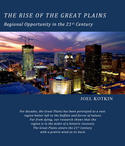







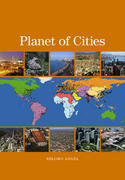










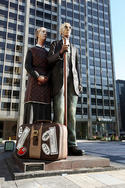






















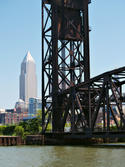


























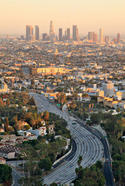

























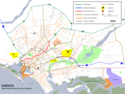























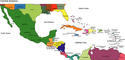





















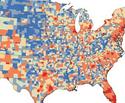










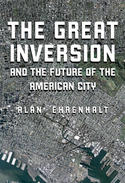





























































































































































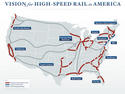




















































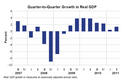







































































































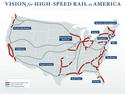





































































































































































































































































































































































































 , we borrowed heavily from the thinking of and acknowledged our intellectual debt to Neil Howe and the late William Strauss, the founders of generational theory.