Newgeography.com - Economic, demographic, and political commentary about places
In the United States, over 69 percent of all residents live in suburban areas. Across the globe many other developed countries are primarily suburban, while developing countries are increasingly suburbanizing. By 2050, an additional 2.7 billion people are anticipated to live in metropolitan regions around the world, and suburbs are a significant portion of this urban expansion. read more »
Yes, wealth concentration is insane. But the ways in which wealth is shifting are surprising—and give reason for a little optimism.
In an age of oligarchy, one should try to know one’s overlords—how they made their money, and where they want to take the country. By looking at the progress of the super-rich --- in contrast with most of us --- one can see the emerging and changing dynamics of American wealth. read more »
Lee Kwan Yew, one of the great political architects of our time, died a year ago, but the regime he established in Singapore remains entrenched in power. In fact, the parliamentary elections last year—to the surprise and consternation of Lee’s critics—enlarged his People’s Action Party (PAP) majority in Parliament from a record low of 60 percent to close to 70 percent. Despite talk of a “new normal” defined by more competitive politics, the city-state’s norms remain very much as they have been for the better part of a half century. read more »
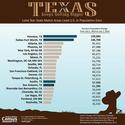
From 2009-11, Americans seemed to be clustering again in dense cities, to the great excitement urban boosters. The recently released 2015 Census population estimates confirm that was an anomaly. Americans have strongly returned to their decades long pattern of greater suburbanization and migration to lower-density, lower-cost metropolitan areas, largely in the South, Intermountain West and, most of all, in Texas. read more »
America’s baby boomers, even as they increasingly enter retirement, continue to dominate our political economy in ways no previous group of elderly has done. Sadly, their impact has also proven toxic, presenting our beleaguered electorate a likely Hobbesian presidential choice between a disliked, and distrusted, political veteran and a billionaire agitator most Americans find scary.
Throughout the campaign, boomers have provided the bedrock of support for both Hillary Clinton and Donald Trump. Bernie Sanders may have devastated Clinton among millennial voters, by almost 3-1, but she has more than offset that gap by winning overwhelming support from older voters. read more »
The Washington Metro system was shut down completely for a day recently to allow crews to inspect all of the power cables in the system. They found 26 cables and connectors in need of immediate repair.
This is just the latest in a series of safety problems and breakdowns that have plagued the system.
Metro has a large unfunded maintenance liability. This doesn’t surprise us because we expect American transit systems to have a backlog. read more »
Trump envisioned and created today’s city of white boxes for rootless new money types, who dominate the city even as they leave little mark here.
An old joke—that in heaven, the Italians do the cooking; in hell, they run the government—feels a lot darker now that American politics are taking an Italian turn. read more »
Density rules new development. From Florida to Texas to points west, city boosters herald a mixture of apartments and shops as an improvement on local 'density'. Dense development can be well designed, and can contribute to the form of a city, but the new density’s formulaic style is a crossbreed of strip shopping centers joined with 1980s apartment complexes. read more »
The increased likelihood of Donald Trump as the GOP presidential nominee, as evidenced by his win in Florida and other states last week, spells the end of the Republican Party as we have known it. Successful political parties unite interests under a broadly shared policy agenda. The Clinton Democrats may seem ethically challenged, condescending and bordering on dictatorial, but they share basic positions on many core issues and a unifying belief in federal power as the favored instrument for change. read more »
Journalists in older cities like New York, Boston or San Francisco may see the role of rail transit as critical to a functioning modern city. In reality, rail transit has been a financial and policy failure outside of a handful of cities. read more »
If you haven’t seen The Big Short, the movie version of Michael Lewis’s fascinating book about the explosion of the housing bubble, you should see it for the entertainment value alone. The film tells an important story with humor, relative accuracy and strong acting. It is so good that it has been nominated for an Academy Award for best picture. But the film largely ignores the experiences of the homeowners who signed notes and mortgages that backed the securities and derivatives that the film describes. A decade later, millions of working-class homeowners are still suffering from results of the greed and recklessness so well documented by the movie. read more »
The first knock on Walmart was that it gutted the mom-and-pop businesses of small-town America. So what happens to those towns when Walmart decides to leave?
What is the future of American retail? The keys might be found not only in the highly contested affluent urban areas but also in the countryside, which is often looked down upon and ignored in discussion of retail trends. read more »
There’s a philosophical debate about what is “sustainable.” The two dominant camps tend to advocate on behalf of either the hyper efficient dense city or bucolic rural self sufficiency. Personally, I’m not a fan of either. read more »
We regularly hear the argument that living in a compact city is more affordable than living in one that is more spread out. But what does the data actually show about the cost of housing in compact cities, and the cost of transport in these dense places? The relationship between those two expenses and the compactness of a city could tell us much about which kinds of places are most affordable, since those two costs together dominate household budgets. read more »
“No man needs sympathy because he has to work, because he has a burden to carry,” began Theodore Roosevelt, the U.S. president from 1901 to 1910. “Far and away the best prize that life offers is the chance to work hard at work worth doing.” read more »
For hundreds of years, New York City has been viewed by Americans and foreigners alike as the default capital of the United States. Though not the official political capital city, New York, New York has been commonly viewed, and certainly among its own residents, as the de facto center for American culture, music, sports, food, and art.
Although far more people migrate out of the New York area than come, it remains a primary destination for those who—in the words of Frank Sinatra—want to be a part of it. read more »
To the untrained eye, looking at a map of metropolitan America can lead one to the conclusion that at least half the nation’s land area is covered by urbanization. This is illustrated by Figure 1 below, which is a Census Bureau map of metropolitan areas as defined in 2013. These areas cover approximately 1.675 million square miles, which represents 47 percent of the US land area. read more »
California may be the country’s most important and influential state for technology, culture and lifestyle, but has become something of a cipher in terms of providing national political leaders. Not one California politician entered the 2016 presidential race in either party and, looking over the landscape, it’s difficult to see even a potential contender emerging over the coming decade. read more »
It was one of those Sundays in early January when you wake up to bright, stark sunlight streaming through your blinds.
My fellow Vancouverites might know the one. It’s been grey and dreary for months. You open your curtains to a brave new world and see, with sudden, startling clarity, all of the dust that had gathered in the cracks of your life while you had been hibernating through the long winter. read more »
In the past few months, many commentators have responded to a recent study that shows increasing death rates among middle-aged white Americans. Some have suggested that the increase is the consequence of material poverty resulting from economic restructuring and the neoliberal agenda over the last several decades. read more »
"Cities are fantastically dynamic places, and this is strikingly true of their successful parts, which offer a fertile ground for the plans of thousands of people."
– Jane Jacobs, The Death and Life of Great American Cities read more »
After Tuesday night’s primary results, the presidential race is now all but settled among Democrats, and the fractured Republican field seems far along on their suicide mission to hand the White House to Hillary Clinton, a woman who as many as two-thirds of all Americans dislike, according to a recent poll. read more »
This year’s Super Tuesday primaries will give both parties a chance to decide which of their candidates offers the best policy prescriptions to address the nation’s challenges. Surprisingly for a campaign that is supposedly focused on America’s future, many of the ideas being proposed echo proposals from America’s past. It’s almost as if the ghosts of not just Ronald Reagan, but Huey Long, William Jennings Bryan, and Norman Thomas have come back to haunt us, making this one of the scariest presidential campaign seasons in recent memory. read more »
Until now, the presidential campaign largely has been dominated by issues of class, driving the improbable rise of both Donald Trump and Bernie Sanders. But as we head toward Super Tuesday – which will focus largely on Southern states – racial issues may assume greater importance. read more »
This essay is part of a new report from the Center for Opportunity Urbanism called "America's Housing Crisis." The report contains several essays about the future of housing from various perspectives. Follow this link to download the full report (pdf).
It is not primarily the fault of land developers that the American suburbs are thought to be dysfunctional and mundane. The blame belongs largely to the influence of boiler-plate zoning regulations combined with design consultants who seek the most minimum criteria allowed by city regulations. read more »
This essay is part of a new report from the Center for Opportunity Urbanism called "America's Housing Crisis." The report contains several essays about the future of housing from various perspectives. Follow this link to download the full report (pdf).
When I was in college the suburbs were vilified. It was the mid-2000s, and here we were, enlightened coeds having one last hurrah in the flat Midwestern expanse before finding our place in the world, and there really was only one world to find: the city. read more »
Justin Chapman contributed research and editorial assistance to this piece. This essay is part of a new report from the Center for Opportunity Urbanism called "America's Housing Crisis." The report contains several essays about the future of housing from various perspectives. Follow this link to download the full report (pdf).
If the United States could remove current obstacles holding back members of the Millennial Generation from owning homes, the value of the housing market would increase by at least one trillion dollars over the next five years. Policies that would eliminate or sharply reduce financial obstacles that are currently hindering thirty somethings who want to start raising a family in the suburbs from buying a home would enable the construction and sale of as many as five million more homes between now and 2020. Residential investment represents about five percent of the country’s GDP, not counting the ancillary spending that results from such purchase. So any sound housing policy for the United States should begin and end with programs that allow these “missing Millennials” to join the ranks of America’s home owners. read more »
This essay is part of a new report from the Center for Opportunity Urbanism called "America's Housing Crisis." The report contains several essays about the future of housing from various perspectives. Follow this link to download the full report (pdf).
“...a social revolution was being made, not by storming barricades, but by leaping over them.”
Seven decades ago, the great post- war American suburbanization began. The seminal development was Levittown, built on potato fields in Nassau County, outside New York City. This archetypical development, with its small houses and modest lots, helped launch a suburbanizing trend that has accounted for virtually all of the population growth in the nation’s largest metropolitan areas. Today’s new houses are at least three times the size of the early Levittown houses, but they reflect the continued preference for suburban communities over the last half century. read more »
December was a record month. I’ve said goodbye to five different households of friends and neighbors. Two more are on the fence – and the fence is leaning precariously. I’m pretty aggressive when it comes to reaching out and making new friends. I practically drag people off the street and force them to eat dinner in my kitchen. But even I can’t make friends fast enough to keep up with the attrition. San Francisco is a tough town these days, even for the comfortably prosperous. read more »
In the coming decades, the United States is going to look a lot greyer. By 2050, the number of Americans over 65 will almost double to 81.7 million, with their share of the overall population rising to 21 percent from roughly 15 percent now, according to Census projections. More than 10,000 baby boomers are turning 65 every day.
Virtually every part of America will become more senior-dominated, but some more than others. read more »
“I live here. I’m from here. My whole family is here. We try to stay close together. This is America. I’m a Marine, I went to war three times. I served my country. It feels crazy not to be able to live in my own area where I grew up,” writes an East Liberty resident in Black Homes Matter, a booklet describing alternative approaches to neighborhood revitalization in the city of Pittsburgh. read more »
Los Angeles transit ridership has fallen even more than a recent Los Angeles Times front page story indicated, according to Thomas A. read more »
Neither Trump nor Sanders started the nation’s current class war—the biggest fight over class since the New Deal—but both candidates, as different as they are, have benefited.
Class is back. Arguably, for the first time since the New Deal, class is the dominant political issue. Virtually every candidate has tried appealing to class concerns, particularly those in the stressed middle and lower income groups. But the clear beneficiaries have been Trump on the right and Sanders on the left. read more »
The religious right, once a major power in American politics, is entering an uncomfortable dotage. Although numerous and well-organized enough to push Ted Cruz over the top in Iowa, the social conservative base, two-thirds of them born-again Christians, was of little use in New Hampshire, one of the most secular states in the Union. In the Granite State, Cruz did best among evangelicals but still slightly trailed Donald Trump among this one-quarter of New Hampshire Republicans. read more »
It is an article of faith among California’s political class that insufficient higher educational opportunities are a constraint on California’s economic and job growth. Just about every California economic development document includes a discussion of California’s desperate need for more college graduates. read more »
The economies of the Middle East and North Africa (MENA) are ill prepared for the coming population boom.
War, terrorism, repression and poverty are all common features in much of today’s Middle East and North Africa (MENA). How are the region’s demographics changing in the next few decades? And what is the prognosis for improved living conditions? read more »
Indulge me please as I tried to write my first sports column. No, I have no intention of applying for the job of newgeography.com’s sports editor and others have been far more prolific on this issue. I have been falling out of love with sports for decades now. read more »
As a former airline pricing analyst who once viewed the intercity bus as an inconsequential player in major markets, I am perhaps an unlikely champion of this mode’s potential. But since Megabus made its US debut just blocks from my Chicago office in 2006, I have become intrigued with this increasingly popular mode of intercity transportation. read more »
The rising cost of housing is one of the greatest burdens on the American middle class. So why hasn’t it become a key issue in the presidential primaries?
There’s little argument that inequality, and the depressed prospects for the middle class, will be a dominant issue this year’s election. Yet the most powerful force shaping this reality—the rising cost of housing—has barely emerged as political issue. read more »
The biggest story this election season is not Donald Trump or the fortunes of the two winners in Iowa, the unattractive tag team of Ted Cruz and Hillary Clinton. For all their attempts to seem current and contemporary, these candidates – and Trump as well – represent older, more established elements in American life, such as evangelicals, nativists and, in Hillary’s case, the ranks of middle-age women, seniors and public-sector unions. read more »
Imagine what it would cost to fly from New York to Los Angeles if the country tolerated a National Airline League? Answer: about what a “personal seat license” will cost at the new City of Champions Stadium in Los Angeles, say $28,000.
In the latest shifting of NFL deckchairs, the League raided St. Louis, San Diego, and Oakland — cities that need things to cheer about — and told team owners that they are free to move to Los Angeles, the city of tomorrow, because of its willingness, today, to chip in on the construction of a $2.66 billion stadium in Inglewood, a city within Los Angeles, for the Rams and possibly the Chargers. read more »
Changing demographics and the commodities crash have slowed down the development of poorer countries.
Perhaps it all started with a turn in China’s demographics. Demand growth for commodities has declined sharply from recent years and has resulted in a crash of global prices. Copper is down 54% from its post 2008 peak and down 25% this year alone. Crude oil is down 67% and 39% in the same time spans. In addition to softer demand, prices were negatively impacted by jumps in supply, most notably from shale energy producers in the United States. read more »
The corporate headquarters used to be the primary measure of a city’s economic clout. Saskia Sassen, while not ignoring headquarters, documented how in the age of globalization, the resurgence of the global city was driven by demand for financial and producer services, not more and bigger HQs. read more »
Is California the most conservative state?
Now that I have your attention, just how would California qualify as a beacon of conservatism? It depends how you define the term. read more »
Market forces in the airline business are, for the moment, a battle between state-owned carriers like Alitalia and Aeroflot, and start-up discounters like Ryanair and AirAsia. The conflict between state monopolies and under-capitalized start-ups is a perfect metaphor for the economic debates over subsidies and competition that divide much of the industrial world in America, Europe, and Asia. When my dreams come true, carriers like these will encircle the globe with two-hour, $49 short-hop flights. read more »
In this hyper-political age, perceptions about virtually everything from the weather to the Academy Awards are shaped by ideology. No surprise then that views on the economy and its trajectory also divide to a certain extent along partisan lines.
How the public perceives the economy will have a major impact on this year’s elections. That most are already discouraged cannot be denied; the negative sentiment has propelled the rise of such seemingly marginal political figures as Donald Trump and Bernie Sanders. But will the economy prove a bother to the Democrats? read more »
We are witnessing an explosion in digital technology that is reshaping cities… and resulting in a fundamental shift in the way people move and interact within the built environment.
New innovations have always had a profound impact on the evolution of cities, supporting commerce as well as addressing lifestyles. Making sense of the prevailing trajectory requires a new paradigm for city residents, visitors and those who govern. read more »
Typically very few people pay attention to the goings on in the small state of Hawaii. How bad can possibly things get there? Well, a lot of people recall Boston’s Big Dig, the nation’s largest infrastructure fiasco with a final price tag of about $15 billion. What if I tell you that tiny Honolulu is building a rail system that’s expected to cost at least one-half the cost of the Big Dig? On a per-capita basis it would be the nation’s largest infrastructure fiasco by far. read more »
So much talk of the Cleveland comeback with our downtown building boom and Republican National Convention-fueled makeover makes it difficult not to think about our mid-1990s civic renaissance. In 1995, The New York Times headline proclaimed " 'Mistake by the Lake' Wakes Up, Roaring" as downtown's stadiums and lakefront development created a "new face and new style of a city that for a long time had little panache."
But it wasn't just the media who became enchanted with our freshly minted charms — even the scholars were feeling it. The academics, however, had a Lake Erie-sized caveat. There was a divide in the region's comeback, noted the authors of the 1997 study "The Rise and Fall and Rise of Cleveland," with areas separated by characteristics of "capital investment and disinvestment, industrialization and deindustrialization, suburbanization and ghettoization, white flight and a black underclass, the growth of services, and a [high-skill and low-skill] dual economy." read more »
Housing affordability and its impact on middle income households around the world is emerging as a major concern throughout the developed world. The largest element in household budgets is housing, and house prices have skyrocketed relative to incomes in many metropolitan areas, especially those that have adopted strict land use regulation (particularly urban containment, as described below). read more »
We often associate suicide with the crises of youth, or the despair of the old. Yet the group that is now experiencing the biggest surge in suicide is in the Baby Boomer Generation; from about 14 percent in the year 2000 to about 19 percent in 2013. Baby boomers rose to 37.5% of all suicides in 2010. That is now the highest suicide rate of any existing age bracket (shown in figure 1). In order to find a way to reduce this percentage, one must understand why this is happening in the first place.
read more »
Among urban historians, Southern California has often had a poor reputation, perennially seen as “anti-cities” or “19 suburbs in search of a metropolis.” The great urban thinker Jane Jacobs wrote off our region as “a vast blind-eyed reservation.”
The Pavlovian response from many local planners, developers and politicians is to respond to this criticism by trying to repeal our own geography. Los Angeles’ leaders, for example, see themselves as creating the new sunbelt role model, built around huge investments Downtown and in an expensive, albeit underused, subway and light-rail network. read more »
General Electric, unhappy with a recent corporate tax increase in Connecticut, has now announced that it is relocating to Boston’s south waterfront. Indeed Connecticut’s tax climate is bad, ranking 44th according to the Tax Foundation, but GE’s move points to much bigger problems in the state. I examine this in my new piece over at City Journal. Here’s an excerpt: read more »
Every now and then, something happens to cause California’s comfortable establishment to celebrate the state’s economy. Recent budget surpluses and jobs data have provided several opportunities, never mind that these are hardly summary statistics. They don’t tell the complete story. read more »
The massive construction waste collapse last month in Shenzhen reflects a wider phenomenon: the waning of the megacity era. Shenzhen became a megacity (population over 10 million) faster than any other in history, epitomizing the massive movement of Chinese to cities over the past four decades. Now it appears more like a testament to extravagant delusion. read more »
When China’s navy looks beyond its coastal waters, which it increasingly does, it sees a kind of Great Wall. The Chinese call this the “First Island Chain,” a line of islands, some small, others huge, extending from the Japan archipelago to the north, the Ryuku island chain past Taiwan, and the Philippines to the south. The waters within this arc are considered an integral part of China itself. read more »
Which cities have the best chance to prosper in the coming decade? The question is a complex one, and as the economy changes, so, too, will the best-positioned cities. read more »
The 2015 state population estimates, recently released by the Census Bureau, indicate that interstate annual migration has begun to surge again. Between July 1, 2014 to June 30, 2015, up to 0.24% of US residents have migrated, returning to levels not experienced since the early 2000s. Interstate migration was just below the 2004 level of 0.25%, but trailed the much higher 2005 and 2006 levels (0.31% and 0.42%). By 2011, after the devastation of the housing bust and the Great Financial Crisis, interstate migration fell to 0.13% (Figure 1). read more »
While the white working class is shrinking in the US, it remains the largest voting block in the country. That may be why leaders of both parties are concerned that white working-class voters, especially in the Midwest and South, are supporting populist candidates like Donald Trump and Bernie Sanders. They don’t understand that many of these voters blame Wall Street, corporate leaders, and politicians – the East Coast establishment –for destroying their jobs and communities over the past few decades. read more »
In presidential election years, it is natural to see our political leaders also as the brokers of our economic salvation. Some, such as columnist Harold Meyerson, long have embraced politics as a primary lever of upward mobility for minorities. He has positively contrasted the rise of Latino politicians in California, and particularly Los Angeles, with the relative dearth of top Latino office-holders in heavily Hispanic Texas. read more »
Compared to what? That’s the question I kept asking myself as I explored Dubai for the second time. Like many people I have serious concerns about the glistening new city-state. But in the end I’ve decided that it’s all really a matter of degree, not kind. I came to this conclusion unexpectedly and begrudgingly. read more »
There is an emerging consensus about the destructiveness of excessive land use regulation, both with respect to its impact on housing affordability but also its overall impacts on economies. This is most evident in a recent New Zealand commentary.
New Zealand
Both the center-Left and center-Right have come together in agreement on the depth of New Zealand's housing affordability and its principal cause, overly restrictive urban planning regulations. read more »
Much is made, and rightfully so, about the future trends of America’s demographics, notably the rise of racial minorities and singles as a growing part of our population. Yet far less attention is paid to a factor that will also shape future decades: where families are most likely to settle.
However hip and cool San Francisco, Manhattan, Boston or coastal California may seem, they are not where families are moving. read more »
This is the introduction to a new report: “Building Cities for People” published by the Center for Demographics and Policy. The report was authored by Joel Kotkin with help from Wendell Cox, Mark Schill, and Ali Modarres. Download the full report (pdf) here.
Cities succeed by making life better for the vast majority of their citizens. This requires less of a focus on grand theories, architecture or being fashionable, and more on what occurs on the ground level. “Everyday life,” observed the French historian Fernand Braudel, “consists of the little things one hardly notices in time and space.” read more »
This could be how our experiment with grassroots democracy finally ends. World leaders—the super-rich, their pet nonprofits, their media boosters, and their allies in the global apparat—gather in Paris to hammer out a deal to transform the planet, and our lives. No one asks much about what the states and the communities, the electorate, or even Congress, thinks of the arrangement. The executive now presumes to rule on these issues. read more »
Why is Saudi Arabia suddenly the pit stop of choice for an impressive laundry list of major companies? How is it positioned among the growing number of Middle-Eastern industrial free zones? And should Rust Belt cities like Cincinnati look this way for answers?
If a nation's cities are the products of their ingredients, the Saudi Arabian pantry leaves much to be desired, with a grueling climate, a monopolistic economy built on the extraction of fossil fuels, looming regional threats, and conservative social practices that hinder freedoms, especially for women. read more »
I could be a pompous prick and brag about how I live in a compact, walkable, mixed use, transit served neighborhood in a seven hundred square foot apartment. My commute to work is measured in blocks not miles. Compared to the average North American I use tiny little sips of water and power. I already own all the physical stuff I’m ever going to need or want. I’m practically invisible in terms of my personal impact on the environment. Yet I enjoying a very high quality of life. read more »
Prior to the holidays City Journal published my major essay on Buffalo in their fall issue. Here’s an excerpt:
Local planner Chuck Banas observes that while Buffalo’s regional population today is roughly the same as it was in 1950, the urbanized footprint of the region has tripled. “Same number of people, three times as much stuff to pay for” is the quip—and it’s true. Physical capital must either be maintained at great cost in perpetuity or ignored and allowed to become a drag on the city. Between 1980 and 2011, according to the University of Buffalo Regional Institute, Buffalo-area governments issued permits for almost 60,000 new single-family homes—while regional population declined. Given the gargantuan scale of state aid to the region, this is clearly not market-rate development.
read more »
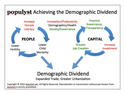
The experience of China provides a useful policy template for countries with booming populations in south and southeast Asia and in sub-Saharan Africa. The Chinese boom showed that a growing working-age population combined with a declining fertility ratio can result in a large demographic dividend if certain conditions are met. read more »
After three decades of breakneck urban growth, there are indications of a significant slowdown in the largest cities of China. This is indicated by a review of 2014 population estimates in the annual statistical reports filed individually by municipalities with the National Bureau of Statistics. read more »
“Hey-hey, ho-ho, Western culture’s got to go.
– Slogan from 1988 Stanford University protest led by Jesse Jackson.
In the aftermath of San Bernardino and Paris massacres, our cognitive leaders – from President Obama on down – have warned Americans not to engage in what Hillary Clinton has described as “a clash of civilizations.” But you can’t have a real clash when one side – ours – seems compelled to demean its traditions and values. read more »
“People rather than places” should be the focus of urban policy, according to Urban Economics and Urban Policy: Challenging Conventional Policy Wisdom. (paperback, Edward Elgar Publishing, 2015 $39.95). The book is among the most effective critiques of contemporary urban planning thought, characterized by such approaches as urban containment, compact city, and densification. The authors are Paul C. Cheshire, Max and Nathan and Henry G. Overman, all economists at the London School of Economics and Political Science. Cheshire has a long list of publications analyzing urban planning policy. The authors characterize the central thesis of urban planning’s misdirected priorities stating that:
"… that the ultimate objective of urban policy is to improve outcomes for people rather than places; for individuals and families rather than buildings."
read more »
Every age produces its own brand of oligarchs – feudal lords, banking gnomes, captains of industry. Our age has its own incipient ruling class, the tech oligarchs. read more »
America is suffering from the severest undersupply of housing since the end of the Second World War. Although population growth has slowed significantly since the 1950s and 1960s, production has slowed down even more so. It’s not surprising that homebuilding declined after the housing bubble burst in 2008, but from 2011 to 2015 it continued to fall, dropping almost a quarter. read more »
Rahm Emanuel, a man of obvious talent, drive, and leadership capacity, should have been an ideal person to run a big city like Chicago. Unfortunately, because of his stubborn unwillingness to admit and compensate for his flaws, that was not to be. After barely limping across the finish line in his re-election bid and tamping down the fallout from Moody’s downgrading the city’s debt to junk status, Emanuel has now been rocked by a truly huge scandal. read more »
New York City has prospered since the great recession of 2008, buoyed by an endless supply of free money from Washington that's elevated the stock and real estate markets. But the broader metro region has struggled, in an ominous sign of tougher times to come.
Little acknowledged in the discussion of New York's "tale of two cities" is something beyond the control of Mayor de Blasio: the fading of the city's once-thriving suburbs, even as the city grows more populous and more expensive. read more »
As 2015 wanes, many swimming in Florida’s new wave of growth are still being carried by a swift current. Everywhere one gazes, new apartments can be seen that accommodate some of the million-plus new residents who have moved here in the last five years. With over 140,000 people migrating to Florida from other states during 2014, and over 100,000 people moving to Florida from other countries, Florida’s GDP is predicted to have grown 3.2% in 2015, the highest in the country and well ahead of the national average. The tide has definitely come in.
For natives and long-term residents, it feels like everyone up north woke up one Tuesday morning and said, “Hey honey, let’s quit our jobs, move to Florida, and get an apartment overlooking the interstate.” From Tampa to Daytona, mid-rise wood frame structures loom over semi-trucks and cars that whizz by, a new voyeur culture in the making. read more »
At a recent breakfast in Washington, D.C., a rising young Republican senator explained the divisions in his party in a particularly succinct manner: a conflict between the donor base and the GOP rank-in-file.
“The donor class,” this senator told me, “really cares about one thing: lower taxes. Most in the party don’t see this as the most crucial issue.” read more »
It’s Black Friday and I thought I’d do something out of character for me, but entirely in keeping with the season. I went to a shopping mall. For those of you not used to the customs of the United States, the day after Thanksgiving is the official start of the Christmas present purchasing period. Most people have off from work, kids don’t have school, so everyone hits the malls. read more »
American cities seemed to be re-centralizing in the years immediately following the Great Recession, but new American Community Survey data indicates that, contrary to conventional wisdom, Americans continue to disperse though at a much reduced rate. The Census Bureau has just released the five year American Community Survey (2010-2014) small area data used by the City Sector Model to report on population trends within functional sectors of metropolitan areas. read more »
A study released a few weeks ago, conducted by Anne Case and Angus Deaton, documented a significant increase in the death rate among the white working class in the US, much of it due to suicide and substance abuse. In one interview about the report, Deaton suggests that the reason for the increase is the increasing economic insecurity this group faces. As he told Vox’s Julia Bellus, they have “lost the narratives of their lives.” Not surprisingly, op-eds flew right and left about this report, from Rod Dreher in The American Conservative and R.R. Reno in First Things to Paul Krugman in the New York Times and Harold Meyerson in the Washington Post. This study is the latest contribution to an expanding public discussion about changes in white working-class culture, which Jack Metzgar has traced in a series of posts here about books by Andrew Cherlin, Robert Putnam, and others. read more »
When I arrived in Los Angeles four decades ago, it was clearly a city on the rise, practicing its lines on the way to becoming the dominant metropolis in North America. Today, the City of Angels and much of Southern California lag behind not only a resurgent New York City, but also L.A.’s longtime regional rival, San Francisco, both demographically and economically. read more »
I was in Oklahoma City for the first time earlier this year. I got to see a lot of the things I’d heard about, such as the in-progress Project 180, a $175 million plan to rethink and rebuild every downtown street. read more »
To some, particularly in the green movement, this month’s Paris climate change summit represents something like the great synods of the early Christian era, where truth and policy, for example, on pastoral celibacy, were determined by the princes of the church. Some others, largely marginalized on the fringes of the Right, insist the whole extravaganza is part of a vast left-wing conspiracy to delude people into accepting a world government.
Lost in translation is that the Paris conference is largely a sideshow camouflaging a potentially epic struggle among national, regional and economic interests. This mundane reality is often lost amid the apocalyptic rhetoric, such as employed by Gov. Jerry Brown, that insists draconian action is necessary to avoid the species’ imminent “extinction.” read more »
Who would have thought that city planners in Oklahoma City would be more bike and pedestrian friendly, and better at taming car traffic, than those in Rome? read more »
Large declines in fertility will depend on raising female literacy above 80%.
Every few years, the United Nations Population Division releases demographic projections for the entire world and for every country, region and continent. Although the UN’s database is the most used source on demographics, the data is not equally reliable for all countries. read more »
The refugee crisis facing Western nations has begun to peak both demographically and politically. The United Nations has reported that more than 6.5 million Syrians have fled to neighboring countries and Europe, and even nations that until recently welcomed refugees are frantically trying to change immigration policy or protect borders. read more »
The Paris Climate Conference, convening this week, takes place in the very place where, arguably, the most dangerous exemplar of hysteria, the Islamic jihadi movement, has left its bloody mark. Yet the think tank mavens, academics, corporate shills and endless processions of bureaucrats gather in the City of Light not to confront the immediate deadly threat, but to ramp up their own grisly scenarios and Draconian solutions. read more »
There is a growing body of research on the consequences of excessive land use regulation. The connection between excessive land use regulation and losses in housing affordability, has been linked to the doubling or tripling of house prices relative to incomes in places as diverse as Hong Kong, the United States, Canada, Australia, New Zealand and the United Kingdom. read more »
At the site of real and immediate tragedy, an old man comes, wielding not a sword to protect civilization from ghastly present threats but to preach the sanctity of California’s green religion. The Paris Climate Change Conference offers a moment of triumph for the 77-year-old Jerry Brown, the apogee of his odd public odyssey. read more »
One theme I always hammer is that you have to look at proposed policy solutions in the context of the area where you want to apply them.
A great example of this is Portland’s Urban Growth Boundary (UGB). The UGB, a policy that limits suburban development outside of a line drawn around the Portland region, is widely admired and perhaps even seen a type of holy grail policy in terms of preventing sprawl. read more »
Will new American housing growth continue to reflect old methods, or will the land development, home building, and consulting industry retool, re-educate, and collaborate to create a new era of more attractive, livable, efficient, and environmentally responsible growth at attainable prices? read more »
The rising tech oligarchy, having disrupted everything from hotels and taxis to banking, music and travel, is also taking over the content side of the media business. In the process, we might see the future decline of traditional media, including both news and entertainment, and a huge shift in media power away from both Hollywood and New York and toward the Bay Area and Seattle. read more »
The major metropolitan area journey to work data is out, reported in the American Community Survey ‘s 2014 one year edition. The news is that there is not much news. Little has changed since 2010 despite all the talk about “peak car” and a supposed massive shift towards transit. Single occupant driving remains by far the largest mode of transport to work in the 53 major metropolitan areas (with over 1,000,000 population), having moved from 73.5 percent of commutes to 73.6 percent. read more »
This is Cherry Hill. It is by far the most desirable suburb in this part of southern New Jersey as measured by all the usual metrics. Property values are high. Public schools are great. The municipal government is lean and responsive. This is as good as the American Dream gets. read more »
Average pay varies widely among U.S. cities, but those chasing work opportunities would do well to keep an eye on costs as well. Salaries may be higher on the East and West coasts, but for the most part, equally high prices there mean that the fatter paychecks aren’t necessarily getting the locals ahead. read more »
My recent post about how urban planning decisions helped lead to the Motown sound in Detroit was inspired by David Maraniss’ new book Once in a Great City: A Detroit Story.
The book takes a deep dive into Detroit 1963, a city that was, although in some ways already in decline, in others near its zenith.
It’s a great read, in particularly for the depth of characterization. Too often Detroit writing is a story of heroes, villains, and victims. Maraniss rejects that approach and provides mostly nuanced portrayals of Detroiters that allows them to be the actual real, red-blooded human beings that they are. read more »
For decades, the decline in China’s birth rate was a big boost for the economy. What now?
This week, schadenfreude could have been a word invented for China experts if you judge by some of the commentary surrounding the country’s lifting of its one-child policy. Most got it right that the legacy of the one-child policy is now a problem for the Chinese economy because of a rapidly rising old-age dependency ratio (green line in the first chart below). This was tacitly acknowledged by the lifting of the policy. read more »
The adage “demographics are destiny” is increasingly being replaced by a notion that population trends should actually shape policy. As the power of projection grows, governments around the world find themselves looking to find ways to counteract elaborate and potentially threatening population models before they become reality. read more »
"He who controls Berlin, controls Germany, and who controls Germany, controls Europe." V.I. Lenin (but also attributed to Karl Marx, and sometimes to Otto von Bismarck)
About the time that Syrian refugees were on the march to Germany’s safe havens, I spent a few days in Berlin, which is not only the capital of reunified Germany, but the unofficial capital of the European Union, as well as being hipster ground zero. read more »
What is the Midwest? There’s been a lot of debate about this question among folks passionate about such thing. But it defies easy definition. Here are eleven ways various people have taken a crack at drawing the map.
Traditional Maps
1. The Northwest Territory
Start with the original Northwest Territory, now sometimes referred to as the Great Lakes region. This is the historic core of what we now think of as the Midwest. read more »
Sandy Ikeda and I have published a new Mercatus paper on the regressive effects of land use regulation. We review the empirical literature on how the effects of rules such as maximum density, parking requirements, urban growth boundaries, and historic preservation affect housing prices. Nearly all of the studies on the price effects of land use regulations find that — as supply and demand analysis would predict — these rules increase the price of housing. read more »
by Anonymous 11/11/2015
When’s the last time you heard some futurist or management guru suggest that in the future more of us will be working at the same desk doing routine tasks on a predictable working week schedule? No? That’s just one of many problems that advocates of limitless spending on public transport need to keep in mind in dealing with the issue of urban congestion. read more »
As part of its annual Survey on American Fears, Chapman University has tried to identify what Americans fear the most. A team of professors and students teamed up to retool last year’s survey tool and dig up American’s deepest horrors. read more »
This is the Executive Summary from a new report “A Question of Values: Middle-Income Housing Affordability and Urban Containment Policy" authored by Wendell Cox and published by the Frontier Centre for Public Policy. Ailin He, a PhD doctoral candidate in economics at McGill University served as research assistant. read more »
When we speak about the ever-expanding chasm that defines modern American politics, we usually focus on cultural issues such as gay marriage, race, or religion. But as often has been the case throughout our history, the biggest source of division may be largely economic.
Today we see a growing conflict between the economy that produces consumable, tangible goods and another economy, now ascendant, that deals largely in the intangible world of media, software, and entertainment. Like the old divide between the agrarian South and the industrial North before the Civil War, this threatens to become what President Lincoln’s Secretary of State, William Seward, defined as an “irrepressible conflict.” read more »
There’s a weird war raging these days. There are people who advocate high rise living and public transit in the urban core to the exclusion of other arrangements. And then there are folks who can’t hold their head up high in church on Sunday if they don’t live on a quarter acre lot out on the far fringe of the metroplex with four cars parked in front of their fully detached home. I always choose the thing in the middle. It’s called a “town”. I’m a Main Street kind of guy. read more »
A recent report published jointly by the World Bank and by Agence Française de Développement highlights the challenge of realizing Africa’s promised demographic dividend. The title Africa’s Demographic Transition: Dividend or Disaster? (see footnote 1) sums up the authors’ thesis that the dividend is not an automatic result of falling fertility ratios (TFR).
Instead, falling TFRs open a window of opportunity which can lead to a demographic dividend when governments and the public sector implement the requisite steps to capitalize on this opportunity. Lower child mortality usually leads to falling fertility ratios and improvements in women’s health. But most important among concurrent or subsequent initiatives are investments in education, and the provision of sufficient jobs to a booming working-age population. read more »
When I was back in Chicago over Labor Day, I had to check out the “big three” new public space projects there: the Riverwalk, Maggie Daley Park, and the 606 Trail. The Riverwalk is a spectacular project I already wrote about. Maggie Daley Park, a new playground just across Columbus Dr. from Millennium Park’s Frank Gehry designed band shell, has been controversial and got mixed reviews. But I really liked it. More importantly, kids seem to love it. read more »
It’s time to put an end to the urban legend of the impending death of America’s suburbs. With the aging of the millennial generation, and growing interest from minorities and immigrants, these communities are getting a fresh infusion of residents looking for child-friendly, affordable, lower-density living. read more »
With more than $10 billion already invested, and much more on the way, some now believe that Los Angeles and Southern California are on the way to becoming, in progressive blogger Matt Yglesias’ term, “the next great transit city.” But there’s also reality, something that rarely impinges on debates about public policy in these ideologically driven times.
Let’s start with the numbers. If L.A. is supposedly becoming a more transit-oriented city, as boosters already suggest, a higher portion of people should be taking buses and trains. Yet, Los Angeles County – with its dense urbanization and ideal weather for walking and taking transit – has seen its share of transit commuting decline, as has the region overall. read more »
City of Auckland Chief Economist Chris Parker has called for establishment of a house price to income ratio objective of 5.0, to be achieved by 2030. The recommendation was included in a report commissioned by Auckland Mayor Len Brown and Deputy Mayor Penny Hulse.
Housing Affordability and Urban Containment Policy
The recommendation has been brought about in response to Auckland's severely unaffordable housing. Recent reports indicate a price to income ratio over 9.0, at least triple that of New Zealand to the early 1990s. read more »
Will Britain vote before the end of 2017 to stay in the European Union? Or will it leave, launching the much-debated Brexit? As the Lions face the Chiefs this Sunday in London, a perhaps related question is whether London should be awarded a franchise in the National Football League. Many Londoners would love nothing more than for the city to be granted a team, even if that team turns out to be the Jacksonville Jaguars, who are considering whether to become the first NFL exiles. If Britain were to leave the EU but join the NFL, maybe the last act of the American revolution will be a reverse takeover of England. read more »
By finally backing away from its one-child policy, China would seem to be opening the gates again to demographic expansion. But it may prove an opening that few Chinese embrace, for a host of reasons.
Initially, the one-child policy made great sense. The expansion of China’s power under Mao Zedong was predicated in part on an ever-growing population. Between 1950 and 1990, the country’s Maoist era, the population, roughly doubled to 1.2 billion, according to U.N. figures. Deng Xiaoping’s move to limit population growth turned out to be a wise policy, at least initially, allowing China to focus more on industrialization and less on feeding an ever-growing number of mouths. read more »
California has a long history of boom and bust cycles, but over the past 25 years or so, California’s cycles appear to be becoming more volatile, with increasing frequency, higher highs, and lower lows. The fast-moving business cycle may not provide the time necessary for many people to recover from previous busts, and may be too limited in its impact. Even now, 22 of California’s 58 counties have unemployment rates of 7.5 percent or higher. Eleven California counties have unemployment rates of at least nine percent. And these, we are told, are the best of times. read more »
The old issues of class, race and geography may still dominate coverage of our changing political landscape, but perhaps a more compelling divide relates to generations. American politics are being shaped by two gigantic generations – the baby boomers and their offspring, the millennials – as well as smaller cohorts of Generation X, who preceded the millennials, and what has been known as the Silent Generation, who preceded the boomers. read more »
The US preference for detached housing remains strong, according to the newest data just released in the 2014 American Community Survey, by the United States Census Bureau. In 2014, detached house and represented 82.4 percent of owned housing in the United States. This is up 1.8 percentage points from the 80.6 percent registered in the 2000 census. The increase may be surprising, given the efforts of planners to steer people into higher density housing, especially apartments. read more »
From the inception of the Soviet Union, transformation was built, quite consciously, on eliminating those forces that could impede radical change. In many ways, the true enemy was not the large foreign capitalists (some of whom were welcomed from abroad to aid modernization) but the small firm, the independent property owner. read more »
I’m reading Once in a Great City: A Detroit Story by David Maraniss, a book I plan to review for City Journal. But I want to highlight something briefly that really caught my eye about Motown Records. It’s no secret Detroit punches above its weight in musical influence, and the Motown sound was clearly a big part of that. Maraniss asks “Why Detroit? What gave this city its unmatched creative melody?” He lays out his theory of the case with regards to Motown Records. read more »
Californians attend innumerable conferences on housing and economic growth. Year after year, in counties across California, the same people show up to say and hear the same things. Mostly what they say and hear is naive, and nothing ever changes.
I was reminded of this when I saw a report on what appears to have been a typical conference at the Harris Ranch on Growing the Central Valley Economy. read more »
It is massively larger than 11 million illegals.
Hans Rosling, co-founder of Gapminder, calls it “the biggest change of our time”. It is Africa’s population growth from 1 billion people today to 2.5 billion by 2050 and 4 billion by 2100. read more »
One of the frequently cited justifications for urban planning is to mitigate negative externalities --- detrimental impacts that people or organizations impose on others in society. While acknowledging this, New Zealand Deputy Prime Minister Bill English charged that urban planning itself has become the externality, by virtue of its impact on house prices, equality and the economy in New Zealand. read more »
What is the endgame of the contemporary green movement? It’s a critical question since environmentalism arguably has become the leading ideological influence in both California government and within the Obama administration. In their public pronouncements, environmental activists have been adept at portraying the green movement as reasonable, science-based and even welcoming of economic growth, often citing the much-exaggerated promise of green jobs. read more »
A World Bank report released earlier this year featured a jarring statistic: 200 million people moved to East Asia’s cities between 2000 and 2010. That figure is greater than the populations of all but five of the world’s countries. read more »
This is Jessie. She’s a well educated thirty year old professional with a good income. She could live anywhere she wants. She was offered excellent positions with good companies in San Francisco. While she was excited by the opportunity to live in a top tier coastal city she was smart enough to actually run the numbers before taking a job. read more »
In 2008, when Chicago inked a deal to privatize its parking meters, a chorus of groans ensued. To say that the deal was widely panned is putting it mildly. Its detractors say the city accepted too little in exchange for turning over the operations of its parking meters for a near-eternal 75 years to a private company that promptly raised the prices and sued the city. To many, the deal appeared desperate and irresponsible; a prime instance of a city in the red buckling to the ambitions of a private operator and getting little in return except for a pittance of one-time cash. read more »
Oil and gas companies have the worst public image of any industry in the United States, according to Gallup. But it’s well-loved in a swathe of the U.S. from the northern Plains to the Gulf Coast, where the boom in unconventional energy production has transformed economies, enlivened cities and reversed negative demographic trends. read more »
The salary gap – where top-end incomes are rising faster than middle- and lower-end salaries – plays a large role in the affordability of middle-class housing along with interest rates and prices. Which factor has more influence depends on where you live and how you make your living. read more »
by Anonymous 10/12/2015
California has always been friendly ground for new ideas and bold proposals. That was a good thing when California’s economic and social policies encouraged middle-class opportunity, entrepreneurship, and social mobility, way back in the 1960s. But the contemporary California political elite tends to pioneer policies that endanger the spirit of opportunity that once made California great. read more »
There is an effective lobby for building light rail, including in cities such as Houston. But why build light rail? To reduce car use? To improve mobility for low-income citizens? This certainly seems a worthwhile objective, with the thousands of core-city, low-income residents whose transit service cannot get them to most jobs in a reasonable period of time.
ut rather than accept the flackery that accompanies these projects, maybe we should focus on effectiveness, judged by ridership, and the impact of such expensive projects on the transportation of the transit-dependent. read more »
The city sidewalk today is pretty empty, with online shopping and social media having replaced shoe leather on pavement. Restrictions in the name of safety have also become more common since 9/11. One result of these trends is a movement called Art in Odd Places : the work of artists that use public space itself as a huge, blank canvas. Orlando is the most recent city to experiment in this fashion. This month, more than fifty artists there reasserted the right to an unfettered exchange of ideas in public space, reinventing the sidewalk. read more »
Demographers frequently remind us that the United States is a rapidly aging country. From 2010 to 2040, we expect that the age-65-and-over population will more than double in size, from about 40 to 82 million. More than one in five residents will be in their later years. Reflecting our higher life expectancy, over 55% of this older group will be at least in their mid-70s. read more »
by Anonymous 10/07/2015
Urban regions are significantly more important than any one city located within them. Housing, transportation, economy, and politics help produce uneven local geographies that shape the individual identities of places and create the social landscapes we inherit and experience. As such, decisions made within one city can ripple through the entire urban region. When affordable housing is systematically ignored by one city, neighboring cities become destinations for those who cannot afford higher housing costs. read more »
Cities get ranked in numerous ways — by income, hipness, tech-savviness and livability — but there may be nothing more revealing about the shifting fortunes of our largest metropolitan areas than patterns of domestic migration.
Bright lights and culture may attract some, but people generally move to places with greater economic opportunity and a reasonable cost of living, particularly affordable housing. read more »
Once a fringe idea, the notion of using technology to allow humanity to “decouple” from nature is winning new attention, as a central element of what the Breakthrough Institute calls “ecomodernism.” The origins of the decoupling idea can be found in 20th century science fiction visions of domed or underground, climate-controlled, recycling-based cities separated by forests or deserts. read more »
In a rare burst of independence and self-interest, the California Legislature, led by largely Latino and Inland Democrats, last month defeated Gov. Jerry Brown’s attempt to cut gasoline use in the state by 50 percent by 2030. These political leaders, backed by the leftovers of the once-powerful oil industry, scored points by suggesting that this goal would lead inevitably to much higher fuel prices and even state-imposed gas rationing. read more »
I’ve observed many times that cities outside of the very top tier almost always come across as generic, cheesy, and trying too hard in their marketing efforts. They highlight everything about their city that is pretty much a variant on things everybody else already has (beer, beards, bicycles, etc) while downplaying the things that truly reflect their community. Call it “aspirational genericism.” read more »
Households are offered a great deal of advice which seems intended to dissuade them from using private, motorised transportation — that is, cars. Information about the negative fallout of car ownership — environmental and otherwise — has often been coloured with ethical overtones. Yet, despite those exhortations and the many well-known and indisputable reasons to cut back, extensive reliance on personal motor transport remains unchanged, if not growing. read more »
How many Africans will have access to electricity by 2050?
According to the World Bank’s latest figures, 64.6% of the population of sub-Saharan Africa lacked access to electricity in 2012, or a total of 572 million people. Across the world, 1.09 billion have no access to electricity. So, sub-Saharan Africa accounts for more than half the total. read more »
This is the abstract from a new report “Putting People First: An Alternative Perspective with an Evaluation of the NCE Cities ‘Trillion Dollar’ Report,” authored by Wendell Cox and published by the Center for Opportunity Urbanism. Download the full report (pdf) here.
A fundamental function of domestic policy is to facilitate better standards of living and minimize poverty. Yet favored urban planning policies, called "urban containment" or "smart growth," have been shown to drive the price of housing up, significantly reducing discretionary incomes, which necessarily reduces the standard of living and increases poverty. read more »
Seven years after the last housing debacle devastated the world economy, we may be on the verge of another, albeit different, bubble. If the last real estate collapse was created due to insanely easy lending policies aimed at the middle and working classes, the current one has its roots largely in a regime of cheap money married to policies of planners who believe that they can shape the urban future from above. read more »
That America has an aging population is well known. Estimates data released this summer by the Census Bureau illustrate this transition in progress – and paint a picture of an actual shrinking number of children in many major American metro areas. read more »
For the last century, one enduring cliché has been that when America sneezes, the world catches a cold. But now the big power with the sniffles is China.
China’s rise has been the most profound development of the past half century, turning a moribund, rural country into a highly urbanized economic superpower. Hundreds of millions have been lifted out of poverty, and markets around the world reshaped. China alone accounted for a whopping 24.1% of global economic growth from 2003 to 2013. according to the IMF. read more »
Race and ancestry, or countries/peoples of origin, are popular topics, with large amounts of data attempting to help us understand the ethnic nature of the country. In this paper I attempt a summary description of the intersections of race, ancestry, and genome, at the state level, but I hasten to emphasize that the “findings” are tentative, highly uncertain, and based on astoundingly unreliable data. I hope some readers may point the way to better data or safer interpretations. read more »
“They don’t know history, but they are making it. But what are they making?”
– Victor Serge, “The Conquered City,” 1932
In contrast to the physical sciences, and even other social sciences, the study of history is, by nature, subjective. There is no real mathematical formula to assess the past. It is more an art, or artifice, than a science. read more »
As a San Franciscan I get a lot of raised eyebrows when I mention that I recently bought property in Cincinnati. “Huh?” Then I walk them through it. Here’s the mom and pop business district along Hamilton Avenue in the Northside neighborhood during a recent Summer Streets event. This is a classic 1890’s Norman Rockwell Main Street with a hardware store, a Carnegie library, barbers, cafes, bars, funky little shops, and seriously good architectural bones. read more »
by Anonymous 09/14/2015
Governor Jerry Brown recently released a plan to find funds to fix California’s roads. Infrastructure funding is one of the essential roles of government, so it’s refreshing to hear that our otherwise dysfunctional state government is taking action on this front. But who will be paying for it? Those who use the roads most, that is, California’s drivers, who disproportionately tend to be members of the middle and working classes. read more »
The massive, ongoing surge of migrants and refugees into Europe has brought up horrendous scenes of deprivation, along with heartwarming instances of generosity. It has also engendered cruel remembrances of the continent’s darkest hours. But viewed over the long term, this crisis may well be the prelude to changes that could dissipate, and even overturn, some of the world’s most-storied and productive cultures. read more »
St. Petersburg, Peter the Great’s new European style capital for imperial Russia, is the most visited city for tourists in Russia. It has a ton of great buildings, energetic street life in its smallish central core, and world-renowned cultural institutions like the Hermitage Museum and the Mariinsky Theater. read more »
Many analysts—usually planners—have been regularly offering a wealth of exhortations concerning how uneconomical it is to purchase, operate and maintain a private car. Is this a valid assertion of a household economic burden? And what is the likelihood that the advice will ultimately prove useful? read more »
Japan reached "peak people" in 2011, when its population reached 127.4 million residents. From that point, all trends point to significant population losses. But, there is by no means unanimity on the extent of those population losses. Population projection is anything but an exact science, and Japan provides perhaps the ultimate example.
Dueling National Population Projections read more »
We all tend to have fond memories of our greatest moments, and for Los Angeles, the 1984 Olympics has served as a high point in the city’s ascendency. The fact that those Summer Games were brilliantly run, required relatively little city expenditure and turned a profit confirmed all those things we Angelenos loved about our city – its flexibility and pragmatism and the power of its civic culture. read more »
One of the common criticisms leveled at people who promote urban living goes something like this. “Cities are great for college kids, people starting off in their careers, bohemians, and maybe some older empty nesters with money who have a taste for theater and art. But most people have families and tight budgets. Suburbia is the only place that provides a high quality, safe, affordable life for regular folks with children.” read more »
For generations the broad swath of America along the Great Lakes has been regarded as something of a backwater. Educated workers and sophisticated industries have tended to gather in the Northeast and on the West Coast, bringing with them strong economic growth. read more »
In recent years there has been a proliferation of traffic congestion rating reports. Tom Tom and Inrix are now making it possible to compare traffic congestion in Louisville or even Lexington to Moscow or Paris. The Castrol Magnatic Start-Stop Index adds places like Jakarta and Bangkok. read more »
As its former rivals in Asia and Europe slip into torpor and even decline, America, almost despite itself, is recovering its perch as the world’s bastion and predominant power. This is all the more remarkable given that our government is headed by someone who largely rejects traditional ideas about American exceptionalism, preferring to “lead from behind.” read more »
If there’s one thing that’s a nearly universal anxiety among cities, it’s brain drain, or the loss of educated residents to other places. I’ve written about this many times over the years, critiquing the way it is normally conceived.
Since brain drain seems to be a major concern in shrinking cities, I decided to take a look at the facts around brains in those places. Looking at the 28 metro areas among the 100 largest that had objective measures of shrinkage – in population and/or jobs – between 2000 and 2013, I looked what what happened to their educational attainment levels. read more »
The election of Barack Obama promised to inaugurate the dawn of a post-racial America. Instead we seem to be stepping ever deeper into a racial quagmire. The past two month saw the violent commemoration of the Ferguson protests, “the celebration” of the 50th anniversary of the Watts riots, new police shootings in places as distant as Cincinnati and Fort Worth, and renewed disorder, tied to a police-related shooting, in St. Louis last week. read more »
I recently made a couple of tweets/Facebook posts pointing out that market declines threaten California’s budget surplus. I referenced articles in the WSJ and Bloomberg, and I thought the observation was non-controversial—almost banal. read more »
The current state of the Republican Party may seem like a demolition derby, but there’s an equally fascinating, if less well-understood, conflict within the Democratic Party. In this case, the disruptive force is largely Silicon Valley, a natural oligarchy that now funds a party teetering toward populism and even socialism. read more »
In the fall of 2005, many saw in postdiluvial New Orleans another example of failed urbanization, a formerly great city that was broken beyond repair.Yet 10 years after a catastrophe that drove hundreds of thousands of its citizens away, the metro area has made an impressive comeback. read more »
Looking at the things now decried by so many urbanists, ranging from urban renewal to freeways to restrictive zoning that makes building difficult, it’s notable how many of them are well-nigh ubiquitous. Surely some city, somewhere must have realized that these were mistakes, if mistakes they were. But very few did.
Why is that? read more »
According to the new United Nations World Population Prospects: The 2015 Revision, the population of the world is projected to rise from 7.3 billion in 2015 to 11.2 billion in 2100. This represents a 53 percent increase. However, over the period, population growth will moderate substantially. This is indicated by the annual growth rate the first year (2015 to 2016), at 1.1 percent, compared to the last year (2099 to 2100) at 0.1 percent. read more »
The people we associate with don't necessarily live right next to us. This is more common than ever before, as social media and other communication technologies allow us to stay connected with people across the globe. But as our urban social networks – the ones that define our lives in cities – continue to transcend traditional geographic boundaries, we must strike a balance along this line. read more »
St. Petersburg and Moscow are typical destinations in Russia, but if you’re looking for other places to visit, where do you go? I can’t claim to answer that question as I have not fully surveyed the realm, but I did visit the city of Kazan for a day, so want to share a few observations and photos. read more »
For decades, California's housing costs have been racing ahead of incomes, as counties and local governments have imposed restrictive land-use regulations that drove up the price of land and dwellings. This has been documented by both Dartmouth economist William A Fischel and the state Legislative Analyst's Office. read more »
New urbanist utopians love to decry Americans’ love of the single family home, and to extol the virtues of a higher-rising denser city as more efficient and environmentally responsible. Without expounding on the immensely destructiveness of such a utopian viewpoint to physical and psychological well-being of a large majority of people, nor of the scientific absurdity of the claim of efficiency and environmental goodness, I will for now present only some maps and data of what the real world is like. read more »
I filmed this story in Cincinnati’s Over-the-Rhine neighborhood. As always, my far more talented friend Kirsten Dirksen did the editing. There are also glimpses of other nearby neighborhoods such as East Walnut Hills and some views for the city taken from across the Ohio River in Kentucky. Michael Uhlenhake is an architect and long time resident of the city. The story of his own practice and home renovation follows the trajectory of the city as a whole. read more »
Barack Obama has always wanted to be a transformational president, and in this, at least, he has been true to his word. The question is what kind of America is being created, and what future does it offer the next generation. read more »
I was in Russia last week and plan to share a few relevant notes from the trip. Since you can easily find better photos of places like the Kremlin than I’ll ever take online, when it comes to Moscow I’m going to focus on more planning and transport items. There’s a lot of other commentary I might make, and if you want to read it, be sure to sign up for my exclusive content by email if you haven’t already, because I may write up further observations on the political scene there. read more »
A review of the most recent internal migration (domestic migration) in England and Wales reveals some surprises. The latest data covers the one year ended June 30, 2014. It was published by the Office of National Statistics (ONS) and provides estimates at least down to the local authority area (municipality). In this regard, is positioned along with a number of European nations and the Australian Bureau of statistics well ahead of the US Census Bureau, which provides estimates only to the county level. read more »
By the fifth word of Designed for the Future, Jared Green had almost lost me. By the end, he hadn’t quite gained me. This slim, visually interesting handbook presents “80 practical ideas for a sustainable world” from the noted author of The Dirt, a weekly blog sponsored by the American Society of Landscape Architects. Green’s earnest mission is to find hope for the future, and with this book, he edits a collection of essays that points to some projects that do. read more »
Public concern about illegal immigration, particularly among older native-born Americans, as well as the the rising voting power of Latinos, all but guarantees that immigration is an issue that will remain at the forefront in the run-up to the 2016 elections. Nor is this merely a right-wing issue, as evidenced in the controversy over “sanctuary cities”; even the progressive Bernie Sanders has expressed concern that massive uncontrolled immigration could “make everybody in America poorer.” read more »
Twenty years ago, America’s cities were making their initial move to regain some of their luster. This was largely due to the work of mayors who were middle-of-the-road pragmatists. Their ranks included Rudy Giuliani in New York, Richard Riordan in Los Angeles, and, perhaps the best of the bunch, Houston’s Bob Lanier. Even liberal San Franciscans elected Frank Jordan, a moderate former police chief who was succeeded by the decidedly pragmatic Willie Brown. read more »
Across the nation, progressives increasingly look at California as a model state. This tendency has increased as climate change has emerged as the Democratic Party’s driving issue. To them, California’s recovery from a very tough recession is proof positive that you can impose ever greater regulation on everything from housing to electricity and still have a thriving economy. read more »
Everywhere I go it seems there’s some kind of housing crisis. In some places home values are dropping precipitously, people are unable to sell and move on, and formerly middle class homes are being abandoned or converted to poorly maintained rental properties. In other places home values and rents are obscenely high and ordinary people and essential workers are being driven out of whole cities and counties. The national economy has bifurcated and the shrinking middle class is reflected in a two tiered housing market. I’d like to explore the root causes of the situation. read more »
In hip, and even not-so-hip, circles, markets, restaurants and cultural festivals across the country, local is in. Many embrace this ideal as an economic development tool, an environmental win and a form of resistance to ever-greater centralized big business control.
Yet when it comes to areas being able to choose their urban form and for people to cluster naturally – localism is now being constantly undermined by planners and their ideological allies, including some who superficially embrace the notion of localism. read more »
Congratulations Boston! Your rejection of the "honor" of representing the US as its candidate for the 2024 Summer Olympics is an inspiring example of government performing its obligation to taxpayers and their hard earned money. Those of us who think that government has a responsibility to wisely use taxpayer money sometimes forget that Massachusetts enacted Proposition 2 1/2 not long after California's fabled Proposition 13. read more »
Preservation seems like an easy idea to support. Who would be against it? History, character, and a sense of place are what great communities are all about. They generate tourism and makes us all culturally richer. Landowners in historic districts even enjoy higher land values than nearby landowners in newer, usually blander developments. What’s not to like?
Apparently, a lot. Cities unilaterally impose ordinances from time to time, regulating building size, shape and use, and rarely are there complaints, although the changes affect everyone in the city. read more »
During a tour to Paris, Bruce Springsteen explained that his dream was for the US to adapt a Swedish style welfare state. The famous musician is far from alone in idealizing Nordic policies. The four Nordic nations (Denmark, Finland, Norway and Sweden) are often regarded as prime role-models the policies to be emulated by others. Internationally, advocates of left of centre policies view these countries as examples of how high tax social democratic systems are viable and successful. read more »
Few people have had more influence on thinking about cities than the late Jane Jacobs.
The onetime New Yorker turned Torontonian, Jacobs, who died in 2006, has become something of a patron saint for American urbanists, and the moral and economic case she made for urban revival has been cited by everyone frompundits and think tanks to developers. read more »
This is the first section of a new report authored by Tory Gattis for the Center for Opportunity Urbanism titled Maximizing Opportunity Urbanism with Robin Hood Planning. Download the full report (pdf) here.
Across America and the developed world, we face a well-reported crisis of income stagnation, rising inequality, a declining middle class, and a general lack of broad prosperity. Yet contemporary urban planning seems disconnected from this crisis, focusing instead on pedestrian aesthetics, environmentalism, and appealing to the supposed preferences of the wealthy and the “creative class.” read more »
China's cities continue to add population at a rapid rate, despite a significant slowdown in population growth. Although overall population is expected to peak around 2030, the urban population will continue growing until after 2050. China’s cities will be adding more than 250 million new residents in the next quarter century, according to United Nations projections. China's cities will add nearly as many people as live in Indonesia, the world's fourth largest country, more than live in Brazil and 10 times as many as live in Australia. read more »
Racial and economic inequality may be key issues facing America today, but the steps often pushed by progressives, including minority politicians, seem more likely to exacerbate these divisions than repair them. In a broad arc of policies affecting everything from housing to employment, the agenda being adopted serves to stunt upward mobility, self-sufficiency and property ownership.
This great betrayal has many causes, but perhaps the largest one has been the abandonment of broad-based economic growth traditionally embraced by Democrats. Instead, they have opted for a policy agenda that stresses environmental puritanism and notions of racial redress, financed in large part by the windfall profits of Silicon Valley and California’s highly taxed upper-middle class. read more »
Recently I grouped all US counties into several categories, from True Believers R and D, R and D leaning groups, and also those areas that are more equally divided. In anticipating the 2016 election, I take here a brief look at a small number of counties (2012 data) that are extreme cases of R voting (over 90%, 28 counties), of D voting (over 80%, 26 counties), and of 50:50 voting (39 counties from 49.7 to 50.3 D vote). These are also shown on the maps. read more »
Frequently I see examples of metro areas comparing themselves to other, more successful metro areas. Metro area movers and shakers take a deep dive into the intricacies of what makes a "good" place tick, and try to implement the takeaways in their metro. This is a reasonable action, but I believe it misses the point. There is more to examine by taking a deep dive within your own metro than looking at another. read more »
Manufacturing may no longer drive the U.S. economy, but industrial growth remains a powerful force in many regions of the country. Industrial employment has surged over the past five years, with the sector adding some 855,000 new jobs, a 7.5% expansion.
Several factors are driving this trend, including rising wages in China, the energy boom and a growing need to respond more quickly to local customer demand and the changing marketplace. read more »
In a number of Western world cities, there is rising concern about foreign housing purchases which may be driving up prices for local residents. Much of the attention is aimed at mainland Chinese buyers in metropolitan areas where housing is already pricier than elsewhere. The concern about housing affordability is legitimate. However, blaming foreigners misses the point, which is that the rising prices are to a large degree the result of urban containment policies implemented by governments. read more »
Will Rogers famously stated, “I am not a member of any organized political party. I am a Democrat.” And he was not so far from the truth. The old Democratic Party was a motley collection of selected plutocrats, labor bosses, Southern segregationists, smaller farmers, urban liberals and, as early as the 1930s, racial minorities. It was no doubt a clunky coalition but delivered big time: winning World War II, pushing back the Soviet Union and making it to the moon while aiding tens of millions of Americans to ascend into the middle class. read more »
Urban risk may be understood as a function of hazard, exposure, and vulnerability.1 In metro New Orleans, Katrina-like storm surges constitute the premier hazard (threat); the exposure variable entails human occupancy of hazard-prone spaces; and vulnerability implies the ability to respond resiliently and adaptively—which itself is a function of education, income, age, social capital, and other factors—after having been exposed to the hazard. read more »
It’s the best of times and the worst of times in Los Angeles.
Los Angeles is now attracting notice as a so-called “global city,” one of the world’s elite metropolises. It is ranked #6 in the world by AT Kearney and tied for 10th in a report by the Singapore Civil Service College that I contributed to. Yet it also has among the highest big city poverty rates in the nation, and was found to be one of the worst places in America for upward mobility among the poor. Newspaper columns are starting to refer to LA as a “third world city.” read more »
In our modern economy, the biggest wellspring of new jobs isn’t the information sector, as hype might lead some to think, but the somewhat nebulous category of business services. Over the past decade, business services has emerged as easily the largest high-wage sector in the United States, employing 19.1 million people. These are the white-collar jobs that most people believe offer a ladder into the middle class. read more »
My latest piece is online in City Journal and is called “Chicago’s Financial Fire.” It’s a look at the ongoing financial crisis in that city, which has all of a sudden gotten very real thanks to a downgrade of the city’s credit rating to junk by Moody’s. Here’s an excerpt: read more »
Few terms are more misunderstood than "urban sprawl." Generally, it refers to the spatial expansion (dispersion) of cities and has been use to describe urbanization from the most dense (least sprawling) in the world (Dhaka, Bangladesh), the most dense in the United States (Los Angeles) and also the least dense in the world (such as Atlanta and Charlotte, read more »
Few factors have had a greater impact on recent urban growth than communications technology (ICT) and property investment strategies. The evolution of both is transforming space and social interaction at an unprecedented pace and depth, with mixed results. As these maturing forces are increasingly taken for granted, the next generation of urban growth should accommodate them in ways that preserve urban vitality and citizen livelihoods.
The jetpack that wasn’t read more »
Recent setbacks for social conservative ideals – most particularly on same-sex marriage – have led some to suggest that traditional values are passé. Indeed, some conservatives, in Pat Buchanan’s phrase, are in “a long retreat,” deserted by mainstream corporate America sporting rainbow logos. Some social conservatives are so despondent that they speak about retreating from the public space and into their homes and churches, rediscovering “the monastic temperament” prevalent during the Dark Ages. read more »
Home-made housing (left): Refugee families from Mindanao set up shop-houses in the grounds of the mosque in Quiapo. Quiapo contains a number of significant sacred sites for Catholic pilgrimages and festivals. Islamic refugees are making a living in the markets, even as some have sought refuge inside their own sacred site. read more »
The next culture war will not be about issues like gay marriage or abortion, but about something more fundamental: how Americans choose to live. In the crosshairs now will not be just recalcitrant Christians or crazed billionaire racists, but the vast majority of Americans who either live in suburban-style housing or aspire to do so in the future. Roughly four in five home buyers prefer a single-family home, but much of the political class increasingly wants them to live differently. read more »
The Minneapolis-St. Paul Metropolitan Council is gambling $8.7 million on a project to alleviate pedestrian congestion that might exist in 5 to 10 years if we’re somehow able to build two additional light rail lines and they are operating at full capacity for 10 days a year.
That’s like buying flood insurance on the house you have yet to buy. read more »
There are black urbanists. There are African-Americans who have invested their life's work toward the betterment of cities. They haven't always gotten the exposure and acknowledgement that others have received, but they have nonetheless contributed to an improved understanding of how cities work, especially in an African-American context. read more »
China has hacked our government, devastated or severely challenged our industries and enjoyed one of the greatest wealth transfers in history – from our households to its. China also benefits from by far the largest trade surplus with the United States and also owns 11 percent of our national debt.
Sometimes it seems to be increasingly China’s world, and we just happen to live in it. Some, such as columnist Thomas Friedman and Daniel A. Bell, author of the newly published “The China Model,” even suggest we adjust our political system to more closely resemble that of the Chinese. read more »
Some future historian, searching for the origins of a second Middle Ages, might fix on the summer of 2015 as its starting point. Here occurred the marriage of seemingly irreconcilable world views—that of the Catholic Church and official science—into one new green faith. read more »
Last month I bought an old fixer-upper for $15,000 in Cincinnati. It was originally offered at $17,000, but I got the sellers down a bit. The place is a complete disaster. All the copper pipes and wires have been stripped out of the building. It hasn’t seen paint for decades. Every window and door needs to be replaced. The roof is shot. There’s no insulation of any kind. The yard is a mess. And there are plenty of similar houses in the neighborhood. So why exactly did I buy it? I’ll get to that in a minute. read more »
Recent revelations about the firing of American tech workers and their replacement by temporary visa holders reveal, in the starkest way, why many Americans are wary of the impact of untrammeled immigration. Workers in American companies have been removed from their jobs not because they could not perform them, but because their replacements, largely from India, are simply cheaper and, likely, more malleable. read more »
The deindustrialization of the United States has been widely considered to be a major force in shaping the economy. It’s one thing to measure where decline has been greatest but where has manufacturing survived or even grown? I use Bureau of Labor Statistics data on manufacturing jobs by county for 1967 and 2014. The results were so surprising that I at first could not believe it. read more »
According to the 2011 census, the London commuter shed --- defined here as the of London (the Greater London Authority, or GLA) and the East and Southeast regions of England --- had a 2013 population of 23.2 million, spread over an area of 15,400 square miles (39,800 square kilometers). read more »
Across federal, state, and local levels, Australian urban planning authorities have emphasized the need for policies that seek to limit urban fringe development and create densely-populated urban centers. This process is called ‘urban consolidation’ and has been a goal of Australian authorities for more than three decades. More specifically, urban consolidation is defined by efforts to concentrate housing, jobs, and amenities around “activity centers” such as a traditional downtown, satellite urban centers, and elongated strategic corridors. read more »
Before taking my trip to Havana, one thing that I was curious about was how a half-century of Communism had affected the built fabric. While there are obvious disadvantages to economic stagnation, I figured that it would have at least created a charming-looking city. There are, after all, a handful of U.S. cities, and numerous European ones, that have resisted growth, modernization, and the automobile, only to remain quaint and historic. read more »
1. I’m now a week removed from my Cuba trip, where I spent 4 days in Havana biking through the city’s near-hourly mix of high heat and torrential rainfall, returning to my bed & breakfast each night covered in soot. read more »
The New York commuter shed (combined statistical area) is the largest in the United States, with 23.6 million residents spread across 13,900 square miles in New York, New Jersey, Connecticut and Pennsylvania. It includes 35 counties, in eight metropolitan areas, including New York (NY-NJ-PA), Allentown-Bethlehem (PA-NJ), Bridgeport-Stamford (CT), East Stroudsburg (PA), Kingston (NY), New Haven (CT), Torrington (CT) and Trenton (NJ). read more »
Every year, I, along with Pepperdine’s Michael Shires, have what has become the often-dispiriting job – for a 40-year California resident – of evaluating the nation’s metropolitan regions in terms of both short-term and midterm job growth. Yet, this year, the results for our state’s metros are somewhat improved, as California’s post-recession job-growth rate now equals, and could surpass, the still-somewhat insipid national average.
After years of subpar growth, California is reaping the advantages of a fortuitous economic alignment of ultralow interest rates, high stock values and growing investments in high-end residential real estate. Vast sums are pouring into the state for new tech ventures, speculative hotel and residential developments. read more »
Rural and small towns suffer from a loss of faith in their place, and seem desperate to be recognized in our new, standardized world. Plenty of our developed land remains specific and even unique, but the highway does not go to it. Outside the cities, unpretty feed stores, the availability of tractor parts, and the presence of cattle hardly contribute to scientifically measured success. The refuge of the individual, the ability of a person to see his or her life as meaningful while it is separate and apart from a larger mass, is crippled. read more »
Core Based Statistical Area (CBSA) is the Office of Management and Budget’s (OMB) way of defining metropolitan regions. The OMB (not the Census Bureau) defines criteria for delineating its three metropolitan concepts, combined statistical areas, metropolitan statistical areas, and micropolitan statistical areas. The CBSA has obtained little use since this adoption for the 2000 census. According to OMB: read more »
I drove out to a distant suburb recently to attend to some business and I passed by a cluster of billboards on the side of the freeway that got me thinking. The general gist of the slogans asserted a conservative anti-government anti-urban rebellion. These are clearly people who don’t want density and public transit imposed on them by pointy headed liberal idiots. I have to admit I have some sympathy for this perspective, although probably not for the same reasons as the billboard people. read more »
We are supposed to be moving rapidly into the “information era,” but the future, as science fiction author William Gibson suggested, is not “evenly distributed.” For most of the U.S., the boomlet in software, Internet publishing, search and other “disruptive” cyber companies has hardly been a windfall in terms of employment. read more »
In the last 25 years there has been a huge change in the level of competitiveness of smaller urban areas – by which I mean the small end of the major urban scale, or metro areas of about one to three million people – that has put them in the game for people in residents in way they never were before.
I recently gave the morning keynote at the Mayor’s Development Roundtable in Oklahoma City and talked a bit about this phenomenon, as well as how these generally younger and sprawling areas ought to be thinking about their future. read more »
There’s more than a bit of cognitive dissonance in the merger of Democrats with plutocracy – rule by the wealthy. After all, the party’s brand is supposed to be “party of the people.” For Democrats, the allure of corporate cash – in campaign contributions and, later on, in of corporate patronage – may be overwhelming, but it does pose a threat to the party’s positioning.
To be sure, the Republicans are not exactly a primary vehicle for social democracy, but at least they generally don’t generally sell themselves this way. This differs from the almost comic attempt of Hillary Clinton to run as the candidate of the abandoned middle class. read more »
Southern California faces a serious middle income housing affordability crisis. I refer to middle income housing, because this nation has become so successful in democratizing property ownership that the overwhelming majority of middle income households own their own homes in most of the country. read more »
Every social, economic, and public policy issue can be seen, at its base, as a family issue. The data and evidence are overwhelming, and have been for decades: family structure is the principal variable in the entire list of economic and social indicators. read more »
A look at job growth in America’s small and medium-size cities provides a very different, perhaps more intimate portrait of the ground-level economy across a wider swathe of the country than our survey last week of The Best Big Cities For Jobs. It takes us to many states that lack large cities, particularly in the Midwest and South. read more »
Reihan Salam, often an insightful critic, argues in Salon that poverty has come to the suburbs at a higher rate than it has grown in big cities because poorer service workers have followed the service jobs required in the suburbs. This has caused problems. read more »
The extreme and rising inequality of income and wealth in the United States has been exhaustively reported and analyzed, including by me. Incomes are strikingly unequal just about everywhere, but not to the same degree. To discover a more egalitarian America, I used US Census American Community Survey data (2007-2011) estimates of the Gini coefficients of all US counties and equivalents. read more »
An analysis of the just-released municipal population trends shows that core city growth is centered in the municipalities that have the largest percentage of their population living in suburban (or exurban) neighborhoods.
Improved Urban Core Analysis read more »
Maybe it’s that reporters don’t like malls. After all they tend to be young, highly urban, single, and highly educated, not the key demographic at your local Macy’s, much less H&M.
But for years now, the conventional wisdom in the media is that the mall—particularly in the suburbs—is doomed. Here a typical sample from The Guardian: “Once-proud visions of suburban utopia are left to rot as online shopping and the resurgence of city centers make malls increasingly irrelevant to young people.” read more »
Before I get to the urbanism portion of this post I need to do a quick geography and geology lesson for those readers who are unfamiliar with Hawaii. The state is made up of a chain of islands: Oahu, Maui, Kauai, Molokai, Lanai, the Big Island (that’s the largest island called “Hawaii”) and numerous lesser islands. All the islands formed from the same volcanic hot spot on the sea floor over a period of 70 million years. read more »
Since the U.S. economy imploded in 2008, there’s been a steady shift in leadership in job growth among our major metropolitan areas. In the earliest years, the cities that did the best were those on the East Coast that hosted the two prime beneficiaries of Washington’s resuscitation efforts, the financial industry and the federal bureaucracy. Then the baton was passed to metro areas riding the boom in the energy sector, which, if not totally dead in its tracks, is clearly weaker. read more »
Real gross domestic product is growing at an anemic pace. Exports are down, and state and local governments are spending less. The consumer price index is falling in a condition known as deflation. Even national defense spending is down. Despite the bad news, consumer spending and home building are rising. Real disposable personal income is roaring ahead at growth rates of 6.2 percent in the first quarter of 2015 and 3.6 percent at the end of 2014. read more »
by Anonymous 06/02/2015
Australia’s inner city areas and CBDs are a focus of media and public policy attention, with good reason. But it’s also true that the real engines of employment are outside the inner city areas and that the dominant role of our suburban economy as an economic engine is grossly understated, even ignored. This is not good public policy. It’s not even common sense.
I have a view that the focus on urban renewal and inner urban economic development has become a policy obsession of late. read more »
Discouraging employment data have recently dampened optimism about America’s economic recovery. These challenges are nothing new for developed regions long beset by manufacturing decline amidst globalization. Exemplars of this trend, America’s rust belt cities have battled unemployment, decaying infrastructure, and social challenges since economic decline emerged in the 1960s. In response, some now cultivate service, knowledge, and tourism industries. read more »
Working at home, much of it telecommuting, has replaced transit as the principal commuting alternative to the automobile in the United States outside New York. In the balance of the nation, there are more than 1.25 commuters who work at home for each commuter using transit to travel to work, according to data in the American Community Survey for 2013 (one year). When the other six largest transit metropolitan areas are included (Los Angeles, Chicago, Philadelphia, Washington, Boston and San Francisco), twice as many people commute by working at home than by transit. read more »
In the aftermath of the Baltimore riots, there is increased concern with issues of race and opportunity. Yet most of the discussion focuses on such things as police brutality, perceptions of racism and other issues that are dear to the hearts of today’s progressive chattering classes. Together they are creating what talk show host Tavis Smiley, writing in Time, has labeled “an American catastrophe.” read more »
Our current urbanized form has become remarkably homogenous. Anywhere in Florida, and in much of the United States, one now experiences a new sense of sameness in the texture and the pace of places. America has entered a period of uniform buildings, roads, and infrastructure, differing only in the details. We live in a very standardized America today. read more »
This is the overview from a new report, Best Cities for Minorities: Gauging the Economics of Opportunity by Joel Kotkin and Wendell Cox for the Center for Opportunity Urbanism. Read the full report here (pdf viewer).
This study provides an initial analysis of African-American, Latino and Asian economic and social conditions in 52 metropolitan regions currently and over the period that extends from 2000 to 2013. Our analysis includes housing affordability, median household incomes, self-employment rates, and population growth. Overall, the analysis shows that ethnic minorities in metropolitan regions with significant economic growth and affordable housing tend to do better than in other locations irrespective of the dominant political culture. read more »
President Obama, as a fan and occasional player of basketball, should know about “unforced errors.” Those are the kind of thoughtless, bonehead plays where you lose the ball without a defender swatting it or toss a pass somewhere into the higher seats. If you want to review how this is done, I recommend re-watching the recent Clippers versus Rockets series – if you have the stomach for it. read more »
In the May 11 issue of Finance and Commerce, Matt Kramer, a local Chamber of Commerce representative lobbying for additional public transit and transportation spending (currently being debated at the Minnesota Legislature) is quoted as saying “Every person who is riding transit is one less person in the car in front of us.” read more »
The California Department of Finance (DOF) has issued population projections for the state’s counties to 2060. Forecasts are provided for every decade, from a 2010 base. The DOF projects that the the state will grow from 37.3 million residents in 2010 to 51.7 million in 2060. This is a 0.7 percent annual growth rate over the next 50 years. read more »
We consume their products every day but economists give them little attention, and perhaps not enough respect. Yet America’s agriculture sector is not only the country’s oldest economic pillar but still a vital one, accounting for some 3.75 million jobs — not only in the fields, but in factories, laboratories and distribution. That compares to about 4.3 million jobs in the tech sector (which we analyzed last month here). read more »
California is undergoing profound change. Most strikingly, people are leaving the Golden State, which was once the preferred destination of migrants worldwide. California’s domestic migration has been net negative for over 20 years. That is, for 20 years, more people have been leaving California for other states than have been arriving from other states. The state’s population is only growing because of a relatively high birthrate, mostly among immigrants. read more »
One unique aspect of Baltimore is that it is a so-called “independent city” that is not part of any county. Because of this, migration data from the IRS allows us to look specifically at the city of Baltimore. So I wanted to take a quick look at migration between Baltimore and its suburbs.
As you might expect, there’s been a net outflow of people from the city for quite some time. From 1990 to 2011 (the most recent year the IRS has released), Baltimore lost almost 151,000 people on a net basis to its suburbs. Here’s the chart: read more »
This is the introduction to a new report, California’s Social Priorties, from Chapman University’s Center for Demographics and Policy. The report is authored by David Friedman and Jennifer Hernandez. Read the full report (pdf).
California has adopted the most significant climate change policies in the United States, including landmark legislation (AB 32)2 to lower state green- house gas (GHG) emissions to 1990 levels by 2020. Proposed new laws, and recent judicial decisions concerning the analysis of GHG impacts under the California Environmental Quality Act (CEQA), may soon increase the state’s legally mandat- ed GHG reduction target to 80% below 1990 levels by 2050.3 The purpose of California’s GHG policies is to reduce the concentration of human-generated GHGs in the atmosphere. The United Nations Intergovernmental Panel on Climate Change (IPCC) and many other scient.c organizations have predicted that higher GHG atmospheric concentra- tions generated by human activity could cause catastrophic climate changes. read more »
The just released County Business Patterns indicates a general trend of continued employment dispersion to the newer suburbs (principally the outer suburbs) and exurbs but also greater concentration in the central business districts of the 52 major metropolitan areas in the United States (over 1 million population in 2013). County Business Patterns is a Census Bureau program that provides largely private-sector employment data by geography throughout the nation. read more »
Resilient: Strong. Healthy. Successful again. But how does a city become resilient? Here are five ways that city leaders can help:
Designing for resilience requires systems thinking: Cities are complex, interconnected systems. Think of a city as being like a human body – a harmonious balance of cardiovascular, skeletal, respiratory, and cognitive functions. Each system is dependent on the next, and is easily stressed when unbalanced or shocked after trauma. An obvious example is PTSD, once known as “shell shock,” affecting so many military veterans today. read more »
California, once disdained as zany, insubstantial and politically unreliable, has now become a favorite of the blue state crew. From culture and technology to politics, the Golden State is getting all sorts of kudos from an establishment media traditionally critical of our state.
For example, the New York Times recently ran two pieces, one political and the other cultural, that praised this state for its innovation and cool – even in the midst of a horrendous drought. read more »
All forms of land use regulation are explicitly “social engineering”. Full stop. Let’s acknowledge that reality as we move forward. The question is never whether we’ll be engaging in manipulating society through land use regulations, but how and why. read more »
Privatization done right can be a great boon. Done poorly, it can harm the public for decades. We see another example of the latter ongoing in North Carolina (h/t @mihirpshah). The Charlotte Observer reports:
The N.C. Department of Transportation’s contract with a private developer to build toll lanes on Interstate 77 includes a controversial noncompete clause that could hinder plans to build new free lanes on the highway for 50 years. read more »
Portland has been among the world leaders in urban containment policy. And, as would be predicted by basic economics, Portland has also suffered from serious housing cost escalation, as its median multiple (median house price divided by median household income) has risen from a normal 3.0 in 1995 to 4.8 in 2014. read more »
Left-leaning authors often maintain that conservatives “hate democracy,” and, historically, this is somewhat true. “The political Right,” maintains the progressive economist and columnist Paul Krugman, “has always been uncomfortable with democracy.”
But today it’s progressives themselves who, increasingly, are losing faith in democracy. Indeed, as the Obama era rushes to a less-than-glorious end, important left-of-center voices, like Matt Yglesias, now suggest that “democracy is doomed.”
Yglesias correctly blames “the breakdown of American constitutional democracy” on both Republicans and Democrats; George W. Bush expanded federal power in the field of national defense while Barack Obama has done it mostly on domestic issues. Other prominent progressives such as American Prospect’s Robert Kuttner have made similar points, even quoting Italian wartime fascist leader Benito Mussolini about the inadequacy of democracy. read more »
Critics of California’s current water policy advocate more infrastructure spending on things like dams, canals, and desalination plants. Many would also curtail water releases for the benefit of fish and other wildlife.
Certainly, infrastructure spending would be better than wasting money on the governor’s high-speed-train fantasy. However, California cannot spend enough money on water infrastructure to prevent water shortages. And, solving California’s water shortage does not require an end to “dumping water” to save fish. read more »
The rioting that swept Baltimore the past few days, sadly, was no exception, but part of a bigger trend in some of our core cities towards social and economic collapse. Rather than enjoying the much ballyhooed urban “renaissance,” many of these cities are actually in terrible shape, with miserable schools, struggling economies and a large segmented of alienated, mostly minority youths. read more »
My last post was about how Silicon Valley is evolving into an urban form that’s not quite leafy and open enough to be a suburb anymore, but not really vibrant and compact enough to be a proper city either. “Too thin to be jelly. Too thick to be jam.” The story got an unusually large number of visits. I received some well informed comments that touched on the reality that Silicon Valley is a big place and I shouldn’t generalize. Palo Alto is very different from Fremont and so on. read more »
by Anonymous 04/30/2015
The Golden State has historically led the United States and the world in technology, quality of life, social innovation, entertainment, and public policy. But in recent decades its lead has ebbed. The reasons for this are various. But there is one area of decay whose story is a parable for California’s other plights—that area is infrastructure. read more »
The United States has 53 mid-sized metropolitan areas, with populations from 500,000 to 1 million. These metropolitan areas together had a population of nearly 38 million in 2014, according to the most recent Census Bureau population estimates (Table). In number, they match the 53 major metropolitan areas (over 1 million population), though they have only one fifth of the population (178 million). read more »
Back when integrated circuits were safely ensconced in missiles, spacecraft and machine tools, information technology could take us to the moon or build better cars, but – as long as they didn’t blow us up – they didn’t seem destined to strip away the last of our humanity. But as information technology has emerged as a factor in everyday life, the threat to our autonomy and privacy as individuals has mounted. read more »
As America’s “third” city, Chicago competes for international attention against the usual rivals: New York and Los Angeles. Even San Francisco, next to Silicon Valley, claims prominence for its cutting-edge industries and progressive culture. Ultimately, though, Chicago’s domestic peers have global status through definitive leadership in industries with visibility and impact (New York in finance, Los Angeles in entertainment, Houston in energy, and San Francisco in technology and innovation). Chicago has dim prospects of replicating such undisputable competitive advantages, but it may not need to. read more »
While the city’s star is rising in popular literature, it has fallen in popular usage. Where have our sidewalks gone—and why is sidewalk activity disappearing? read more »
I tend to explore what happens to suburbs as they age and begin to decline. But this time I’m going to explore what happens to suburbs that thrive and continue to grow and work their way up the value chain. It isn’t exactly what many people expect. “Be careful what you wish for.”
A friend moved from San Francisco to San Jose this winter. Now that I’ve been visiting her on a regular basis I have an excuse to poke around. It’s actually pretty fascinating. read more »
Despite the claim to uniqueness that is quintessentially French, the housing bubble shares the same root as we see in the Anglo-Saxon world. To be sure, some analysts blame it only on low interest rates: they made the households more solvent, and thus drove home prices up. This rise in purchasing power might have been enhanced by some specific subsidies to new rental units. Some also y point to normative constraints on new buildings have added to production costs. read more »
As demographers have projected for some time, China's population growth is slowing. The nation gained population at a rate of 0.49% between 2010 and 2013, according to data from the National Bureau of Statistics. This is a reduction from the rate of 0.57% between 2000 and 2010. Further growth rate declines are expected until the 2030s when the total population, according to United Nations projections, will actually begin to decline. read more »
What kind of urban future is in the offing for Southern California? Well, if you look at both what planners want and current market trends, here’s the best forecast: congested, with higher prices and an ever more degraded quality of life. As the acerbic author of the “Dr. Housing Bubble” blog puts it, we are looking at becoming “los sardines” with a future marked by both relentless cramming and out-of-sight prices. read more »
With Iranian-American nuclear relations back on the front burner — make that front and center — I was able to secure a visa and travel counter-clockwise by train around Iran, covering more than a thousand miles. In American headlines and Congressional outbursts, Iran is thought only to be grappling with its nuclear dilemma. But I came to the conclusion that Iran’s future is tied more closely to its cities, where some 60 percent of the population lives, than it is to its nuclear capabilities or its revolutionary doctrines. read more »
California has met the future, and it really doesn’t work. As the mounting panic surrounding the drought suggests, the Golden State, once renowned for meeting human and geographic challenges, is losing its ability to cope with crises. As a result, the great American land of opportunity is devolving into something that resembles feudalism, a society dominated by rich and poor, with little opportunity for upward mobility for the state’s middle- and working classes. read more »
For any who had been following demographic trends closely in Western Europe, it is long been obvious that suburbanization was following generally the same track as in Canada (more than 75 percent suburban), Australia and the United States (85 percent suburban). Nearly all growth in the major cities has been in the suburbs for the last four decades. read more »
Ten billion dollars — for a bus station. And if other projects are any guide, this price tag for a Port Authority Bus Terminal replacement is only going up from there.
That’s after we’ve committed: $4.2 billion at the PATH World Trade Center station; $1.4 billion for the Fulton St. subway station; $11 billion for the East Side Access project; $4.5 billion for just two miles of the Second Ave. Subway, and $2.3 billion for a single station extension of the 7-train.
Having grown numb to multi-billion price tags for building almost anything, New Yorkers might not know just how messed up all this is. In any other American city, even just one of these fiascoes might well have sunk the entire town. read more »
No industry generates more hype, and hope, than technology. From 2004 to 2014, the number of tech-related jobs in the United States expanded 31%, faster than other high-growth sectors like health care and business services. In the wider category of STEM-related jobs (science, technology, engineering and mathematics), employment grew 11.4% over the same period, compared to 4.5% for other jobs. read more »
South Florida connotes a certain lifestyle in media and popular culture. Miami’s bright, tall energy has always been intertwined with the Florida Everglades’ quiet, flat landscape – low, grassy plains soaked with swamp water and edged by dense jungle. The seam where these two opposites meet is neither active nor passive; it is, instead, a third thing, where man’s activity has subtly modified the landscape, and nature has slowed man’s pace closer to its own. read more »
“Science,” wrote the University of California’s first President Daniel Coit Gilman, “is the mother of California.” In making this assertion, Gilman was referring mostly to finding ways to overcoming the state’s “peculiar geographical position” so that the state could develop its “undeveloped resources.” read more »
Transit ridership is increasing in the United States. The American Public Transportation Association (APTA) has reported that 10.8 billion trips were taken on transit in 2014, the largest number since 1956. With a more than 80% increase in gasoline prices since 2004, higher transit ridership was to be expected. However, it would be wrong to suggest the transit ridership is anywhere near its historic peak, nor that the increases have been broadly spread around the nation. read more »
Traffic crashes are a cause of ill health, impaired living or curtailed lifespan. Does city growth, in its sprawl-type outward expansion, increase the incidence of fatal and injurious crashes? This factor is the latest addition to numerous attempts to pin a correlation or causality linking traffic accidents with any number of causes.
The twentieth century is not the only time in city evolution at which traffic accidents became a concern. Around the end of nineteenth century, when all in-city transportation was hoof and foot-dependent, accidents in cities were common. read more »
The recent brouhaha over Indiana’s religious freedom law revealed two basic things: the utter stupidity of the Republican Party and the rising power of the emerging tech oligarchy. As the Republicans were once again demonstrating their incomprehension of new social dynamics, the tech elite showed a fine hand by leading the opposition to the Indiana law. read more »
I was recently at a friend’s wedding on Maui. It was a beautiful ceremony in a magnificent location. The wedding was a week-long affair and the other guests were thrilled to enjoy the beach and sip drinks along the cascade of infinity pools at the resort. But I’m weird. I can’t sit still that long so I started to explore how the place works – not just the one resort, but the whole Maui tourist economy. First, I checked out real estate prices in the area. The cost of even the most modest homes and apartments are off the charts expensive. read more »
We cannot escape the reality of a polarized America, given the current level of rhetorical and real political gridlock. And maps are frequently invoked to illustrate that this polarization is also geographic, with clear-cut Red and Blue territories.
Clearly there are large areas of extreme polarization, and we will show them. But there are also more balanced kinds of counties which vote not consistently with one side. These contested areas are more extensive than people likely believe or the media proclaim. This is healthy for the nation. read more »
California, our beautiful, resource-rich state, has managed to miss both the recent energy boom and the renaissance of American manufacturing. Hollywood is gradually surrendering its dominion in a war of a thousand cuts and subsidies. California’s poverty rate – adjusted for housing costs – is the nation’s worst, and much of the working class and lower middle class is being forced to the exits. Our recent spate of high-tech growth has created individual fortunes, but few jobs, outside the Bay Area. read more »
Providence regularly lands on the lists of top hipster cities and top hipster colleges for its cool factor, having earned plaudits from Travel and Leisure to Buzzfeed for live music, coffee shops, and hip culture.
But can hipsters save Providence? read more »
I’m ambivalent about big box stores. I occasionally shop at places like Walmart, Costco, and Target just like most people. I buy various packaged goods in bulk from these mega retailers to take advantage of a volume discount. I don’t moralize over these things. But when it comes to meat, dairy, and fresh produce I walk around the corner or down the street to my local mom and pop stores, farmers market, or Community Supported Agriculture plan. I’m fine with buying a pallet of inexpensive toilet paper that was manufactured on an industrial scale. Chicken? Not so much. read more »
Housing will take a great leap forward when the house becomes married to the concept of solid-state. This revolution will begin when solid-state – i.e., no moving parts – becomes meshed into notion of shelter; ergo, the solid state house. This will be the housing of the future. read more »
On Sunday, Singapore cremates its greatest leader, the late Lee Kuan Yew, architect of its good fortunes. Yet the flames also could extinguish the era of relentless social and economic progress that Lee ushered in during his long, amazingly productive life. read more »
Texas continues to dominate major metropolitan area growth. Among the 53 major metropolitan areas (with more than 1 million population), Texas cities occupied three of five top positions in population growth, and four of the top 10 (Figure 1). read more »
California in 1970 was the American Dream writ large. Its economy was diversified, from aerospace and tech to agriculture, construction and manufacturing, and allowed for millions to achieve a level of prosperity and well-being rarely seen in the world.
Forty-five years later, California still is a land of dreams, but, increasingly, for a smaller group in the society. Silicon Valley, notes a recent Forbes article, is particularly productive in making billionaires’ lists and minting megafortunes faster than anywhere in the country. California’s billionaires, for the most part, epitomize American mythology – largely self-made, young and more than a little arrogant. Many older Californians, those who have held onto their houses, are mining gold of their own, as an ever-more environmentally stringent and density-mad planning regime turns even modest homes into million-dollar-plus properties. read more »
by Anonymous 03/24/2015
The advent of Australian ‘urban renewal’ in the 1990s has been such a blistering policy success that it’s now arguably well out of proportion to the realities of need based on where people actually live. It’s as if the magic “5 kilometre ring” around our city centres has become a policy preoccupation and an industry obsession. One look at the evidence though suggests perhaps it’s time we turned attention to the suburbs, where the vast majority of us live, to restore some balance. read more »
Important attention has been drawn to the shameful condition of middle income housing affordability in California. The state that had earlier earned its own "California Dream" label now limits the dream of homeownership principally to people either fortunate enough to have purchased their homes years ago and to the more affluent. Many middle income residents may have to face the choice of renting permanently or moving away. read more »
In this age of political Lilliputians, we must acknowledge the passing of giants. Although he ran only a small city-state, Lee Kuan Yew, along with late Chinese Premier Deng Xiaoping, ranks among Asia’s most pivotal figures of the past 50 years. read more »
The village of Kiryas Joel is a perfect illustration of how demographic differences can play out spatially. An enclave of ultra-orthodox Satmar Hasidic Jews tucked in the woods of Orange County, about 60 miles north of New York City, Kiryas Joel is an uncharacteristically high-density settlement filled with individuals whose high birth rate and dependence on federal aid often incurs the anger of the upper-middle class suburbs that surround it. read more »
I was recently asked by a neighbor to write a blog post about greed in the super heated economic bubble here in San Francisco. I told her I think the problems that vex her are more complicated than pure greed, but I’d give it a shot. Keep in mind, where a person stands on any of these issues depends a great deal on their particular circumstances. The point of this post isn’t to argue in favor of one thing or another, but to illustrate how some people experience the city at this moment in time. read more »
In the coming decades, no ethnic group may have more of an economic impact on the local level in the U.S. than Asian-Americans. Asia is now the largest source of legal immigrants to the U.S., constituting 40% of new arrivals in 2013. They are the country’s highest-income, best-educated and fastest-growing racial group — their share of the U.S. population has increased from 4.2% in 2000 to 5.6% in 2010, and is expected to reach 8.6% by 2050. read more »
The Federal Highway Administration reported that driving increased 1.7 percent between 2013 and 2014 in the United States. This compares to virtually no increase over the period from 2004 to 2013. The 2014 increase will come as a disappointment to those who have perceived that the flat driving volumes of recent years signaled a shift in preferences away from driving. read more »
California teachers, politicians and media types like to extoll the benefits of ethnic diversity. Certainly, the state’s racial makeup has changed markedly since 1970, with the white non-Hispanic population now a minority. Some, like state Assemblyman Luis Alejo, D-Salinas, and some education activists now insist that multicultural studies be mandated for the public school curriculum. read more »
Recently I attended a presentation at Mission Dolores Church sponsored by the San Francisco Chronicle called “A Changing Mission”. The discussion was based on a newspaper article and associated short film about the neighborhood. It’s well worth a quick look here. read more »
The headline line in the Sunday St. Louis Post-Dispatch asked "Are St. Louis Area's Home Prices too Low?” This is could not possibly have appeared describing any major metropolitan area of Australia, New Zealand, or the United Kingdom. Nor will newspapers in Vancouver, Toronto, Calgary, Portland, Seattle, Boston, New York or in any of the overpriced markets of California decry low prices any time soon. read more »
There is no longer a Rust Belt. It melted into air. The decline of manufacturing, the vacancy of the immense, industrial structures that once defined the productive capacities and vibrant lives of so many pockmarked towns, the dwindling of social capital—all the prognosticators writing the obituaries for these dead geographies were right.
How long were rust belt cities going to be able to, as author Robert Putnam would phrase it, “bowl alone?" It turns out not very long. read more »
This is the introduction to a new report, California’s Social Priorties, from Chapman University’s Center for Demographics and Policy. The report is authored by David Friedman and Jennifer Hernandez. Read the full report (pdf).
California has achieved a great deal since 1970, including much cleaner air, water and more effective resource stewardship notwithstanding a population increase from approximately 19.9 million in 1970 to over 38 million by 2014. 2 Nevertheless, the state continues to face significant, and in many cases increasingly adverse educational and social equity challenges. As summarized in more detail below: read more »
In November, I joined an overflow crowd at the Walker Arts Center to hear a panel discussion entitled Midwest? The Past, Present, and Future of Minnesota’s Identity. The discussion stemmed from common questions of identity, and proposed that Minnesota and the Twin Cities secede from the “Midwest” and claim ownership of a new region: the North. You might have heard about this, perhaps from the Star Tribune’s original write-up. There are some powerful people behind the movement. It’s the brainchild of Eric Dayton, son of the governor and owner of The Bachelor Farmer restaurant and the Askov Finlayson clothing store. read more »
In this highly polarized political environment, states and localities, are ever more taking on the character of separate countries. Washington’s gridlock is increasingly matched by decisive, often “go it alone” polices from local authorities. Rather than create a brave, increasingly federalized second New Deal, the Obama years, particularly since the Republicans took control of the House in 2010, have seen discord rise to a level more akin to that left by James Buchanan, the last president before the Civil War, than Franklin Roosevelt. read more »
by Anonymous 03/06/2015
Advocates of higher density housing development in Australia’s major cities – inner city areas in particular - are fond of pointing to a range of statistics as evidence of rising demand. Dwelling approvals, dwelling commencements, tower crane counts and various other sources, both reputable and dodgy, are referenced and then highly leveraged to support claims that our housing preferences have fundamentally changed in favour of high density apartments. But what’s the one inescapable fact that these advocates are missing? read more »
Yes, millennials are moving to the urban cores but not in significant numbers when view from the context of larger city (metropolitan area) trends. That's the updated story, based on new small area data that approximates the year 2011 (Note: ACS 5-Year Data).
Small area trends are important to understanding developments in metropolitan areas, because conventional municipal jurisdiction based analysis obscures the extent of large suburban areas within the boundaries of most core municipalities. In 2010, approximately 58% of the population in core municipalities lived in small areas that were essentially suburban, with much lower population densities than areas that developed before World War II, and where nearly all motorized travel is by car. read more »
In this column, we often rate metropolitan areas for their performance over one year, five or at most 10. But measuring economic and social progress often requires a longer lens, spanning decades.
Nowhere is this clearer than in education, which many claim is the key to higher-wage economic growth. Yet there are two sets of numbers that need to be distinguished: those states with the highest percentage of educated workers and the states that have increased their numbers most rapidly. read more »
The millennial generation has had much to endure – a still-poor job market, high housing prices and a generally sour political atmosphere. But perhaps the final indignity has been the tendency for millennials to be spoken for by older generations, notably, well-placed boomers, who often seem to impose their own ideological fantasies, without actually finding out what the younger cohort really wants. The reality, in this case, turns out far different than what is bespoken by others. read more »
I was recently asked by Gracen Johnson (check out her site here) to elaborate on the possible future of suburbia. How are the suburbs likely to fare over time? This coincided with a city planner friend of mine who asked a more poignant question about the suburban community he helps manage. “What’s this place for?” If we can answer that question we might be able to get a handle on the possible trajectories of various suburbs. read more »
by Anonymous 02/25/2015
Despite a huge advantage in name recognition, massively more money, and a lift from President Obama, Rahm Emanuel failed to avoid a run-off Tuesday. It seems many Chicago residents are beginning to realize that our present system – and leaders – are leading us off a precipice. read more »
In Canada, growth is moving west, but not all the way. The big growth now is in the Prairies between central Canada and British Columbia, the Canadian part of the Great Plains.
Yet you can’t talk about metropolitan Canada without first mentioning the Toronto region. read more »
More than at any other time in recent memory, American politics now are centered on class and the declining prospects of the middle class. This is no longer just an issue for longtime leftists or Democratic or right-wing propagandists. It’s a reality so large that even the most detached and self-satisfied Republicans must acknowledge it.
The Left’s new superstar, New York City Mayor Bill de Blasio, identifies inequality as “the dominant issue in our public discourse” but similar assessments have recently been coming from such unlikely sources as GOP Senate Majority Leader Mitch McConnell, Jeb Bush and even Mitt Romney. read more »
In the years after the Cold War, much was written about Europe’s emergence as the third great force in the global political economy, alongside Asia and the United States. Some, such as former French President Francois Mitterand’s eminence grise Jacques Attali, went even further: in his 1991 book Millenium Attali predicted that in the 21st century, “Japan and Europe may supplant the United States as the chief superpowers.” read more »
Although inequality is the current focus of concern with income, it is in the end a story of the rich, the middle and the poor, who of course have not gone away. It is valuable to remind ourselves, particularly the young, about how pervasive poverty was 50 years ago, how poverty declined markedly between 1960 and 1980, after which it has risen again. Most important is to understand what led to the poverty reduction between 1960 and 1980, in order to further understand the power and lure of forces which would return us to the good old days of 1960, or before!. read more »
Recent anti-Semitic events – from France and Belgium to Argentina – are accelerating the relentless shrinking of the Jewish Diaspora. Once spread virtually throughout the world, the Diaspora – the scattering of Jews after the fall of ancient Israel – is retreating from many of its global redoubts as Jews increasingly cluster in two places: Israel and the United States. read more »
I have a theory about where the next culturally dynamic neighborhoods are likely to emerge and which building types will be the engine of that transformation. It may not be exactly what most people expect. read more »
The world's second-largest city, Jakarta, is its most congested according to the Castrol Magnatec Stop-Start Index. The Start-Stop Index estimates the average number of starts and stops per vehicle in 78 cities around the world. Jakarta drivers had 33,240 starts and stops annually according to the survey. read more »
In the last decade, Texas emerged as America’s new land of opportunity — if you will, America’s America. Since the start of the recession, the Lone Star State has been responsible for the majority of employment growth in the country. Between November 2007 and November 2014, the United States gained a net 2.1 million jobs, with 1.2 million alone in Texas. read more »
How are states faring in these two years of modest recovery? Change is never simple. States vary in their rates of births and deaths, “natural increase” (or decrease, possibly), rates of immigration from abroad, and especially in domestic, internal migration. I present four maps, for population change, natural increase, immigration, and domestic migration.
Population change read more »
Urban form in American cities is in a constant state of evolution. Until recent years, American suburbia was often built without an appreciation for future evolution. This has left many older suburbs in a deteriorated state, and has accelerated claims of a more generalized suburban decline. read more »
Do the middle class and working class have a future in the Southland? If they do, that future will be largely determined in the Inland Empire, the one corner of Southern California that seems able to accommodate large-scale growth in population and jobs. If Southern California’s economy is going to grow, it will need a strong Inland Empire.
The calculation starts with the basics of the labor market. Simply put, Los Angeles and Orange counties mostly have become too expensive for many middle-skilled workers. The Riverside-San Bernardino area has emerged as a key labor supplier to the coastal counties, with upward of 15 percent to 25 percent of workers commuting to the coastal counties.
In a new report recently released by National Core, a Rancho Cucamonga nonprofit that develops low-income housing, I and my colleagues, demographer Wendell Cox and analyst Mark Schill, explored the challenges facing the region. read more »
“[T]he city as World icon is being destroyed, not by being secularized (it was always secular at base with some sacral potencies shooting through it from every angle) but by being radically profaned. The city has become the playground not of Wisdom but the battleground of savages, as in Belfast and Beirut. The city’s sacral potentialities have been removed and invested in the sovereign individual. Its central workshop, where radical transactions with reality used to summon a citizenry to meet in peace, was given notice that its lease was up. read more »
What would our neighborhoods look like if we voluntarily reduced the amount of infrastructure? This isn’t a purely academic question. As municipal, state, and federal budgets get squeezed there’s going to be a point at which we have no choice but to stop building new roads and even reduce the amount of maintenance on the roads we already have. We could approach this situation with dread and a sense of loss, or we could embrace it as an opportunity to get a better quality of life for a whole lot less money. read more »
The historian Carl Degler, who recently died, studied the rapid urbanization and industrialization of the late 19th century. That period has striking parallels to our country at the beginning of the 21st century. Between 1880 and 1915 the country’s face changed, and today the same phenomenon is occurring. The polarization of society and the divisive politics of that time were resolved, according to Degler, only by the rise of progressivism, which returned America to a sense of balance. The lack of a progressive “third way” today is startling, given that the concentrations of wealth and power are higher than ever existed in the Gilded Age. read more »
The election of Barack Obama six years ago was hailed as a breakthrough both for minorities, particularly African Americans, and for his being the first “city guy” elected president in recent history. Both blacks and urbanistas got one of their “own” in power, and there were hopes that race relations and urban fortunes would improve at a rapid pace. read more »
Since 1980, the percentage of Americans who claim Hispanic heritage has grown from 6% to 17%. By 2040, Latinos will constitute roughly 24% of the population.
Many Democrats no doubt see President Obama’s executive actions on immigration as a step not only to address legitimate human needs, but their own political future. But perhaps a more important question is how these new Americans will fare economically. read more »
I was researching material for a blog post about the town I grew up in (Toms River, New Jersey) and accidentally stumbled on something completely unrelated that I find deeply disturbing on multiple levels. It was a roadside memorial dedicated to a fallen soldier. I looked up his name and realized that he had gone to my high school and his family lived very near the house I had once lived in. United States Navy SEAL Denis Miranda was twenty four years old when he perished in Qalat, Afghanistan. He has two surviving brothers on active duty. read more »
Intercity bus companies have made some surprising moves to win a bigger slice of the business-travel market in the past year. City-to-city express operators like BoltBus, GO Buses, and Megabus are upping their game, and several new luxury services have entered the mix with amenities designed to attract disenchanted frequent flyers who wouldn’t have dreamed of taking an intercity coach a few years ago. Think refreshments, attendants, roomy seating, and even shoe shining services. read more »
There is an impression, both in the press and among some urban analysts that as cities become larger they become more densely populated. In fact, the opposite is overwhelmingly true, as Professor Shlomo Angel has shown in his groundbreaking work, A Planet of Cities. This conclusion arises from the fact that, virtually everywhere, cities grow organically so that they add nearly all of their population on the urban fringe, which has considerably less expensive land. read more »
The blue team may have lost the political battle last year, but with the rapid fall of oil and commodity prices, they have temporarily gained the upper hand economically. Simultaneously, conditions have become more problematical for those interior states, notably Texas and North Dakota, that have benefited from the fossil fuel energy boom. And if the Obama administration gets its way, they are about to get tougher. read more »
With his recent series of executive actions on U.S. policies ranging from climate to energy, immigration and, most recently, Cuba, Barack Obama is working to fulfill his long-held dream of being a “transformative” president. By decisively circumventing Congress with bold decrees, the president has won the plaudits of his core media supporters, with predictable “amens” from Eugene Robinson in the Washington Post and from the New York Times’ Paul Krugman, who described him as a more “transformative” president than either Bill Clinton or Ronald Reagan. read more »
Back in New York, no one quite believed my accounts of urban renewal across the Midwest, through a piece of the Rustbelt, and then back — that St. Louis is the Brooklyn of the heartland, or that even downtown Buffalo has charms. I tended to be on safer ground when I described Targeted small towns in Ohio, or drive-by shootings in Chicago. read more »
The flashpoint for the gentrification conversation along Portland’s North Williams revolves around the bicycle. The cultural appetite for what the creative class likes and enjoys is in stark contrast to that of the African-American community. “North Williams Avenue wasn’t hip back in the late 1970s. There was no Tasty n Sons. No Ristretto Roasters. No 5th Quadrant. Back then, it was the heart of the African American community. read more »
I have an Australian friend who works on an oil drilling platform off the coast of Tasmania. He sent these photos from his phone. Pretty cool, huh? These photos got me thinking about the Peak Oil meme. For the uninitiated there are two camps on the subject. read more »
Over time, suburbs have had many enemies, but perhaps none were more able to impose their version than the Communist Party of the Soviet Union. In its bid to remake a Russia of backward villages and provincial towns, the Soviets favored big cities – the bigger the better – and policies that were at least vaguely reminiscent of the “pack and stack” policies so popular with developers and planners today. read more »
The just released 11th Annual Demographia International Housing Affordability Survey shows the least affordable major housing markets to be internationally to be Hong Kong, Vancouver, Sydney, along with San Francisco and San Jose in the United States. Honolulu, which should reach 1,000,000 population this year (and thus become a major metropolitan market) was nearly as unaffordable as San Francisco and San Jose. An interactive map in The New Zealand Herald illustrates the results. read more »
I’m a longtime advocate of walkable, mixed-use, mixed-income, transit-served neighborhoods. But lately I’ve been having impure thoughts about suburbia. Let me explain. read more »
The U.S. may have its first black president, but these have not been the best of times for African-Americans. Recent shootings of unarmed black teenagers and the murder of two New York City police officers have inflamed racial tensions. A Bloomberg poll in December found that 53% of respondents believed that race relations have declined since Obama was elected in 2008. read more »
People advance two main sorts of arguments in favor of things for which they advocate: the moral argument (it’s the right thing to do) and the utilitarian one (it will make us better off). As it happens, in practice most people tend to implicitly suggest there’s a 100% overlap between the two categories. That is, if we do what’s right, it will always make us better off too with no down sides at all.
But is that true? read more »
A frequent and entirely valid point made by representatives of public sector unions is that their membership, government workers, need to be able to afford to live in the cities and communities they serve. The problem with that argument, however, is that nobody can afford to live in these cities and communities, especially in California. read more »
California, after nearly five years in recession, has made something of a comeback in recent years. Job growth in the state – largely due to the Silicon Valley boom – has even begun to outpace the national average. The state, finally, appears to have finally recovered the jobs lost since 2007.
To some, this makes California what someone called “a beacon of hope for progressives.” Its “comeback” has been dutifully noted and applauded by economist Paul Krugman, high priest of what passes for the American Left. read more »
Asians have emerged as the fastest growing of the three major ethnic and minority populations in the United States. According to Census Bureau data, the number of US native and foreign-born Asian residents rose 56 percent from the 2000 Census to the 2013 American Community Survey (one year release). This is calculated by comparing estimates based on interviews with residents who have classified themselves as a single race and Asian. In the last two censuses, respondents have been asked to designate their race, with the option of selecting more than one ("combinations"). read more »
Check out these photos and try to guess where they were taken. If you thought Cleveland, Pittsburgh, Detroit, Buffalo, Cincinnati, or a dozen other Rustbelt towns you’d be mistaken, although your confusion is completely understandable. It’s actually Portland, Oregon – that bastion of liberal, crunchy, hippie, yuppie, hipster, eco-friendliness. Go figure. I’m not putting down Portland. Portland is great. I love Portland. I’m making a point about the reputation of some cities and how we perceive places differently based on a lot of vague stereotypes. read more »
Data on incomes of households for US counties allow us to see the geographic patterns of poorer, average and richer households. Covering the numbers of households and shares of households that are relatively poor to rich, we get a fascinating picture of American economic diversity. read more »
Florida is on track to break the 20 million population mark by 2016, or possibly even this year. The Sunshine State will displace New York as the third most populous state in the country, just behind California and Texas. Nationally, rural counties absorb a lot of newcomers of modest income or fixed income seeking affordable places to live. Here in Orlando, however, banks and developers are betting big on a newfound taste for the urban lifestyle, beckoning new arrivals with hip-looking apartments and parking garages, often coupled with shopping plazas full of pricey, name-brand retailers. read more »
The fortunes of the city of Chicago have become clouded in recent years as concerns over its weakening finances and heavy debt obligations have grown. The tally for the unfunded public employee debt obligations of Chicago’s overlapping units of local governments (including those for public schools, parks, and county services) is now approaching $30 billion. Moreover, the city government has been criticized for its practices of funding current public services with proceeds from the issuance of long-term debt and the long-term leases of public assets (such as its parking meter system). read more »
There is nothing like a trip to Washington, D.C., to show how out of touch America’s ruling classes have become. I was in the nation’s capital to appear on a panel for a Politico event that – well after I agreed to come – was titled “Booming Cities, Busting Suburbs.”
The notion of cities rising from the rotting carcass of suburbia is widely accepted today by much of our corporate, academic and media leadership. This notion has been repeatedly embraced as well by the Obama administration, whose own former secretary of Housing and Urban Development declared several years back that the suburbs were dying, and people were “moving back to the central cities.” read more »
The recent passage by Congress of new legislation favourable to loosening controls on risky Wall Street trading is just the most recent example of the consolidation of plutocratic power in Washington. read more »
The new Census Bureau state and District of Columbia population estimates indicate that North Dakota grew at the fastest rate from the 2010 census, displacing the District of Columbia, which had grown the fastest from 2010 to 2013. Seven of the 10 fastest growing areas were in the South and West between 2010 and 2014. Only one state, West Virginia, suffered a population loss between 2010 and 2014 (-0.1 percent). read more »
We’ve come to the end of another year at New Geography. Here’s a look back at the most popular pieces from 2013. Happy New Year, and thanks for reading.
12. The Rust Belt Roars Back from the Dead In December, Joel and Richey Piiparinen laid out the case for the rustbelt resurgence based on human capital and a new maker economy. This piece also appeared at The Daily Beast.
read more »
Global cities are like that famous quip on obscenity: we know one when we see it. But the definitions of global cities are incredibly varied and there doesn’t seem to be a consensus or well-defined way to think about. I looked at the criteria used in various prominent studies back in 2012 and found them highly divergent. Only the Sassen based one appeared to have a robust definition and theoretical basis, but it’s a pretty narrow definition. read more »
In this information age, brains are supposed to be the most valued economic currency. For California, where the regulatory environment is more difficult for companies and people who make things, this is even more the case. Generally speaking, those areas that have the heaviest concentration of educated people generally do better than those who don’t. read more »
The urban cores of the nation's 52 major metropolitan areas (over 1 million population) lost nearly one-fifth of their school age population between 2000 and 2010. This is according an analysis of small area age group data for children aged 5 to 14 from Census Bureau data, using the City Sector Model. Over the period, the share of 5 to 14 age residents living in the functional urban cores declined from 15.0 percent to 12.0 percent (Figure 1). read more »
Is the demise of the ruble, together with falling crude oil prices, comeuppance for President Vladimir Putin’s expansionist dreams? That’s certainly the storyline of those holding faith in economic sanctions. In their eyes, he foolishly land grabbed eastern Ukraine and Crimea, and in exchange got back a cratered Russian economy, with a debased currency and little access to Western financial markets. Heck of a job, Vlad.
The victors, presumably, are the sanction wizards of Washington and London who stared down the barrels of Putin’s tanks and fifth columnists. read more »
In the past, this season was marked by a greater interest in divinity, the family hearth and the joy of children. Increasingly our society has been turning away from such simple human pleasures, replacing them with those of technology.
Despite the annual holiday pageantry, in the West religion is on the decline, along with our society’s emphasis on human relationships. Atheism seems to be getting stronger, estimated at around 13 percent worldwide but much higher in such countries as Japan, Germany and China. “The world is going secular,” claims author Nigel Barber. “Nothing short of an ice age can stop it.” read more »
The Internet Tax Freedom Act (ITFA), signed into law by President Clinton in 1998 and extended three times since, was scheduled to expire on November 1, 2014 if Congress did nothing – which they are very good at. ITFA placed a moratorium on new taxes either for Internet access services or for products and services not already taxed in local commerce. A more definitive action, the Marketplace Fairness Act (MFA), has been attached to various versions of the ITFA renewals. read more »
President Obama’s amnesty edict, likely to be the first of other such measures, all but guarantees California’s increasingly Latino future. But, sadly, for all the celebration among progressives, the media, Democratic politicans and in the Latino political community, there has been precious little consideration about the future of the newly legalized immigrants, as well as future generations of Latinos, in the state. read more »
Once giants walked this earth, and some of them were Democrats. In sharp contrast to the thin gruel that passes for leadership today, the old party of the people, with all its flaws, shaped much of the modern world, and usually for the better. Think of Franklin Roosevelt or Harry Truman, John Kennedy, or California’s Pat Brown, politicians who believed in American greatness, economic growth, and upward mobility. read more »
Over the last fifty or sixty years most towns have been dedicated to accommodated cars in order to cultivate business and permit people to live better more convenient lives. For new developments out in a former corn field this was effortless since everything was custom built with the automobile in mind. But older towns that had been built prior to mass motoring were at a distinct disadvantage. read more »
Reminiscent of the late Rodney Dangerfield's lament, America's network of school buses get "no respect." The thousands "yellow buses" are buried without a mention in the most important tables of the US Department of Transportation's National Transportation Statistics. Neither the terms "school" nor "school bus" appear in tables summarizing the number of vehicles (Table 1-11), vehicle travel (Table 1-35), passenger travel (Table 1-40) and others. At the same time, there is far more complete information on virtually every other transportation mode. read more »
Driving just got a lot cheaper in America. The timing is great not only for American consumers, but also for America’s infrastructure. The Highway Trust Fund simply can’t keep up current spending levels without more revenue. Significant declines in pump prices have presented an excellent opportunity to raise the federal gas tax, while keeping pump prices lower than initially anticipated. Though a gas tax hike may not be the ideal approach, it is infinitely preferable to bailing out the Trust Fund with general revenue, or to putting the brakes on much needed infrastructure spending. read more »
60 Minutes ran a segment recently called “Falling Apart” that was another alarmist take on the state of American infrastructure. I’ll embed here but if it doesn’t display for you, click to CBS News to watch (autoplay link).
We’ve seen this story before. America’s infrastructure is falling apart and we need to spend many billions on upgrades, but politicians won’t agree because they are too craven. read more »
Much has been made of Japan’s latest relapse into recession. For the most part, economists have focused on the efficacy of the once much-ballyhooed “Abenomics,” the stimulus and structural reform program that was seen as the key to turning around the island nation’s torpid economy. read more »
Here’s the bitter reality for business in much of California: there’s no cavalry riding to rescue you from the state’s regulatory and tax vise. The voters in California have spoken, and with a definitive, distinctive twist, turned against any suggestion of reform and confirmed the continued domination of the state by public employee unions, environmental activists and their crony capitalist allies. read more »
There’s plenty of blight out there. Inner city blight, failing suburban blight, long lost rural small town blight… empty storefronts, boarded up buildings, dead streets. There’s simply no government program that’s going to bring these places back to life. No Wall Street investment scheme is likely to revive these places. Developers have no economic incentive to do anything with these buildings. Banks are risk averse and will not fund investments here. However, many of these forlorn spots exist within otherwise populated and potentially healthy neighborhoods. read more »
Years ago, when I first started working as a planner for the City of Chicago, my primary responsibility was working with community organizations that received Community Development Block Grant (CDBG) funding for commercial revitalization activities. This being CDBG funding, our work was constrained to areas of the city where 51% or more of households earned less than the median household income for the Chicago metro area. read more »
Where Cities Grow: The Suburbs
The massive exodus of people from rural areas to urban areas over the past 200 years has been called the "great urbanization." For more than two centuries, people have been leaving rural areas to live in cities (urban areas). The principal incentive has been economic. But most of this growth has not taken place close to city centers, but rather on or beyond the urban fringe in the suburbs (and exurbs). Appropriately, The Economist magazine refers to the urbanization trend as the "great suburbanization," in its December 6, 2014 issue (PLACES APART: The world is becoming ever more suburban, and the better for it). read more »
Southern California, like the rest of America and, indeed, the higher-income world, is getting older, rapidly. Even as the region’s population is growing slowly, its ranks of seniors – people age 65 and older – is exploding. Since 2000, the Los Angeles metropolitan area population has grown by 6 percent, but its senior population swelled by 31 percent.
The trend is stronger in the Inland Empire, where senior growth was almost 50 percent, the 14th-highest among the nation’s 52 largest metropolitan areas and more than three times the national average. read more »
Urban America is often portrayed as a tale of two kinds of places, those that “have it” and those who do not. For the most part, the cities of the Midwest—with the exception of Chicago and Minneapolis—have been consigned to the second, and inferior, class. Cleveland, Buffalo, Detroit or a host of smaller cities are rarely assessed, except as objects of pity whose only hope is to find a way, through new urbanist alchemy, to mimic the urban patterns of “superstar cities” like New York, San Francisco, Boston, or Portland. read more »
by Anonymous 12/05/2014
Between roughly the Civil War and World War II, most American cities were at some point dominated by a boss and his machine. The term “boss” referred not only a powerful politician, but one who acquired, held and exercised power outside the channels dictated by law. Progressive reformers fought the bosses for control of American city government for over a century. The Progressives ultimately won, or, at least, the bosses lost. read more »
For more than 40 years, US cities have rushed to build new rail systems (indeed I was part of such an effort, see Los Angeles: Rail for Others). This article examines the trend in transit and driving alone work trip market share in 23 cities (metropolitan areas) that have built new rail systems that have represented material expansions of regional transit systems. These new rail systems include Metros ("heavy rail"), light rail (not streetcars) and commuter rail (suburban rail). read more »
Growing up I remember the adults talking about the old neighborhood in Brooklyn where my grandparents lived during the Great Depression and World War II. In spite of the hardships of the era it was described as a great place full of life and colorful characters and extended family all on the same block. But by the time I was born no one we knew lived there anymore. My family was part of the great suburban migration away from cities. By 1967 (the year of my birth) New York, like most cities, had begun to fail. read more »
There’s been a lot in the news lately about the troubles plaguing Tony Hsieh’s Downtown Project in Las Vegas. The latest is a longish report in the Guardian, which notes:
Yet by late September of this year, the press – especially the technology press – had begun asking some serious questions, as the Downtown Project suddenly laid off 30 people – 10% of the total it then directly employed. Alongside portentous headlines announcing this “bloodletting” appeared claims that Hsieh had “stepped down” from his position of leadership of the project. A damning open letter from the Downtown Project’s former “director of imagination”, David Gould, called the operation from which he had just resigned “a collage of decadence, greed and missing leadership … There were heroes among us,” he added, “and it is for them that my soul weeps.”
read more »
Perhaps nothing better illustrates the notion of urban revival in America than the comeback of many downtown districts. Yet if these areas have recovered some of their vigor, they are doing so in a manner that hardly suggests a return to their glory days in the first half of the 20th Century.
Instead what’s emerging is a very different conceptualization of downtown, as a residential alternative that appeals to the young and childless couples, and that is not so much a dominant economic hub, but one of numerous poles in the metropolitan archipelago, usually with an outsized presence of financial institutions, government offices and business service firms. read more »
Southern California has long been a nurturer of dreams that, while widely anticipated, often are never quite achieved. One particularly strong fantasy involves Los Angeles abandoning what one enthusiast calls its “car habit” and converting into an ever-denser, transit-oriented region. read more »
A select group of cities elected black mayors during the brief and tumultuous Black Power Era, seeking to implement an activist social justice platform. These cities – notably Cleveland, Gary, Newark and Detroit among large cities — became stigmatized in a way that few have been able to recover from. A negative narrative was developed about most of them that stuck, despite considerable efforts to dispel them. Cities that elected “first black mayors” after the Black Power Era, during a period of relative calm, were able to adapt as the political skill set grew in the read more »
Recently concluded agreements between the United States and China have led to easing of visa restrictions, which is expected to lead to tourist volume increases in both directions. As a frequent traveler to China, I have found that organized groups – the simplest way to travel in China – far too confining and have avoided their use with the exception of travel to a Great Wall site in the Beijing area. read more »
In this predictably difficult year for the Democrats, the party of the people is turning, of all people, to its plutocrats. However much the party stigmatizes right-wing billionaires like the Koch brothers, a growing proportion of America’s ultra-rich have become devoted Democrats, giving them an edge in fund-raising. Indeed, an analysis of billionaire contributors this year by Politifact found that 13 supported liberals while only nine backed Republicans. read more »
As traffic levels decline nationally in defiance of the usual state DOT forecasts projecting major increases, a number of commentators have claimed that we’ve reached “peak car” – the point at which the seemingly inexorable rise in vehicle miles traveled in America finally comes to an end. But while this has been celebrated, with some justification in the urbanist world as vitiating plans for more roads, the implications for public policy haven’t been fully faced up to. read more »
With his questionably Constitutional move to protect America’s vast undocumented population, President Obama has provided at least five million immigrants, and likely many more, with new hope for the future. But at the same time, his economic policies, and those of the progressive wing of the Democratic Party, may guarantee that many of these newly legalized Americans will face huge obstacles trying to move up in a society creating too few opportunities already for its own citizens, much less millions of the largely ill-educated and unskilled newcomers. read more »
I tend to fixate on certain places – sometimes because I love them, other times because I can’t help but stare at twisted wreckage. Lancaster, California has always been 30/70 leaning toward wreckage, although it does show signs of ongoing reinvention so I keep going back. Lancaster is highly representative of most places in suburban America. If Lancaster can successfully adapt to changing circumstances then there’s hope for the rest of the country. read more »
In December, the Metropolitan Council of Minneapolis and St. Paul is scheduled to vote on a vision for the region's housing and transportation future. "Thrive MSP 2040” is the council’s comprehensive development plan for the seven-county Twin Cities metro area for the next 30 years. It's a regional growth plan that will result not in a cure for the area's ills, though, but in a virus that will kill its vitality. read more »
Recently, BloombergView writer Michael Lewis called attention to tape recordings made by a Federal Reserve Bank of New York bank examiner who was stationed inside Goldman Sachs’ offices for several months during 2011-2012. She released the tapes to This American Life who aired her story on September 26, 2014. read more »
Tianjin is located on Bohai Gulf, approximately 75 miles (120 kilometers) from Beijing. It was the imperial port of China, by virtue of that proximity. Tianjin also served as one of the most important "treaty ports" occupied and/or controlled by western nations and Japan for various years before 1950. read more »
In this difficult recovery, many of the strongest local economies have been those with a high share of educated people in their workforce, particularly areas where technology companies and other knowledge-based industries are growing most rapidly. read more »
You are a political party, and you want to secure the electoral majority. But what happens, as is occurring to the Democrats, when the damned electorate that just won’t live the way—in dense cities and apartments—that you have deemed is best for them? read more »
This week I’m helping a friend move house after watching her grapple with some unappealing options for the last couple of years. In the end she’s leaving San Francisco and moving to the suburbs forty-seven miles to the south. She absolutely hates the suburbs, but given all the possibilities it really is the right thing to do under the circumstances. Here’s a little background. She attended Berkeley University in the 1990′s as a foreign exchange student and fell in love with the Bay Area. read more »
Earlier this year a trend called “normcore” got a lot of press. Normcore is a fashion idea based on wearing boring, undistinguished clothing such as that from the Gap. Jerry Seinfeld is a normcore fashion icon.
While normcore was at least in part a joke, I think it illustrates why trend chasing by uncool cities will never make them cool. So you live in some place which isn’t on everyone’s list of the coolest cities. You read all about what’s happening in places like Brooklyn with micro-roasters, micro-breweries, cupcake shops, and artisanal pickles, and you’re like wow, my city has all that now, too. We’ve arrived. read more »
Traditionally, the discussion of Canadian urban issues focussed almost exclusively on the Big Three cities: Toronto, Vancouver, and Montreal, with the occasional nod to Ottawa. Calgary, Winnipeg, and Regina were generally only mentioned as punchlines, and, until recently, no one in urban Canada really knew what was going on in Edmonton other than that they had a winning hockey team in the '80s and a really big mall. read more »
Growth in the current land areas of the 52 major metropolitan areas (over 1 million) provides an effective overview of changes in how the population has been redistributed United States since 1900. These metropolitan areas are composed of nearly 440 counties, as defined by the Office of Management and Budget for 2013. There have been such substantial changes in metropolitan area concepts and definitions that reliable comparisons extending beyond a decade from Census Bureau are impossible. (See Caution: Note 1). read more »
Long Island is the birthplace of suburbia, from colonial-period Brooklyn to Levittown and beyond, and its economy has survived booms and busts since the 1950s. As stagnant as it may be, if it's anything, it is resilient. Today, its problems mirror those of many older suburban areas scattered across the country, and, like many other suburbs, its problems cannot be solved by simply shoehorning in more development - and more tax revenue. Are policymakers addressing the true thorns in the region's side: Affordable housing, cost-of-living, taxes, racism and fear of change? read more »
We know this was a harsh recession, followed by, at best, a tepid recovery for the vast majority of Americans. But some people and some regions have surged somewhat ahead, while others have stagnated or worse. read more »
There’s an established image in the collective imagination of the kinds of places artsy types tend to live: the painter in a Paris garret, the actor in a Brooklyn brownstone, the musician in a San Francisco Victorian, or the playwright in a fisherman’s shack on Cape Cod. It’s all very romantic. We currently associate these places with vacation destinations and cutting edge high culture so of course that’s where the avant garde would naturally congregate. But people forget that in their day these were the cheapest least desirable locations available. read more »
Three years is a short time, but perhaps enough to give a sense of what is happening to US metropolitan areas. For both reasons of less uncertainty (and less work for me), I look at just the 107 US metro areas with 500,000 or more people in 2013. These regions house 213 million, two-thirds of the population. I look at the populations of core cities and their suburbs, comparing amounts and rates of change, with further comparison by population size and by region. read more »
Over the past five years, the Democratic Party has tried to add class warfare to its pre-existing focus on racial and gender grievances, and environmental angst. read more »
A few years ago, the satirical publication, The Onion ran an article under the headline "98 Percent of US Commuters Favor Public Transit for Others." The spoof cited a mythical press release by the American Public Transit Association (APTA), in which Lance Holland of Anaheim, California said "Expanding mass transit isn't just a good idea, it's a necessity," Holland said. "My drive to work is unbelievable. read more »
“If the 19th [century] was the century of the individual (liberalism means individualism), you may consider that this is the ‘collective’ century, and, therefore, the century of the state.”
Benito Mussolini, “The Doctrine of Fascism” (1932), translated by Barbara Moroncini.
Where goes the 21st century? Until recently, it could be said that, with the defeat of fascism, in 1945, followed by the collapse of the Soviet Union about a half century later, that we had seen the demise of what the Italian dictator Mussolini envisioned as “a century of authority.” But, now, liberalism’s global triumphal march, as was so brazenly predicted in some corners just two decades ago, seems to have slowed, and may even be going into reverse. read more »
Americans have always prided themselves on being a nation of the self-made, where class and the accident of birth did not determine success. Yet increasingly we are changing into a society where lineage does matter—and likely this process has just started, threatening not only our future prosperity but the very nature of our society.
In some ways the emerging age of inheritance stems from the success Americans enjoyed over the past half century. Think not only of the wealthy entrepreneurs, but the vast middle class that purchased their homes, often for what in hindsight look like very low sums, and which now can be sold at massively higher prices. read more »
For years we have been warned about the looming, profound impacts that the aging of the U.S. population will have on the country. Well, the gray wave has arrived. Since 2000, the senior population has increased 29% compared to overall population growth of 12%. The percentage of Americans in the senior set has risen from 12.4% to 14.1%, and their share of the population is projected to climb to 19.3% by 2030. There are two principal causes for this: the baby boom generation is reaching 65 years old, while the U.S. read more »
Desperate times call for desperate measures. The Rust Belt, a region familiar to the air of anxiety, knows this all too well, particularly the “desperate measures” part.
A case in point: During the 1990’s, Pittsburgh, like many of its Rust Belt peers, was in the midst of a fit of brain drain hysteria. Strategic policy was needed. So the powers that be thought of a marketing campaign meant to saturate the minds of the educated “young and the restless” who were thinking about exiting the Steel City. read more »
The political leadership and others in New Zealand are talking about the consequences of its land use policies. Under the "urban containment" land use policy (also called by terms like "smart growth," "growth management," and "livability") in effect in every urban area, house prices have doubled relative to incomes over the last 25 years. read more »
Silicon Valley long has been hailed as an exemplar of the American culture of opportunity, openness and entrepreneurship. Increasingly, however, the tech community is morphing into a ruling class with the potential for assuming unprecedented power over both our personal and political lives. read more »
Mayor de Blasio has his work cut out for him if he really wants to end New York’s “tale of two cities.” Gotham has become the American capital of a national and even international trend toward greater income inequality and declining social mobility.
There are things the new mayor can do to help, but the early signs aren’t promising that he will be able to reverse 30 years of the hollowing out of the city’s once vibrant middle class. read more »
I’ve lived in San Francisco long enough (I’m getting old) that I’ve seen several waves of bright young people arrive, burn out, then move away. For some they were looking for adventure, found it, and then carried on with normal life elsewhere. But for most it was simply a matter of the numbers not adding up. Working a dead end low wage job while sharing a two bedroom apartment with seven room mates is only romantic for so long. I’m fairly inquisitive so I’ve kept up with many of these folks to see how they manage after they leave. I travel a lot and pop in to visit on occasion. read more »
As part of a small project I’m doing in Southern Indiana, I spent two days touring around Clark and Floyd Counties to see what was up. As a guy who grew up in the area, it was great to get to see a lot of the positive things that have been occurring there. While perhaps places like New Albany and Jeffersonville might be considered small cities, the Southern Indiana portion of the Louisville metro area has about 280,000 people and is integrated into the larger regional economy. read more »
Finally, there is credible housing affordability data from China. For years, analysts have produced "back of the envelope" anecdotal calculations that have been often as inconsistent as they have been wrong. read more »
With public support for Barack Obama recently at low ebb, some might suggest that his will be a weak political legacy. But, in reality, the president’s legacy may prove profoundly important in having helped usher into power a new dominant political configuration whose influence will survive for decades to come.
In “The New Class Conflict,” I describe this alliance as the New Clerisy, which encompasses the media, the academy and the expanding regulatory bureaucracy. This Clerisy already dominates American intellectual and cultural life and increasingly has taken virtual control of key governmental functions, as well as the educations of our young people. read more »
After approving yet another general budget stopgap for highway construction in July, legislators across the country are acknowledging the obvious: The Federal Highway Trust Fund, the primary pot of federal roadway dollars, is nearly out of gas. read more »
The current protests in Hong Kong for democracy reflects only part of the issues facing Chinese cities, as they grow and become ever more sophisticated. In just four decades, China has gone from 17.4 percent to 55.6 percent urban, adding nearly 600 million city residents. And this process is far from over: United Nations projections indicate that over the next 20 years, China’s urban population will increase by 250 million, even as national population growth rates slow and stall. read more »
Any serious student of California knows that the state’s emergence in the past century reflected a triumph of engineering. From the water systems, the dredged harbors, the power stations and the freeway system, California overcame geographical limits of water, power and its often-unmanageable coastline to create a beacon of growth and opportunity.
That was then, but certainly not the case today. Indeed, since the halcyon postwar days of infrastructure-building under Gov. Pat Brown, roughly one-in-five dollars of state spending went to building roads, bridges, water systems and the like. Today, this investment amounts to less than 5 percent. read more »
This is the introduction to a new report commissioned by the Greater Houston Parnership and HRG and authored by Joel Kotkin with help from Tory Gattis, Wendell Cox, and Mark Schill. Download the full report (pdf) here.
Over the past decade, we have witnessed the emergence of a new urban paradigm that both maximizes growth and provides greater upward mobility. We call this opportunity urbanism, an approach that focuses largely on providing the best policy environment for both businesses and individuals to pursue their aspirations. read more »
Americans continue to favor large houses on large lots. The vast majority of new occupied housing in the major metropolitan areas of the United States was detached between 2000 and 2010 and was located in geographical sectors associated with larger lot sizes. Moreover, houses became bigger, as the median number of rooms increased (both detached and multi-family), and the median new detached house size increased. read more »
It’s an idea echoed everywhere from “Friends” to “Girls”: Young people want to live in cities. And, we’re told, a lot of them (at least the cool ones) do.
It’s a common assumption. But it’s also wrong.
Between 2010 and 2013, the number of 20- to 29-year-olds in America grew by 4 percent. But the number living in the nation’s core cities grew 3.2 percent. In other words, the share of 20-somethings living in urban areas actually declined slightly.
This trend has occurred in supposedly hot cities like San Fransisco, Boston, New York and D.C., notes demographer Wendell Cox. Chicago and Portland, Ore., both widely hailed as youth boom-towns, saw their numbers of 20-somethings decline, too. read more »
Former Indianapolis Mayor Bill Hudnut used to like to say that “you can’t be a suburb of nowhere.” This is the oft-repeated notion has been a rallying cry for investments to revitalize downtowns in America for three decades or so now. The idea being that you can’t have a smoking hole in your region where your downtown is supposed to be. This created a mental based on a donut. You can’t let downtown become an empty hole. For reason that will become apparent soon, I call this model “the old donut”. read more »
It is painfully clear that the current U.S. economic recovery has been a meager one, with the benefits highly concentrated among the wealthiest. The notion that “a rising tide” lifts all boats has been sunk, along with the good ship middle class. read more »
“Human happiness,” the Greek historian Herodotus once observed, “does not abide long in one place.” In its 240 years or so of existence, the United States has experienced similar ebbs and flows, with Boston replaced as the nation’s commercial capital first by Philadelphia and then by New York. The 19th century saw the rise of frontier settlements—Cincinnati, Pittsburgh, Cleveland, and finally Chicago—that also sought out the post position. In the mid 20th century, formerly obscure Los Angeles emerged as New York’s most potent rival. read more »
Artists are bus riders. With day jobs to keep food on the table, they often forego luxuries, using feet and bicycles, as well as buses, instead of cars. They travel alongside many people for whom the bus is an absolute necessity. Too often, the bus is a class marker in America, and a racial marker in the South. Many do not want to cross the threshold of the bus. With artists increasingly passing through this doorway, the Transit Interpretation Project began, first in Orlando, Florida and now in Roanoke, Virginia. read more »
Senior citizens (age 65 and over) are dispersing throughout major metropolitan areas, and specifically away from the urban cores. This is the opposite of the trend suggested by some planners and media sources who claim than seniors are moving to the urban cores. read more »
Nassau Veterans Memorial Coliseum is one of the last remaining old time hockey rinks. But this will be the last year that the New York Islanders play there. The old barn has long been slated for replacement. It is an old building that requires expensive repairs. Many attempts were made to reach an agreement for a new arena with Nassau County. Sadly, the team’s new location will be at the Barclay’s Center in Brooklyn; on Long Island physically, but not a part of the island’s suburban tradition. read more »
A recent New York Times Magazine had a story on Portland that featured Yours Truly. I recapitulated a few observations I’ve had over the years, including that it’s truly remarkable how a small city like Portland has captured so many people’s imagination, and also that “people move to Portland to move to Portland.” read more »
Jews, despite their above-average affluence and their entrepreneurial bent, have long been among the most loyal constituencies of the Democratic Party. Half of American Jews earn more than $100,000 annually, three times the national average and far more than typical members of mainline Protestant churches. read more »
The newly released American Community Survey data for 2013 indicates little change in commuting patterns since 2010, a result that is to be expected in a period as short as three years. Among the 52 major metropolitan areas (over 1 million population), driving alone increased to 73.6% of commuting (including all travel modes and working at home). The one mode that experienced the largest drop was carpools, where the share of commuting dropped from 9.6% in 2010 to 9.0% in 2013. Doubtless most of the carpool losses represented gains in driving alone and transit. read more »
The recent near breakup of the United Kingdom — something inconceivable just a decade ago — reflects a deep, pervasive problem of identity throughout the EU. The once vaunted European sense of common destiny is decomposing. Other separatist movements are on the march, most notably in Catalonia, Flanders and northern Italy.
Throughout the continent, public support for a united Europe fell sharply last year. Opposition to greater integration has emerged, with anti-EU parties gaining support in countries as diverse as the United Kingdom, Greece, Germany and France. read more »
It's September, but island beaches from the Aegeans to Zante are still buzzing in Greece. Mykonos has been the summer's Go-To spot for superstars and supermodels; the mainland and cities are also seeing the British and Europeans coming back.
Greece's reemergence on the tourist circuit and the celebrity-watch sites has brought travel revenue, which accounted for 12 billion euros through April, actually above the previous peak in 2008. And, based on arrivals, the national tourism agency predicts that visitors will account for 13 billion euros this year. read more »
The latest survey data on the living preferences of the Millennial generation (born 1982-2003) once again validates the picture of a cohort that, contrary to urban legend, actually prefers the suburbs, even as they prepare to shape the suburbs in their own image. We and others have previously made this data-based point on this website. The results of the survey challenges the often wishful thinking of academics and ideologues who yearn for a more urbanized, denser America.
The Demand Institute commissioned the Nielsen company, to survey 1000 Millennial households about where and how they plan to live over the next five years, The results suggest a major transformation of the country’s housing markets is about to take place that will benefit those who know and understand Millennials and respond to their desires. read more »
The Bureau of Economic Analysis is out with the preliminary numbers for 2013 metro area GDP (see the press release). Here is a spreadsheet with per capita GDP data for all large metros.
We’ve now got enough data that it’s worthwhile to start tracking the trend vs. a 2010 base instead of 2000. With that, here are the top ten large metros by real per capita GDP: read more »
For generations, politicians of both parties – dating back at least to Republican Herbert Hoover and Democrat Franklin Roosevelt – generally supported the notion of suburban growth and the expansion of homeownership. “A nation of homeowners,” Franklin Roosevelt believed, “of people who own a real share in their land, is unconquerable.”
Support for suburban growth, however, has ebbed dramatically, particularly among those self-styled progressives who claim FDR’s mantle. In California, greens, planners and their allies in the development community have supported legislation that tends to price single-family homes, the preference of some 70 percent of adults, well beyond the capacity of the vast majority of residents. read more »
I’m trying to make more of an effort, whenever I write or talk about gentrification, to point out that the real issue is larger: that gentrification is only one aspect of income segregation – specifically, the part where the borders between rich and poor neighborhoods shift – and that the real problem is that we have such sharply defined rich and poor neighborhoods to begin with. read more »
The British Talmudic scholar Abraham Cohen noted that, throughout history, children were thought of as “a precious loan from God to be guarded with loving and fateful care.” Yet, increasingly and, particularly, here in Southern California, we are rejecting this loan, and abandoning our role as parents. read more »
I recently moved from Cincinnati to Providence, Rhode Island, although I still think of the Detroit area as my hometown. All of these cities are based on their access to water. Providence, despite its location at the mouth of an Atlantic bay, is still a river-town at heart. Chicago mayor Rahm Emanuel has plans for a new and improved riverwalk, too. What can these cities learn from each other? read more »
With the U.S. economy reviving, birth rates may be as well: the number of children born rose in 2013 by 4,700, the first annual increase since 2007. At the same time new household formation, after falling precipitously in the wake of the Great Recession, has begun to recover, up 100,000 this June from a year before. read more »
Recently, former Nassau County Executive Tom Suozzi took a turn answering The Foggiest Five, a new segment that asks influential Long Islanders five questions regarding the future of the Nassau-Suffolk region. His answers gave an interesting look at our issues, and I appreciate the time he took answering the questions. read more »
In a New York Times column entitled "Wrong Way America," Nobel laureate Paul Krugman again reminds us of the high cost of overzealous land-use regulations. Krugman cites the work of Harvard economist Ed Glaeser and others in noting that "high housing prices in slow-growing states also owe a lot to policies that sharply limit construction." He observes that "looser regulation in the South has kept the supply of housing elastic and the cost of living low" (Note 1). read more »
Recent events in Ferguson, Missouri and along the U.S.-Mexico border may seem to suggest that race has returned as the signature issue in American politics. We can see this already in the pages of mainstream media, with increased calls for reparations for African-Americans, and expanded amnesties for the undocumented. read more »
In her August 21 pieces “Can Urban Agriculture Work on a Commercial Scale?” and “Five Urban Farms that are Growing Big” published in Citiscope, journalist Flavie Halais enthuses over the potential for small scale urban agriculture, vertical farming, and innovative ways to connect producers and consumers. In doing so, she ignores some very real pitfalls that have long relegated urban food production to the realm of hobbyists.
Pitfall #1: Urban land is too valuable to be devoted profitably to food production
Until a century ago many foods that did not travel well, or benefitted from organic waste (primarily horse manure) generated in cities, were still produced in and around large urban agglomerations. read more »
The continuing improvement in international traffic congestion data makes comparisons between different cities globally far easier. Annual reports (2013) by Tom Tom have been expanded to include China, adding the world’s second largest economy to previously produced array of reports on the Americas, Europe, South Africa and Australia/New Zealand. A total of 160 cities are now rated in these Tom Tom Traffic Index Reports. read more »
Coverage of America’s changing urban scene tends to focus heavily on large metropolitan areas and the “megaregions” now often said to dominate the economic future. Often missed has been a slow, but inexorable, shift of migration and economic growth to smaller cities, a geography usually ignored or dismissed, with the exception of college towns, as doomed to lag behind by urban boosters. read more »
The City of Broad Shoulders may have two faces, but how will it age?
This was the essence of the question that the Chicago Tribune was asking in October of 2013 when it urged readers to re-envision the city’s original 1909 plan in a modern context. In the 115 years since, and especially recently, Chicago has become a glitzy glass and steel mecca for Midwest yuppies. It's also become an unfortunate poster child for corruption, financial struggles, urban violence, and poor schools. It’s a city whose two reputations could hardly be more different. read more »
For more than a century, Southern Californians have dreamed of their region becoming host to a great global city. At the turn of the 20th century Henry Huntington, who built much of the area’s first mass-transit system, proclaimed that “Los Angeles is destined to become the most important city in the world.”
Of course, builders of other cities – St. Louis, New Orleans, Chicago and even Cincinnati, Ohio – have made similar predictions. But L.A.’s claim, unlike the others, had a significant resonance. Not only was the region growing rapidly throughout the previous century, and now stands as North America’s second-largest population center, but it dominated a host of fields, notably entertainment and aerospace, and was highly influential in energy, fashion and manufacturing. read more »
by Anonymous 08/29/2014
Inspired by a recent visit to a Le Corbusier-designed Dominican monastery near the French city of Lyon, I’ve been thinking a lot about the interaction between Catholicism and modernist aesthetics. It has little to do with whether the Church affects what designers create beyond filling the program. Instead, I’ve tried to examine how the architect’s religion influences the Church’s own self-image. I’ve concluded that the Church, an institution that has been the guardian tradition and the patron artistic and architectural development in the West for almost two millennia, never could reconcile itself comfortably with Modernism. read more »
America’s cognitive elites and many media pundits believe high-density development will dominate the country’s future.
That could be so, but, if it is the case, also expect far fewer Americans — and far more rapid aging of the population.
This is a pattern seen throughout the world. In every major metropolitan area in the high-income world for which we found data — Tokyo, Seoul, London, Paris, Toronto, New York, Los Angeles, and the San Francisco Bay area — inner-core total fertility rates are much lower than those in outer areas. read more »
This is a new report brief from the Center for Population Dynamics at Cleveland State University, download the pdf version here. The report was authored by Richey Piiparinen, Charlie Post, and Jim Russell
Greater Cleveland ranks 8th nationally in the percentage of 25- to 34-year-olds in the labor force with a graduate or professional degree, ahead of such “brain hubs” as Chicago, Seattle, and Austin. The analysis speculates as to whether or not this is a leading indicator to broader economic growth. Comparisons are made with Boston and Pittsburgh—two metros further along in the economic restructuring process. read more »
When our urban pundit class speaks of the future of cities, we are offered glittering images of London, New York, Singapore, or Shanghai. In reality, the future for most of the world’s megacities—places with more than 10 million people—may look more like Dhaka, Mumbai, or Kinshasa: dirty, poverty- and disease-ridden, and environmentally disastrous. read more »
Patterns of gentrification vary by city, and the spread of gentrified areas is partly determined by the city’s predominant development form and the historic levels of African-American populations within them. Gentrification is a nuanced phenomenon along these characteristics, but most people engaged in any gentrification fail to acknowledge the nuances. read more »
The globalization of cities and their elites often comes at the expense of many of the people who live there. Forced to compete with foreign capital and immigrant workers, native-born residents of cities from Los Angeles and London to Singapore often feel displaced, becoming strangers in what they thought was their own place. read more »
The United States lost jobs between 2000 and 2010, the first loss between census years that has been recorded in the nation's history. The decline was attributable to two economic shocks, the contraction following the 9/11 attacks and the Great Recession, the worst financial crisis since the Great Depression. Yet, even in this moribund job market, employment continued to disperse in the nation's major metropolitan areas. read more »
When it comes to attracting the hip and cool, Southern California, long a cultural trendsetter, appears to be falling behind – at least in the view of the national media. Articles about where millennials are, or should be, going rarely mention anywhere in this region as a top choice. read more »
Net migration of people to or from metro areas is reported annually by the Census Bureau and widely discussed. Less well known is that their American Community Survey (ACS) provides migration figures broken down by characteristics such as race, age, income, and educational attainment. This lets us drill into finer grained details about who is moving where.
Here is a map of net migration of people with a bachelor’s degree or higher, based on data from the 2007-2011 ACS, with blue indicating net migration gains and red net migration losses: read more »
What is a city for?
It’s a crucial question, but one rarely asked by the pundits and developers who dominate the debate over the future of the American city.
Their current conventional wisdom embraces density, sky-high scrapers, vastly expanded mass transit and ever-smaller apartments. It reflects a desire to create an ideal locale for hipsters and older, sophisticated urban dwellers. It’s city as adult Disneyland or “entertainment machine,” chock-a-block with chic restaurants, shops and festivals. read more »
Many modern economies struggle with integrating foreign-born into their labor markets. In particular, low-skilled immigrants from poor countries experience high unemployment and a range of related social problems. Much has been written about the extent of the problem. In many Western European cities, entire communities of migrants are living in social and economic exclusion. The state of poverty is often persists among their children. read more »
In the past century, the greatest global cities were generally the largest and centers of the world’s great empires: London, Paris, New York and Tokyo. Today size is not so important: Of the world’s 10 most populous cities, only Tokyo, New York and Beijing are in the top 10 of our ranking of the world’s most important cities. Instead, what matters today is influence. read more »
There have been frequent press reports that baby boomers, those born between 1945 and 1964, are abandoning the suburbs and moving "back" to the urban cores (actually most suburban residents did not move from urban cores). Virtually without exception such stories are based on anecdotes, often gathered by reporters stationed in Manhattan, downtown San Francisco or Washington or elsewhere in urban cores around the nation. Clearly, the anecdotes about boomers who move to suburbs, exurbs, or to outside major metropolitan areas are not readily accessible (and perhaps not as interesting) to the downtown media. read more »
California has big troubles. It hasn’t rained for two years. Our reservoirs are almost depleted. Our aquifers are being overdrawn. Forecasts for next winter’s rain, which were optimistic not long ago, have become increasingly pessimistic. read more »
Across the country—but particularly in the heavily industrialized Northeast and Midwest—smaller cities have confronted the grim realities of the unflattering “Rust Belt” moniker, and all of its associated characteristics, with varying degrees of success. With an aging work force, difficulty in retaining college graduates, and a frequently decaying building stock, the challenges they face are formidable. Cites from between 30,000 and 80,000 inhabitants typically boomed due to the exponential growth of a single industry, and, in many cases, the bulwark of that industry l read more »
An Excerpt from Joel Kotkin’s Forthcoming book The New Class Conflict available for pre-order now from Telos Press and in bookstores September, 2014.
In ways not seen since the Gilded Age of the late nineteenth century, America is becoming a nation of increasingly sharply divided classes. Joel Kotkin’s The New Class Conflict breaks down these new divisions for the first time, focusing on the ascendency of two classes: the tech Oligarchy, based in Silicon Valley; and the Clerisy, which includes much of the nation’s policy, media, and academic elites.
The Proleterianization of the Middle Class
From early in its history, the United States rested on the notion of a large class of small proprietors and owners. “The small landholders,” Jefferson wrote to his fellow Virginian James Madison, “are the most precious part of a state.” To both Jefferson and Madison, both the widespread dispersion of property and limits on its concentration—“the possession of different degrees and kinds of property”—were necessary in a functioning republic. read more »
The New York Times ran an op-ed piece that helpfully demonstrated the pitfalls of lifestyle arguments in favor of urbanism, namely that they are annoying to everyone but the people making the argument. read more »
The United Nations periodically publishes World Urbanization Prospects. One of the highlights is both historic and projected detailed population information for individual cities around the world. The publication provides perhaps the best summary of US urban area population trends since 1950 and also projects their population through 2030. The UN provides data for the 135 urban areas with an estimated population of at least 300,000 residents in 2014. read more »
This is an exerpt from a new report published by Civil Service College of Singapore, authored by Joel Kotkin with contributions from Wendell Cox, Ali Modarres, and Aaron M. Renn.
Download the full report.
As the world urbanises and more megacities are created, some smaller, focused urban regions are becoming truly critical global hubs, unlike most larger cities, which are simply tied to their national economies. In a new ranking of global cities, CSC Senior Visiting Fellow Joel Kotkin argues that the truly global city is one that is uniquely situated to navigate the global transition to an information-based economy since the influence of industries such as media, culture or technology are the ones that will determine economic power in future. Kotkin also examines the fundamental challenge faced by cities as they achieve global status: the need to balance two identities, a global and a local one. "The world beckons, and must be accommodated, but a city must be more than a fancy theme park, or a collection of elite headquarters and expensive residential towers", he asserts. read more »
The college town, one of America’s most appealing and unique features, grew out of the Age of Reason, and the concept of a regional, liberal-arts college nurtured by a small town has been intertwined with American history. Today, with enrollment dropping, the small, private college seems to be going the same way as the typewriter, the newspaper and the independent bookstore. While some colleges struggle to survive, the institution of the college town lives in suspended animation, ready to support whatever form its major employer may take. read more »
Much has been written about the supposed preference of millennials to live in hip urban settings where cars are not necessary. Surveys of best cities for millennials invariably feature places like New York, San Francisco, Chicago and Boston, cities that often are also favorites of the authors. read more »
If California is to change course and again become a place of opportunity, the impetus is likely to come not from the perennially shrinking Republican Party but from working-class and middle-class Democrats. read more »
Last week, as part of my series on planning reasons behind Detroit’s decline, part 2 of the nine-part series was about the city’s poor housing stock. I started to play with some numbers to see if there was any validity to my opinions about the city’s housing, and I found some very intriguing things. Detroit’s housing stock is definitely unique among its Midwestern and Rust Belt peer cities, and perhaps among cities nationwide. Let’s examine. read more »
Many American cities, described commonly as urban cores, are functionally more suburban and exurban, based on urban form, density, and travel behavior characteristics. Data from the 2010 census shows that 42.3 percent of the population of the historical core municipalities was functionally urban core (Figure 1). By comparison, 56.3 of the population lived in functional suburbs and another 1.3 percent in functionally exurban areas (generally outside the urban areas). read more »
“Shame is fear of humiliation at one’s inferior status in the estimation of others.”—Lao Tzu.
Sitting with fellow Clevelanders at a since-demolished bar, July 7th, 2010, LeBron James, local boy, uttered the words that hurt: “I am taking my talents to South Beach”. It was a shot heard around the world, but felt sharply inside the Rust Belt city’s heart. read more »
Southern California faces a crisis of confidence. A region that once imagined itself as a new model of urbanity – what the early 20th century minister and writer Dana Bartlett called “the better city” – is increasingly being told that, to succeed, it must abandon its old model and become something more akin to dense Eastern cities, or to Portland or San Francisco.
This has touched off a “density craze,” in which developers and regulators work overtime to create a future dramatically different from the region’s past. This kind of social engineering appeals to many pundits, planners and developers, but may scare the dickens out of many residents. read more »
Der Spiegel had an interesting article recently called “Angry Germans: Big Projects Face Growing Resistance.” The article (linked version is English) talks about how it is increasingly difficult to get infrastructure projects built in Germany.
Wherever ambitious construction ventures loom on the horizon in Germany — from the cities to the countryside, from the coastlines in the north to the Black Forest in the south — opponents are taking to the streets…. read more »
In the coming election, we will hear much, particularly from progressives, about inequality, poverty and racism. We already can see this in the pages of mainstream media, with increased calls for reparations for African-Americans, legalizing undocumented immigrants and a higher minimum wage. read more »
by Anonymous 07/23/2014
This month marks forty-five years since men first left planet earth and set foot on another world. The last man to walk on the moon did so in December, 1972, over four decades ago. It's a good moment to ponder what we haven't done since.
There were six successful landings on the moon, and, almost literally, they barely scratched the surface of that body. The later astronauts had “golf carts” that allowed them to travel short distances, but only a fraction of a percent of the Africa-sized area was directly investigated by humans. To say, as some do, that we shouldn't go back, and should instead go on to Mars, would be like saying that, having touched shore in a half dozen places in the Americas, we should have then ignored those continents and gone on to Asia. read more »
Eric Alexander, the Executive Director of Vision Long Island, seems to be popping up everywhere on Long Island these days. He was recently quoted in The Corridor Magazine’s transportation and infrastructure issue as saying: “Academic conversations about regionalism is a 90s thing.” Similar to his condemnation on “academic” commentary concerning the downtown redevelopment trend, Alexander made it clear in the piece that he feels a local, downtown-centric approach is the way to go. read more »
America, seen either from here or from abroad, doesn’t look so good these days. The country that maintained world peace for decades now “leads by behind,” or not at all. You don’t have to have nostalgia for George W. Bush’s foreign policy to wish for someone in the White House who at least belongs in the same room with the likes of Vladimir Putin. Some wags now suggest that President Barack Obama has exceeded Jimmy Carter in foreign policy incompetence – Carter certainly was more effective in the Middle East. read more »
It was the best of times, it was the worst of times; it was the age of wisdom, it was the age of foolishness; it was the epoch of belief, it was the epoch of incredulity; it was the season of light, it was the season of darkness; it was the spring of hope, it was the winter of despair.
Charles Dickens, A Tale of Two Cities
Since 1790, 273 cities have made an appearance on the list of the nation’s 100 largest places. read more »
Seven months after the announcement, it still seems like the largest municipal bankruptcy filing (at least up to this point) is the stuff of legend—the culminating event, after successive blunders. The apex. Or the nadir. No doubt those of us living here are guilty of a degree of chauvinism as we experience how it plays out firsthand, but it’s easy for anyone with even moderate media curiosity to see how much the city has hogged the headlines. It may be for all the wrong reasons, but Detroit is prominent once again. read more »
Urban cores are much celebrated but in reality most of the population living in functional urban cores is strongly concentrated in just a handful of major metropolitan areas in the United States. This conclusion is based on an analysis using the City Sector Model, which uses functional characteristics, rather than municipal jurisdictions, to analyze urban core and suburban components of metropolitan areas. read more »
David Wolff and David Hightower are driving down the partially completed Grand Parkway around Houston. The vast road, when completed, will add a third freeway loop around this booming, 600-square-mile Texas metropolis. Urban aesthetes on the ocean coasts tend to have a low opinion of the flat Texas landscape—and of Houston, in particular, which they see as a little slice of Hades: a hot, humid, and featureless expanse of flood-prone grassland, punctuated only by drab office towers and suburban tract houses. But Messrs. read more »
Ever since the publication this spring of Thomas Piketty’s book “Capital in the 21st Century,” conservatives and much of the business press, such as the Financial Times, have been on a jihad to discredit the author and his findings about increased income inequality in Western societies. Some have even equated growing attacks on inequality with anti-Semitism, with at least one Silicon Valley venture capitalist, Tom Perkins, comparing anti-inequality campaigners to Nazis. read more »
by Anonymous 07/13/2014
Michael Lind has released a new essay titled “The Coming Realignment” in The Breakthrough Journal, one of the most innovative magazines around today. He predicts that social conservatism as we know it will fade away, but that does not mean we will have political consensus; only that the terms of engagement may change.
Lind suggests will be two camps, one he calls “liberaltarian” based in the denser urban areas that he calls “Densitaria”; the other, “populiberalism,” will flourish in more loosely settled suburban areas he calls “Posturbia.” He contends that Densitaria will be primarily occupied by wealthy urbanites and their poor, often immigrant servants, while Posturbia, being dominated by the single family home, will occupy the middle ground. read more »
What if they gave a recovery, and the middle class were never invited? Well, that’s an experiment we are running now, and, even with the recent strengthening of the jobs market, it’s not looking very good.
Over the last five years, Wall Street and the investor class have been on a bull run, but the economy has been, at best, torpid for the vast majority of the population. Despite blather about our “democratic capitalism,” stock ownership is increasingly concentrated with the wealthy as the middle class retrenches. The big returns that hedge funds, real estate trusts or venture capitalist receive are simply outside the reach of the vast majority. read more »
Part two of a two-part report. Read part 1.
The problem with analyzing California's economy — or with assessing its vigor — is that there is not one California economy. Instead, we have a group of regions that will see completely different economic outcomes. Then, those outcomes will be averaged, and that average of regional outcomes is California's economy. It is possible, even likely, that no region will see the average outcome, just as we rarely see average rainfall in California. read more »
Part one of a two-part report
California is a place of extremes. It has beaches, mountains, valleys and deserts. It has glaciers and, just a few miles away, hot, dry deserts. Some years it doesn't rain. Some years it rains all winter. Those extremes are part of what makes California the attractive place that it is, and, west of the high mountains, California is mostly an extremely comfortable place to live. read more »
The very centers of urban cores in many major metropolitan areas are experiencing a resurgence of residential development, including new construction in volumes not seen for decades. There is a general impression, put forward by retro–urbanists (Note 1) and various press outlets that the urban core resurgence reflects a change in the living preferences of younger people – today's Millennials – who they claim are rejecting the suburban and exurban residential choices of their parents and grandparents. read more »
How I Learned to Stop Worrying and Love Northeast Ohio
Go to sleep, Captain Future, in your lair of art deco
You were our pioneer of progress, but tomorrow’s been postponed
Go to sleep, Captain Future, let corrosion close your eyes
If the board should vote to restore hope, we’ll pass along the lie
-The Secret Sound of the NSA, Captain Future
As near as I can tell, the term “Rust Belt” originated sometime in the mid-1980s. That sounds about right. read more »
Forty years ago, Mexico was a one-party dictatorship under the Partido Revolucionario Institucional, hobbled by slow growth, soaring inequality, endemic corruption and dead politics. California, in contrast, was considered a model American state, with a highly regarded Legislature, relatively clean politics, a competitive political process and a soaring economy. read more »
Around this time of year, some of us can’t help but think of the history of this great nation. What was life like back in the days of the founding fathers, and how have they changed in the decades since? read more »
Is there a more crooked roulette wheel than the one that spins around in the circles of professional sports? I ask in the context of the punishment meted out to Donald Sterling, the in-limbo owner of the Los Angeles Clippers, who, for his commentaries about race in America, was banned from the league and might be “forced” to sell his team for $2 billion, about $1.5 billion more than it was worth before his girlfriend taped their tawdry talks. read more »
Every few years the ideals of Ebenezer Howard’s garden city utopia are resurrected in an attempt by the UK government to create new communities, and address the country’s housing crisis. Sometimes this takes the form of new towns or eco-towns, and sometimes proposals for an actual garden city are put forward – as in the last budget. read more »
No city in the world is so misunderstood by analysts and the press. It is commonly asserted Chongqing is the largest city in the world. In reality it barely makes the top 50, ranking 47th.
Cities (Shi) in China are Regions and Mostly Rural
It is fundamentally a problem of semantics and a failure to comprehend the nuances of urban geography in China. The country is divided into provinces and their equivalents, which are in turn, divided into prefectures, most of which are "shi," "Shi" translates into English as "city." read more »
The November election will be played out along all the usual social memes – from gay marriage, racism and immigration to the “war against women.” But what may determine the outcome revolves around one key economic issue: energy. This has all come to a boil now as President Obama has backed an Environmental Protection Agency effort to accelerate tougher emissions standards, something that could shutter hundreds of coal-fired power plants and slow fossil fuel development across the country. read more »
When our current President was elected, many progressives saw the dawning of a new epoch, a more egalitarian and more just Age of Obama. Instead we have witnessed the emergence of the Age of Oligarchy.
The outlines of this new epoch are clear in numerous ways. There is the diminished role for small business, greater concentration of financial assets, and a troubling decline in home ownership. On a cultural level, there is a general malaise about the prospect for upward mobility for future generations. read more »
When we think about American finance, the default image is of a pinstriped banker on Wall Street. But increasingly financial services is shifting away from the traditional bastions of money.
In an analysis of recent and longer-term employment trends, we have identified the large cities –those with over 450,000 jobs – that are gaining jobs in financial services, a sector that employs 7.9 million people nationwide. Overwhelmingly, the fastest growth has been in cities not associated with high finance, but largely low-cost Sun Belt cities, which account for seven of the top 10 large metro areas on our list. read more »
I was in Dallas this recently for the New Cities Summit, so it’s a good time to post an update on the city.
I don’t think many of us realize the scale to which Sunbelt mega-boomtowns like Dallas have grown. The Dallas-Ft. Worth metro area is now the fourth largest in the United States with 6.8 million people, and it continues to pile on people and jobs at a fiendish clip. read more »
Much attention has been given the increase in transit use in America. In context, the gains have been small, and very concentrated (see: No Fundamental Shift to Transit, Not Even a Shift). Much of the gain has been in the urban cores, which house only 14 percent of metropolitan area population. read more »
This is the executive summary for the U.S. Chamber of Commerce Foundation's 5th Annual Enterprising States report, authored annually by Praxis Strategy Group. View the interactive map with state-by-state data and download the full report here.
The growing skills gap is one of the most persistent challenges affecting thriving and lagging state economies—the disparity between the skills companies need to drive growth and innovation versus the skills that actually exist within their organizations and in the labor market. This disconnect, expected to grow substantially as the boomer generation retires, causes workers and companies to miss out on realizing their full potential. A sizable skills gap impacts virtually every aspect of the economy, thereby affecting our national competitiveness and, in turn, causing the economy to fall short of its potential. read more »
The recent political earthquake in Europe has great implications for the United States, both internationally and domestically. The unpopularity of European Union institutions produced record-breaking votes for a motley assortment of anti-establishment parties across the Continent, suggesting it’s time to stop looking across the Atlantic for role models as Europe’s dismal prospects have inspired the lowest levels of political support in several decades. read more »
Not long ago, Brazil was riding high. It was feted as one of the “BRIC” nations destined to be the next world economic powers. The commodities boom had its natural resources and agricultural sectors humming. The press – for example, Monocle magazine’s swooning over Brazil’s push to boost its diplomatic presence – was adoring. And Rio was awarded the 2014 World Cup and the 2016 Olympics, two events that were intended to both serve as a catalyst for further development, and also as a coming out party of sorts for the country. read more »
David Peebles works in a glass tower across from Houston’s Galleria mall, a cathedral of consumption, but his attention is focused on the city’s highly industrialized ship channel 30 miles away. “Houston is the Chicago of this era,” says Peebles, who runs the Texas office of Odebrecht, a $45 billion engineering firm based in Brazil. “In the sixties you had to go to Chicago, Cleveland and Detroit. Now Houston is the place for new industry.” read more »
It is important that traffic congestion be controlled sufficiently to facilitate a more competitive metropolitan economy. Each year, three organizations produce traffic congestion reports, Tom Tom, INRIX and the Texas Transportation Institute of Texas A&M University (TTI). These reports use different methods to estimate the excess time lost in traffic congestion during peak travel periods (morning and evening week day "rush hours"). read more »
In 2005, in order to boost their city’s economy, a small group of donors in the city Glenn Miller made famous created the Kalamazoo Promise. It offered any graduate of the city’s public schools a four-year scholarship covering all tuition and mandatory fees at any of Michigan’s public colleges or universities, provided those students maintained a 2.0 grade average in college and made regular progress toward a degree. read more »
When it comes to the future, Detroit and San Francisco act as poles in the continuum of American consciousness. Detroit is dead and will continue dying. San Francisco is the region sipping heartily from the fountain of youth. Such trajectories, according to experts, will go on indefinitely.
Harvard economist Ed Glaeser has a grim outlook for the Rust Belt. “[P]eople and firms are leaving Buffalo for the Sunbelt because the Sunbelt is a warmer, more pleasant, and more productive area to live,” he writes in City Journal.
Glaeser echoes this sentiment in a recent interview with International Business Times, saying “[s]mart people want to be around other smart people”, and the Rust Belt has a long slog ahead given that “post-industrial city migration is dominated by people moving to warmer climes”.
But is this true? read more »
I’ve been friends with Charlie Sena for almost two decades. Charlie, a longtime entrepreneur, Democratic political operative and fundraiser for former Gov. Gray Davis, recently chided me about what he sees as my “negativity” about California and its future. My response was that, given its natural advantages, this region should not be in such a weakened condition. Decline, I suggest, is not an imperative here, but largely a choice. read more »
I work for myself, and when I travel to China on business I have the “luxury” of sleeping on trains and in hostels, and getting around during the day by bicycle. This spring I made a circuit from Beijing to Chengdu (in western China), to Wuhan (right in the middle), and to Shanghai (east coast), before heading back to Beijing. Ostensibly I was there to hunt down consumer trends. read more »
Brick streets, mature old oaks, and a sense of history imbue Winter Park, Florida with a sense of place that is the envy of many small cities and towns. The tony Park Avenue brings shoppers and visitors, who soak up its ambience and enjoy the street life of this quaint southern town. On the east side, bounded by blue lakes, lie gentrified historical mansions, while the west side is a neighborhood of smaller, affordable homes with multigenerational Winter Parkers. read more »
The major metropolitan areas of the United States experienced virtually all of their overall growth in suburban and exurban areas between 2000 and 2010. This is the conclusion of an analysis of the functional Pre-Auto Urban Cores and functional suburban and exurban areas using the Demographia City Sector Model. read more »
What Is Your Ambition?
Columbus doesn’t have a powerful brand in the market outside of Ohio. Having said that, the city is growing rapidly in population and jobs, is extremely livable and improving day by day, and seems to make its residents very happy. Is there any reason the city has to be better nationally known in order to be complete or something?
I say No. It’s a valid choice to simply stay with the status quo. read more »
California’s dream is shrinking inexorably, and only radical steps can prevent the condition from becoming permanent. Compared with previous economic expansions, fewer state residents and communities are benefiting from this recovery, which has largely been restricted to the small coastal zone surrounding the Bay Area, as well as certain parts of western Los Angeles, Orange and San Diego counties. read more »
In ways not seen since at least the McCarthy era, Americans are finding themselves increasingly constrained by a rising class—what I call the progressive Clerisy—that accepts no dissent from its basic tenets. Like the First Estate in pre-revolutionary France, the Clerisy increasingly exercises its power to constrain dissenting views, whether on politics, social attitudes or science.
read more »
by Anonymous 06/06/2014
Discussions about housing affordability focus almost exclusively on the price of the real estate, movements in which are monitored by multiple organisations on a seemingly daily basis. There is comparatively little discussion about people’s incomes, which are equally as important as prices in determining what can and can’t be reasonably afforded. The income profile of what most Australian’s actually earn paints a sobering picture which could more often be taken into account in debates about housing and affordability. read more »
In virtually every regional economic or demographic analysis that I conduct for Forbes, Rust Belt metro areas tend to do very poorly. But there’s a way that they could improve, based in large part on the soaring cost of living in the elite regions of California and the Northeast. And one of the rustiest of them appears to be capitalizing on the opportunity already: that perpetual media punching bag, Cleveland. read more »
Two distinct expressions of urbanism, the global city and the mega city, are often conflated in the public’s mind. This can lead people to implicitly link the future fortunes of megacities (urban regions of more than 10 million people) with the success of global cities (defined roughly as a very important node at the high end of the global economy), especially as there’s overlap between the two types. They can then assume that the world’s emerging megacities will ultimately be successful, maybe even very successful. read more »
The 52 major metropolitan areas of the United States are, in aggregate, approximately 86 percent suburban or exurban in function. This is the conclusion from our new City Sector Model, which divides all major metropolitan zip codes into four functional categories, based on urban form, population density and urban travel behavior. The categories are (1) Pre-Auto Urban Core, (2) Auto Suburban: Earlier, (3) Auto Suburban: Later and (4) Auto Exurban. read more »
As they approach what could be a troublesome election season, Democratic party strategists have targeted two issues – inequality and race – as their primary means to prevent another shellacking in the mid-terms.
But given the growing dominance of wealthy and overwhelmingly white gentry liberals, the class issue could prove troublesome, particularly given the tepid performance of the economy. read more »
In 2009, the two richest men in America organized a confidential dinner meeting of billionaires in New York City, hosted by David Rockefeller. Guests included George Soros, Michael Bloomberg, Ted Turner, and Oprah Winfrey. The topic of discussion was philanthropy. Each billionaire was asked to describe his philosophy of giving. CNN-founder Ted Turner told the story tale of how he had made a spur-of-the-moment decision to donate $1 billion, most of his future, to the United Nations. During this dinner, Bill Gates and Warren Buffet started the biggest fundraising drive in history. Setting examples though their own charity, Gates and Buffet initiated “The Giving Pledge”, a campaign encouraging billionaires to commit the majority of their wealth to philanthropic causes. So far around 113 billionaires have agreed to the pledge. read more »
One of the core barriers to economic prosperity in California is the price of housing. But it doesn’t have to be this way. Policies designed to stifle the ability to develop land are based on flawed premises. These policies prevail because they are backed by environmentalists, and, most importantly, because they have played into the agenda of crony capitalists, Wall Street financiers, and public sector unions. read more »
I’ve noticed so often that urbanist policy suggestions or case studies are treated as universals. That is, with a presumption that a good idea or policy can be replicated pretty much anywhere. Clearly, there are a number of items like bike lanes and trails that would appear to be widely applicable, and for which the best practice standards would appear to work without much modification in most places. On the other hand, this isn’t true of everything. read more »
In the town of Verona on the rural fringes of Madison, Wisc., there’s a Google-like campus that houses one of the country’s most rapidly growing tech companies, and one of the least well known. Founded in 1979, the medical software maker Epic has grown to employ 6,800 people, most of whom work at its 5.5 million-square-foot headquarters complex, which sprawls over 800 acres of what was farmland until the early 1990s. read more »
As they face the midterm elections with the wind in their faces, Democrats increasingly stake their collective political future on the issue of inequality. The topic has great resonance, given the economy’s vast preponderance of benefits to the very rich and the almost obsessive focus on the issue by the mainstream media. read more »
According to the Wall Street Journal, there are "Signs of a Suburban Comeback." This is a turnaround from the typical media coverage of US population estimates in recent years, which have more often than not heralded a "return to the cities" generally more rooted in anecdote than data.
There were always at least two problems with the "return to the city" thesis. First of all, most people who live in the suburbs came from areas outside metropolitan areas and they couldn't return to where they had never lived (see Cities and Suburbs: The Unexpected Truth). More importantly, in every year for which there is data, the net inward migration to suburbs has been far greater than to the core counties, which have nearly always had net outward migration (see Special Report: 2013 Metropolitan Area Population Estimates. Under these conditions, there could not have been net migration from the suburbs to the core municipalities. read more »
After years of closing the gap with the United States, China built enough freeways in 2013 to amass the greatest length of freeways in the world. Between 2003 and 2013, China expanded its national expressway system, with interstate (motorway in Europe) standard roadways from 30,000 to 105,000 kilometers (18,000 to 65,000 miles). This compares to the 101,000 kilometers (63,000 miles) in the United States in 2012. read more »
The most important news recently to hit Southern California did not involve the heinous Donald Sterling, but Toyota’s decision to pull its U.S. headquarters out of the Los Angeles region in favor of greater Dallas. This is part of an ongoing process of disinvestment in the L.A. region, particularly among industrially related companies, that could presage a further weakening of the state’s middle class economy. read more »
Across broad ideological lines, Americans now foresee a dismal, downwardly mobile future for the country’s middle and working classes. While previous generations generally did far better than their predecessors, those in the current one, outside the very rich, are locked in a struggle to carve out the economic opportunities and access to property that had become accepted norms here over the past century. read more »
The 1957 sci-fi classic The Incredible Shrinking Man reads like a Rust Belt city script. In it, the lead actor is afflicted with the anti-natural: shrinkage in a world of growth. The rest becomes existential. From the movie review blog “Twenty Four Frames”: read more »
Google Earth pic to the left of the boundary between Detroit and suburban Grosse Pointe Park, MI. Alter Road (cutting from upper left to lower right) is the boundary between the two. Take note of the differences in vacant land between Detroit (on the left) and Grosse Pointe Park (on the right).
read more »
I recently received an email from the folks behind the Meetings of the Minds conference asking if I’d participate in a group blogging event they were doing by writing a post on the topic of “How can cities better connect all their residents to economic opportunity?” As this is a topic I personally care quite a bit about, I was happy to do so. They will be linking to responses to other people’s answers should you be interested. read more »
by Anonymous 05/13/2014
With one of the most successful economies in the nation, the real estate news in the Pacific Northwest is positive and gives hope for a housing sector recovery, albeit at different rates in different markets. CNNMoney reports that from the third quarter in 2012 to the third quarter in 2013, the median home price in the Seattle-Bellevue and Everett area increased by 13.7%. The forecast for changes from the third quarter in 2013 to the third quarter in 2014 is another 5.2%. read more »
In the classic television show “The Honeymooners,” many jokes were wrung out of bus driver Ralph Cramden’s membership in the International Brotherhood of Loyal Raccoons, headquartered in Bismarck, North Dakota. When Ralph mentioned in one episode to his wife, Alice, that among the privileges is that they could be buried at the “Raccoon National Cemetery” in Bismarck, Alice’s reply was that it made her not know “if I want to live or die.” read more »
The fortunes of U.S. core cities (municipalities) have varied greatly in the period of automobile domination that accelerated strongly at the end of World War II. This is illustrated by examining trends between the three categories of "historical core municipalities" (Figure 1). read more »
This spring I traveled from St. Petersburg to Kiev, by way of southern Russian and eastern Ukraine. The newspapers were filled with reports of American policymakers gushing over how mobs in Kiev deserved the inalienable rights of freedom fighters and self-determination. Mobs of Russian mercenaries in Eastern Ukraine, who set up automobile tire and sandbag roadblocks, were condemned for threatening world peace. read more »
Obviously states aren’t going anywhere anytime soon, but a number of folks have suggested that state’s aren’t just obsolete, they are downright pernicious in their effects on local economies.
One principal exponent of this point of view is Richard Longworth, who has written about it extensively in his book “Caught in the Middle” and elsewhere. Here’s what he has to say on the topic: read more »
I, like most members of the middle class, particularly in California, just paid a tax bill that seemed less like my fair share than a shakedown by the Mafia. Increasingly, for people who run small businesses or earn a decent income, the tax bite is becoming ever more like in Europe, with total bills in high-tax states like ours reaching upward of 40 percent. It’s like paying the bill for a big dinner without eating the food – we get hammered like Swedes but without the free education, health care and other benefits of a more conventional welfare state. read more »
This is the executive summary from a new report, America’s Emerging Housing Crisis, published by National Community Renaissance, and authored by Joel Kotkin and Wendell Cox. Download the report and the supplement report below.
From the earliest settlement of the country, Americans have looked at their homes and apartments as critical elements of their own aspirations for a better life. In good times, when construction is strong, the opportunities for better, more spacious and congenial housing—whether for buyers or renters—tends to increase. But in harsher conditions, when there has been less new construction, people have been forced to accept overcrowded, overpriced and less desirable accommodations. read more »
Fine art resides not only in the cosmopolitan cities. It lived, as we saw in the recent movie “The Monument Men”, in the many villages of Europe. Right now, we are seeing it living on the periphery of Orlando, Florida. read more »
Worship at the altar of what is labelled big data is rampant in both corporate and large not-for-profit settings. And while there is some general sense that big data arrives at warp-speed and involves huge datasets from very diverse sources and methodologies, there is no consensus and little discussion of what comprises meaningful and valid “big” datasets. read more »
Philadelphia was America's first large city and served as the nation's capital for all but nine months between the inauguration of George Washington is the first president in 1789 and the capital transferred to Washington, DC in 1800.
Before the early 1900s, the United States Census Bureau had not developed a metropolitan area (labor market area) concept. However, the website peakbagger.com has attempted to define earlier metropolitan areas based on concepts similar to those used today. In the case of Philadelphia, this is important, because it was somewhat unique in having virtually adjacent, highly populated suburbs that make comparisons of municipal populations (the only population data available) misleading. read more »
by Anonymous 04/29/2014
So much spit has flown on the topic of gentrification in New York City that it seemed at best superfluous and at worst suspicious for New York Times chief film critic A.O. Scott to say anything at all about the subject. But Scott couldn’t resist. In "Whose Brooklyn Is It, Anyway?" last month, Scott stuck a toehold into the debate sparked by film director Spike Lee, whose 7-minute rant against gentrification recently went viral. read more »
As the recovery from the Great Recession stretches into its fifth year, the locus of economic momentum has shifted. In the early years of the recession, the cities that created the most jobs — sometimes the only ones — were either government- or military-dominated (Washington, D.C.; Kileen-Temple-Fort Hood, Texas), or were powered by the energy boom in Texas, Oklahoma and the northern Great Plains. read more »
Over the past few years, particularly since the bursting of the housing bubble, there have been increasing calls for middle-class Americans to “scale down” from their beloved private homes and seek a more constrained existence. Among these voices recently was Michael Milken, for whom I have worked and have enormous respect. He suggested Americans would be better off not buying homes and living smaller, for the sake of their own economic situations, families and the environment. read more »
Silicon Valley’s biggest names—Google, Apple, Intel and Adobe—reached a settlement today in a contentious $3 billion anti-trust suit brought by workers who accused the tech giants of secretly colluding to not recruit each other’s employees. read more »
Recently, Long Island-based Foggiest Idea launched an all-new feature called The Foggiest Five, which asks influential Long Islanders five questions regarding the future of the region. The first participant was Andrew Freleng, who serves as Suffolk County's Chief Planner. Freleng's experience and dedication to the field made for the perfect first featured guest. read more »
The recently released 10th edition of Demographia World Urban Areas provides estimated population, land area and population density for the 922 identified urban areas with more than 500,000 population. With a total population of 1.92 billion residents, these cities comprise approximately 51 percent of the world urban population. The world's largest cities are increasingly concentrated in Asia, where 56 percent are located. North America ranks second to Asia, with only 14 percent of the largest cities (Figure 1). read more »
Over the past five years, the millennial generation (born after 1983) has been exercising greater influence over the economy, society and politics of the country, a trend that will only grow in the coming years. So far, they’ve leaned Democratic in the voting booth, but could the lousy economic fate of what I’ve dubbed “the screwed generation” lead to a change? read more »
The ongoing trial involving journalist Mark Steyn – accused of defaming climate change theorist Michael Mann – reflects an increasingly dangerous tendency among our intellectual classes to embrace homogeneity of viewpoint. read more »
There was a time when downtown Los Angeles was the commercial center of Southern California. According to Robert Fogelson, writing in his classic Downtown: Its Rise and Fall (1880-1950)"nearly half" of Los Angeles residents went downtown every day in the middle 1920s. A time traveler from 1925 might think that to still be the case, with the concentration of tall buildings, and the frequent press reports about downtown’s resurgence. read more »
Why is it that some nations, such as Switzerland, respond quickly to the need for reform – improving railroads, health care systems and schooling – even before the systems break down? And why do other nations, such as Italy and France, wait until major crises are upon them before introducing institutional change? Some, such as Daron Acemoglu and James Robinson, take a deterministic stance. The acclaimed writers of Why Nations Fail believe that cultural and geographical differences, or even historical accidents, put countries on to different trajectories of institutional development which are more or less conducive to growth. Although clearly relevant, this view is incomplete. read more »
Headquarters were once a defining characteristic of urban economic power, and indeed today cities that can still brag of the number of entries they boast on the Fortune 500 list of largest American firms. Yet as urban centers increasingly lost headquarters, boosters started to downplay them as a metric, particularly with the rise of the so-called “global city” concept. Today the HQ is back into the urban mix, but increasingly as what I would call the “executive headquarters” which brings bragging rights to a city but not much in terms of middle class jobs.
The corporate headquarters in a downtown skyscraper took a beating during the 70s, 80s, and 90s as America’s inner cities went into decline. Why locate in a decaying, lawless, dysfunctional urban setting that seemed destined for the scrap heap when the shiny suburbs beckoned? read more »
Given the quality of leadership in Washington, it’s not surprising that many pundits are shifting focus to locally based solutions to pressing problems. This increasingly includes many progressives, who historically have embraced an ever-more expansive federal government.
In many ways, this constitutes an extraordinarily positive development. Political decentralization is built into the very framework of American democracy, as Alexis de Tocqueville, among others, recognized. read more »
This week the coastal crowd will get another opportunity to laugh at the zany practices of those living in the frozen reaches of the Great Plains. The new television series “Fargo,” based on the 1996 Coen brothers movie, will no doubt be filled with fearsome violence mixed with the proper amount of Scandinavian reserve and wry humor — the very formula that made the original such a hit. read more »
I’ve written extensively about American presidential elections, trying to understand the nature of Democratic success in 2008 and 2012. Many pundits use these elections and changing demographics and public attitudes to write off the future of the Grand Old Party. But this would be a mistake, because we also know that Republicans have a majority in the House of Representatives and in the state legislatures. They also could well get a majority in the US Senate in 2014. Hardly a death spiral. read more »
The Russian-speaking population of Ukraine has been at a disadvantage since the collapse of the Soviet Union. In the Ukrainian parliament, this occasionally erupts in violent brawls caught on YouTube; for average citizens, it is a humanitarian problem. Early on in this conflict the Peace Corps instructed its volunteers in Ukraine to avoid speaking Russian whenever possible. This almost certainly stoked the tensions that have now, years later, destabilized the country. read more »
For seven decades urban planners have been seeking to force higher urban population densities through urban containment policies. The object is to combat "urban sprawl," which is the theological (or ideological) term applied to the organic phenomenon of urban expansion. This has come at considerable cost, as house prices have materially increased relative to incomes, which is to be expected from urban containment strategies that ration land (and thus raise its price, all things being equal). read more »
In many uncomfortable ways, American politics now resemble those that arose late in the Roman Republic. As wealth and land ownership concentrated in few hands, a state built on the discipline of soldiers who tended their own farms became ever more dominated by fractious oligarchs. As property consolidated into huge slave-owning estates, more citizens became landless and ever more dependent on the patronage of the rich generals and landowners who increasingly seized control of politics. read more »
Editor’s note: following is an excerpt from Tulane University geographer Richard Campanella’s new book, “Bourbon Street: A History” (LSU Press, 2014), which traces New Orleans’ most famous and infamous space from its obscure colonial origins to its widespread reknown today. This chapter, titled “Replicating Bourbon Street: Spatial and Linguistic Diffusion” and drawn from a section called “Bourbon Street as a Social Artifact,” recounts how this brand has spread worldwide and become part of the language—to both the benefit and chagrin of New Orleans. read more »
Brainpower rankings usually identify the usual suspects: college towns like Boston, Washington, D.C., and the San Francisco Bay area. And to be sure, these places generally have the highest per capita education levels. However, it’s worthwhile to look at the metro areas that are gaining college graduates most rapidly; this is an indicator of momentum that is likely to carry over into the future. read more »
by Anonymous 04/02/2014
Cities of varying sizes struggle with two related, but seemingly opposing, global and local forces. At one level, every city would like to benefit from the global flow of capital and the emerging landscapes of prosperity seen in “other” places. At another level, to be a recipient of such attention, a city has to offer something more than cheaper real estate and tax benefits. read more »
The 2013 annual metropolitan area population estimates by the US Census Bureau indicate a continuing and persistent dominance of population growth and domestic migration by the South. Between 2010 and 2013, 51 percent of the population increase in the 52 major metropolitan areas (over 1 million population) was in the South. The West accounted for 30 percent of the increase, followed by the Northeast at 11 percent and eight percent in the North Central (Midwest).
Components of Population Change: Major Metropolitan Areas read more »
If there's anything both political parties agree upon, it's that our education system is a mess. It is particularly poor at serving the vast majority of young people who are unlikely either to go to an elite school or get an advanced degree in some promising field, particularly in the sciences and engineering. read more »
While American government officials respond to the Russian Anschluss in Crimea by mobilizing their Twitter feeds and making the rounds of the Sunday morning meetings of the press, the Moscow government of Vladimir Putin reinforced its occupation forces around Simferopol and Sebastopol, perhaps at some point passing out small Russian flags to local sympathizers, who can wave them gratefully when the symbolic gates between Russia and Crimea are thrown open. read more »
Urban culture varies radically from city to city. Yet to a great extent the culture of the usual suspects type of places tends to get portrayed as normative. In New York, for example, with its tiny apartments, the social life is often in public, in many cases literally on the streets of the city, which pulse with energy. As the ne plus ultra of cities, the street life of New York is often seen as what every place should aspire to. read more »
Photographs of downtown skylines are often the "signature" of major metropolitan areas, as my former Amtrak Reform Council colleague and then Mayor of Milwaukee (later President and CEO of the Congress of New Urbanism) John Norquist has rightly said. The cluster of high rise office towers in the central business district (CBD) is often so spectacular – certainly compared with an edge city development or suburban strip center – as to give the impression of virtual dominance. I have often asked audiences to guess how much of a metropolitan area's employment is in the CBD. Answers of 50 percent to 80 percent are not unusual. read more »
Are we becoming a part-time economy? Maybe. A collaborative economy? Possibly. A freelance economy? Definitely. Here's the evidence:
The Part-Time Economy- Involuntary part-time work is at a historic high, and the workforce participation rate is at a near-historic low. The number of unemployed people is higher, and the number of jobs in the economy is lower, than five years ago. During this weak recovery, more people have left the workforce than have started a new job, and a high percentage of the jobs that are being created are low-wage and part-time. read more »
by Anonymous 03/24/2014
Estonians and Latvians are the only independent nations in Europe with fewer people now than at the beginning of the 20th century. It is written in The White Book, 2004, about losses inflicted on the Estonian nation by occupation regimes. During the whole period (1940-1991) nearly 90,000 citizens of the Republic of Estonia perished, and about the same number of people left their homeland forever. It happened in a nation with a population number of about one million. Another nation, through centuries, gradually perished and disappeared from this territory: the Livonians. read more »
Southern California, once the center of one of the world's most vibrant business communities, has seen its economic leadership become largely rudderless. Business interests have been losing power for decades, as organized labor, ethnic politicians, green activists, intrusive planners, crony developers and local NIMBYs have slowly supplanted the leaders of major corporations and industries, whose postures have become, at best, defensive. read more »
Perhaps no issue looms over American politics more than worsening inequality and the stunting of the road to upward mobility. However, inequality varies widely across America. read more »
One of the great memes out there in trying to diagnose persistently high unemployment and anemic job growth during what is still, I argue, the Great Recession is the so-called “skills gap”. The idea here is that the fact that there are millions of unfilled job openings at the same time millions of people can’t find work can be chalked up to a lack of a skills match between unemployed workers an open positions. read more »
The American Public Transportation Association (APTA) is out with news of higher transit ridership. APTA President and CEO Michael Melaniphy characterizes the new figures as indicating "a fundamental shift going on in the way we move about our communities.” Others even characterized the results as indicating "shifting consumer preferences." The data shows either view to be an exaggeration.
1935 and 2013 read more »
Los Angeles is unique among the big, world-class American cities. Unlike New York, Boston, or Chicago, L.A. lacks a clearly defined core. It is instead a sprawling region made up of numerous poly-ethnic neighborhoods, few exhibiting the style and grace of a Paris arrondissement, Greenwich Village, or southwest London. In the 1920s, the region’s huge dispersion was contemptuously described—in a quotation alternately attributed to Dorothy Parker, Aldous Huxley, or H. L. Mencken—as “72 suburbs in search of a city.” Los Angeles’s lack of urbane charm led William Faulkner to dub it “the plastic asshole of the world.” But to those of us who inhabit this expansive and varied place, the lack of conventional urbanity is exactly what makes Los Angeles so interesting. read more »
Sanford, Florida was in the midst of reinventing itself. Then the calamity of Trayvon Martin’s violent death turned this sleepy Florida town into a poster child for everything that's wrong with the state. Now that the media frenzy has moved on to other troughs, the residents must sweep up the mess. As is often the case, compassion and healing have been operating quietly in the background. read more »
To some, the $19 billion paid by Facebook for the Silicon Valley start-up What's App represents the ultimate confirmation of the capitalist dream. After all, these riches are going first and foremost to plucky engineers whose goals are simply to make life better for the public. Got a problem with that? read more »
The New York Times ran a Timothy Egan editorial on California on March 6. The essay entitled Jerry Brown's Revenge was reverential towards our venerable Governor. It did, however, fall short of declaring Brown a miracle worker, as the Rolling Stone did last August. These and other articles are part of an adoring press's celebratory spasm occasioned by the facts that California has a budget surplus and has had a run of strong job growth. read more »
The San Francisco Bay Area (San Jose-San Francisco combined statistical area or CSA) has a superior access to work systems, including its important work at home element. The freeway system provides primary access between all points, importantly supplemented by arterial streets, and accounts for nearly 70 percent of all work trips. read more »
If anything positive can be said for the current tepid economic recovery, it has been very good to those who invest in the stock market or own real estate.
Property owners have been able to reap higher rents and sale prices, and the stock market has soared while the overall economy has registered only modest gains. However, only a precious few have benefited from the bull market on Wall Street. read more »
California and Germany may not immediately come to mind as a doppelganger, but they do share several characteristics, particularly when it comes to their attitudes toward energy production and consumption.
Both “States” have large populations which seem to agree that the world will be a better place if renewable sources of energy are given precedence over hydrocarbon based options in powering their economies. read more »
As part of his plan to boost sagging ratings at the network, CNN chief Jeff Zucker commissioned an eight part reality series about Chicago and its mayor called Chicagoland that premiers tonight at 10pm ET. The show is produced by the same people who did the Brick City series about Newark Mayor Cory Booker, with support from mega-star executive producer Robert Redford. read more »
Third-generation venture capitalist Tim Draper believes he has a solution for California's problems that will make the Silicon Valley safe for its wealthy: secession. In a recent interview, Draper suggested that California be divided into six states, including one dominated by the Valley and its urban annex, San Francisco. read more »
The recent wrangling over decisions on where to build the next version of Boeing’s 777 has left a residue of bitterness and rancor around the Puget Sound region. Were the Machinists forced to give too much? Were the taxpayers squeezed too far? While views will differ on those questions, one thing is clear: jobs lost at Boeing are very difficult, if not impossible to replace. read more »
As all the Californians who celebrated the deluge of rain that fell the week before last know, it did not do much to ameliorate the state’s deep drought. We are likely to enter our traditionally dry spring, summer and fall in a crisis likely to exacerbate the ever greater estrangement between the state’s squabbling regions and classes. read more »
London’s goal — admirable for any city of medieval invention — is to drive the private car underground and replace it with a web of mass transit, suburban trains, bike lanes, taxi stands, and walkways. All of those are well calibrated to an urban grid that consists of mews, squares, and quirky side streets with names like Shoulder of Mutton Alley. read more »
Is New York City ready to contest in high-tech against Silicon Valley? Fuggedaboutit.
Gotham is so far behind in every conceivable measurement — from engineering prowess to employment and venture funding — that even the idea is somewhat ludicrous.
While Madison Alley has marketed the city’s tech prowess before, going back to when owners of lower Manhattan real estate promoted “Silicon Alley,” the action has been elsewhere. read more »
Former World Bank principal planner Alain Bertaud has performed an important service that should provide a much needed midcourse correction to urban planning around the world. Bertaud returns to the fundamentals in his "Cities as Labor Markets." read more »
David Jarman of Daily Kos Elections provides an excellent analysis of the absolute change in the Democratic and Republican vote for president from the 1988 through the 2012 elections, together with valuable tables and maps. read more »
The recent decision by Occidental Petroleum to move its headquarters to Houston from Los Angeles, where it was founded over a half-century ago, confirms the futility and delusion embodied in California's ultragreen energy policies. By embracing solar and wind as preferred sources of generating power, the state promotes an ever-widening gap between its declining middle- and working-class populations and a smaller, self-satisfied group of environmental campaigners and their corporate backers. read more »
Ever since the Great Recession ripped through the economies of the Sunbelt, America’s coastal pundit class has been giddily predicting its demise. Strangled by high-energy prices, cooked by global warming, rejected by a new generation of urban-centric millennials, this vast southern region was doomed to become, in the words of the Atlantic, where the “American dream” has gone to die. If the doomsayers are right, Americans must be the ultimate masochists. After a brief hiatus, people seem to, once again, be streaming towards the expanse of warm-weather states extending from the southeastern seaboard to Phoenix. read more »
The only time the Swiss make US headlines, other than with the occasional Olympic biathlon medal, is when a majority of the voters exercise their franchise by voting down minarets or, as happened this month, banning free immigration from the European Union.
As the most democratic country on earth — major political questions are submitted to a popular vote — Switzerland allows what are called popular initiatives on any issue that can muster 100,000 signatures on a petition. It’s the only country in Europe that operates like "The Gong Show". read more »
In an era of high unemployment and limited opportunity, more Americans are taking matters into their own hands and going to work for themselves out of their homes. read more »
As housing prices and rents soar out of control in tightly regulated cities like San Francisco and New York, many people have called for a significant loosening of zoning rules to permit greater densification. Many policies contribute to unaffordable housing, including rent control, historic districts, eminent domain abuse, and building codes, but zoning puts an absolute cap on dwelling units per acre thus is generally part of any solution to the supply problem. read more »
Oregon is a beautiful place, and, for many of the state's well-heeled residents, including many refugees from equally beautiful but overpriced California, economic growth not only is unimportant but is even a negative. Rather than create opportunity, the real issue, according to Gov. John Kitzhaber, is making sure the state ranks high on “the happiness index.” Forget sweating the hard stuff, and cozy up with a hot soy latte. read more »
Call it 'Nomenclature Nationalism', or 'The Tyranny of Also Known As'. The Virginia state legislature ventured into unfamiliar foreign policy waters earlier this month when it passed a law that requires school text book publishers to add six little words in reference to the body of water usually known as the Sea of Japan: “also known as the East Sea”. New York and New Jersey have now also placed the item on their state agendas. The moves reflect a trend: Geographic nomenclature is becoming a frontline in nationalism, particularly in Asia. read more »
The American Community Survey has released domestic migration data that was collected over a five year period (2007 to 2011). There is newer domestic migration data available, such as is annually provided by the Census Bureau's population estimates program, but not in the detail that the latest data provides. read more »
Last week’s conviction of former New Orleans Mayor Ray Nagin on 20 charges of bribery and fraud marks the end of a tumultuous era in the city’s history, and perhaps also the beginning of a new era in American urban politics. Perhaps most remarkable was the almost total lack of protest in New Orleans over the downfall of Nagin, who had relied heavily on polarizing racial politics in his last five years in office. read more »
This is the executive summary from a new report Sustaining Prosperity: A Long Term Vision for the New Orleans Region, authored by Joel Kotkin for Greater New Orleans, Inc. Download the full report from GNO, Inc. here: gnoinc.org/sustainingprosperity
The recovery of greater New Orleans represents one of the great urban achievements of our era. After decades of slow economic, political and social decline, hurricane Katrina seemed a kind of coup de grâce, smothering the last embers of the region’s vitality. read more »
Back in the 1960s, and for well into the 1980s, California stood at the cutting edge of youth culture, the place where trends started and young people clustered. “The California teen, a white, middle-class version of the American dream” raised in a world of “suburbs, cars, and beaches,” notes historian Kirse Granat May, literally shaped the national image of youth, from the Beach Boys and Barbie to Gidget. read more »
The biggest issue facing the American economy, and our political system, is the gradual descent of the middle class into proletarian status. This process, which has been going on intermittently since the 1970s, has worsened considerably over the past five years, and threatens to turn this century into one marked by downward mobility.
The decline has less to do with the power of the “one percent” per se than with the drying up of opportunity amid what is seen on Wall Street and in the White House as a sustained recovery. Despite President Obama’s rhetorical devotion to reducing inequality, it has widened significantly under his watch. read more »
There is an increasing recognition – at least outside the academy, planning organization and urban core developer groups – that the spatial expansion of cities or suburbanization represents the evolving urban form of not only the United States and virtually all of the high income world but also across the developing world, whether middle income or third world. read more »
There is a shiny, brittle skin to the economic recovery that conceals an unhealthy flesh underneath. It is tempting to call this condition a glass half empty. But seeking the healthy and the fit in nontraditional places has become a quest for more and more Americans who are leading us down a pathway that diverges, from the mainstream towards a new future. Out of earshot of the mainstream media and off of Main Street, there is a glass half full. read more »
by Anonymous 02/11/2014
Imagine someone writes a newspaper story about you and prints the picture of your older, well-known sibling next to the column. It is clear to you why this was done: your sibling is more famous and recognizable. But how does that make you feel?
Following the January 28th State of the Union address, PBS interviewed a number of civic leaders. One of those interviewed was the mayor of Tacoma, a city with many of the challenges and attributes of a second child. read more »
A quarter century ago, the Los Angeles-Orange County area seemed on the verge of joining the first tier of global cities. As late as 2009, the veteran journalist James Flanigan could pen a quasiserious book, “Smile Southern California: You're the Center of the Universe,” which maintained that L.A.'s port, diversity and creativity made it the natural center of the 21st century. read more »
The iconic view of tech companies almost invariably stress their roots in people’s garages, plucky individual entrepreneurs ready to challenge all comers. Yet increasingly the leading tech firms – Amazon, Apple, Facebook, Amazon and especially Google – have morphed into vast tech conglomerates, with hands in ever more numerous, and sometimes not obvious, fields of endeavor. read more »
This is my old apartment in SF’s Mission District from way back when Mrs. UpintheValley and I were just dating. My waystation before cohabitation and matrimony. I notice the curtains haven’t changed. Flea market bedspreads and pillowcases were the order of the day then, and apparently still are. Which means P. has kept the lease on the place and presumably lived in uninterrupted squalor with a revolving cast of characters from Roommate Finders all these years. At the prices we were paying then, why would you ever leave? read more »
To identify economic hot spots in the making, we often look for where immigrants, young people or entrepreneurs are clustering. But perhaps nothing is a better indicator than those who truly make up generation next — America’s children. read more »
This is the second of a two-part series discussing Charles Mongomery's Happy City. Read part one here.
‘The system that built sprawl’
Montgomery faces the hurdle of explaining why, if low-density suburbs cause unhappiness, so many millions of people, over so many decades, across several countries, flocked to that way of life. As he writes, ‘since 1940, almost all urban growth has actually been suburban.’ He must account for this fact, even though it means little to him personally. For the green-tinged intelligentsia, working and middle-class people are pawns who rarely think for themselves. read more »
Despite planning efforts to restrict it, the Bay Area continues to disperse. For decades, nearly all population and employment growth in the San Jose-San Francisco Combined Statistical Area has been in the suburbs, rather than in the core cities of San Francisco and Oakland. The CSA (Note) is composed of seven adjacent metropolitan areas (San Francisco, San Jose, Santa Cruz, Santa Rosa, Vallejo, Napa, and Stockton). A similar expansion also occurred in the New York CSA. read more »
An idea that’s been kicked around by many is to help turn around struggling cities like Detroit by offering geographically limited immigrations visas. That is, to allow foreigners get their green card if they agree to live in a particular city for a certain number of years.
Michigan Gov. Rick Snyder has now officially endorsed the concept, calling for Detroit to be awarded 50,000 city-specific immigration visas for skilled workers over five years. As the NYT put it: read more »
The stock market is high, real estate prices have resurged, even the unemployment rate is dropping, yet Americans still feel pretty down about the future. A survey released in January by the AP-NORC Center for Public Affairs Research had 54 percent of respondents expecting American life to go downhill over the coming decades. In a December survey, 23 percent of respondents said things will improve over time. read more »
Income inequality is an increasingly dominant theme in American culture and politics. Data from the IRS covering mean and median income of filing households for 2012 by zipcode allow us to map and interpret the fascinating geography of income differences. Where are the richest areas, the poorest and the most unequal? read more »
The United States could have three more megacities (metropolitan areas over 10 million) by 2042, according to population projections released by the United States Conference of Mayors (USCM). Chicago, Dallas-Fort Worth, and Houston are projected to join megacities New York and Los Angeles as their metropolitan area populations rise above 10 million. At the projected growth rates, Atlanta, Miami, Phoenix, and Riverside-San Bernardino could pass the threshold by 2060. read more »
A three installment start at a potential Discovery Channel “reality” program called Salvage City has created a minor kerfuffle in some local quarters. I haven’t seen the show, but it appears to feature a group of the Beautiful and the Bearded who break into buildings, ostensibly illegally, on architectural salvage missions one step ahead of the wrecking ball, all for fun and profit. Here’s the trailer. (If the video doesn’t display for you, click here). read more »
Maybe it's my age, but, somehow, the future does not seem to be turning out the way I once imagined. It's not just the absence of flying cars, but also the lack of significant progress in big things, like toward space colonization, or smaller ones, like the speed for most air travel or the persistence of poverty. read more »
This is part one of a two-part series. Read part two here.
Striking a pose of defiance, contemporary urbanists see themselves as the last champions of happiness in a world plunged into quiet despair, and Canadian writer and journalist Charles Montgomery is no exception. Drawing on the emerging ‘science of happiness’, his new book Happy City, subtitled ‘transforming our lives through urban design’, joins a wave of anti-suburban literature spurred on by climate fears and the financial crisis. ‘As a system’, writes Montgomery, the dispersed city ‘has begun to endanger both the health of the planet and the well-being of our descendants.’ read more »
Where do we find the nations with the highest tax levels? In the mid-90s the answer was quite clear: in Western Europe. Both Denmark and Sweden had a tax rate of 49 percent of GDP in 1996, followed closely by Finland with a 47 percent level. The tax burden was somewhat lower in France, Belgium, Austria and Italy, where rates ranged from 42 to 44 percent of GDP. Thanks to its oil-wealth Norway could afford a Nordic welfare model with 41 percent taxes, the same level as the Netherlands which had recently slimmed down its welfare system considerably. These Western European welfare states were the nine OECD countries with the highest tax rates. The tenth country was Eastern European Hungary with a rate of 40 percent. read more »
Globalization, technology, productivity improvements, and the resulting restructuring of the world economy have led to fundamental changes that have destroyed the old paradigms of doing business. Whether these changes are on the whole good or bad, or who or what is responsible for bringing them into being, they simply are. Most cities, regions, and US states have extremely limited leverage in this marketplace and thus to a great extent are market takers more than market makers. They have to adapt to new realities, but a lack of willingness to face up to the truth, combined with geo-political conditions, mean this has seldom been done. read more »
California's economy may be on the mend, but prospects for continued growth are severely constrained by the increasing obsolescence of the state's basic infrastructure. Once an unquestioned leader in constructing new roads, water systems, power generation and building our human capital, California is relentlessly slipping behind other states, including some with much lower tax and regulatory burdens.
The indications of California's incipient senility can be found in a host of reports, including a recent one from the American Society of Civil Engineers, which gave the state a “C” grade. read more »
Alain Bertaud of the Stern School of Business at New York University and former principal planner of the World Bank introduces the 10th Annual Demographia International Housing Affordability Survey by urging planners to abandon:
"...abstract objectives and to focus their efforts on two measurable outcomes that have always mattered since the growth of large cities during the 19th century’s industrial revolution: workers’ spatial mobility and housing affordability". read more »
Marin County is a a picturesque area across the Golden Gate Bridge from San Francisco of quaint walkable towns, with homes perched on rolling hills and a low rise, unspoiled feel. People typically move to Marin to escape the more urbanized South and East Bay and San Francisco. Eighty-three percent of Marin cannot be built on as the land is agricultural and protected open space. read more »
There’s general agreement that inequality will be the big issue of this election year. But to understand how this will play out you have to go well beyond the simplistic “one percent” against everyone else mantra that has to date defined discussion of inequality. read more »
A great divide exists between European countries when it comes to the issues of women’s career opportunities. Some countries have high female work participation and values that promote gender equality, while others lag behind. But a closer look shows that the share of women in managerial positions is in odds with other indicators of equality. Scandinavia, where we might expect to find most female directors and chief executives, has in fact the lowest share. read more »
Perhaps for the first time in nearly seven decades a serious debate on housing affordability appears to be developing in the United Kingdom. There is no more appropriate location for such an exchange, given that it was the urban containment policies of the Town and Country Planning Act of 1947 that helped drive Britain's prices through the roof. Further, massive damage has been done in countries where these polices were adopted, such as in Australia and New Zealand (now scurrying to reverse things) as well as metropolitan areas from Vancouver to San Francisco, Dublin, and Seoul. read more »
In an upcoming study I am working on with Chapman University’s Center for Demographics and Policy, we show that San Francisco and Houston are North America’s “emerging” global cities. They are also rival representative champions and exemplars of two models of civic development. San Francisco is the world’s technology capital; focused on the highest levels of the economic food chain; paragon of the new, intangible economy; and promoter environmental values and compact development. Houston is the closest thing to American laissez-faire; unabashed embracer of the old economy of tangible stuff, including unfashionable, but highly profitable, industries like oil, chemicals, and shipping. read more »
The recent decision by Los Angeles County Superior Court Judge Allan J. Goodman to reject as “fatally flawed” the densification plans for downtown Hollywood could shake the foundations of California's “smart growth” planning clerisy. By dismissing Los Angeles' Hollywood plan, the judge also assaulted the logic behind plans throughout the region to construct substantial high-rise development in “transit-oriented developments” adjacent to rail stations. read more »
“Supply and demand” describes the interaction between the available amount of a resource and the need for it by consumers. In the world of community development, nowhere is this dynamic more pronounced than in the rental housing market. read more »
Much has been written, often with considerable glee, about the worsening divide in the Republican Party between its corporate and Tea Party wings. Yet Democrats may soon face their own schism as a result of the growing power in the party of high-tech business interests. read more »
Interstate 4. It is a unique highway which is cursed by many drivers in Central Florida, and many more who come here in search of rest and relaxation. While Californians raise all highways to royal status — Interstate 5, for one, is referred to as "the five", as if it were some kind of important personage — Floridians just call their central artery I-four. My decision to chronicle I-4 was sparked by a recent experience. Along with my family, I was caught in a traffic jam as we headed east on I-4 outside of Disney World. I have been stuck on this very spot many times. read more »
There may be no better example of the post World War II urban form than Charlotte, North Carolina (a metropolitan area and urban area that stretches into South Carolina). Indeed, among the approximately 470 urban areas with more than 1 million population, Charlotte ranks last in urban population density in the United States (Figure 1) and last in the world. According to the United States Census Bureau, Charlotte's built-up urban area population density was 1685 per square mile (650 per square kilometer) in 2010. read more »
There’s been so much ink spilled over Detroit’s bankruptcy that I haven’t felt the need to add much to it. But this week the judge overseeing the case ruled that the city of Detroit is eligible for bankruptcy. He also went ahead and ruled that pensions can be cut for the city’s retirees. Meanwhile, the city has received an appraisal of less than $2 billion for the most famous paintings in the Detroit Institute of the Arts.
A couple of thoughts on this: read more »
Generally speaking, we associate the quest for central government control to be very much a product of the extremes of left and right. But increasingly, the lobby for ever-greater concentration of power – both economically and politically – comes not from the fringes, but from established centers of both parties and media power.
Recently, for example, an article by Francis Fukuyama, a conservative-leaning intellectual, called for greater consolidation of federal power, most particularly, the Executive Branch. Ironically, Fukuyama's call for greater central power follows a line most often adopted by “progressive” Democrats, who seek to use federal power to enforce their views on a host of environmental, economic and social issues even on reluctant parts of the country. read more »
City building is an imperfect process. Poverty, segregation, and income disparities persist, or worsen, despite longstanding efforts to affect change. The unsightliness of these social failures are called “blight”. Blight is commonly thought to be the antithesis to beauty. read more »
The cultural and political division of America, the gap between “red” and ”blue” with respect to economic and social liberalism or conservatism is a constant and dominant theme in American discourse. Here’s some narrowly specific measures of social liberalism based on actual votes by citizens or legislatures, not polls or broader indices available. read more »
The recent publication of the United States Department of Energy, Energy Information Administration's (EIA) 2014 Annual Energy Outlook provides a good backdrop for examining the importance of current information in transportation and land-use planning. I have written about two recent cases in which urban plans were fatally flawed due to their reliance on outdated information. read more »
A new year is upon us, here’s a look back at a handful of the most popular pieces on NewGeography from 2013. Thanks for reading, and happy New Year. read more »
President Obama’s most-recent pivot toward the issue of “inequality” and saving the middle class might be seen as something of an attempt to change the subject after the health care reform disaster. As the Washington Post’s reliably liberal Greg Sargent explains, this latest bit of foot work back to the “old standby” issues provides “a template for the upcoming elections, one that allows Dems to shift from the grinding war of attrition over Obamacare that Republicans want to the bigger economic themes Dems believe give them the upper hand.” read more »
by Anonymous 12/27/2013
How can street furniture improve not only the walkability, but the sustainability of a city?
The completely self-sustaining city may seem like a pipe-dream to some, but as with all outwardly impossible tasks, it all starts with the first step. Urban planners have focused on making communities more walkable by improving public spaces and sidewalks. Large, pedestrian-only areas inspire people to shop, interact with others, and simply enjoy spending time in their community. Wider, safer sidewalks encourage pedestrians to walk, rather than drive from place to place. read more »
America’s economy may be picking up steam, but it remains a story of parts, with the various regions of the country performing in often radically divergent ways. read more »
Confrontation and conflict are the favorite dispute resolution tools of Baby Boomers, who were born in the aftermath of WWII and grew up in the rebellious ‘60s. In stark contrast, members of the Millennial generation, born 1982-2003, bring a spirit of collaboration and consensus to solving any problem they encounter. read more »
The city of Los Angeles received a stunning rebuke, when California Superior Court Judge Alan J. Goodman invalidated the Hollywood Community Plan. The Hollywood district, well known for its entertainment focus, contains approximately 5% of the city of Los Angeles’ population. The Hollywood Plan was the basis of the city's vision for a far more dense Hollywood, with substantial high rise development in "transit oriented developments" adjacent to transit rail stations (Note 1). read more »
The late comedian Rodney Dangerfield (nee Jacob Cohen), whose signature complaint was that he “can't get no respect,” would have fit right in, in the Inland Empire. The vast expanse east of greater Los Angeles has long been castigated as a sprawling, environmental trash heap by planners and pundits, and its largely blue-collar denizens denigrated by some coast-dwellers, including in Orange County, who fret about “909s” – a reference to the IE's area code – crowding their beaches. read more »
The attached report is derived from a speech given last spring in Singapore at the Singapore University of Technology and Design. The notion here is to lay out a new, more humanistic urban future, not one shaped primarily by large developers, speculators and transient global workers. Singapore was a particularly difficult case to look at since it has no room to spread out, something we still have in much of the rest of the world. Yet the city has been very innovative in the development of open space, and its public housing agency, the Housing Development Board, has worked hard to accommodate the needs of families. read more »
Barrels of ink and money have been devoted to predictions of where Americans will migrate, particularly younger ones. If you listen to big developer front groups such as the Urban Land Institute or pundits like Richard Florida, you would believe that smart companies that want to improve their chances of cadging skilled workers should head to such places as downtown Chicago, Manhattan and San Francisco, leaving their suburban office parks deserted like relics of a bygone era. read more »
The term “Greater New York” was applied, unofficially, to the 1898 consolidation that produced the present city of New York, which brought together the present five boroughs (counties). The term “Greater” did not stick, at least for the city. When consolidated, much of the city of New York was agricultural. As time went on, the term "Greater" came to apply to virtually any large city and its environs, not just New York and implied a metropolitan area or an urban area extending beyond city limits. read more »
I was a guest on the show “Where We Live” on WNPR radio in Connecticut this week. The theme was “Suburban Corporate Wasteland” – the increasing numbers of white elephant office campuses in suburbs. Apparently Connecticut has several of these and some buildings are actually being demolished because there’s no demand for them.
The entire program is worth a listen, particularly if you are someone trying to figure out how to redevelop one of these things. Several local officials join to talk about efforts to do that in their towns. If you want to just hear Yours Truly, I’m on for about 10 minutes starting at 38:30. Follow this link to listen to the show. read more »
At this time of year, with Thanksgiving, Hanukkah and Christmas, there's a tendency to look back at our lives and those of our families. We should be thankful for the blessings of living in an America where small dreams could be fulfilled.
For many, this promise has been epitomized by owning a house, with a touch of green in the back and a taste of private paradise. Those most grateful for this opportunity were my mother's generation, which grew up in the Great Depression. In her life, she was able to make the move from the tenements of Brownsville, Brooklyn, first to the garden apartments of Coney Island and Sheepshead Bay, and, eventually, to a mass-produced suburban house on Long Island. read more »
In a fit of what now appears to have been madness, over the last ten days I attempted to live the life of a small plastic figure in an architect’s model community. I wheeled my bike through railroad stations, and took eco-friendly cycle lanes. The goal was to use only a combination of trains and my bicycle to attend a series of meetings in France, Belgium, and the Netherlands. read more »
Are America’s suburbs facing end times? That’s what a host of recent authors would have you believe. The declaration comes in variety of guises, from Alan Ehrenhalt’s The Great Inversion (2012), to “the peaking of sprawl” pronounced by urban planner Christopher Leinberger to, most recently, to Leigh Gallagher’s The End of Suburbs(2013). Suburbs and sprawl have joined the ranks of “history” and “nature” as fixtures of our lives that teeter on the verge of demise—if we’re to lend credence to this latest clamor from journalists, planners, and academics. read more »
Looking at a map of the metropolitan areas of the United States, it would be easy to get the impression that “urban sprawl” had consumed most of the nation. Indeed, as Figure 1 indicates, one could drive from Santa Rosa, north of San Francisco to the Arizona-New Mexico border without ever leaving a metropolitan area. This more than 1,000 mile trip (1,600 kilometers) would take nearly 15 hours, according to Google Maps. New Jersey is shown as all-metropolitan, as well as Delaware. But looks can be deceiving. read more »
Like many cities coming out of the downturn, Orlando is jonesing for a recovery. To promote a sense of new prosperity, City Hall leaders recently added eight works of art to its downtown core, amidst much fanfare. Before we start whistling “Happy Days Are Here Again,” however, we would do well to examine the circumstances of this renewed interest in public art. Its surprising return was trumpeted as a new way to enrich the city and benefit its residents; many, including this author, applauded the effort. This has certainly happened. But has the result been a barrier, as much as a connection, to its citizenry? read more »
One supposed trend, much celebrated in the media, is that younger people are moving back to the city, and plan to stay there for the rest of their lives. Retirees are reportedly following suit.
Urban theorists such as Peter Katz have maintained that millennials (the generation born after 1983) show little interest in “returning to the cul-de-sacs of their teenage years.” Manhattanite Leigh Gallagher, author of the dismally predictable book The Death of Suburbs, asserts with certitude that “millennials hate the suburbs” and prefer more eco-friendly, singleton-dominated urban environments. read more »
China's recent decision to reverse – at least in part – its policy limiting most couples to one child marks a watershed in thinking about demographics. Yet, this reversal of the 30-year policy may prove unavailing due to reasons – notably dense urbanization and high property prices – that work against people having more children.
China already faces a demographic crisis unprecedented for a still-poor country. By 2050, China will have 60 million fewer people under 15 years of age, while the over-65 population grows by 190 million, approximately the population of Pakistan, the world's sixth-most populous country. The U.S. Census Bureau estimates that China's population will peak in 2026, and then will age faster than any country besides Japan; most of the world's decline in children and workers ages 15-19 over the next two decades will take place in China. read more »
A recent visit by President Obama to an Ohio steel mill underscored his promise to create 1 million manufacturing jobs. On the same day, Commerce Secretary Penny Pritzker announced her department’s commitment to exports, saying “Trade must become a bigger part of the DNA of our economy.” read more »
Like many older suburbs in high priced regions, Long Island faces two great crises: a loss of younger residents and a lack of affordable housing for the local workforce, including those employed as nurses, teachers and other professionals. read more »
America’s cities have been under fiscal pressure for an extended period of time. To cope with this, and better manage assets, they’ve increasingly turned to various forms of special purpose districts or entities for service delivery. Traditional independent service districts such as sewer districts or transit districts were often designed to circumvent bonding limits or to deliver services regionally, so were larger in scale. These newer service districts are much smaller in scope. They consist of two basic components: read more »
Its image further enhanced by the recent IPO of Twitter, Silicon Valley now stands in many minds as the cutting edge of the American future. Some, on both right and left, believe that the Valley's geeks should reform the nation, and the government, in their image. read more »
The imminent departure of New York’s Mayor Michael Bloomberg, and his replacement by leftist Bill DeBlasio, represents an urban uprising against the Bloombergian “luxury city” and the growing income inequality it represents. Bloomberg epitomized an approach that sought to cater to the rich—most prominently Wall Street—as a means to both finance development growth and collect enough shekels to pay for services needed by the poor. read more »
Europe's demographic dilemma is well known. Like East Asia and to a lesser degree most of the Western Hemisphere, Europe's birth rates have fallen so far that the population is becoming unable to replenish itself. At the same time, longer life spans have undermined the poulation’s ability to withstand a growing old age dependency ratio, challenging the financial ability (and perhaps even willingness) of a smaller relative workforce in the decades to come. read more »
When I arrived in Los Angeles almost 40 years ago, there was a palpable sense that here, for better or worse, lay the future of America, and even the world. Los Angeles dominated so many areas — film, international trade, fashion, manufacturing, aerospace — that its ascendency seemed assured. Even in terms of the urban form, L.A.’s car-dominated, multipolar configuration was being imitated almost everywhere; it was becoming, as one writer noted, “the original in the Xerox” machine. read more »
Legacy cities have legacy costs, including disinvestment from the inner city, as well as regional economic decline. The spiral has been ongoing for decades. The new white paper by consultants Richey Piiparinen and Jim Russell entitled “From Balkanized Cleveland to Global Cleveland”, funded by the Cleveland-based neighborhood non-profit Ohio City Inc., examines the systemic reasons behind legacy city decline, all the while charting a path to possible solutions. read more »
When Bill De Blasio won New York’s mayoral election a few weeks ago, it came as no surprise to anyone. His impassioned analogies to New York’s “Tale of Two Cities” and his call for a city that provided not just for the wealthiest one or two percent, but for all, appealed to the growing sense that New York is an increasingly unfair and unequal place. read more »
Obamacare's first set of victims was predictable: the self-employed and owners of small businesses. Since the bungled launch of the health insurance enrollment system, hundreds of thousands of self-insured people have either had their policies revoked or may find themselves in that situation in the coming months. read more »
In case it has been a while since you have ridden a bicycle around Manhattan, the Bronx, Brooklyn or Queens — as I have in recent weeks — here is a shortlist of some developments around New York City: midtown sidewalks are overflowing with tourists and too narrow for the pedestrian flow (especially around the many Elmos posing in Times Square); the South Bronx, while still very poor, has an emerging middle class; cruise ships dock in Red Hook, Brooklyn, on the same piers that were once the provenance of gangland; potholes and deteriorating asphalt are everywhere, despite Mayor Michael Blo read more »
The term 'walking away from the property' usually refers to owners who leave a home when they can't make the mortgage payments. In Youngstown, Ohio, it may gain a new meaning: to describe banks that abandon a vacant property in foreclosure, and leave neighbors to cope with the blight. Now banks that walk away from their properties are being reigned in by a local community organization. read more »
With the social media frenzy at a fever pitch, people may be excused for thinking that Silicon Valley is still the main engine for growth in the technology sector. But a close look at employment data over time shows that tech jobs are dispersing beyond the Valley and its much-celebrated urban annex of San Francisco. read more »
“We believed then as we do now, that the sharing economy can democratize access to goods, services, and capital – in fact all the essentials that make for vibrant markets, commons, and neighborhoods. It’s an epoch shaping opportunity for sustainable urban development that can complement the legacy economy. Resource sharing, peer production, and the free market can empower people to self-provision locally much of what they need to thrive. Yet we’ve learned that current U.S. policies often block resource sharing and peer production. – From the report “Policies for Shareable Cities”
“Digital information technology contributes to the world by making it easier to copy and modify information. Computers promise to make this easier for all of us. Not everyone wants it to be easier.” – Richard Stallman, “Why Software Should Not Have Owners”
Not long ago there were pretty clear boundaries between the personal sphere and the commercial one, as well as more clear boundaries between public and private space. read more »
The public stock offering by Twitter reflects not only the current bubble in social media stocks, but also the continuing shift in both economic and political power away from Southern California to the San Francisco Bay Area, home to less than one in five state residents. Not since the late 19th century, when San Francisco and its environs dominated the state, has influence been so lopsidedly concentrated in just one region. read more »
Silicon Valley has been well recognized as the nation’s hub of technology, having easily surpassed both Southern California and Massachusetts, but it’s now Seattle that may emerge as its greatest rival. Home to tech giants such as Microsoft and Amazon, Seattle has attracted creative and entrepreneurial talent, which has been the foundation to its low unemployment rate of 5.9% and continuous economic growth. read more »
Getting meat and potatoes from the farm to the table depends upon a smooth, even flow. The smaller farmers' markets are mostly absent in the city these days, with a few vestigial exceptions: Reading Market in Philadelphia, Pike Place in Seattle, and Greenmarket in Manhattan, to name a few. Now, East End Market on Corrine Drive in Orlando has taken its place alongside these venerable exchanges. read more »
Three decades ago, the Texas Transportation Institute (TTI) at Texas A&M University began a ground-breaking project to quantify traffic congestion levels in the larger urban areas of the United States. The Urban Mobility Report project was begun under Tim Lomax and David Shrank, who have led the project over the first 30 annual editions. read more »
Jerry Brown is supposed to be a different kind of politician: well informed, smart, slick, and skilled. While he has had some missteps, he's always bounced back. His savvy smarts have allowed him to have a fantastically successful career while generally avoiding the egregious dishonesty that characterizes so many political practitioners. read more »
In his classic 1893 essay, “The Significance of the Frontier in American History,” historian Frederick Jackson Turner spoke of “the expansive character of American life.” Even though the frontier was closing, Turner argued, the fundamental nature of Americans was still defined by their incessant probing for “a new field of opportunity.” Turner’s claim held true for at least a century—during that time, the American spirit generated relentless technological improvement, the gradual creation of a mass middle class, and the integration of ever more diverse immigrants into the national narrative. read more »
Affordable housing is Long Island's greatest regional failure and the key to our success in the 21st century. Yet, for such an important topic, there is still a fundamental lack of understanding of the problem, and a marked lack of standardization in studying it. read more »
The world’s largest economies seem engaged in something like the children’s game of “musical chairs.” For years, the United States has been the world’s largest national economy, though in recent decades the integrated economy of the European Union has challenged that claim given that the region includes four of the ten top national economies, Germany, the United Kingdom, France and Italy. The most recent data, reflecting the deep European recession, indicates that the top position has been retaken by the United States. read more »
Despite some hype and a few regional exceptions, the construction of office towers and suburban office parks has not made a significant resurgence in the current recovery. After a century in which office space expanded nationally with every uptick in the economy, we may have reached something close to “peak office” in most markets. read more »
“The heresy of heresies was common sense”—George Orwell
The stories we tell affect the lives we lead. I do not mean to be abstract here. I mean, literally, the stories that are told make up a kind of meta-reality that soaks in us to form a “truth”. This “truth” affects policy, which affects investment, which affects bricks and mortar, pocketbooks, and power. Eventually, the “truth” trickles down into a more real reality that defines the lives of the powerless. read more »
In this strange era of self-congratulation in California, it may be seen as poor manners to point out tectonic shifts that could leave the state and, particularly, Southern California, more economically constrained and ever more dependent on asset bubbles, such as in real estate. One of the most important changes on the horizon is the shift of economic power and influence away from the Pacific Coast to the Gulf Coast – the Third Coast – a process hastened by the imminent widening of the Panama Canal. read more »
When the Netherlands’ newly coronated king made his first annual appearance before parliament, he turned some heads when he addressed the deficiencies of the Dutch welfare state. “Due to social developments such as globalisation and an ageing population, our labour market and public services are no longer suited to the demands of the times”, the king said in a speech written by Liberal prime minister Mark Ruttes cabinet. “The classical welfare state is slowly but surely evolving into a ‘participation society’”, Willem-Alexander continued. By this he meant that the public systems should start encouraging self-reliance over government dependency. read more »
Consider the recent government shutdown as a disagreement about how much influence Europe should have on the continuing American revolution. Who would have predicted that, more than 237 years after the United States threw off the English yoke, disagreement over European approaches to life and government would be strong enough to shutter the democratic experiment, or downgrade the nation's credit? And yet, Congress is divided, as it was in 1797, between Royalist Republicans and Jacobin Democrats, arguing about which model of government best suits the young and restless American republic. read more »
Despite well-publicized problems that earned it the nickname of the “Rust Belt”, on paper the Midwest possesses some formidable strengths. These include the largest concentration of engineers in America, world class educational institutions, a plethora of headquarters of global champions ranging from Proctor and Gamble to Caterpillar to the Chicago Mercantile Exchange, the world’s greatest reserves of fresh water, and an expanding immigrant population. read more »
The inaugural edition of Enterprising Cities: A Force for Prosperity that was recently released examines best practices in municipalities taking proactive measures to support job creation and economic growth together with the private sector. The U.S. Chamber of Commerce Foundation’s Enterprising States and Cities program takes an in-depth look at the policies and programs being implemented to promote economic growth at the state and local levels. read more »
The nation’s lackluster economic performance continues to be a concern. This is evident in stubbornly high unemployment rates (See: Suburban and Urban Core Poverty: 2012 Special Report),which continue to be well above historic norms. There is another indicator, which may be even more important – underemployment. read more »
Historically, progressives were seen as partisans for the people, eager to help the working and middle classes achieve upward mobility even at expense of the ultrarich. But in California, and much of the country, progressivism has morphed into a political movement that, more often than not, effectively squelches the aspirations of the majority, in large part to serve the interests of the wealthiest. read more »
A couple weeks ago I outlined how the Ohio River Bridges Project in Louisville had gone from tragedy to farce. Basically none of the traffic assumptions from the Environmental Impact Statements that got the project approved are true anymore. According to the investment grade toll study recently performed to set toll rates and sell bonds, total cross river traffic will be 78,000 cars (21.5%) less than projected in the original FEIS. read more »
Perhaps nothing is as critical to America’s future as the trajectory of the middle class and improving the prospects for upward mobility. With middle-class incomes stagnant or falling, we need to find a way to generate jobs for Americans who, though eager to work and willing to be trained, lack the credentials required to enter many of the most lucrative professions.
Mid-skilled jobs in areas such as manufacturing, construction and office administration — a category that pays between $14 and $21 an hour — can provide a decent standard of living, particularly if one has a spouse who also works, and even more so if a family lives in a relatively low-cost area. But mid-skilled employment is in secular decline, falling from 25% of the workforce in 1985 to barely 15% today. read more »
This post examines the idea that we can promote sustainability by increasing the densities of large cities around their centres. This compact city paradigm presumes that we can reshape the consumption of citizens in environmentally benign ways by reshaping the cities they live in. read more »
The US Census Bureau recently released poverty rate data by state, county and metropolitan area for 2012. As has been the case for decades, urban core poverty rates dwarf those of suburban areas in the nation's 52 major metropolitan areas (those with more than 1 million population). read more »
There is a lot of speculation that residential real estate markets are in a bubble. Certainly there is cause for concern: The rates of gains in prices over the past year are unsustainable, and a bit disturbing. We are seeing multiple offers on a huge percentage of homes that are sold, and buyers are racing to make offers.
Sustained strong real estate markets are usually driven by household formation, or an increase in the percentage of the population that owns a home. Neither is happening. read more »
Viewed from a 50-year perspective, the rise of East Asia has been the most significant economic achievement of the past half century. But in many ways, this upward trajectory is slowing, and could even reverse. Simply put, affluence has led many Asians to question its cost, in terms of family and personal life, and is sparking a largely high-end hegira to slower-growing but, perhaps, more pleasant, locales. read more »
For centuries, explorers searched for the legendary golden city of El Dorado, seeking instant wealth in the jungles of South America. But today’s treasure trove may be found much closer to home; cities like El Dorado, Arkansas, for example, that have successfully linked their economic development strategy to improving the educational attainment of their residents. read more »
Perhaps no urban legend has played as long and loudly as the notion that “empty nesters” are abandoning their dull lives in the suburbs for the excitement of inner city living. This meme has been most recently celebrated in the Washington Post and the Wall Street Journal.
Both stories, citing research by the real estate brokerage Redfin, maintained that over the last decade a net 1 million boomers (born born between 1945 and 1964) have moved into the city core from the surrounding area. “Aging boomers,” the Post gushed, now “opt for the city life.” It’s enough to warm the cockles of a downtown real-estate speculator’s heart, and perhaps nudge some subsidies from city officials anxious to secure their downtown dreams. read more »
The urbanist internet has been a ga ga over an article by artist and musician David Byrne (photo credit: Wikipedia) called “If the 1% stifles New York’s creative talent, I’m out of here.” Now David Byrne himself is at least a cultural 1%er, and at with a reported net worth of $45 million, isn’t exactly hurting for cash. In fairness to him, he forthrightly admits he’s rich. He also is bullish on the positive changes in New York in areas like public safety, transportation, and parks, and does not fall prey to romanticizing the bad old days of the 70s and 80s. However, in his assigning blame for New York’s affordability, he points the finger squarely at Wall Street, neglecting the role he himself played in bringing about the changes he decries, changes in which he was more than a passive participant. read more »
Middle-skill jobs are in the same camp as green jobs, STEM jobs, and other groups of occupations that garner lots of attention: They can be defined many ways, by many rubrics. Regardless of the definition, however, it’s clear that middle-skill, or middle-wage, jobs have been in decline for years. read more »
Less than 35 years ago, China established its first special economic zone in Shenzhen, a prefecture (Note) bordering Hong Kong. This model is about to be expanded with the establishment of a new financially oriented free-trade zone in Shanghai, which could prove a major breakthrough in that city’s quest to become East Asia’s financial capital. read more »
Southern California has always been an invented place. Without a major river, a natural port or even remotely adequate water, the region has always thrived on reinventing itself – from cow town to agricultural hub to oil city, Tinsel Town and the “Arsenal of Democracy.” read more »
With Twitter’s high-profile IPO, the media and much of the pundit class are revisiting one of their favorite themes: the superiority of the brash, young urban tech elite, who don’t need to produce much in the way of profits to be showered with investor cash. Libertarians will celebrate the triumph of fast-paced greed and dismiss concerns over equity; progressives may dislike the easy money but will be comforted when much of it ends up supporting their candidates and causes. read more »
The headline read, “We Have Become a Nation of Hamburger Flippers: Dan Alpert Breaks Down the Jobs Report.” Seems that Alpert, the managing partner of New York investment bank Westwood Capital, LLC, was unhappy that most of the jobs created in July were for low-wage workers. read more »
If there’s one thing that people of pretty much every political persuasion agree on, it’s the need to boost exports. This is true not just at the national level, but also the local one. The balance of world population and economic growth is outside the United States. McKinsey estimates that there will be an additional one billion people added to the global “consuming class” by 2025. An economy focused solely on a domestic American or North American market is missing a huge part of the addressable market, dooming it to slower growth. read more »
New data from the American Community Survey makes it possible to review the trend in mode of access to employment in the United States over the past five years. This year, 2012, represents the fifth annual installment of complete American Community Survey data. This is also a significant period, because the 2007 was a year before the Lehman Brothers collapse that triggered the Great Financial crisis, while gasoline prices increased about a third between 2007 and 2012. read more »
Much has been written and spoken about the deep divide between “red” and “blue” America, but the real chasm increasingly is between Washington and the rest of the country. This disconnect may increase as both conservatives and liberals outside the Beltway look with growing disdain upon their “leaders” inside the imperial capital. Indeed, according to Gallup, trust among Americans toward the federal government has sunk to historic lows, regarding both foreign and domestic policy.
The debate over Syria epitomizes this division. For the most part, Washington has been more than willing to entertain another military venture. This includes the Democratic policy establishment. You see notables like Anne Marie Slaughter and the New York Times' Bill Keller join their onetime rivals among the neoconservative right in railing against resurgent “isolationism” on the Right. read more »
California has been the source of much innovation, from agribusiness and oil to fashion and the digital world. Historically much richer than the rest of the country, it was also the birthplace, along with Levittown, of the mass-produced suburb, freeways, much of our modern entrepreneurial culture, and of course mass entertainment. For most of a century, for both better and worse, California has defined progress, not only for America but for the world. read more »
Scarcity leads to creativity out of necessity. That’s the pop culture meme at least. Think “starving artist,” or the survivors in Survivor. The thinking has penetrated the business culture as well. For example, in the shadow of the 2008 recession, Google founder Sergey Brin, in a letter to his shareholders, writes: “I am optimistic about the future, because I believe scarcity breeds clarity: it focuses minds, forcing people to think creatively and rise to the challenge.” read more »
Largely uncommented on in the US press, Europe’s long-standing social democratic tilt has changed. During recent years, almost all Western European nations have seen a dramatic fall in support for the traditional Social Democratic parties, which for so long have dominated the political landscapes. In response, the centre-left parties have morphed, moving towards greater emphasis on the benefits of free markets and individual responsibility. In several countries the former communist parties now claim that they fill the role of traditional Social Democrats. read more »
Take a look at the two maps below. Like the captions say, the one on the left shows homicide rates in Chicago by police district in the early 90s, when crime was at its peak, and the one on the right shows the same thing, but about two decades later.* The areas in dark green are the safest; the ones in dark pink are the most dangerous. The colors are calibrated so that green areas are safer than average for the early 90s, and pink ones are more dangerous than average for the early 90s. read more »
Canada is even more a suburban nation than generally thought, according to new research that digs deeper than the usual core city versus suburbs distinctions. Researchers at Queen's University in Kingston, Ontario have announced groundbreaking research that disaggregates 33 census metropolitan areas into four classifications: (1) urban core, (2) transit oriented suburban, (3) automobile oriented suburban and (4) exurban lifestyles, which are also automobile oriented. read more »
Michael Bloomberg's passing from New York City Hall, and his likely replacement as mayor by a fire-breathing populist Democrat, Bill de Blasio, marks a historic shift, not just in urban politics but, potentially, also national politics. For 20 years, under first Rudy Giuliani and then Bloomberg, New Yorkers accepted a form of “trickle down economics” where Wall Street riches flowed into city coffers and kept Gotham, at least on the surface, humming and solvent. read more »
What do you do when you’re a post-industrial city fallen on hard times? There’s a sort of default answer in the marketplace that I’ll call for want of a better term the “Standard Model.” The Standard Model more or less tells cities to try to be more like Portland. That is, focus on things like local food, bicycles, public transit, the arts, New Urbanist type real estate development, upscale shopping, microbreweries, coffee shops, etc., etc. The idea seems to be that the Rust Belt city model is a failure and should be chucked in favor of something better. In this model the publicly subsidized real estate project is the preferred economic development strategy. read more »
For nearly a half century, the death of suburbs and exurbs has been prophesied by pundits, urban real-estate interests and their media allies, and they ratcheted up the volume after the housing crash of 2007. The urban periphery was destined to become “the next slums,” Christopher Leinberger wrote in The Atlantic in 2008, while a recent book by Fortune’s Leigh Gallagher, The End of Suburbs, claimed that suburbs and exurbs were on the verge of extinction as people flocked back to dense cities such as New York. read more »
One of the most contentious under-the-radar mayoral races heated up in Cincinnati on September 10th, with former city council representative John Cranley surging to a huge 55%-37% primary victory over previously presumed frontrunner Vice Mayor Roxanne Qualls. The primary eliminates minor candidates; now, both Cranley and Qualls are still alive for November’s general election. Cranley's huge primary victory is a notable development for planners everywhere. read more »
To many in the transit business – that is, people who seek to profit from the development and growth of buses, trains and streetcars – Southern California is often seen as a paradise lost, a former bastion of streetcar lines that crossed the region and sparked much of its early development. Today, billions are being spent to revive the region’s transit legacy. read more »
Scandinavia is often hailed as the best place on the planet for women. Yet in reality --- despite being frontrunners in gender equality --- Nordic countries have not been so successful when judged by women’s career progress. read more »
Urban boosters are rightly proud of the progress American cities have made since their nadir in the 1970s; Harvard economist Ed Glaeser has gone so far as to proclaim “the triumph of the city.” Yet recent events — notably Detroit’s bankruptcy and the victory of left-wing populist Bill de Blasio in the Democratic primary of the New York mayoral election — suggest that the urban future may prove far more problematic than commonly acknowledged. read more »
The proponents of currently fashionable planning doctrines favouring density promulgate a variety of baseless assertions to support their beliefs. These doctrines, which they group under the label of “Smart Growth”, claim, among other things, that from a health and sustainability perspective, the need to increase population densities is imperative.
With regard to health these high-density advocates have seized upon the obesity epidemic as a reason to advocate squeezing the population into high-density. This is based on a supposition that living in higher densities promotes greater physical activity and thus lower levels of obesity. They quote studies that show associations between suburban living and higher weight with its adverse health implications. But the weight differences found are minor – in the region of 1 to 3 pounds. Nor do the studies show it is suburban living that has caused this. read more »
The fastest-growing industry in the U.S since 2010 isn’t large or well-known. In fact, nearly half of the estimated 5,100 jobs in support activities for metal mining are located in one state: Nevada. Nonetheless, employment in this niche mining industry has ballooned 53% since 2010, and it creates a huge number of supply-chain jobs in other parts of the economy. read more »
People care deeply about where they live. If you ever doubt that, remember this: they staged massive protests over a park in Istanbul. Gezi Park near Taksim Square is one of that ancient city’s most beloved spots. read more »
“So, about the slow growth/debt connection: I’ve done a quick and dirty mini-RR for the period 1950-2007 ……focusing only on the G7……and if you look at it, you see that most of the apparent relationship is coming from Italy and Japan……And it’s quite clear from the history that both Italy and (especially) Japan ran up high debts as a consequence of their growth slowdowns, not the other way around.” – Paul Krugman, Reinhart-Rogoff, Continued read more »
OK, I get it. Between George W. Bush and Barack Obama we have made complete fools of ourselves on the international stage, outmaneuvered by petty lunatics and crafty kleptocrats like Russia’sVladimir Putin. Some even claim we are witnessing “an erosion of world influence” equal to such failed states as the Soviet Union and the French Third Republic. read more »
Lots of cities in America are struggling with low population growth and sluggish economies. Poor demographics and economics lead to fiscal problems that result in more people and businesses leaving, perpetuating a downward spiral. Detroit, which recently filed bankruptcy, is an extreme case, but many cities and states find themselves in similar straits, including much of New England and especially most of Rhode Island. read more »
We earlier mapped inequality of the US states. Now I show the geography of inequality for metropolitan areas over 1,000,000. These measures of inequality are gini coefficients, calculated by the US Census Bureau for 2005-2009. These indicate how amazingly severe inequality, or the concentration of income and wealth at the top, has become. The gini is a measure of the departure of a curve of accumulated income, ranking from the poorest to the richest. read more »
Suburbia has been a favorite whipping boy of urbane intellectuals, who have foretold its decline for decades. Leigh Gallagher's "The End of the Suburbs" is the latest addition to this tired but tireless genre. The book lacks the sparkling prose and original insights one could find in the works of, say, Jane Jacobs or Lewis Mumford. Indeed, Ms. Gallagher's book is little more than a distillation of the conventional wisdom that prevails at Sunday brunch in Manhattan.
The author restages many of the old anti-suburban claims, and her introduction's section headings easily give away the gist of the argument: "Millennials hate the burbs"; "Our households are shrinking"; "We are eco-obsessed"; "The suburbs are poorly designed to begin with"; and so on. read more »
In this bizarrely politicized environment, even the preservation of the most basic institution of society – the family – is morphing into a divisive partisan issue. Increasingly, the two parties are divided not only along lines of economic and social philosophy, but over the primacy of traditional familialism. read more »
Freeways, particularly urban freeways, have had a bad press for several decades now. They are accused of despoiling scenery, destroying habitat and causing urban sprawl. Many observers report with glee on the latest news of a small segment of urban freeway being dismantled. read more »
Sure, suburbs have big problems. Their designs force their inhabitants to drive in cars, instead of walking and bicycling. This diminishes face-to-face interactions, physical health, and the quality of the environment. Aesthetically, many of them, particularly those dreaded “planned communities,” are quite boring. People who live there tend not to have much contact with people who aren’t like them, so suburbs reinforce racial, religious, and class segregation. read more »
The world’s biggest and most dynamic economy derives its strength and resilience from its geographic diversity. Economically, at least, America is not a single country. It is a collection of seven nations and three quasi-independent city-states, each with its own tastes, proclivities, resources and problems. These nations compete with one another – the Great Lakes loses factories to the Southeast, and talent flees the brutal winters and high taxes of the city-state New York for gentler climes – but, more important, they develop synergies, albeit unintentionally. read more »
Since the 1970s there has been a well-documented and persistent increase in income inequality in the United States. As the country slowly emerges out of a deep recession, it is instructive to seek out the geographic variation by states in the degree of inequality and the variation in both median and mean incomes. read more »
During his upcoming visit to Sweden, President Barack Obama will surely praise the nation’s combination of high living standards, few social problems, and high level of income equality. What he may not recognize -- although he should -- is that the astonishing social and economic outcomes in Sweden and other Nordic countries have more to do with a unique culture among homogenous populations than with simply following a recipe of social democratic policies. read more »
If the prospects for the United States remain relatively bright – despite two failed administrations – how about Southern California? Once a region that epitomized our country's promise, the area still maintains enormous competitive advantages, if it ever gathers the wits to take advantage of them. read more »
South Korea is a small country with grit. The shrimp sized peninsula is a national success story that transformed itself from impoverished conditions to industrial riches in a remarkable 68-year postwar period. The country experienced the fastest growth in per-capita GDP since the 1960. read more »
Over four decades, the Great Lakes states have been the sad sack of American geography. This perception has been reinforced by Detroit’s bankruptcy filing and the descent of Chicago, the region’s poster child for gentrification, toward insolvency. read more »
Urban form or urban consumers? If we want to reduce the environmental impacts of modern society let’s prioritize consumption, not city form. The evidence suggests that large cities (and especially city centres) are associated with a bigger environmental footprint than modest cities or suburbs.
This post looks at incomes and consumption, especially the consumption of housing and transport services, asking how far can local regulation really influence environmental impacts? read more »
The San Francisco area’s recently adopted Plan Bay Area may set a new standard for urban planning excess. Plan Bay Area, which covers nearly all of the San Francisco, San Jose, Santa Rosa, Vallejo and Napa metropolitan areas, was recently adopted by the Metropolitan Transportation Commission (MTC) and the Association of Bay Area Governments (ABAG). read more »
Recently Detroit, under orders from a state-appointed emergency manager, became the largest U.S. city to go bankrupt. This stirred predictable media speculation about why the city, which at 1.8 million was once America’s 5th-largest, declined in the first place. Much of the coverage simply listed Detroit’s longtime problems rather than explaining their causes. read more »
To paraphrase the great polemicist Thomas Paine, these are times that try the souls of optimists. The country is shuffling through a very weak recovery, and public opinion remains distinctly negative, with nearly half of Americans saying China has already leapfrogged us and nearly 60 percent convinced the country is headed in the wrong direction. Belief in the political leadership of both parties stands at record lows, not surprisingly, since we are experiencing what may be remembered as the worst period of presidential leadership, under both parties, since the pre-Civil War days of Franklin Pierce and James Buchanan. read more »
Skyscrapers have always intrigued me. Perhaps it began with selling almanacs to subscribers on my Oregon Journalpaper route in Corvallis. I have continued to purchase almanacs each year and until recently, the first thing I would do is look in the index for "Buildings, tall” in the old Pulitzer The World Almanac, the best source until the Internet.
My 1940 edition is the first in which “Buildings, tall” appears. The world of skyscrapers has changed radically through the years. read more »
Central cities are not likely to regain their former population. However, some of them may have reached an important inflection point—population growth has returned to at least some of the largest (and longest-declining) cities. For example, New York City’s population has increased by more than one million since 1990, after declining by about one million between 1950 and 1980. Over the past decade, nine of the ten largest (and 17 of the 20 largest) cities in the United States have gained population. read more »
Public transit systems intend to enhance local economies by linking people to their occupations. This presents problems for many low-income families dependent on transit for commuting. With rising prices at the gas pump, much hope has been placed on an influx of investment into public transit to help low-income households. But does public transit really help the poor? read more »
Nothing. Seriously. Not a damn thing.
Oh, the occasion is being used to opine on our state of affairs, but nothing is structurally taking shape in America to prevent the next Detroit from occurring. In fact, Detroit is occurring every day inside most of us. We are all getting bankrupt in so many little ways. read more »
Members of the millennial generation – born between 1982 and 2003 – carry a student debt burden of close to one trillion dollars. This is the group that includes many just entering the stage in life when people tend to settle down and start families. Even though Millennials are marrying later than previous generations, they would still be the prime market for sales of single family starter homes, if only they could afford them. read more »
In the 1950s and 1960s, Southern California was ground zero for the "American Dream" of owning a house. From tony Newport Beach and Bel-Air to the more middle-class suburbs of the San Fernando Valley and Garden Grove to working-class Lakewood, our region created a vast geography of opportunity for prospective homeowners. read more »
August 9th is National Day in Singapore, and it is accompanied by both public and private celebrations. From my family’s flat in the public housing estate of Hougang, we can hear the roar of jet planes over our heads as they make their way to the National Day Parade grounds for a fly-past and appear shortly before our eyes on the television screen. read more »
In the housing industry, land planners are the first to be dropped during a downturn… and the first needed in an upturn. A good way to monitor the optimism of the housing development market is to monitor the volume of land planning.
The land plan is the beginning of a long and arduous process. Unlike architecture, which is relatively quick from design to construction, land planning takes patience. It can easily consume a year or two (or more) for a US neighborhood to go from the initial design stages to the beginning of construction. read more »
There are two deep-blue regions that are critical to the Obama administration: the Northeast and the coastal region between San Jose and Seattle that truly deserves the moniker of the Left Coast. They dominate the Democratic donor list, and provide the administration with most of its appointees and much of its ideological moorings. read more »
When the 2010 Census results were released, a number of big cities had populations that were very off from what would have been expected based on the Census Bureau’s previous annual estimates of the population – sometimes grossly so. Some of these were related to cities that had challenged the estimates and had adjustments made in their favor, such as Cincinnati and St. Louis. Given that the Census Bureau seems to have approved every challenge, bogus challenges were all but encouraged. Still, there were significant variances in cities that didn’t challenge the Census, such as Chicago and Phoenix. read more »
For a generation, most Americans, whatever their politics, have largely admired Silicon Valley as an exemplar of enlightened free-market capitalism. Yet, increasingly, the one-time folk heroes are beginning to appear more like a digital version of President George W. Bush's “axis of evil.” In terms of threats to freedom and privacy, we now may have more to fear from techies in Palo Alto than the infinitely less-competent retro-Reds in North Korea. read more »
KAMAISHI, Japan - Two years after the disastrous 2011 earthquake and tsunami, most of the debris from the deluge has been cleared away in this small city on the northern edge of Japan’s tsunami coast. The cars and vans once piled on top of each other like some kind of apocalyptic traffic jam have been sorted out or sold for scrap. My guide, a local teacher who lost three of her aunts in the deluge, drives us up to a lookout. Spread out below us is the coastal village of Unosumai, or, more accurately, what once was the village of Unosumai. The view reminds me of pictures taken of Hiroshima after the atomic bomb had flattened almost everything. The only exception there was one surviving building, the former Industrial Promotion Hall in Hiroshima’s Peace Garden. read more »
Among university professors, government planners and mainstream pundits there is little doubt that the best city is the densest one. This notion is also supported by a wide number of politically connected developers, who see in the cramming of Americans into ever smaller spaces an opportunity for vast, often taxpayer-subsidized, profiteering. read more »
It might stem from the dot-com crash, the increased popularity of certifications and onsite employer training, or various other reasons. Regardless, the key finding from EMSI and CareerBuilder’s analysis of higher education degree output over the last decade is still eye-opening: Computer and IT degrees completed in the U.S. have declined 11% since 2003. read more »
What is a city for? Ever since cities first emerged thousands of years ago, they have been places where families could congregate and flourish. The family hearth formed the core of the ancient Greek and Roman city, observed the nineteenth-century French historian Fustel de Coulanges. Family was likewise the foundation of the great ancient cities of China and the Middle East. As for modern European cities, the historian Philippe Ariès argued that the contemporary “concept of the family” itself originated in the urbanizing northern Europe shown in Rembrandt’s paintings of bourgeois life. Another historian, Simon Schama, described the seventeenth-century Dutch city as “the Republic of Children.” European immigrants carried the institution of the family-oriented city across the Atlantic to America. In the American city until the 1950s, urbanist Sam Bass Warner observed, the “basic custom” was “commitment to familialism.” read more »
Perhaps nothing more illustrates the evolving inner class conflict within the progressive political movement than the recent embrace of California as a role model for the rest of the country. The Golden State, maintains John Judis of the New Republic, should provide the game plan for the Obama administration as it seeks a path back to relevance. read more »
Among urban planners, there is probably not a more revered urban area in the world than Portland (Oregon). The Portland metropolitan area and its core urban area , principally located in Oregon, stretches across the Columbia River into the state of Washington (Figure 1). Nearly four decades ago, the state of Oregon adopted strong urban planning requirements, including the requirement of an urban growth boundary. read more »
We recently explored the post-recession tsunami of online retail and discovered that e-shopping’s future is anything if not bright. According to a report by Forrester Research, by 2016, not only are 192 million U.S. consumers projected to be be clicking “checkout” (up 15% since 2012), but those 192 million will also be spending an average of 44% more. read more »
America has always been a nation of tinkerers. Our Founding Fathers, notes author Alec Foege, were innovators in areas ranging from agriculture (George Washington, Thomas Jefferson) and electricity (Benjamin Franklin) to the swivel chair (Jefferson). read more »
A city at its best, wrote the philosopher René Descartes, provides “an inventory of the possible.” The city Descartes had in mind was 17th-century Amsterdam, which for him epitomized those cities where people go to change their circumstances and improve their lives. But such aspirational cities have existed throughout American history as well, starting with Boston in the 17th century, Philadelphia in the 18th, New York in the 19th, Chicago in the early 20th, Detroit in the 1920s and 1930s, followed by midcentury Los Angeles, and San Jose in the 1980s. read more »
As I’ve noted before, Detroit is all too frequently just a blank screen onto which people project their own personal bogeymen. So liberals see in Detroit racism gone wild, America’s comeuppance for its love affair with the automobile, and corporate greed. Conservatives see the ultimate end result of unions and where liberalism will take the US as a whole if it isn’t stopped.
There’s a bit of truth in all of these. read more »
When American progressives dream their future vision of America, no place entices them more than the sparsely populated countries of Scandinavia. After all, here are countries that remain strongly democratic and successfully capitalist, yet appear to have done so despite enormously pervasive welfare systems. read more »
It makes sense that the European continent would enthusiastically welcome Bruce Springsteen this summer on his Wrecking Ball Tour. Europe is in its second year of a prolonged recession, and its economic union looks like a failed savings and loan association. As he has in the past, the Boss is making The Grand Tour. Instead of gracing luxury hotel suites, though, he’s filling up the kinds of cost-overrun stadiums in Barcelona, Paris, Düsseldorf, and Cork that are one reason the European Union is starting to look like Youngstown. read more »
The current housing recovery may be like manna to homeowners, but it may do little to ease a growing shortage of affordable residences, and could even make it worse. After a recession-generated drought, household formation is on the rise, notes a recent study by the Harvard Joint Center on Housing Studies, and in many markets there isn’t an adequate supply of housing for the working and middle classes. read more »
What comes to mind when you think of Los Angeles’ big industries? Motion pictures and other entertainment sectors, yes. Real estate and corporate headquarters, too. But probably not manufacturing.
No other sector, however, contributes more to the Los Angeles metro area’s gross regional product – the final market value of all goods and services in a region – than manufacturing. It accounted for 11% of L.A.’s GRP in 2012, narrowly beating out the real estate and rental and leasing sector (10%). read more »
Swedish fourth graders are leading the world in mathematics, followed closely by those in other developed European nations, at least if we look at students’ reported self-confidence in the subject. Fully 77% of Swedish students at fourth grade express a high level of confidence about their learning, compared to merely 5% who express a low level. In Austria, Germany, Denmark, and Norway seven out of ten students have high confidence about their mathematics knowledge. One in ten or fewer have low confidence. read more »
Many people hate the term “Rust Belt”. They dislike the aesthetics of the Rust Belt. For others, the term is less loaded, but rather a moniker denoting who we are. Consider me in the latter camp. But I often cross paths with those who loathe the term, or more exactly any notion of there being a Rust Belt culture. read more »
For other rural cities in America, Sanford, Florida, home of the George Zimmerman trial, is useful as a cautionary tale: Define yourself now, before an incident like the shooting of Trayvon Martin defines you.
All of Florida is once again in an uncomfortable position, this time with the Zimmerman verdict. The state has by now earned a solid last-place position in its contribution to America’s culture. Its poor history was topped by its performance in the 2000 presidential election, but it includes lurid crimes going back well over a century. Most Florida residents quickly change read more »
Thou wouldst fain destroy the temple! If thou be Jesus, Son of the Father, now from the Cross descend thou, that we behold it and believe on thee when we behold it. If thou art King over Israel, save thyself then!
God, My Father, why has thou forsaken me? All those who were my friends, all have now forsaken me. And he that hate me do now prevail against me, and he whom I cherished, he hath betrayed me.
Lyric excerpts from the Fifth and Fourth and Words, respectively, of the Seven Last Words of Christ orchestral work by Joseph Haydn.
I’m pissed. read more »
As has long been expected, the city of Detroit has officially filed for bankruptcy. While many will point to the sui generis nature of the city as a one-industry town with extreme racial polarization and other unique problems, Detroit’s bankruptcy in fact offers several lessons for other states and municipalities across America. read more »
Recently, the US Department of Transportation indefinitely suspended a federal loan application for the XpressWest high-speed rail train from Victorville California to Las Vegas. read more »
Over the past half century, the tiny city-state of Singapore has developed arguably the most successful formula for growth and social uplift on the planet. Like the famous Singapore sling — a tropical cocktail blending gin, grenadine, sweet and sour mix, cherry brandy and club soda — the city’s mandarins created the perfect recipe for rapid economic growth by combining its strategic location and hard-driving, largely Chinese population, with first-class infrastructure, a relentlessly improved local workforce and an opportunistic immigration policy designed to fill gaps in the labor pool. read more »
by Anonymous 07/17/2013
The basic, often unappreciated, fact about economic life in Australia’s metropolitan regions are that most of the jobs are in suburban locations. Our central business districts (CBDs) – prominent though they are – account for only around 10% of all metro wide jobs. That rises to maybe 15% if you include inner city areas. But still, 85% of everyone else who calls Brisbane, Sydney, or Melbourne home works somewhere other than the CBD or inner city. read more »
America has become much more metropolitan since 1950, when the Office of Management and Budget released the first modern criteria for determining the boundaries of metropolitan areas. Metropolitan areas are the economic or functional definition of the "city." They are otherwise known as labor markets and include the physical "urban area" (the area of continuous development) as well as economically connected rural territory from which people commute into the urban area. read more »
The best hope for the youth of France, according to a recent New York Times op-ed, is, well, to get out of France. Youth unemployment in France is running at 26%. No wonder some might believe their best opportunity lies elsewhere, including their old colony of New France (Quebec).
But this punishing level of unemployment is only slightly worse than the EU-wide rate of 23%. Countries like Spain and Greece have astonishing youth unemployment rates of nearly 60%. What does the future of these countries’ youth look like? Or their adults for that matter? Maybe it’s a future on another continent, including former colonies. read more »
Eastvale, a new community just over the Riverside County line from Orange County, is a place that most urbanists would naturally detest. City Hall is no architectural masterpiece, occupying a small office inside the area's largest shopping mall. The streets are wide, and the houses tend to be over 2,500 square feet. There's nothing close to a walking district and little in the way of restaurants besides fast-food outlets and chain eateries. read more »
Some states, such as New York and California, are loudly proclaiming that they have returned from the fiscal abyss. Maybe for now, but the future doesn’t look so good when long-term debt and pension obligations are factored in. Taken together, our 50 states owe $1 trillion in unfunded pension obligations. read more »
The current era of 21st century urban revolutions began in early 2011, with scores of cities during the Arab Spring. The uprisings have now taken on a newer, darker hue, with Sao Paolo’s protest over bus fares that has already spread to other cities in Brazil. A few uprisings have resulted in the deposing of hated Middle Eastern dictators, and many leaders have reached uneasy truces with their citizens, but observers sense that this conflict is far from over. Some see these as isolated incidents. It seems more like a global web of urban unrest searching for a voice. read more »
New data from the National Household Survey indicates that driving to work continues to surge in Canada. In addition to providing work access market shares, the National Household Survey provides one-way work trip travel time estimates for all metropolitan areas.
The National Data
Between the 2006 census and the 2011 National Household Survey indicates an increase of nearly 750,000 additional work-bound cars on the road. The increase in driving exceeded the overall increase of 585,000 in employment (Figure 1). read more »
“There is a secret at the core of our nation. And those who dare expose it must be condemned, must be shamed, must be driven from polite society. But the truth stalks us like bad credit.” – Writer Ta-Nehisi Coates
***
With the recent Supreme Courts strike down of the 1965 Voting Rights Act, which was created to protect minority representation, the headline in the Huffington Post read “Back to 1964?” While some contend the title hyperbolic, the HuffPost lead, if not the strike down itself, reflects the reality of a country still tethered to its discriminatory past. read more »
In May 2013, the district of Husby in suburban Stockholm, Sweden was shaken by “angry young men” engaging in destructive behavior for about 72 hours,1 including the burning of automobiles and other properties and attacks on police officers (over 30 officers were injured). The violence spread to the nearby districts of Rinkeby and Tensta as well as to other parts of Sweden. read more »
From the earliest times, cities have revolved around three basic concepts – security, the marketplace and what I call "the sacred space." In contemporary America, everyone wants safe streets and a thriving economy, but what about the ethereal side, the places that makes us take note of a place and feel, in some way, a connection with its history? read more »
When a city bankrupts itself on the debt service of municipal bonds that were issued to keep some local pro team from bolting, residents and fans get the worst of both worlds. Losing teams and crippling interest payments are the signatures of bad deals in Cincinnati, Miami, Phoenix, and Cleveland, which collectively have taken on more than $1 billion in stadium debt to keep the Bengals, Marlins, Cardinals, and Browns in their loss columns. read more »
Concerned citizens of California are already familiar with the undue political influence of California’s prison guard union. According to Tim Kowal of the Orange County Federalist Society, the union raises $23 million dollars per year and spends $8 million of it lobbying. As a result, the state has found it impossible to engage in meaningful reform of its correctional system. read more »
Occasional Urbanophile contributor Robert Munson has talked about how Chicago Mayor Richard M. Daley was among the first to recognize that there was a “taxpayer strike” in America. That is, given the breakdown in the social contract in our cities, taxpayers were increasingly unwilling to pour money down a rat hole. read more »
In the 1980s, American commentators and best-selling authors repeatedly sought to convince companies and workers to be more "Japanese." After all, for two generations, the men of Japan, supported by their wives, constituted a fearsome force – first, in the run up to the Second World War, then during the economic "miracle" that drove that small island nation toward the pinnacle of global economic power. read more »
“'Angry young men' lack optimism.” This was the title of a BBC News story earlier this year, exploring the deeply pessimistic views that some young working class British hold about their own future. Two-thirds of the young men from families of skilled or semi-skilled workers, for example, never expect to own their own home. Angry young men, this time of immigrant origin, were also recently identified as the group causing riots in Swedish suburbs such as Husby. read more »
Eighty years ago, the Tennessee Valley region was like many poor rural communities in tropical regions today. The best forests had been cut down to use as fuel for wood stoves. Soils were being rapidly depleted of nutrients, resulting in falling yields and a desperate search for new croplands. Poor farmers were plagued by malaria and had inadequate medical care. Few had indoor plumbing and even fewer had electricity. read more »
For some students, the decision to enroll at a community college is simple. A two-year school offers the credential they need at a much lower cost than a university, and the earnings post-degree are on par with — or better than — what they would make after going to a four-year school.
Less debt, similar salary — the math adds up. read more »
For the better part of a half century, social conservatives have been waging a desperate war to defend “family values.” However well-intentioned, this effort has to be written off as something of a failure. To continue it would cause even more damage to many of the things that social conservatives say they care most about. read more »
Planners and parents have been concerned about two widely reported, and most likely related, trends: the increasing percentage of overweight children, and the growing number of hours that kids spend looking at a screen, be it a television or a laptop. These two activities take up most of the free time kids have after school. Add on the tendency for kids to be driven or bussed to school, and the result is what has been called a “nature deficit” — a disconnect to natural surroundings. read more »
Recent announcements of state budget surpluses have led to the popping of corks across the deepest-blue parts of America, particularly here in California. In some cases, the purported fiscal recovery has been enshrined by an emerging hagiography about Jerry Brown's steadfastness in the face of budget debacles. read more »
The recent general election in Malaysia left behind a bitter legacy of political divisions, threats of lawsuits, growing demonstrations, and arrests under the Sedition Act. In a larger sense, however, it was another sign that the race-based political order in Malaysia, and to a certain extent in neighboring Singapore, is breaking down.
Ever since Malaysia won independence in 1957 it has been governed by a coalition – the National Front or Barisan Nasional (BN) - made up of as many as a dozen parties, representing the ethnic and racial makeup of this multicultural country. read more »
Around the world planners are seeking to increase urban densities, at least in part because of the belief that this will materially reduce automobile use and encourage people to give up their cars and switch to transit, or walk or cycle (Note 1). Yet research indicates only a marginal connection between higher densities and reduced car use. read more »
Pete Saunders recently described how, after being built in part with eastern money, West Coast outposts like San Francisco and Los Angeles never relinquished their East Coast connections. This created bi-coastal connectivity that continues to play dividends for both coast at the expense of relatively disconnected “flyover country.” read more »
It was widely reported that the Great Recession and subsequent economic malaise changed the geography of America. Suburbs, particularly in the Sun Belt, were becoming the “new slums” as people flocked back to dense core cities. read more »
We are entering a domain where looms a lost decade of income, growth and opportunity – and maybe it's time to address that fact. read more »
Rhine-Ruhr, or Essen-Düsseldorf, is among the world's least recognized larger urban areas (Figure 1). Germany does not designate urban areas according to the international standard, and for that reason the Rhine-Ruhr does not appear on the United Nations list of largest urban areas. Yet, in reality this contiguous urban area is Germany's largest urban area, a position as it has held since at least the end of World War II. The Rhine-Ruhr is the third largest urban area in Western Europe, trailing only Paris and London. read more »
Nobody who has paid attention to what's happened to solar panels over the last several decades can help but be impressed. Prices declined an astonishing 75 percent from 2008 to 2012. In the United States, solar capacity has quintupled since 2008, and grown by more than 50 times since 2000, according to US Energy Information Administration data. In 1977, solar panels cost $77 per watt. read more »
The startup scene today, and by ‘scene’ I’m sweeping a fairly catholic brush over a large swath of people – observers, critics, investors, entrepreneurs, ‘want’repreneurs, academics, techies, and the like – seems to be riven into two camps.
On one side stand those who believe that entrepreneurs have stopped chasing and solving Big Problems – capital B, capital P: clean energy, poverty, famine, climate change, you name it. I needn’t replay their song here; they’ve argued their cases far more eloquently elsewhere. read more »
Let me stipulate that I think Toronto’s Rob Ford is a terrible mayor. In fact, while I might not go so far as Richard Florida, who labeled Ford “the worst mayor in the modern history of cities, an avatar for all that is small-bore and destructive of the urban fabric, and the most anti-urban mayor ever to preside over a big city,” I’m willing to say he’s probably in the running for the title.
The roots of Rob Ford lie in “amalgamation,” the forcible merging of the city of Toronto government with various of its suburbs by the Ontario provincial government. The idea was cost savings, but of course costs went up. read more »
Our tepid economic recovery has been profoundly undemocratic in nature. Between the “too big to fail” banks and Ben Bernanke’s policy of dropping free money from helicopters on the investor class, there have been two recoveries, one for the rich, and another less rewarding one for the middle class.
Viewed in this light, the recent run-up in home prices, the biggest in seven years, offers some relief from this dreary picture. Home equity accounts for almost two-thirds of a “typical” family’s wealth (those in the middle fifth of U.S. wealth distribution); there is no other investment by which middle-class families can so easily grow their nest eggs. read more »
After being elected New York City’s mayor in 2002, Michael Bloomberg quickly expanded on the city’s progress during the 1990s. He combined predecessor Rudolph Giuliani’s reforms in welfare and policing with his own. He rezoned land for needed housing, reduced public school inefficiencies, and advanced major transportation projects like the 7-train extension and rapid buses. Along with these, he pioneered changes in the urban fabric—from the High Line Park to an automobile-free Times Square—that may have seemed insubstantial to outsiders, but were appreciated by New Yorkers. read more »
by Anonymous 06/07/2013
Where I live is where most Californians live: in a tract house on a block of more tract houses in a neighborhood hardly distinguishable from the next, and all of these houses extending as far as the street grid allows.
My exact place on the grid is at the southeast corner of Los Angeles County, between the Los Angeles and San Gabriel rivers. But my place could be almost anywhere in the suburbs of Los Angeles and Orange counties. read more »
Suburbs are often unfairly maligned as lacking the qualities that make cities great. But one place that criticism can be fair is in the area of sacred space. There most certainly is sacred space in the suburbs, but usually less of it than in the city both quantitatively and qualitatively. In fact, the comparative lack of sacred space is one of the distinguishing characteristics of the suburb that makes it “sub” urban, that is, in a sense lesser than the city.
Lewis Mumford put it this way: read more »
The United States labor market has been undergoing a substantial shift toward small-scale entrepreneurship. The number of proprietors – owners of businesses who are not wage and salary employees, has skyrocketed, especially in the last decade. Proprietors are self employed business owners who use Internal Revenue Service Schedule C to file their federal income tax. Wage and salary workers are all employees of any establishment (private or government), from executives to non-supervisory workers. read more »
In the seventeen years since my last visit, Florida's Pinellas County hasn't much changed. It's still a low-grade carpet of commercial junk space from coast to coast, and the edges - where the value really lies - aren't very different than they were in the 1990s. There's more, but not better. A county that has consistently avoided growth regulation, Pinellas could have been a model for cooperative public/private real estate development, unimpeded by pesky government regulations. Instead, it is a living example of the atrocious results when leaders focus on quantity, not quality. read more »
This is the introduction to "Retrofitting the Dream: Housing in the 21st Century," a new report by Joel Kotkin. To read the entire report, download the .pdf attachment below.
In recent years a powerful current of academic, business, and political opinion has suggested the demise of the classic American dream of home ownership. The basis for this conclusion rests upon a series of demographic, economic and environmental assumptions that, it is widely suggested, make the single-family house and homeownership increasingly irrelevant for most Americans. read more »
Ever since the housing bubble burst in 2007, retro-urbanists, such as Richard Florida, have taken aim at homeownership itself, and its "long-privileged place" at the center of the U.S. economy. If anything, he suggested, the government would be better off encouraging "renting, not buying." read more »
Over the past 60 years, financial services’ share of the economy has exploded from 2.5% to 8.5% of GDP. Even if you believe, as we do, that financialization is not a healthy trend, the sector boasts a high number of relatively well-paid jobs that most cities would welcome.
Yet our list of the fastest-growing finance economies is a surprising one that includes many “second-tier” cities that most would not associate with banking. read more »
When the cardinals sent billowing white smoke from their conclave and elected Jorge Mario Bergoglio as Pope Francis I, little did the Catholic Church realize that two millennia of ecumenical liturgy might come unraveled on the heresy of offshore banking regulations. Among the many frustrations that drove Pope Benedict XVI to take early retirement was his role as guardian angel of the Institute for the Works of Religion (the formal title for the Vatican Bank), which can no longer get past compliance questions by answering that its beneficial owner is “the Almighty.” read more »
Our country is six years into the Great Recession, the biggest economic downturn since the Great Depression. It’s been replete with reports of home foreclosures, collapsing commuter towns, and young people struggling to become home owners. The term “generation rent” is often used in the media to describe the struggles of aspiring young people. read more »
One of Orange County's top executives asked me over lunch recently why Southern California has not seen anything like the kind of tech boom now sweeping large parts of the San Francisco Bay Area. In many ways, it is just one indication of how this region – once seen as the cutting edge of American urbanism – has lost ground not only to its historic northern rival, but also to some venerable East Coast cities, as well as the boom towns of Texas and the recovering metropolitan areas of the Southeast. read more »
The US Census Bureau has reported that eight of the fifteen 2011-2012 fastest-growing municipalities with at least 50,000 population were in Texas. Three of them were in the Austin metropolitan area. San Marcos, south of Austin, grew the fastest in the nation at 4.9 percent. Cedar Park, located in Austin's northern suburbs, ranked fourth in growth at 4.7 percent while Georgetown, also north of Austin grew 4.2 percent and ranked seventh. read more »
The information industry has long been a darling of the media — no surprise since the media constitutes a major part of this economic sector, which includes publishing, software, entertainment and data processing. Yet until the last few years, it has been a sector in overall decline, with almost 850,000 jobs lost since 2001. The biggest losses have been in telecommunications (half a million jobs gone since 2001) and print publishing (books, newspapers, magazines), which lost 290,000 jobs — 40% of its 2001 job base. read more »
There are interesting developments being played out in the Rust Belt. Some cities, like Detroit, seem to be embarking whole hog down the creative class path. Others, like Pittsburgh, have their own thing going on, a thing loosely delineated as the “Rust Belt Chic” model of economic development, with no modest amount of success. How a given Rust Belt city reinvests will have a large say in its future. read more »
In the wake of the post-2008 housing bust, suburbia has become associated with many of the same ills long associated with cities, as our urban-based press corps and cultural elite cheerfully sneer at each new sign of decline. read more »
The Ohio suburb of East Cleveland abuts the core city to its west and north, and in terms of physical appearance the boundary between the two is indistinct. A century ago, the City of Cleveland unsuccessfully attempted to annex East Cleveland on two occasions. These days, Cleveland is unlikely to perceive its eastern neighbor as much of a catch. East Cleveland fell on hard times during the deindustrialization that took place throughout the Cuyahoga Valley: since 1970, it has lost more than half of its population. Nearly 40% of the 2010 population falls below the poverty level. read more »
It's been two decades since California Gov. Pete Wilson used grainy ads of undocumented immigrants – "They keep coming" – as an effective means of stoking fear of newcomers and assuring his re-election. Yet, increasingly America's immigration realities are moving far beyond the mojado paradigm of the 1990s in ways that challenges the stereotypes of both conservatives and progressives. read more »
Toronto is the largest city (metropolitan area) in Canada and its principal commercial center. However, this is a relatively recent development. Toronto displaced Montréal is Canada's largest city during the 1960s. Since the 1971 census, when the two Metropolitan areas were nearly identical size, Toronto has added approximately 3 million people, while Montréal has added approximately 1,000,000 (Figure 1). read more »
At the moment, the technology sector is the focus of a lot of attention — and with good reason. Tech industries have helped turn San Jose and Austin into major economies and brought other large metros, like Detroit, through tough spells. But which small, off-the-radar towns out there also deserve recognition as technology hubs? read more »
Conventional wisdom for a generation has been that manufacturing in America is dying. Yet over the past five years, the country has experienced something of an industrial renaissance. We may be far from replacing the 3 million industrial jobs lost in the recession, but the economy has added over 330,000 industrial jobs since 2010, with output growing at the fastest pace since the 1990s. read more »
The mostly commonly chosen means, or at least attempted means, of revitalizing central cities that have fallen on hard times is gentrification. Gentrification is the process of replacing the poor population of a neighborhood with the affluent and reorienting the district along upscale lines. This has seen enormous success in large swaths of New York and Chicago, but even traditionally struggling cities like Cleveland have seen pockets of this type of development downtown.
What makes gentrification so attractive as a redevelopment strategy? There are many reasons. read more »
A year or two ago, pundits and planners, in California and elsewhere, proclaimed – and largely celebrated – the demise of suburbia. They were particularly heartened by a report, financed by portions of the real estate industry, that predicted the market for single-family homes in the state was hopelessly flooded, with a supply overhang of up to 25 years. read more »
It has been a difficult time for newspapers. The industry has experienced serious challenges due to multiple factors going back at least to the early 1960s when the three major television networks began their extensive and widely popular evening news programs, with the likes of Walter Cronkite, Chet Huntley and David Brinkley.
Recent Setbacks read more »
The common image of American manufacturing, as Harold L. Sirkin wrote in Bloomberg Businessweek, is of huge plants with waves of assembly-line workers producing cars and refrigerators. But there’s a whole other world of niche manufacturers in the U.S., and these small firms are more typical — and should be more of a priority, Sirkin argued — than you might think. read more »
“[T]he most obvious, ubiquitous, important realities are often the ones that are the hardest to see and talk about.” Writer David Foster Wallace
The story of the three Cleveland women kidnapped over 10 years ago and recently found alive in a house on the city’s Near West Side has captivated the national imagination. There is the miracle aspect from the fact that such situations rarely end this way. read more »
Are public banks the answer for the recession-induced decline in municipal revenue and other ills that plague our cities? It’s a solution being discussed in more than one American city.
Mike Krauss, a founder of the Public Banking Institute and a chairmen of the Pennsylvania Pubic Bank Project, both non-profits that promote public banking, said this month an ad hoc committee made up of Philadelphia City Council members and civic groups started working on the adoption of language for a public bank in the city. He also said the measure is being adopted out of a need for “affordable and sustainable credit.” The PPBP is leading the effort for public banking in the city. read more »
The 2013 edition of our list shows many things, but perhaps the most important is which cities have momentum in the job creation sweepstakes. Right now the biggest winners are the metro areas that are adding higher-wage jobs thanks to America’s two big boom sectors: technology and energy. read more »
For the 2013 Job Growth Rankings, Needle Analytics has mapped out every city sampled in the survey and visualized their positions on the list of rankings. While a list of data can impart interesting revelations to the reader, visualizing the data can highlight differences by region or across regions. read more »
As Millennials, America’s largest generation, enter their thirties in ever greater numbers, their beliefs about how and where to raise a family will have a major impact on the nation’s housing market. This follows as their media and political preferences have helped shape how we entertain ourselves and who is the president of the United States. A 2012 survey indicated that seventy percent of Millennials would prefer to own a home in the suburbs if they can “afford it and maintain their lifestyle.” Now a new survey of 1000 18-35 year olds conducted for Better Homes and Garden Real Estate (BHGRE) by Wakefield Research provides a much more detailed picture of the type of home Millennials believe best fits their needs and desires. read more »
Having collected the Nobel peace prize in 2007, Al Gore’s fortunes as a climate crusader slid into the doldrums. But 8th November 2011 arrived as a ray of sunshine. On that day Australia’s parliament passed into law the world’s first economy-wide carbon tax. Rushing to his blog, Gore posted a short but rapturous statement, cross-posted in The Huffington Post. His fervent language echoed in progressive circles across the globe. read more »
Ninety years have made a world of difference in the United States. Between 1920 and 2010, the nation's population nearly tripled. But that was not the most important development. Two other trends played a huge role in shaping the United States we know today. The first trend was increasing urbanization, a virtually universal trend, but one which occurred earlier in the high income countries, while the other was a rapidly falling average household size.
National Trends read more »
Having run out of options to solve its bigger problems, European Union commissioners, in the spirit of famed bank robber Willy Sutton, have decided to go after depositors’ money on Cyprus for a simple reason: “That’s where the money is.” Will the current shake down of bank depositors on Cyprus save or sink the Euro? It stretches the imagination to fathom how putting bank depositors in play will comfort European Union bondholders or other EU banks. read more »
The following is an exerpt form a new report, Enterprising States, released this week by the U.S. Chamber of Commerce Foundation and written by Praxis Strategy Group and Joel Kotkin. Visit this site to download the full pdf version of the report, or check the interactive dashboard to see how your state ranks in economic performance and in the five policy areas studied in the report.
Nothing better expresses America’s aspirational ideal than the notion of small enterprise as the primary creator of jobs and innovation. Small businesses, defined as companies with fewer than 500 employees, have traditionally driven our economy, particularly after recessions. Yet today, in a manner not seen since the 1950s, the very relevance and vitality of our startup culture is under assault. For the country and the states, this is a matter of the utmost urgency.
read more »
The “silver lining” in our five-years-and-running Great Recession, we’re told, is that Americans have finally taken heed of their betters and are finally rejecting the empty allure of suburban space and returning to the urban core. read more »
As a Truman-style Democrat left politically homeless, I am often asked about the future of the Republican Party. Some Republicans want to push racial buttons on issues like immigration, or try to stop their political slide on gay marriage, which will steepen as younger people replace older people in the voting booth. Others think pure market-oriented principles will, somehow, win the day. read more »
“Men often applaud an imitation and hiss the real thing”--Aesop
There are interesting developments being played out in the Rust Belt. Some cities, like Detroit, seem to be embarking whole hog down the creative class path. Others, like Pittsburgh, have their own thing going on, a thing Economic Geographer Jim Russell has delineated as the “Rust Belt Chic” model of economic development, with no modest amount of success. How a given Rust Belt city reinvests will have a large say in its future. read more »
The continuing dispersion of employment in the nation's major metropolitan areas has received attention in two recent reports. The Brookings Institution has published research showing that employment dispersion continued between 2000 and 2010, finding job growth was greater outside a three mile radius from central business districts between 2000 and 2010 in 100 metropolitan areas Note 1). read more »
The Second City syndrome is alive and well. An anti-Chicago essay masquerading as a book review in the New York Times provides the latest example of the truth of that. Rachel Shteir, a former New Yorker now living in Chicago, notes the various ills in the Windy City that should come as a surprise to no one, least of all residents: read more »
Last month the BLS put out the first official release of annual job data for metropolitan areas, so I wanted to take a brief look at this for large metro areas (more than one million in population, based on old metro area definitions that the BLS still uses). Here are the top 10 cities for percentage job growth. Nashville takes the crown. I’m also personally glad to see Indy bounce back after a couple tough years. read more »
The recent announcement that Jerry Brown is studying "fracking" in California, suggests that our governor may be waking up to the long-term reality facing our state. It demonstrates that, despite the almost embarrassing praise from East Coast media about his energy and green policies, Brown likely knows full well that the state's current course, to use the most overused term, is simply not politically and economically sustainable. read more »
When my seventeen year old son was mugged this year, coming home on a late weekend tram, he lost his iPod along with his Beats headset. I felt sympathetic, but not shocked, that he had been shaken down, even though we live in a quiet village on the outskirts of Geneva. read more »
Urbanist Richard Florida, in a New York Daily News op-ed, has called for President Obama to define his legacy not only by focusing on gun control, immigration and climate change, but by zeroing in on an even more important issue: America’s urbanization. read more »
Nanjing is one of China's most historic cities. It is one of the four great ancient capitals of the nation, along with Beijing, Chang'an (Xi'an) and Luoyang. Its name means southern capital (Nan=south, Jing=capital), while the name of the current capital, Beijing means Northern capital. read more »
Perhaps no idea is more widely accepted among urban core theorists than the notion that higher population densities lead to more productivity and sustainable economic growth. Yet upon examination, there are less than compelling moorings for the beliefs of what Pittsburgh blogger Jim Russell calls “the density cult,” whose adherents include many planners and urban land speculators. read more »
This jaded land, Florida, is the world-weary capital of architectural irony, with more tongue-in-cheek showpieces than even Las Vegas. But hidden within the MedRev McMansions, the stucco-smeared stage sets, and the high cynicism of our highway junkspace, there lies hidden a handful of true works of quiet beauty. Leave it to Paul Goldberger, Pulitzer prize-winning architecture critic and best-selling author of Why Architecture Matters, to point it out to us godless heathens. In an interview, he tells me that he’s excited to tour these nuggets we’re hoarding. Who knew?
“While Frank Lloyd Wright and other ‘star-chitects’ hogged center stage,” Goldberger says, “many more created earnest, sincere buildings that fulfilled their obligation to the street. These unsung heroes of American architecture matter. I think that James Gamble Rogers II was one of these in Winter Park. I hope so, anyway, because I’m coming down from New York to see them for the first time ever.” Sincere architecture: an endangered species in the world today, but in over-themed Orlando, practically nonexistent. read more »
Why Cities Matter
by Stephen Um and Justin Buzzard
Pretty much everybody doing anything today has to be thinking about how to respond to urbanism, especially in a global but also a developed world context. While it’s clearly too early to proclaim the “death of the suburb” clearly cities have experienced a resurgence. New York, LA, and San Francisco are at all time population highs. The District of Columbia and Philadelphia grew for the first time since 1950 according to the latest census.
Religion has been one of those movements that has to respond to urbanism. Christianity was traditionally an anchor of cities, especially the Catholic Church which was a key agency of assimilating of immigrants into American society, among other things. read more »
Suburban areas in the US metropolitan areas with more than 1 million total regional population, once largely seen as bedroom communities, are nearing parity between jobs and resident employees. The jobs housing balance, which measures the number of jobs per resident employee in a geographical area has reached 0.89 (jobs per resident workers) in these 51 major metropolitan areas, according to data in the 2011 one-year American Community Survey. read more »
by Anonymous 04/10/2013
Is it density or migration? Venture capitalist Brad Feld weighs in:
The cities that have the most movement in and out of them are the most vibrant.
The densest city in the world won't be as vibrant as the city with the most talent churn. Yet planners and urbanists tout the former over the latter. read more »
The modern megacity may have been largely an invention of the West, but it’s increasingly to be found largely in the East. The seven largest megacities (defined as areas of continuous urban development of over 10 million people) are located in Asia, based on a roundup of the latest population data released last month by Wendell Cox’s Demographia. read more »
America’s urban landscape is changing, but in ways not always predicted or much admired by our media, planners, and pundits. The real trend-setters of the future—judged by both population and job growth—are not in the oft-praised great “legacy” cities like New York, Chicago, or San Francisco, but a crop of newer, more sprawling urban regions primarily located in the Sun Belt and, surprisingly, the resurgent Great Plains. read more »
Conservatives often fret that Barack Obama is leading the nation toward socialism. In my mind, that's an insult to socialism, which, in theory, at least, seeks to uplift the lower classes through greater prosperity. In contrast, the current administration and its core of wealthy supporters are more reminiscent of British Tories, the longtime defenders of hereditary privilege, a hierarchical social order and slow-paced economic change. read more »
Known for her spiky hair, studded-collar and heels, Sydney’s Lord Mayor is the epitome of progressive chic. For a green activist, though, Clover Moore attracts some surprising company. Landlords owning 58 per cent of the CBD’s office space have rushed to join her Better Buildings Partnership, an alliance “to improve the sustainability performance of existing commercial and public sector buildings”. read more »
TOKYO – The weather here is turning warmer, the cherry trees are blossoming and the waiting rooms in clinics that specialize in nose and eye problems are filling up with people suffering from runny noses, sneezing and bloodshot eyes.
Tokyo is known for many things: the Imperial Palace gardens, cherry trees in the springtime, super-crowded commuter trains. But it has a more dubious distinction. It is also the world capital for allergies, especially for hay fever, known to the Japanese as pollen sickness. read more »
Around the fifth century BCE, Athens may have been the most important city in the West. Like China's Chang'an (modern Xi'an), the "on and off" capital of China, Athens has experienced many severe "ups and downs" throughout its remarkable history. At its ancient peak, Athens is estimated to have had more than 300,000 residents (historic population estimates vary greatly). read more »
The postal service has been ravaged by enormous deficits and massive layoffs. It will inevitably see the closing of thousands of buildings. Planners have taken notice. Countless journalists have lamented the loss of post-office buildings, praised their often remarkable architecture and called for pressure to save them. These buildings are catalysts of “community”, the authors have suggested, citing the chance encounters of townspeople. Something is profoundly wrong, we are told, when community incubators are eradicated. read more »
Cleveland Mayor Frank Jackson’s recent comment about immigration has drawn some local ire. At his annual remarks on the state of the city, the Mayor—in response to a question of how Cleveland can end its population decline by attracting immigrants—stated: “I believe in taking care of your own”.
To be fair, the Mayor contextualized the statement by inferring that the best attraction strategy is to build a city that works for those who reside in it. In some respects I agree. In fact America attracts immigrants not because of “attraction strategies”, but because it offers the prospects of a better quality of life. So, if a city can nail that down, well, that is a hell of a pull. read more »
With the stock market hitting new highs, and unemployment easing, albeit slightly, President Obama can now seize his moment. After spending four years blaming George W. Bush for his lousy hand, the president now sits at the table with three strong aces among his cards.
The key question is: Will he play them?
One reason he might not is that most of his good hand stems primarily not from his stewardship but America's economic and demographic kismet. In fact, this resurgence is primarily not taking the "green," urban and high-tech form, as preferred by most coastal Democrats, but stems largely from the productive forces being unleashed in the nation's largely red heartland. read more »
The British have the least living space per head, the most expensive office rents and the most congested infrastructure of any EU-15 country. Thanks to a rapidly growing population – the result of a healthy birth-rate and immigration – these trends are worsening steadily. At the same time, the British economy is languishing in a prolonged slump brought on by a collapse of demand. The answer is obvious: Britain needs to build more. Unfortunately, the obstacles to development are formidable. read more »
Tokyo continues to be the world's largest urban area with more than 37 million people, according to the recently released 9th Annual edition of Demographia World Urban Areas. Tokyo has held the top position for nearly 60 years, since it displaced New York. There have been only modest changes in the ranking of the world's largest urban areas over the past year. read more »
Starting in the mid-nineties, ecologically-minded Americans increasingly came to see farmers markets as a way to bring healthy foods to poor neighborhoods, support local organic agriculture, and even address global warming. During the Bush years, major health philanthropies joined these efforts, making new grocery stores their highest priority in combating obesity, which was disproportionately affecting the poor. read more »
Because so many chief executives of failed or mediocre companies have walked away with millions in bonuses and swag bags, both Switzerland and the European Union recently voted to put a cap on corporate bonuses, limiting them to a small multiple of base salary. What prompted the acceptance of the “Minder Initiative”—named after the independent parliamentarian who sponsored the referendum — is a string of stunning business losses that had no affect on the bonuses paid to the sitting executives. read more »
Marissa Mayer’s pronunciamento banning home-based work at Yahoo reflects a great dilemma facing companies and our country over the coming decade. Forget for a minute the amazing hubris of a rich, glamorous CEO, with a nursery specially built next to her office, ordering less well-compensated parents to trudge back to the office, leaving their less important offspring in daycare or in the hands of nannies. read more »
The visionary evangelical zeal of Steve Jobs lured me from my cozy philosophical pursuits at Barry University in south Florida to the frenetic gyrations of 1980s Silicon Valley. read more »
One of the most fascinating aspects of Barack Obama's presidency stems not so much from his racial background, but his status as America's first clearly post-European, anti-colonialist leader. Yet, after announcing his historic "pivot" to vibrant Asia, the president, the son of an anti-British Kenyan activist, recently announced as his latest foreign policy initiative an economic alliance with, of all places, a declining, and increasingly decadent, Europe. read more »
Data from the 2011 censuses indicates that mass transit is gaining market share in all of but one of Australia's major metropolitan areas. The greatest increase as in Perth, at 21% , aided by the new Mandurah rail line to the southern urban fringe. On average, mass transit's market share increased by 10.8% in the five metropolitan areas with more than 1 million population. This increase seems likely to be in response to both mass transit service improvements (such as in Perth) and higher petrol (gasoline) prices. read more »
California’s political class, led by Governor Brown, has been patting itself on the back for solving California’s problems. This celebration is ludicrous. What they’ve done amounts to a mere slowing down in a long-term political, fiscal, and demographic decline. read more »
What Killed Downtown?: Norristown, Pennsylvania, from Main Street to the Malls
by Michael E. Tolle
For those of us who have grown dyspeptic on the over-indulged topic of the collapse of the American city center, Michael Tolle’s What Killed Downtown? Norristown, Pennsylvania, from Main Street to the Malls earns much of its anodyne appeal by straying from a commonly accepted convention in urban studies—that an analysis of the socioeconomic decline of a community should draw heavily upon socioeconomic variables. Isn’t there another way to get the point across? And more importantly, aren’t there other contributing factors? read more »
Among the most pervasive, and arguably pernicious, notions of the past decade has been that the “creative class” of the skilled, educated and hip would remake and revive American cities. The idea, packaged and peddled by consultant Richard Florida, had been that unlike spending public money to court Wall Street fat cats, corporate executives or other traditional elites, paying to appeal to the creative would truly trickle down, generating a widespread urban revival. read more »
Southern California, just a few decades ago the fastest-growing region in the high-income world, is hitting a demographic tipping point. With a decade or more of domestic out-migration and a sharp fall in immigration, the region is morphing from a destination that attracts dreamers and builders into a place increasingly dominated by those born or bred here.
To some demographers, this transition from a magnet for migrants to a more native-born population represents something of a boon. As for migrants, one USC demographer wrote that California acts like "a gold pan that sifts through aspiring talent and keeps the best." read more »
by Anonymous 03/15/2013
California used to consider itself the leading state and the bellwether for the entire country. Now that the entrepreneurial initiative has mostly switched to Texas and other such places, and Texas’s infrastructure has pulled ahead of California’s in its quality (I lived in Texas in the 1970s, and it was not so then!), California is, at the very least, still thought of as a bellwether for the whole country, if perhaps a dystopian one. But there is a state that even Californians look to for popular cultural leadership, visit frequently, and admire. read more »
North Carolina Gov. Pat McCrory made waves when he said on syndicated radio that he wants to encourage the funding of four-year programs that align with the job market — not those, like gender studies, that do little to help a graduate’s employment prospects. read more »
On Wall Street, even as layoffs mount, the upper echelons are clinking champagne glasses for good reason. The stock market is hitting new highs, propelled largely by Bernanke dollars and strong corporate profits. Big financial institutions like Wells Fargo and JPMorgan have announced record profits.
But on Main Street, for the most part, the mood is far more subdued. read more »
Greg Hinz at Crain's Chicago Business congratulates Chicago for its nation-leading population growth. Heinz also notes that the far suburbs also gained population strongly, but there had been losses in the areas between the two. He asks: "the question now is whether the area can prosper with a thriving core but sinking neighborhoods and inner-ring suburbs around it." read more »
"Innovation distinguishes between a leader and a follower"
–Steve Jobs
Behind every sociological movement is a psychology. The ever-growing creative classification of America is no different. The following teases the psychology of the movement apart.
Why do this?
Because it is needed. The costs of blindly acquiescing to copycat community building are too great. These costs are not simply aesthetic, even economic, but are costs in the ability to distinguish creativity from repetition, and ultimately: truth from fiction. read more »
"Memento Mori" – "Remember your mortality" – was whispered into the ears of Roman generals as they celebrated their great military triumphs. Someone should be whispering something similar in the ear of Gov. Jerry Brown, who has been quick to celebrate his tax and budget "triumph" and to denounce as "declinists" those who threaten to rain on the gubernatorial parade. read more »
In a heart-breaking scene in the 2010 documentary Waiting for Superman, a young mother is crying in her Harlem apartment, which overlooks her daughter’s school. Bianca, her daughter, has been barred from attending graduation. The villain isn’t a union boss or a bureaucrat in Albany – instead, it's the Archdiocese of New York and its affable leader, Cardinal Dolan. Bianca hadn't misbehaved or been excessively tardy. read more »
Although its manufacturing jobs are gone forever, New York continues to ride the crests of its paper-profits prosperity. Housing in once-notorious slums now costs more than $1.5 million. The waterfront is getting a green-space makeover. The city’s future depends on Wall Street’s ability to attract capital, be it from clients or bailouts. And the jury is still out how the rise and rise of New York reflects on the legacies of former mayors Rudy Giuliani, Ed Koch, and (soon to be former) Michael Bloomberg. read more »
Something strange happened on the road to our much-celebrated post-industrial utopia. The real winners of the global economy have turned out to be not the creative types or the data junkies, but the material boys: countries, states and companies that have perfected the art of physical production in agriculture, energy and, remarkably, manufacturing. read more »
A remarkable, but mostly unnoticed, 2012 study found a powerful correlation between a community’s civic health and its economic well being. The analysis by the National Conference on Citizenship (NCoC) and its partners found that the density of non-profits whose purpose was to encourage their members’ participation within the community correlated strongly with the ability of a locality to withstand the effects of the Great Recession. read more »
To many presidential idolaters, this era will be known as the Age of Obama. But, in reality, we live in what may best be called the Age of Bernanke. Essentially, Obamaism increasingly serves as a front for the big-money interests who benefit from the Federal Reserve's largesse and interest rate policies; progressive rhetoric serves as the beard for royalist results. read more »
Walt Disney's first version of Tomorrowland came to life in 1955. The attractions were geared towards the space age, and towards the future of transportation that Disney believed scientists of his time were about to create. The imaginary world was intended to “give you an opportunity to participate in adventures that are a living blueprint of our future.” When Tomorrowland opened, its showpiece was the TWA Moonliner exhibit, which contained the Rocket to The Moon; later, its Flight to the Moon gave another perspective. read more »
In a piece called The Beauty of Urban Planning from Space, the Sustainable Cities Collective highlights views from space of uniquely designed street pattern designs in various cities around the world. There are ten examples that illustrate the zenith of urban planning.
As attractive as the street patterns are, they highlight the inevitable inability of designers, or anyone else for that matter, to influence much more than small changes in the overall urban form. read more »
Readers of this forum have probably heard rumors of gentrification in post-Katrina New Orleans. Residential shifts playing out in the Crescent City share many commonalities with those elsewhere, but also bear some distinctions and paradoxes. I offer these observations from the so-called Williamsburg of the South, a neighborhood called Bywater.
Gentrification arrived rather early to New Orleans, a generation before the term was coined. Writers and artists settled in the French Quarter in the 1920s and 1930s, drawn by the appeal of its expatriated Mediterranean atmosphere, not to mention its cheap rent, good food, and abundant alcohol despite Prohibition. read more »
“Indeed, we have the know-how, but we do not have the know-why, nor the know-what-for”—Erich Fromm, social psychologist.
The question of how you “become” as a city has been weighing on me lately. Is it enough to get people back into the emptiness? Is it enough to pretty the derelict? I mean, is the trajectory of Cleveland’s success simply a collection of micro-everythings, start-ups, and occupancy rates? That is, is Cleveland’s reward simply the benefit of being creatively classed? read more »
In the wake of the 2012 presidential election, some political commentators have written political obituaries of the "red" or conservative-leaning states, envisioning a brave new world dominated by fashionably blue bastions in the Northeast or California. But political fortunes are notoriously fickle, while economic trends tend to be more enduring.
These trends point to a U.S. economic future dominated by four growth corridors that are generally less dense, more affordable, and markedly more conservative and pro-business: the Great Plains, the Intermountain West, the Third Coast (spanning the Gulf states from Texas to Florida), and the Southeastern industrial belt.
Read or download the full report from the Manhattan Institute. read more »
For the past century, California, particularly Southern California, nurtured and invented the suburban dream. The sun-drenched single-family house, often with a pool, on a tree-lined street was an image lovingly projected by television and the movies. read more »
In recent years, the debate over immigration has been portrayed in large part as a battle between immigrant-tolerant blue states and regions and their less welcoming red counterparts. Yet increasingly, it appears that red states in the interior and the south may actually have more to gain from liberalized immigration than many blue state bastions.
Indeed an analysis of foreign born population by demographer Wendell Cox reveals that the fastest growth in the numbers of newcomers are actually in cities (metropolitan areas) not usually seen as immigrant hubs. read more »
A recent study has come up with some shocking news: life expectancy of the least educated white Americans, both men and women, is going down. White women without a high school diploma now live five years less on the average than they did 20 years ago: for white male dropouts, the decline is three years.
This is a calamity matched only by the six-year decline in longevity among Russian men in the waning years of Communism there. But that decline, blamed on rampant alcoholism, has been mostly reversed. read more »
Sitting around a table at a hookah bar in New York’s East Village with three women and a gay man, all of them in their 20s and 30s and all resolved to remain childless, a few things quickly became clear: First, for many younger Americans and especially those in cities, having children is no longer an obvious or inevitable choice. Second, many of those opting for childlessness have legitimate, if perhaps selfish, reasons for their decision.
read more »
Transit's greatest potential to attract drivers from cars is the work trip. But an analysis of US transit work trip destinations indicates that this applies in large part to just a few destinations around the nation. This is much more obvious in looking at destinations than the more typical method of analysis, which looks at the residential locations of commuters. read more »
Leafy, timeless rural routes and monotonous, flat highways have characterized Florida’s network of state roads since the early 20th century. Vacationers in the Sunshine State either stick to the interstates – often a hot, frustrating parking lot – or consign themselves to the stop-and-go, confusing local roads. Future Corridors, the state’s vision of a future, integrated road network, is set to finish its conceptual phase this year, and promises to radically revamp the state’s road system. read more »
President Barack Obama's proposed tilt of U.S. priorities toward the Pacific – and away from the historical link to Europe – represents one of the most encouraging aspects of his foreign policy. Although welcome, we should recognize that this shift comes about three decades too late and that it may miss the rising geopolitical centrality of sub-Saharan Africa and Latin America. read more »
The last five years have seen a revolution in terms of the amount of inexpensive U.S. natural gas made available for consumption in power plants, road fuels, and as a feedstock for new and expanded petrochemical plants. We are now even debating the advisability of large volume natural gas exports in the form of liquid natural gas (LNG). read more »
There is a crisis in America that’s not being attended to. It is the housing crisis, and its tentacles reach deep into the decline of the American middle class. Particularly, the interlocking dynamics of foreclosure, abandonment, and blight are draining the net worth of millions of Americans. The solutions to date have been piecemeal and ineffective. read more »
One of the most important turning points in the social history of the United States occurred at the beginning of the 1940s. This is not about Pearl Harbor or the Second World War, but rather about the economic, housing and transportation advances that have produced more affluence for more people than ever before in the world. read more »
Whatever President Obama proposes in his State of the Union for the economy, it is likely to fall victim to the predictable Washington gridlock. But a far more significant economic policy debate in America is taking place among the states, and the likely outcome may determine the country’s course in the post-Obama era. read more »
Forget about a fiscal cliff or the threat of sequestrations. Bernanke’s use of the term “cliff” in 2012 is based on the erroneous analogy that fiscal policy had been moving along some level road for a period of time and was just now approaching an “end” or “falling-off” point. read more »
For all of human history, family has underpinned the rise, and decline, of nations. This may also prove true for the United States, as demographics, economics and policies divide the nation into what may be seen as child-friendly and increasingly child-free zones.
Where California falls in this division also may tell us much about our state's future. Indeed, in his semi-triumphalist budget statement, our 74-year-old governor acknowledged California's rapid aging as one of the more looming threats for our still fiscally challenged state. read more »
The prospect of falling car use now needs to be firmly factored into planning for western cities.
That may come as a bit of a surprise in light of the preoccupation with city plans that aim to get people out of their cars, but it is already happening. And it is highly likely to continue regardless of whether or not we promote urban consolidation and expensive transit systems. read more »
In an era in which many businesses that pay high wages have been shedding jobs, the wide-ranging employment category of professional, scientific and technical services has been a relatively stellar performer, expanding some 15% since 2001. In contrast, employment dropped over 20% in such lucrative fields as manufacturing and information-related businesses (media, telecom providers, software publishing) over the same period, and finance and wholesale trade experienced small declines. read more »
The pejoratively named “trickle-down economics” was the idea that by giving tax breaks to the wealthy and big business, this would spur economic growth that would benefit those further down the ladder. I guess we all know how that worked out. read more »
No decade in history has experienced such an increase in urban population as the last. From Tokyo-Yokohama, the world's largest urban area (population: 37 million) to Godegård, Sweden, which may be the smallest (population: 200), urban areas added 700 million people between 2000 and 2010. read more »
Besides his history-making embrace of full equality for gays and lesbians, the most surprising part of President Barack Obama’s Second Inaugural Address may have been the emphasis placed on dealing with the challenge of climate change. The president devoted almost three whole paragraphs, more than for any other single issue, to the topic. read more »
Just six years since the last housing bubble, California is blowing up another. This may seem like good news to homeowners and speculators alike but it could further accelerate the demise of the state's middle class and push more businesses out of the state. read more »
The common media view of the South is as a regressive region, full of overweight, prejudiced, exploited and undereducated numbskulls . This meme was perfectly captured in this Bill Maher-commissioned video from Alexandra Pelosi, the New York-based daughter of House Minority Leader Nancy Pelosi. read more »
“It took a bit of wind out of my sails, watching what happened in this neighborhood, watching how it happened…I don’t know how to beat this [gentrification]. I don’t know how anyone can beat this machine.”—From the article The Ins and Outs
The Generalization of Gentrification read more »
Rio de Janeiro was the capital of Brazil from before independence from Portugal was declared in 1822. That all changed in 1960, when the capital moved to the modern planned city of Brasilia, more than 500 miles (800 kilometers) inland. The move, however, did nothing to slow Rio de Janeiro's growth, as the metropolitan area (as designated by Brazil's census agency, the Instituto Brasileiro de Geografia e Estatística), added 7 million people – a 150 percent increase in population – over the ensuing 60 years read more »
For twenty years British house building has fallen behind demand, forcing up prices and rents. Here's a series of photos showing some of the things people have had to do to live.
Victoria Campbell was living in a shed in her parents' garden in Havant, while she and her fiance saved up for a deposit, but the Council has told her that she has to move out. read more »
Only a fool, or perhaps a politician or media pundit, would say California is not in trouble, despite some modest recent improvements in employment and a decline in migration out of the state. Yet the patient, if still very sick, is curable, if the right medicine is taken, followed by the proper change in lifestyle regimen. read more »
Recently the Detroit Works Project released their long awaited strategic plan for the city. This is the one led by Toni Griffin that produced a lot of public controversy because of suggestions it would result in the planned shrinkage or decommissioning (or even forced residential relocations) in sparsely populated neighborhoods. read more »
Late in 2012, the Brookings Institution published its annual Global Metro Monitor (by Emilia Istrate and Carey Anne Nadeau), which estimates economic data for the 300 world metropolitan areas with the largest gross domestic product (GDP). The Global Metro Monitor also provides estimates of the GDP per capita for each of the qualifying metropolitan areas. read more »
What have the last two years of modest recovery meant to the growth and redistribution of population among the states? New data on the components of change for states are now available. In March county level data will permit a more detailed portrait.
For states I present four maps, overall population change, change from natural increase, immigration (net international migration) and internal migration between states.
Population Change read more »
Republicans took an all around shellacking in the 2012 elections. Part of the reason is that Democrats dominated the cities. President Obama won 69% of the big city vote, according to a New York Times exit poll analysis. Some of this is perhaps on account of the racial makeup of the cities, as blacks overwhelmingly vote Democratic. Yet it’s clear that, even among the upscale white urbanist crowd, Republican policies and candidates are finding few takers. read more »
The just released 9th Annual Demographia Housing Affordability Survey (pdf) indicates that housing affordability has deteriorated modestly in the last year. A number of major metropolitan areas remain severely unaffordable.
Highlights: Metropolitan Areas
Among the 337 Metropolitan markets analyzed, Hong Kong remained the most unaffordable, with a median multiple (median house price divided by pre-tax median household income) of 13.5, up nearly a full point from last year's 12.6. read more »
Karl Marx wrote, "History repeats ... first as tragedy, then as farce." Nothing better describes how California, with its unmatched natural and human riches, has begun to morph into what the premier California historian Kevin Starr has called "a failed state" – a term more usually applied to African kleptocracies than a place as blessed as the Golden State. read more »
When President Obama takes the oath of office for the second time, he will also usher in a new era in American power politics. Whereas the old left-wing definition of “who rules” focused on large corporations, banks, energy companies and agribusinesses, the Obama-era power structure represents a major transformation. read more »
The war on automobiles is real. Backed by a legion of city officials, environmentalists, and new urbanists, the argument to mitigate vehicle usage has so far been an easy sell – at least in planning circles. Their assumptions echo concerns about the trajectory American cities – the downfall of rural life and open space to name a few. The problem is the trifecta of pollution, congestion, and urban sprawl. Out with cars, they propose – people could ride high-speed transit instead of sitting in traffic. read more »
Given its legacy of shrinking, the Rust Belt has issues. The issues arose naturally, and relate to the fact things leave, or that so much has left. Particularly, when things leave, the mind—both the individual and the collective city mind—can get protective and restrictive. Neediness arises. The smell of desperation ensues like a pall that can tend to hang over cities, influencing decision making on all levels.
Enter “brain drain”, or that term coined to refer to the outmigration of an area’s educated citizens, particularly it’s young. read more »
Michael Peevey, President of the California Public Utilities Commission, is sincere and concerned about CO2 emissions. At a recent presentation at California State University Channel Islands, he spoke about California’s efforts to limit emissions. He mentioned green jobs, but, to his credit, he did not repeat the debunked claim that restricting CO2 emissions will be a net job creator. He also acknowledged that it doesn’t much matter what California does, if China doesn’t change its behavior. read more »
Washington may be a left coast “blue” state, but the geography of the voting well illustrates the national phenomena of intensifying polarization. The division may be among individual people, but also expressed in geographies down to precincts and census tracts.
The Washington 2012 elections provided ample data to assess this political and geographic divide. I review here the two most polarized races, for president (Obama vs. Romney) and for R74, to reaffirm the right to same sex marriage. read more »
It's been nearly 20 years since California Gov. Pete Wilson won re-election by tying his campaign to the anti-illegal immigrant measure Proposition 187. Ads featuring grainy images of presumably young Hispanic males crossing the border energized a largely white electorate terrified of being overwhelmed, financially and socially, by the incoming foreign hordes.
The demographic dilemma facing California today might be better illustrated by pictures of aging hippies with gray ponytails, of legions in wheel-chairs, seeking out the best rest home and unemployed young people on the street corner, watching while middle-age families drive away, seeking to fulfill mundane middle-class dreams in other states. read more »
The Kuala Lumpur region of Malaysia is generally defined by the state of Selangor and two geographical enclaves (the federal territories of Kuala Lumpur and Putrajaya), carved from the state. These enclaves are the two seats of the federal government. Kuala Lumpur houses the national parliament and Putrajaya the executive and judicial branches.
Population Growth in the Kuala Lumpur Region
The Kuala Lumpur region had a population of approximately 7.1 million, according to the 2010 census. This includes 1.6 million in the federal territory (core city) of Kuala Lumpur and 5.5 million in the suburbs (which include Putrajaya). read more »
Technology is reshaping our economic geography, but there’s disagreement as to how. Much of the media and pundits like Richard Florida assert that the tech revolution is bound to be centralized in the dense, often “hip” places where “smart” people cluster. read more »
By the time I arrived in Silicon Valley in 1986 California's middle class economy was already being remade by globalization. Globalization's dramatic impact on northern California hit me square in the face the moment I arrived at my first career expo later that year at the Westin Hotel in Santa Clara. There I found myself surrounded by a multitude of H‑1B workers from all over the world, excitedly speaking in a myriad of languages. I was staggered. Born in the U.S.A., I felt like a foreigner in the land of my birth. read more »
When you think of financial services, one usually looks at iconic downtowns such as New York’s Wall Street, Montgomery Street San Francisco's or Chicago’s LaSalle Street. But since the great financial crisis of 2007-8 the banking business is on the move elsewhere. Over the last five years (2007 to 2012), even as the total number of financial jobs has declined modestly, they have been growing elsewhere. read more »
California's current economic recovery may be uneven at best, but things certainly look better now than the pits-of-hell period in 2008. A cautiously optimistic New York Times piece proclaimed "signs of resurgence," and there was even heady talk in Sacramento of eventually sighting that rarest of birds, a state budget surplus. read more »
Despite a corporate sponsor that paid handsomely for the naming rights, Londoners stubbornly refer to our bikesharing system as ‘Boris Bikes’, in a nod to our colourful Mayor, Boris Johnson. But what will we call our new drive-it-yourself taxis? My suggestion: ‘Boris Cabs’ – and they are now a reality here, thanks to Daimler’s car2go service, if you happen to live in one of three small and separate sections of town. But why did a one-way carsharing system have to limp into London, when more than a dozen other cities have welcomed these arrangements with open arms? In the US, car2go first appeared in Austin, Texas, and since then has moved into Washington, D.C, Miami, Portland Oregon, San Francisco, San Diego, and Seattle. It operates in Canada read more »
by Anonymous 01/03/2013
The Progressive wing of the Democrat Party sits at the left end of their spectrum. JFK’s liberal positions would be regarded as moderate today. Progressives have a unique vision of what a blue state utopia would look like that begins with clean air, clean water, and green energy. Over the last twenty years, with the backing of the public employee unions that control the political process in California, the Progressives have managed to neuter the Republican Party and turn California Blue, owning every elective office in the state. read more »
Here’s a list of the most popular pieces from 2012 here at NewGeography, our fourth full calendar year. Thanks for reading and happy 2013. read more »
Recent reports of America’s sagging birthrate ‑ the lowest since the 1920s, by some measures ‑ have sparked a much-needed debate about the future of the American family. Unfortunately, this discussion, like so much else in our society, is devolving into yet another political squabble between conservatives and progressives. read more »
livability: (livable) fit or suitable to live in or with; “livable conditions”.
“Livability” has been a buzz word in city development for some time, and for good reason, as who doesn’t want livability, outside the zombie cohort? Things get hairy, though, when “livability”—as an economic development strategy—gets unpacked, because questions arise: “Livability” for whom? “Livability” at what cost? read more »
Since 2000, the Bangkok region has experienced annual population growth 2.5 times the rate of growth from 1980 to 2000. By 2010, the Bangkok region – which includes the provincial level city of Bangkok and the provinces of Samat Prakan, Samut Sakhon, Pathum Thani, Nonthaburi and Nakhon Pathom – was nearing a population of 15 million (Note 1). read more »
Progressives may be a lot less religious than conservatives, but these days they have reason to think that Providence– or Gaia — has taken on a bluish hue.
From the solid re-election of President Obama, to a host of demographic and social trends, the progressives seem poised to achieve what Ruy Texeira predicted a decade ago: an “emerging Democratic majority”.
Virtually all the groups that backed Obama — singles, millennials, Hispanics, Asians — are all growing bigger while many of the core Republican groups, such as evangelicals and intact families, appear in secular decline. read more »
How we, as a nation, find bounty and beauty in the future depends upon how we react to two trends emerging from the recent difficult period in American urbanism. The first of these trends is the increasing lack of affordability in mainstream urban America, with the costs of maintaining a middle-class lifestyle at a level where distinct have/have-not lines are now drawn. The second is the increasing authoritarianism in mainstream urban America, where decisions about how our cities function are guided by a new array of authority figures that represent the common good. read more »
In the fall of 2010, as part of a book project, ex-newspaperman Bill Steigerwald retraced the route John Steinbeck took in 1960 and turned into his classic “Travels With Charley.” Steigerwald drove 11,276 miles in 43 days from Long Island to the top of Maine to Seattle to San Francisco to New Orleans before heading back to his home in Pittsburgh. In “Dogging Steinbeck,” his new e-book about how he discovered “Charley” was not nonfiction but a highly fictionalized and dishonest account of Steinbeck’s real trip, Steigerwald describes the America he saw.
"Big."
"Empty."
"Rich."
"No change since 1960." read more »
Central banks—the US Federal Reserve is one—come with the mystique of Oz. While the Fed fiercely denies that it is powerful enough to cure recessions with a click of the heels, there are those who believe it's true. If, however, you look behind the velvet curtains and columned lobbies, you will find good men, but bad wizards. In mid-December, the bank’s Open Market committee pledged $85 billion a month until unemployment drops below 6.5 percent. Such policies are a long way from Kansas and prudent finance. read more »
At this most familial time of the year, as recent events make us hold our children even closer, we might want to consider what kinds of environments are most conducive to having offspring. Alarm bells are beginning to ring in policy circles over the decline of the U.S. birth rate to a record low. If unaddressed, this could pose a vital threat the nation’s economic and demographic vitality over the next few decades. read more »
On November 6, eight days after Hurricane Sandy’s surge waters flooded the streets, I started volunteering in the Rockaways, where I stayed for much of the next three weeks.
On that first day, I joined an ad hoc group of volunteers and took a school bus full of supplies donated by my Brooklyn neighbors out to a church on Beach 67th Street. read more »
The always-entertaining Freakonomics podcast recently devoted a full episode to the emergence of management consulting firms in the U.S. The podcast got our attention right away when Stephen Dubner rattled off labor market statistics — something that always piques our interest — for management consultants. read more »
There has been a substantial reduction in both the extreme poverty rate and the number of people living in extreme poverty since the early 1980s, according to information from the World Bank poverty database. The World Bank maintains data on developing world nations, which include both low income and middle income nations. The analysis below summarizes developing world (low and middle income nations) poverty trends from 1981 to the latest available year, 2008 (Table and Figure 1). read more »
While it is still fashionable for politicians in both China and the United States to prove their domestic leadership credentials by taking tough stances against their nation’s chief economic rival, the results of recent Pew surveys conducted in the two countries suggest that this type of rhetoric is a holdover from an earlier era. An examination of the beliefs among the youngest generational cohorts in each country shows a distinct lack of the ideological vitriol so common in the 1960s and 1970s. read more »
Intellectually -- despite the events in Newtown, Connecticut -- I can appreciate that the “right to bear arms” is a fundamental constitutional guarantee, inherited from both the Glorious (1688) and American revolutions. I still wonder, though, whether it applies to a society in which most people live in suburban condos and tract houses, which are largely absent of Redcoats or the Hole in the Wall gang. Why have guns in our lives? We know the status quo ante of the 18th century Second Amendment isn’t working. The issues surrounding guns failed to make even a cameo appearance in the recent election, and, when they have been raised in the recent past they certainly did not elicit the same tears that they did at the Newtown press conferences. read more »
Notwithstanding plastic surgery, health improvements and other modern biological enhancements, we are all getting older, and the country is too. Today roughly 18.5% of the U.S. population is over 60, compared to 16.3% a decade ago; by 2020 that percentage is expected to rise to 22.2%, and by 2050 to a full 25%.
Yet the graying of America is not uniform across the country — some places are considerably older than others. The oldest metropolitan areas, according to an analysis of the 2010 census by demographer Wendell Cox, have twice as high a concentration of residents over the age of 60 as the youngest. In these areas, it’s already 2020, and some may get to 2050 aging levels decades early. read more »
The New York Times continued its excellent iEconomy series with an article on the job prospects for app developers. The lengthy piece gives a few snippets of labor market data for software developers and touches on the work of economist Michael Mandel in measuring the “App Economy.” read more »
This is the story of how elites prospered while killing the singular trend that built America, and all that you proles got in return was a dysfunctional housing market. In a reversal of more than 100 years of American history, the unique force that built the United States and the wealth of its inhabitants – geographic convergence – has been stopped. read more »
It’s true. I am not happy all the time living in Cleveland. But I don’t want to be happy all the time. That’s unnatural. Said Nietzsche:
“Sometimes, struggles are exactly what we need in our life. If we were to go through our life without any obstacles, we would be crippled. We would not be as strong as what we could have been.”
read more »
Talk all you want about the fiscal cliff, but more important still will be how the Obama administration deals with a potential growth-inducing energy boom. read more »
We hear a lot of talk these days about so-called “global cities.” But what is a global city?
Saskia Sassen literally wrote the book on global cities back in 2001 (though her global cities work dates back well over a decade prior to that book). She gave a definition that has long struck with me. read more »
Recently, the Journal of the American Planning Association (JAPA) published research that directly challenged prevailing views in urban planning. In an article entitled Growing Cities Sustainably, Marcial H. Echenique, and Anthony J. read more »
With their enthusiastic backing of President Obama and the Democratic Party on Election Day, the bluest parts of America may have embraced a program utterly at odds with their economic self-interest. The almost uniform support of blue states’ congressional representatives for the administration’s campaign for tax “fairness” represents a kind of bizarre economic suicide pact. read more »
There is a new video out marketing Cleveland and a new slogan: “Downtown Cleveland: It’s here”. Now, I struggle with critiquing it. One the one hand, I get its energy and optimism: the energy in Downtown is palpable, real—there is a bit of a youth movement to the core—and hence the compilation of images, sounds, and narratives that are trying to capitalize and communicate what is going down.
read more »
Recent media attention has focused on a slowdown in China. The actual state of play in China that should be watched, though, is rather different. While residents of first and second-tier cities such as Shanghai, Beijing and Shenzhen can still be seen holding Louis Vuitton bags and iPhones, a significantly larger, yet less individually affluent, market has begun to rise within the country. It is within this terrain of lower-tier cities that China’s breakneck growth is now being demonstrated. read more »
Have you ever tried to visit a South Pacific island near New Caledonia called Sandy Island? A team of Australian scientists attempted just that and found no sign of the supposedly sizeable landmass. Instead, the team from the University of Sydney were greeted by open ocean and nothing more. read more »
“Angry Gran” was one of the top mobile app games of 2012 globally. In it, the gamer assumes the persona of a grandmother gone rogue: Angry Gran is angry and needs money! Whack your enemies like piñatas until the cash comes flying out... The objective? Support Gran’s ‘active’ and ‘financially savvy’ retirement by assaulting unsuspecting passers-by with various weapons. If the assault succeeds, Gran steals their money and the gamer’s score rises; if the assault fails, Gran sprains her back and the gamer’s progress is delayed. Given the aging global demographic, one wonders if this sense of humour is best categorized as fiction, or as paradoxical truth? read more »
A review of data from the past 200 years indicates not only a huge increase in the world's population, but an even more significant increase in real incomes. This is illustrated using the data series developed by the late Angus Maddison of the Organization for Economic Cooperation and Development that included historic estimates of economic performance by geographical area (nations and other reported geographies) from 1500 to 2000. read more »
The red states may have lost the presidential election, but they are winning new residents, largely at the expense of their politically successful blue counterparts. For all the talk of how the Great Recession has driven people — particularly the “footloose young” — toward dense urban centers, Census data reveal that Americans are still drawn to the same sprawling Sun Belt regions as before. read more »
Recent data from a survey commissioned by Better Homes and Garden Real Estate (BHGRE) suggests a pent up desire among 18-35 year olds to own a home of their own that could easily fuel a real estate boom for at least the rest of this decade. read more »
For a century now, Republicans have confused being the party of plutocrats with being the party of prosperity. Thus Mitt Romney.
To win back the so-called 47 percent—an insulting description Romney doubled down after the election when he blamed his loss on Obama’s “gifts”—Republican might look farther back, past Calvin Coolidge and Herbert Hoover to their first president, Abraham Lincoln. read more »
Every so often, Detroit seems to pop up in our popular consciousness in a negative way. Ever since the ’67 riots, a steady stream of bad press has altered the national perception of the Motor City. Right now the city’s efforts to prevent state takeover because of its fiscal problems seems to shape discussion about Detroit. The most recent demonstration of this is the State of Michigan’s proposal to make Detroit’s Belle Isle Park, the jewel of the city’s park system, into a state park through an extended lease agreement. read more »
Within the last couple of years, the population of the world has become more than one half urban for the first time in history. By 2025, the world's urban areas are expected to account for 58% of the world population, rising further to two-thirds in 2050. This represents a huge increase from the 29% that was urban in 1950, or estimates of approximately 10% (or less) in 1800. (Figure 1). read more »
Picasso said “Art is a lie that tells the truth”. Nowadays, there’s less truth to that, as the creative process is increasingly about prettying up and papering over what’s broke.
More on that shortly, but first, about the breakage: it’s legitimate. Said Nobel laureate Joseph E. Stiglitz in a recent NY Times piece that plain-talks our economic conditions: “Increasing inequality means a weaker economy, which means increasing inequality, which means a weaker economy.”
That assessment—from a very smart man studying the problem—isn’t good. But in the American feel-good milieu you wouldn’t know it: “We’re coming out if it.” “Tomorrow is forever.” “Start-ups will save the U.S.” Etc. And while tone deaf, this kind of brushing off of problems isn’t new, but part of what social critic Barbara Ehrenreich refers to as America’s “cult of cheerfulness”, and it’s a “cult” that has spawned a longstanding and growing American feel-good industry. read more »
For more than a century, the city of Detroit has been an ideological and at times actual battleground for decidedly different views about the economy, labor and the role of government. At one time it was the center of a can-do entrepreneurialism that helped launch the American automobile industry. By 1914, for example, no fewer than 43 start-up companies were manufacturing automobiles in the city and surrounding region. Following a wave of sit-down strikes that began almost immediately after FDR’s landslide victory in 1936, the economic character of the city changed dra read more »
Bimbo eruptions are never fortunate occurrences, least of all for the bimbos involved. When they occur in South Tampa, they carry the sordid spectacles to new frontiers. A gentle but feisty cultural mix of blue-collar, white-collar, and varied ethnicities stretches between Old Tampa Bay and Hillsborough Bay on a peninsula tipped with MacDill Air Force Base. read more »
In the wilds of Louisiana’s St. James Parish, amid the alligators and sugar plantations, Lester Hart is building the $750 million steel plant of his dreams. Over the past decade, Hart has constructed plants for steel producer Nucor everywhere from Trinidad to North Carolina. Today, he says, Nucor sees its big opportunities here, along the banks of the Mississippi River, roughly an hour west of New Orleans by car. read more »
Although the professional, scientific, and technical industry sector makes up only 6% of the U.S. workforce, it was responsible for 10% of national job growth from 2010 to 2012. In addition, the broad industry (NAICS 54) grew by 6% in the past two years, which illustrates our nation’s march toward a more technical, STEM type workforce. There are over 9.2 million jobs in this industry, which is driven by sub-sectors like computer system design services and management, scientific, and technical consulting services. read more »
Conservatives of the paranoid stripe flocked to the documentary “America: 2016” during the run up to the election, but you don’t have to time travel to catch a vision of President Obama’s plans for the future. It’s playing already in California. read more »
The ING New York City Marathon was cancelled, but the football game of the New York Giants against the Pittsburgh Steelers went ahead. Why? The nation places a higher value on sedentary spectators popping Advil and Viagra, than on lean and wiry runners, whose idea of a big night out is pasta and a few sips of Gatorade. It also helps that pro football has a televised address on 21st and Primetime, while the pleasure of a marathon is simply to finish one, even in the dark. read more »
We can't afford outmoded attitudes in housing development anymore - not as businesses, not as citizens, and certainly not as development professionals. As development consultants, we're often asked to provide detailed input on project design and the marketing of developments throughout the United States and Canada. We usually work with a local team of engineering consultants that provides construction drawings and serves as an intermediary for the project with local governments. read more »
The San Jose metro is adding jobs at a faster clip than any other large metro area in the U.S. since the recession. Houston, Austin, Detroit — and a handful of other metros — have also been stellar performers the last few years. But how much of the job growth in these and other metros can be explained by unique regional factors rather than national trends? read more »
Looking at Tuesday’s election results, it’s clear the United States has morphed into five distinct political nations. This marks a sharp consolidation of the nine cultural and economic regions that sociologist Joel Garreau laid out 30 years ago in his landmark book “The Nine Nations of North America.”
In political terms there are two solid blue nations, perched on opposite coasts, that have formed a large and powerful bloc. Opposing them are two almost equally red countries, which include the historic Confederacy as well as the vast open reaches between the Texas panhandle and the Canadian border. read more »
Who lost the most in economic terms Tuesday? Certainly energy companies now face a potentially implacable foe — and a re-energized, increasingly hostile bureaucratic apparat. But it’s not them. Nor was it the rhetorically savaged plutocrats who in reality have been nurtured so well by the President’s economic tag team of Ben Bernanke and Tim Geithner. read more »
President Obama’s re-election does not, as some conservatives suggest, represent a triumph of socialism. Instead, it marks the massive endorsement of an expanding crony capitalism that ultimately could reshape the already troubled American economic system beyond recognition. read more »
President Obama, the man many saw as curing the country’s “scar of race,” won a second term in the most racially polarized election in decades. Overall, the Romney campaign relied almost entirely on white voters, particularly in the South and among the working class. Exit polls showed that almost 60 percent of whites voted for Romney. read more »
|